


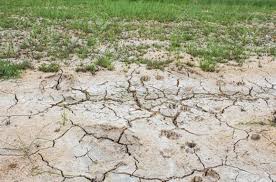
As noted in the previous article, rainfall in arid and semi-arid regions, typically 15–20 inches per year, is insufficient for leaching. Water collected in holes and depressions from runoff evaporates, leaving salts behind.
In shallow water tables, water moves upward and evaporates, resulting in salt accumulation and forming saline, saline-sodic, or sodic soils. These soils also develop in irrigated areas with poor drainage and irrigation systems. Such soils occur in tropical mangrove swamps, marshy areas near salt lakes, and temperate regions.
Dry season farming using irrigation has led to soil degradation due to salinity issues. In India, large areas of land have become unproductive due to salt accumulation and poor water management, making salinity a major issue in wetland rice production.
Salinity is also an increasing problem in non-irrigated croplands and rangelands of the United States. These soils contain cations (Na+, Ca2+, Mg2+) and anions (Cl-, SO42-, HCO3-, CO32-).
Soluble salts result from rock mineral weathering and parent material, accumulating where precipitation is too low to cause leaching.
Definition of Soil Salinity and Sodicity in Agriculture
Soil salinization is the accumulation of neutral soluble salts, mainly chlorides (Cl-) and sulphates (SO42-) of calcium, magnesium, potassium, and sodium, with concentrations sufficient to affect plant growth and produce an electrical conductivity (EC) greater than 4 dS/m (4 mmhos/cm) in the saturation extract. This process is termed soil salinity.
Sodicity involves the accumulation of neutral salts at low EC (less than 4 mmhos/cm) but with high Na+ levels on the exchange complex, where the Exchangeable Sodium Percentage (ESP) exceeds 15 and the Sodium Adsorption Ratio (SAR) exceeds 13 in the saturation extract.
Read Also: How to Extract and Package Snail Slime (Snail filtrate) for Commercial Use
Types of Salt-Affected Soils in Crop Production
Salt-affected soils are classified into three types based on EC, ESP (or SAR), and soil pH:
1. Saline Soils and Their Characteristics
- Formerly called white alkali due to salt deposits on the soil surface.
- EC greater than 4 mmhos/cm.
- pH below 8.5.
- ESP less than 15%.
- SAR less than 13.
- Exchange complex dominated by Ca2+ and Mg2+, not Na+.
- Soluble salts are sufficient to affect plant growth, though plants vary in salt tolerance.
2. Sodic Soils and Their Properties
- Formerly called black alkali due to organic matter deposited with salts on the surface.
- EC less than 4 mmhos/cm, indicating low neutral soluble salts.
- pH greater than 8.5, up to 10 or more, as sodium carbonate is more soluble than Ca or Mg carbonates, maintaining high CO32- and HCO3- levels in soil solution.
- ESP greater than 15%.
- SAR greater than 13.
- Exchangeable Na+ disperses soil colloids, clogging pores, breaking aggregates, lowering hydraulic conductivity, and reducing water infiltration, causing puddling. This is a key characteristic of sodic soils, making them unproductive and difficult to manage.
3. Saline-Sodic Soils and Their Features
- Neutral soluble salts have EC greater than 4 mmhos/cm, qualifying as saline.
- ESP greater than 15% and SAR greater than 13, qualifying as sodic.
- pH less than 8.5.
- Leaching salts increases exchangeable Na+ hydrolysis, raising pH and converting to sodic soil.
- Soil physical conditions are intermediate between saline and sodic soils.
- Salts maintain soil colloid aggregation.
- Rapid changes occur if soluble salts are leached, especially with high SAR, reducing salinity but increasing ESP, turning the soil sodic.
Read Also: Proper Layers Management Practices for Better Performance
Causes of Soil Salinity and Sodicity in Arid Regions
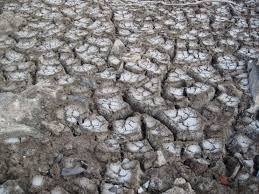
Salinity and sodicity result from salt accumulation in semi-arid and arid region soils. High evaporation exceeding precipitation (less than 25 cm or 15–20 inches annually) prevents leaching, leading to salt buildup and forming saline, saline-sodic, and sodic soils.
Improper irrigation and drainage methods, particularly with Na+-rich irrigation water, cause sodicity by saturating the exchange complex with Na+. Salts, mainly Ca2+, Mg2+, Cl-, SO42-, HCO3-, and CO32-, also accumulate from rock weathering and parent materials in low-precipitation areas.
In salt-affected soils, Ca2+ and Mg2+ dominate the exchange complex, but in sodic soils, Na+ prevails where ESP and SAR exceed 15% and 13, respectively, and EC is less than 4 mmhos/cm.
Measurement of Soil Salinity and Sodicity Parameters
Salt-affected soils negatively impact plant growth, development, and soil structure due to high salt (salinity) and Na+ (sodicity) accumulation. To manage these soils, characteristic parameters are measured:
1. Electrical Conductivity (EC) in Soil Assessment
- Measures total dissolved salts (TDS) in soil solution: EC x 10 = TDS in milli-equivalent per litre (meq/l).
- TDS conversion to ECw: For Na salts, TDS = 640 x ECw; for Ca salts, TDS = 800 x ECw.
- TDS: Total dissolved salts in water or solution from water-saturated soil paste, measured on bulk soil.
- ECw: Conductivity of solution from a 1:2 soil-water mixture.
2. Exchangeable Sodium Percentage (ESP) in Soil Analysis
- ESP = (Exchangeable Na+ cmol/kg x 100) / Cation Exchange Capacity cmol/kg.
- Or ESR = Exchangeable Na+ (meq/100g) / Exchangeable (Ca2+ + Mg2+) (meq/100g).
- [Na+], [Ca2+], [Mg2+]: Concentrations in milli-equivalent of charge per 100g in soil solution.
- ESR (Exchangeable Sodium Ratio) relates to SAR and CEC.
3. Sodium Adsorption Ratio (SAR) for Soil Evaluation
- SAR = [Na+] / √(([Ca2+] + [Mg2+]) / 2) (meq/l).
- Or SAR = [Na+] / √(([Ca2+] + [Mg2+]) / 2) (nmol/litre).
- [Na+], [Ca2+], [Mg2+]: Concentrations in millimole per litre in soil solution.
- SAR accounts for Na+’s mild to moderate effects in the presence of Ca2+ and Mg2+, used to characterize irrigation water.
- ESR relates to SAR and ESP: ESR = 0.015 (SAR), ESP = 100 (ESR) / (1 + ESR).
Effects of Salt-Affected Soils on Plant Growth
Salt-affected soils impact plants differently:
- Nutrient deficiencies from high pH cause stunted growth, dark blue-green leaves with dull surfaces, scorching or necrosis of leaf margins, and premature leaf fall.
- Increased osmotic pressure drives salts from high to low concentration, leading to plasmolysis (cell collapse) as salts enter plant tissues via roots. Plants are more susceptible to salt damage early in growth.
- Seed germination is delayed or prevented in saline conditions, though older plants may tolerate it.
- Specific ion effects: Cl-, Na+, H4BO4- (borate), and HCO3- are toxic. High Na+ causes nutrient imbalance, competing with K+ uptake, reducing K+ availability, especially in saline-sodic and sodic soils. In saline soils, Ca2+ mitigates Na+ effects, making K+ available.
- Sodic soils disperse soil colloids, reducing oxygen and aeration, and lowering water infiltration and percolation rates.
Reclamation of Saline Soils for Agricultural Use

Soil reclamation restores chemical and physical soil conditions to high productivity. Saline soil reclamation is easier than saline-sodic or sodic soils and requires:
- Effective drainage (internal and surface).
- Low-salt irrigation water to leach salts beyond the root zone.
- Deep-rooted vegetation in non-irrigated areas to lower the water table, reducing salt uptake.
- Artificial drainage networks where natural drainage is inadequate, with periodic excess irrigation to reduce salt levels.
- Leaching Requirement (LR): LR = ECiw / ECdw, where ECiw is the EC of irrigation water, and ECdw is the EC of drainage water. LR depends on crop salt tolerance (ECse), irrigation water quality (ECiw), rooting/leaching depth, and soil water-holding capacity.
Reclamation of Saline-Sodic and Sodic Soils
Reducing exchangeable Na+ and ECse is more challenging due to clay dispersion, lowering infiltration. In saline-sodic soils, leaching may increase Na+ and pH, so Na+ reduction precedes salt removal.
Gypsum (CaSO4·2H2O) releases Ca2+ or H+ ions, displacing Na+ as Na2SO4, which is leached beyond the root zone. Soil must be moistened, gypsum mixed via cultivation, and irrigation applied to leach Na2SO4.
Management of Reclaimed Soils in Arid Regions
Effective management minimizes LR and drainage water use:
- Maintain soil water near field capacity to dilute salts.
- Light irrigation post-planting to move salts below the rooting zone.
- Periodic water application to leach salts as precipitates (CaSO4·2H2O, CaCO3, MgCO3) during dry periods.
- Ridge tillage with planting on ridge shoulders to avoid salt issues.
- Additional leaching to reduce nutrient excesses like boron.
Limitations of Leaching Requirement (LR) Method
- LR ignores rising water tables from increased leaching, causing waterlogging and salinity.
- Over-application of irrigation treats entire fields, ignoring variability.
- LR overlooks salts from fossil salt deposits in soil strata.
- Assumes known EC of drainage water, which may be outdated. Repeated measurements using EM sensors or far-electrode methods, combined with site-specific management, are recommended.
Do you have any questions, suggestions, or contributions? If so, please feel free to use the comment box below to share your thoughts. We also encourage you to kindly share this information with others who might benefit from it. Since we can’t reach everyone at once, we truly appreciate your help in spreading the word. Thank you so much for your support and for sharing!