


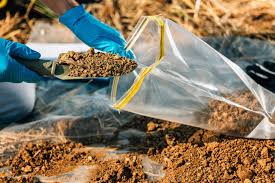
Soil analysis is a diagnostic instrument for soil fertility and basis for fertilizer recommendation; to know where and where not fertilizer is to be applied. Obtaining accurate and precise values has always been the basis of soil analysis. From an agronomic view, the aims of soil analysis are:
- To satisfy the demand for soil classification data.
- To generate information for management and improvement of the soil.
- To determine the ecological effect of some agricultural production and environmental pollution.
- To evaluate soil fertility in order to recommend fertilizer.
It is important to have a clear idea about the purpose of any soil analysis as this will help determine sampling technique, sample preparation methods, elements or fractions to be determined, and the analytical techniques to be employed.
Read Also: Floribunda Rose Flowers: All You Need To Know About
General Principles of Soil Sampling in Agriculture
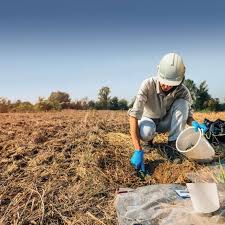
It is necessary to procure a test sample that will be representative of the soil under investigation and to prepare the test sample for analysis. This is because sampling errors are commonly greater than analytical errors. Analytical value can serve as an accurate description of the soil if the following are true:
- The gross sample accurately represents the whole soil from which it was taken.
- No changes occur in the gross and subsamples prior to analysis.
- The subsamples analysed represent the gross sample accurately.
- The analysis determines a true value of the soil characteristics under investigation.
A soil or field may be assessed for its capability of providing a crop with essential nutrients in several ways:
- Field plot fertilizer trials
- Greenhouse pot experiments
- Crop deficiency symptoms
- Biological tests such as growing microorganisms
- Soil testing prior to cropping
All the approaches can be used in research; the latter one is most amenable and popular and one upon which recommendations for farmers can be based. On the other hand, plant analysis is a postmortem approach and one that should be interpreted in the light of soil test results.
Most soil tests primarily focus on elements in most demand by crops which are supplied by fertilizers: N, P, and K; others are Ca, Mg, and S. In drier areas, micronutrients such as Fe, Zn, Mn, Cu, and B are often measured.
As nutrient behavior in soils is governed by soil properties and environmental conditions, measurement of such properties is often required. These include pH, salinity, organic matter, CaCO3, and texture; in drier areas, the presence of Na and gypsum (CaSO4·2H2O) is also of concern.
Types of Soil Sampling Methods for Agricultural Analysis
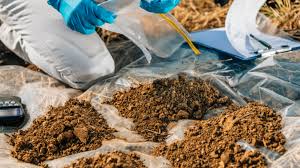
- Simple random sampling
- Systematic sampling
- Stratified sampling
Phases of Soil Testing for Agricultural Applications
1. Sample collection: This should be such that it reliably reflects the average status of a field for the parameter considered.
2. Extraction or digestion and nutrient determination: The reagent used and the procedures adopted should quantify all or a portion of the element in the soil which is related to availability to the plant, i.e., it should be correlated with plant growth.
3. Interpreting the analytical results: The units of measurement should reliably indicate if a nutrient is deficient, adequate, or in excess.
4. Fertilizer recommendation: This is based upon the soil test calibrated for field conditions and considers other factors such as yield target, crop nutrient requirement, management of the crop, soil type, and method of fertilizer application.
Soil Sampling Techniques for Agricultural Fields
Soil sample should be composed of several subsamples representing a seemingly uniform area or field with similar cropping and management history. There is no universally accepted number of subsamples for different field situations. However, the following points can serve as guidelines:
- Composite sampling
- Time of sampling
- Depth of sampling
- Sampling tools
Field and Laboratory Processing of Soil Samples
- Field Processing
- Laboratory Processing
Laboratory Factors Affecting Soil Extraction in Agriculture
These are factors that have significant impact on the test results. They include means of shaking, rate of reciprocation, type of extraction vessel, extraction time, and laboratory temperature.
- Extraction vessel shape
- Shaking vs stirring
- Shaking rates
- Extraction time
- Laboratory temperature
Dissolution for Total Elemental Analysis in Soil
It is important to have a clear idea about the purpose of any soil analysis as this will help determine sampling technique, sample preparation methods, elements or fractions to be determined, and the analytical techniques to be employed. There are several types of soil analysis, namely:
- Elemental analysis
- Fractional analysis
- Total elemental analysis (TEA)
TEA determines the quantity of an element present in the soil without reference to the quality (available form or polluted form). TEA is achieved by either wet or dry ashing.
1. Wet ashing: Can be accompanied by use of nitric, sulphuric, or perchloric acid in different combinations.
2. Dry ashing: This is done in a muffle furnace at a temperature of 600°C but with high temperature.
Testing for Soil pH and Acidity in Agricultural Soils
pH measures relative acidity and alkalinity, whereas soil acidity means the total amount of acid present in the soil. Quantitatively, the pH scale is used in order to remove unwieldy figures, e.g., 0.056M H+. P means –log. The pH scale could be derived from the ionization of water:
H2O ⇌ H⁺ + OH⁻, Kw = activity of pure solid, liquid, or gas in solution is 1. At 25°C, Kw = 10⁻¹⁴ (moles litre⁻¹).
∴ (H⁺)(OH⁻) = 10⁻¹⁴
In pure water, the concentration of (H⁺) and (OH⁻) are equal: (H⁺)(OH⁻) = 10⁻¹⁴
x × x = x² = 10⁻¹⁴ ∴ x = 10⁻⁷
∴ (H⁺) = 10⁻⁷, (OH⁻) = 10⁻⁷
∴ pH = 7 of pure water, pOH = 7 of pure water
pH scale runs between 0 and 14, and pH 7 is neutral.
Application of pH to Agricultural Soils
Most mineral soil in the humid region has a pH range between 3.5 to 7, while those of arid regions have a range between 6.8 – 8.8. pH above 9 is found in alkali Na-saturated soil, and pH below 3.5 is found in acid organic soil (peat).
pH is one of the most enlightening attributes of the soil; whether the soil pH is high or low will depend on the solubility of certain compounds in the soil.
pH of around 4 signifies the presence of free acids in the soil (usually from oxidation of sulphides), pH of 5.5 and below indicates the likely presence of CaCO3. Measurement of pH means the H⁺ concentration in solution and is called the active acidity; the potential/reserve acidity is that left within the microcell.
Cations in exchange sites are in constant equilibrium with those in solution. pH measures the active acidity, while potential acidity is determined by titration using a base.
Causes of Soil Acidity in Agricultural Systems
- Leaching loss of bases
- Application of fertilizer, especially N fertilizer; NH4⁺-producing and NH4⁺-containing fertilizers like urea and (NH4)2SO4
- Acid rain
- Decomposition of organic matter; here, CO2 evolved reacts with soil water to form H2CO3
- Hydrolysis of aluminum: Al³⁺ + 3H2O ⇌ Al(OH)3 + 3H⁺
Determination of Soil pH in Agriculture
There are two basic methods of determining the soil pH, namely:
1. Colorimetric method
2. Potentiometric method
In either method, the sample has to be prepared. The soil sample is weighed, then a decision is made on the type of slurry to prepare (water slurry (distilled water)) or salt solution (KCl or CaCl2) 0.01M concentration of the salts are used. Decision on the ratio of water to soil or salt solution to soil, usually 1:1 or 2:1 (salt or water: soil).
It is recommended that slurry should be shaken and read immediately because if allowed to settle, the potential difference as a result of the junction is avoided; when settling is not allowed, the actual reading is obtained.
1. Colorimetric Method of pH Measurement
This entails the formation of colour with soil: H2O or salt solution mixture. The colour formation is made possible by the addition of a universal indicator (indicator with large pH range); the colour is then matched with colour charts of known pH. (Demerit – slower, less precise, colour blindness, and eye fatigue.)
2.Potentiometric Method of pH Measurement
This is an instrumental method and involves measurement of potential. It is based on the principle that if a pH-sensitive electrode (selective or specific electrode) is used, the potential generated is proportional to the H⁺ concentration, i.e., E = K(H⁺). It is based on the Nernst equation:
E = E₀ ± 0.059/n log [H⁺], i.e., E₀ ± 0.059/n = K, holds only at 25°C.
pH is also known to be equal to (E – K) / 0.059 @ 25°C; hence, the temperature should be adjusted to 25°C.
The pH is directly related to E. To establish this straight line, a minimum of two or more points is required. To establish this straight line, the pH meter has to be calibrated with standard buffers.
There are three standard buffers: pH 4, 7, and 9. The choice of buffer is a function of experience; if acid soil, use pH 4, 6, or 7; if alkaline, use 6 or 7 and 9.
Factors Affecting pH Measurement in Soil Analysis
- Suspension effect
- Dilution effect
- Sodium effect
Lime Requirement for Correcting Soil Acidity
This is the amount of lime required to neutralize the acidity of the soil to a desired pH. There are several methods of determining lime requirement, out of which five are very common:
- Field plot techniques
- Titration with a base (soil/base titration)
- Incubation studies
- Use of buffer
- Greenhouse techniques
Read Also: Mimosa Flowers (Mimosa Pudica): Complete Growing and Care Guide
Soil Organic Matter Determination in Agriculture
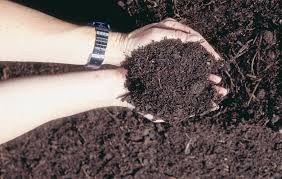
Soil organic matter (SOM) is the plant and animal remains or debris at all stages of decomposition. Decomposed parts are called humus.
1. Measurement of CO2 evolved during decomposition: This is achieved by destroying the CO3 with concentrated H2SO4. It only works in a very close analytical train.
2. Determination from the total nitrogen values: It is assumed that 5% of SOM is N (100/5 × value); this particular method is based on an assumption which may not hold at all times. It is known that N content of SOM could vary from as low as 3% to as high as 8%.
3. Weight loss: This is achieved by destroying the SOM and estimated by difference in weight loss before and after the destruction. SOM is destroyed by (1) chemical method by the addition of H2O2 or (2) by ignition in a furnace. Weight loss method is not a very accurate method because it may not get all the OM destroyed; it is, however, used when there is no other method.
4. Estimation of the oxidizable carbon: This is the most popular method and most accurate. There are several techniques under this, but the most popular is the Walkley and Black (1939) method.
Walkley and Black Procedure for SOM Analysis
This is a chromic acid oxidation procedure; it involves the oxidation of the SOM by chromic acid. In practice, the chromic acid is generated in situ by the reaction between K2Cr2O7 and concentrated H2SO4, then back titrated with ferrous solution because the K2Cr2O7 and H2SO4 are added in excess.
By this, the oxidizable organic carbon is determined; however, not all the organic carbon is oxidizable, but about 75% of the organic carbon in organic matter is oxidizable; hence, to convert organic carbon = 100 / 75 = 1.33.
Only about 58% of total organic matter is organic carbon. So, to convert organic carbon to organic matter = 100/58 = 1.724.
Milli-equivalent weight of carbon in (g) = 0.003 (12/4 = 3/1000 = 0.003g).
% organic C = [Titre value of blank (A) – Titre value of sample (B)] × Normality of titrant × 100 × 0.003 × 1.33 / Weight of soil taken
Organic matter = Total Organic C × 1.724
Organic matter = [(A) – (B)] × N × 100 × 0.003 × 1.33 / Weight of sample
Testing for Available Nutrients in Agricultural Soils
Available nutrient is that portion of soil nutrient whose variations (increase or decrease) are reflected in the growth/yield of the crop. The major nutrients of interest in this course are nitrogen, P, K, Ca, Mg, Na, Mn, Fe, etc.
1. Soil Nitrogen Analysis for Crop Nutrition
This is perhaps the most needed nutrient element in most soils. About 90% of total N in the soil is in organic combination. In most soils, N content ranges as low as 0.01% to as high as 0.5%. Total N content of Nigerian soil is around 0.02 – 0.2%, and the critical level is 0.15%.
i. Methods of Determining Nitrogen Levels in Soil
Plants take N as NO3⁻ and NH4⁺; hence, both are important in plant uptake. There is, however, the interconversion of both in the soil to different forms. In recent times, attention is focused on NO3⁻ for many reasons, including the possibility of leached NO3⁻ polluting the underground water, i.e., NO3⁻ going below the root zone of plants. From the point of view of crop need, however, so far in Nigeria, total nitrogen is used mainly as the index of N availability to crops.
ii. Total Nitrogen Determination
There are two classical methods of determining total nitrogen:
a. Dumass (1831): This is a dry oxidation procedure.
b. Kjeldahl method: This is the widely used method for determining total nitrogen, and there are many forms of this method, namely macro, micro, semi-micro systems. The Kjeldahl method is made up of two steps: digestion step and distillation step.
The Kjeldahl system does not take into consideration the following compounds: N-O compounds and the N-N compounds; therefore, the two-step system has to be modified in order to include N-O compounds as NO3⁻, NO2⁻. There are some modifications, namely:
a. Salicylic (e.g., aspirin) acid modification: In this modification, the sample is pre-treated with salicylic acid dissolved in concentrated H2SO4; the NO3⁻ with the salicylic acid forms a nitro compound; the nitro compound in acid medium will be converted to an amino compound, and the sample is then treated normally by adding all the reagents required for digestion in the ordinary Kjeldahl system.
2. Determination of Phosphorus in Agricultural Soils
Plants take their P in the form of HPO4²⁻ and H2PO4⁻. Unfortunately, the soluble form of P in the soil at any particular time is very small, such that it will not satisfy the crop yield.
Labile P is the pool of P that replenishes soil P immediately after the soluble P is depleted. Therefore, available P = labile P + solution P. Labile P varies from soil to soil; hence, the extractant varies too from soil to soil.
- 50% organic
- 100% P mineral: 40%
- 50% inorganic adsorbed P: 10% solution P < 0.01%
i. Criteria for Selecting Extractant for Phosphorus
The extractant should:
- Rapidly dissolve or desorb P and be time-independent after 30 minutes.
- Maintain organic matter and soil clays in a flocculated form (no dispersion of OM or soil minerals).
- Not precipitate after dissolution.
- Not contain excess salts, buffers, or ions that will interfere with the analytical determination.
- Be easy to prepare, store, or dispose of.
In practice, some of the commonly used extractants include:
- Bray 1: 0.03M NH4F in 0.025N HCl
- Bray 2: 0.03M NH4elder: 0.5M NaHCO3, pH 8.5
- Hunter: 0.05M NaHCO3 in 0.01M EDTA
- Mehlich 1: 0.05N HCl + 0.025N H2SO4
- Egner: 0.02N Ca-lactate + 0.02N HCl
- Ambic I: 0.25M NH4HCO3 + 0.01M (NH4)2 EDTA + 0.01M NH4F + superfloc
- Citric acid: 1% citric acid
- 0.01M CaCl2 solution
ii. Bray 1 Extractant
0.03M NH4F in 0.025N HCl; here, the F⁻ ion complexes Al and Fe, forming AlF and FeF (AlPO3 and FePO3 are P forms in the soil). Since Al and Fe are removed from AlPO3 and FePO3, then the P is left available for determination. NH4F also chelates Al and Fe in solution.
iii. Bray 2 Extractant
0.03M NH4F in 0.1N HCl; this is also based on the same principle as Bray 1; however, because of the stronger strength of the acid in Bray 2, it is also able to dissolve some mineral P (rock phosphate, apatite).
iv. Olsen Extractant
0.5M NaHCO3 at pH 8.5. At high pH, P is held by Ca as Ca3(PO4)2. Ca3(PO4)2 ⇌ 3Ca²⁺ + 2PO4³⁻. If Ca²⁺ is removed, more Ca3(PO4)2 will be dissociated to counteract the effect of the removal (Le Chatelier’s principle); hence, Ca is removed by NaHCO3.
Even Ca has a strong affinity for CO3²⁻ to form CaCO3; hence, more Ca3(PO4)2 dissolves. If Ca is continually removed by precipitating it as CO3²⁻, the reaction goes to the right, and more P is released into solution.
In addition, NaHCO3 in solution will also have NaOH; the NaOH will react with Fe in the FePO3 to form Fe(OH)3, which will also release more P into solution.
v. Determination of Extracted Phosphorus
There are several methods of doing this, but the most common is the molybdate method. The classical molybdate method involves the use of certain reagents like sodium vanadate and NH4MoO10.
When these reagents react with P in solution, yellow phosphomolybdate is formed, and the intensity of the yellow colour is determined colorimetrically. However, the yellow colour is not very sensitive, and there is a limit to its detection; hence, to enhance the sensitivity of the colour, it is reduced to blue colour by the addition of stannous chloride (tin chloride).
Another common method is the use of antimony potassium tartrate and ascorbic acid solution to generate a blue colour, whose intensity is a function of the P concentration.
Exchangeable Cations in Soil Analysis
Two principal methods used in determining total cation exchange capacity (CEC) are:
1. Summation method: All the cations are displaced by a saturated solution of the displacing ion, usually a monovalent ion. NH4⁺ (ammonium) ion is often used. The salt widely used is NH4OAc; by adding this, NH4⁺ is furnished, and all other cations will have been displaced.
The cations will then be determined and summed up to give the total CEC. Colloids + NH4⁺ ⇌ Colloids + Ca²⁺, Mg²⁺, K⁺; usually, the Ca²⁺ and Mg²⁺ are determined using atomic absorption spectrophotometer (AAS), while Na⁺ and K⁺ are determined using a flame photometer, H⁺ and Al³⁺ by AAS and by NaOH titration.
2. Displacement method: Here, the displacing ion and index ion (e.g., NH4⁺ as index ion) are determined. Colloids + NH4⁺ + Ca²⁺, Mg²⁺, K⁺, Na⁺ ⇌ Colloids + NH4⁺. With soil and NH4⁺, shake for 1 hour, filter; the filtrate has cations, residue (solid) has NH4⁺. Return the residue to the beaker, then look for a displacing ion (monovalent cation), usually Na⁺ in the form of acetate. Hence, NH4⁺ in solution is equivalent to all the cations.
Determination of Available Sulphur in Agricultural Soils
The best extractant for S is Ca(H2PO4)2; it must contain about 500 ppm PO4³⁻. Phosphorus is more specifically fixed, whereas S is not specifically fixed, i.e., the adsorption energy is higher in P than in S (P is more tightly held than S).
Therefore, P can easily displace S on the adsorption site. Extract and determine S by colorimetry, gravimetry, but most commonly by the turbidimetric method; here, BaCl2 is added to the extract: BaCl2 + SO4²⁻ ⇌ BaSO4 + 2Cl⁻. BaSO4 is formed; this is a turbid suspension.
The turbidity of the solution is determined; hence, to make it stay, a stabilizer is added, e.g., gelatin/gum acacia; the resulting solution is determined by use of a spectrophotometer at 420 nm wavelength.
To remove any colour (to ascertain that only turbidity is measured and not colour), this is achieved by adding a decolorizer, e.g., activated charcoal; this is added to the filtrate and then refiltered before adding BaCl2 and measuring. A turbidimeter functions even in the presence of colour because it records reflection and refraction.
Micro-Nutrient Analysis for Crop Growth
They are Cu, Zn, Co, Mo, B, Fe, Mn. They are essential to crop growth but needed in small amounts as far as fertilizer need is concerned; however, they have equal importance as the macro elements. Micronutrient analysis is not common in most analyses because of several reasons:
- Since their presence is in trace levels, the instrument used for the analysis must be highly sensitive; this is not only very costly but also not available in most laboratories.
- Since they are present in trace amounts, containers used for them may contaminate the sample to the extent that the error level could be very high (e.g., 90%), and therefore, it requires well-trained personnel to handle micronutrient analysis.
Extraction by EDTA + HCl, DTPA + HCl, acid, etc.; for boron, hot water is used, and immediately they are extracted, AAS can be used to determine them, depending on the availability of lamps as every element has its own lamp.
Do you have any questions, suggestions, or contributions? If so, please feel free to use the comment box below to share your thoughts. We also encourage you to kindly share this information with others who might benefit from it. Since we can’t reach everyone at once, we truly appreciate your help in spreading the word. Thank you so much for your support and for sharing!