


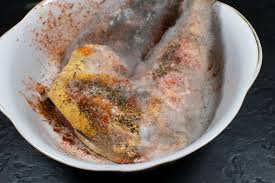
Spoilage is caused by the accumulation of metabolic by-products or the action of extracellular enzymes produced by psychrotrophic spoilage bacteria as they multiply on poultry surfaces at refrigeration temperatures. Some of these by-products become detectable as off-odours and slime, as bacteria utilize nutrients on the surface of meats.
Off-odours do not result from breakdown of the protein in skin and muscle, as previously thought, but from the direct microbial utilization of low molecular weight nitrogenous compounds such as amino acids, which are present in skin and muscle. Concentrations of free amino acids increase as proteolysis occurs throughout the storage period.
It has been demonstrated that measurement of these free amino acids, due to the production of aminopeptidases and subsequent breakdown of protein, may be used to rapidly determine the bacteriological quality of beef.
Read Also: Sheep Production Guide
Development of Off-Odors and Slime in Poultry Spoilage
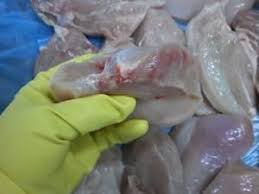
Microorganisms appear first in damp pockets on the carcass, such as folds between the foreleg and breast of a carcass, and their dispersion is promoted by condensation which occurs when a cold carcass is exposed to warm, damp air.
An ester-like odor, which was described as a “dirty dishrag” odour, can develop on cut-up chickens. Off-odour precedes slime formation and is considered the initial sign of spoilage in most cases. Immediately after off-odours are detected, many small, translucent, moist colonies may appear on the cut surfaces and skin of the carcass.
Eventually, meat surfaces become coated with tiny drop-like colonies, which increase in size and coalesce to form a slimy coating.
In the final stages of spoilage, the meat may begin to exhibit a pungent ammoniacal odour in addition to the dirty dishrag odour, which may be attributed to the breakdown of protein and the formation of ammonia or ammonia-like compounds.
Effects of Cold Storage on Poultry Spoilage
Under refrigeration (< 5°C), psychrotrophic bacterial populations are able to multiply on broiler carcasses and produce spoilage defects; however, the mesophilic bacteria that predominate on the carcass initially remain the same or decrease in number. This phenomenon may be explained by examining the metabolic changes that occur in these groups of bacteria as they are exposed to refrigerator temperatures.
Cellular Lipids in Bacteria During Cold Storage
Naturally, mesophilic bacteria cease to proliferate below a certain environmental temperature because as temperature decreases so does their cellular absorption of nutrients.
Psychrotrophic bacteria species typically exhibit no such temperature-induced difference; hence, they are able to grow rapidly at refrigerator temperatures.
Read Also: Fattening of Sheep and Goats Guide
Lipase Production in Psychrotrophic Bacteria
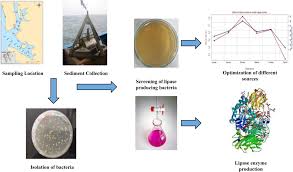
Research has demonstrated that the amount of lipase produced by psychrotrophic bacteria increases as a result of exposure of the bacteria to cold temperatures. This means that Pseudomonas is able to breakdown fat equally well when on chicken in the refrigerator or at room temperature, hence, its capability to spoil chicken.
Proteolytic Activity in Pseudomonas Fluorescens
Research has shown that production of proteolytic enzymes by Pseudomonas fluorescens was higher when this bacterium was cultured at lower temperatures. This means that, as with fat, Pseudomonas is able to breakdown protein more effectively at refrigeration temperature than at room temperature and this makes the bacterium ideally suited to spoil chicken.
Shelf Life Assessment and Premature Spoilage
From time to time premature spoilage will occur. In order for companies to assess this problem, they often conduct aerobic plate counts on products. This microbiological method is inappropriate for this purpose because measuring mesophilic bacteria on chicken does not indicate what is happening with spoilage bacteria. Aerobic plate counts (APC) may miss up to 99.9% (3 logs) of spoilage bacteria on the surface of the product.
To measure spoilage bacteria, samples should be plated and incubated at 7°C for 10 days. In this way, the bacteria that grow and produce colonies on the plate will be the ones responsible for spoiling the product.
Frequently Asked Questions (FAQs)
- What causes spoilage defects in poultry?
Spoilage is caused by the accumulation of metabolic by-products or the action of extracellular enzymes produced by psychrotrophic spoilage bacteria as they multiply on poultry surfaces at refrigeration temperatures. - How do off-odours develop in spoiled poultry?
Off-odours do not result from breakdown of the protein in skin and muscle, as previously thought, but from the direct microbial utilization of low molecular weight nitrogenous compounds such as amino acids, which are present in skin and muscle. - What is the initial sign of spoilage in poultry?
Off-odour precedes slime formation and is considered the initial sign of spoilage in most cases. - Why do psychrotrophic bacteria thrive in cold storage?
Psychrotrophic bacteria species typically exhibit no such temperature-induced difference; hence, they are able to grow rapidly at refrigerator temperatures, unlike mesophilic bacteria which cease to proliferate below a certain environmental temperature. - How does cold storage affect lipase production in bacteria?
Research has demonstrated that the amount of lipase produced by psychrotrophic bacteria increases as a result of exposure of the bacteria to cold temperatures. - What is the role of proteolytic activity in poultry spoilage?
Research has shown that production of proteolytic enzymes by Pseudomonas fluorescens was higher when this bacterium was cultured at lower temperatures, making the bacterium ideally suited to spoil chicken. - Why is aerobic plate count (APC) inappropriate for assessing poultry spoilage?
This microbiological method is inappropriate for this purpose because measuring mesophilic bacteria on chicken does not indicate what is happening with spoilage bacteria, and APC may miss up to 99.9% (3 logs) of spoilage bacteria on the surface of the product. - How should spoilage bacteria in poultry be measured?
To measure spoilage bacteria, samples should be plated and incubated at 7°C for 10 days, as the bacteria that grow and produce colonies on the plate will be the ones responsible for spoiling the product.
Do you have any questions, suggestions, or contributions? If so, please feel free to use the comment box below to share your thoughts. We also encourage you to kindly share this information with others who might benefit from it. Since we can’t reach everyone at once, we truly appreciate your help in spreading the word. Thank you so much for your support and for sharing!