


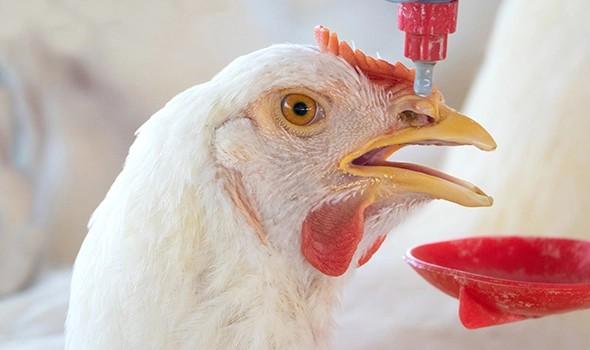
Heat stress is one of the most damaging and underestimated challenges in poultry farming, particularly in tropical and subtropical climates. The goal of managing heat stress goes beyond simply keeping birds alive. The real target is maintaining production performance, getting the expected number of eggs from layers, achieving the right body weight at the right age in broilers, and hitting the feed conversion ratios your operation depends on.
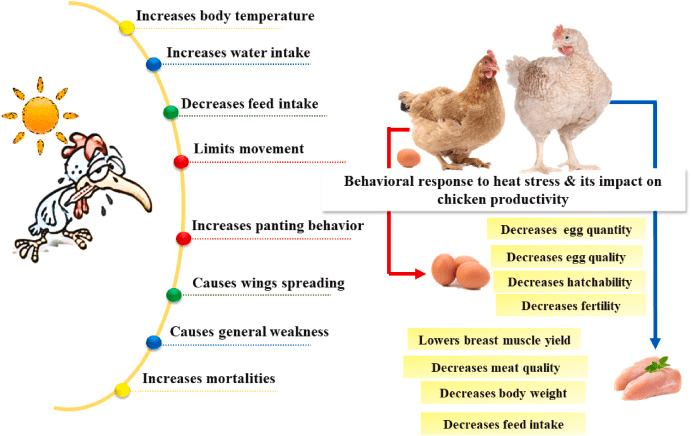
When birds overheat, feed intake drops, water consumption spikes, immune function weakens, egg production falls, shell quality deteriorates, and growth slows. In severe cases, mortality rises sharply. Managing heat stress effectively requires action across four areas: housing, water, feed, and general farm management.
1. Housing Management for Poultry Birds
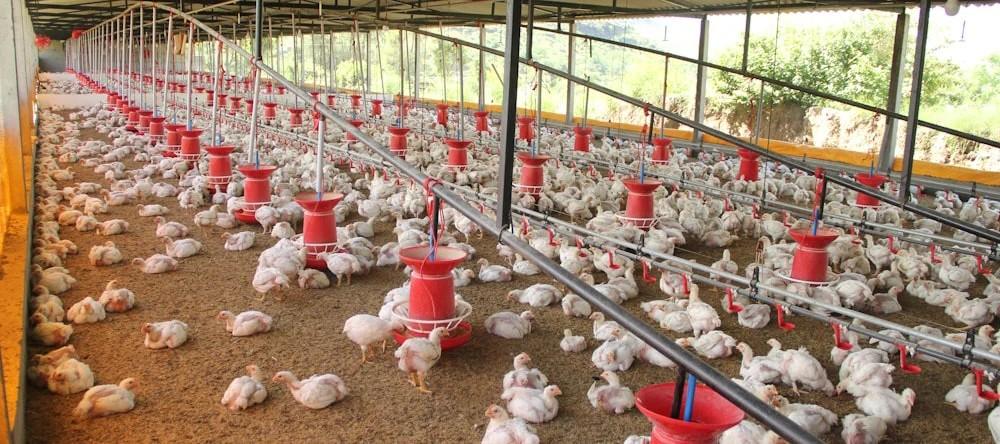
The design and orientation of your poultry house determines how much heat builds up inside before any other intervention is applied. Getting the structure right is the most cost-effective long-term investment you can make against heat stress.
i. Orient the house east to west: Align the long axis of the building along an east-west direction. This minimizes the surface area exposed to direct solar radiation during the hottest parts of the day.
ii. Insulate the roof: In tropical climates, roof insulation is essential. A false roof below the main roof reduces heat conduction into the house. Support this with foggers and cooler systems for additional temperature control.
iii. Maintain optimal house width: For open-sided houses, keep the width between 24 and 32 feet depending on temperature, humidity, wind velocity, and bird type. This range supports effective cross ventilation.
iv. Install fans for wind chill effect: Cooler fans or exhaust fans that increase air movement over the birds create a wind chill effect. This cools birds even when the actual house temperature has not dropped.
v. Prevent direct sunlight on birds: The design of the shed should block direct sunlight from reaching the birds at any time of day.
vi. Thatch the roof: Covering the roof with paddy straw or sugarcane leaves reduces internal shed temperature naturally and at low cost.
vii. Whitewash the roof: Painting the roof white reflects sunlight and reduces radiant heat absorption into the building.
viii. Plant trees around the shed: Tall trees on the perimeter reduce radiant heat reaching the house. Choose species that are leafy in summer and lose their leaves in winter so they provide shade when needed and allow warmth when temperatures drop.
ix. Provide sufficient roof overhang: Overhangs of 3 to 5 feet protect birds from direct sunrays entering through the sides of the house.
Read Also: Difference between Poultry Vaccines and Poultry Drugs
2. Water Management for Poultry Birds
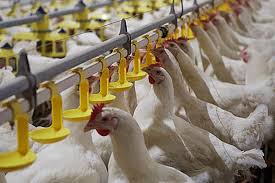
Water is the single most critical management factor during hot weather. In summer, birds drink 3 to 4 times more water than usual. Even a slight shortfall in water supply can cause heat stroke and death. Under normal conditions the feed to water consumption ratio is 1:2. When temperatures exceed 95°F this ratio can reach 1:4 or higher. Plan your water supply accordingly.
i. Supply clean, cool water at all times: Water temperature should be kept between 60 and 70°F during summer months. Warm water is less effective at cooling the bird internally.
ii. Sanitize the water: Use good-quality water sanitizers to prevent bacterial buildup and waterborne infections, which are more likely in hot conditions when birds drink heavily.
iii. Give new chicks water before feed: On arrival at the farm, provide day-old chicks with cool water and electrolytes before offering any feed. Transportation causes dehydration and birds need rehydration first.
iv. Cover water tanks: Wrap or cover water storage tanks with wet gunny bags to prevent direct sun exposure from heating the water.
v. Increase the number of waterers by 25%: More drinking points reduce competition and ensure all birds have consistent access to water during peak demand periods.
vi. Increase watering frequency: Refresh and refill waterers more often during hot weather to keep water cool and clean.
vii. Insulate nipple drinker pipes: Wrap nipple drinker pipes with wet gunny cloth to keep water in the lines cooler.
viii. Add electrolytes during hot hours: Provide electrolytes at 1 to 2 grams per liter of water during the hottest parts of the day to replace minerals lost through panting and physiological stress.
ix. Add salt to drinking water: Adding 0.25% salt to drinking water encourages higher water consumption, which helps birds cool themselves more effectively.
x. Adjust water-based medications and vaccines: During hot weather, water consumption increases significantly. Adjust the volume of water used for water-soluble vaccines and medications to reflect this. Never withhold drinking water from the flock when vaccine is administered through water.
3. Feed Management for Poultry Birds
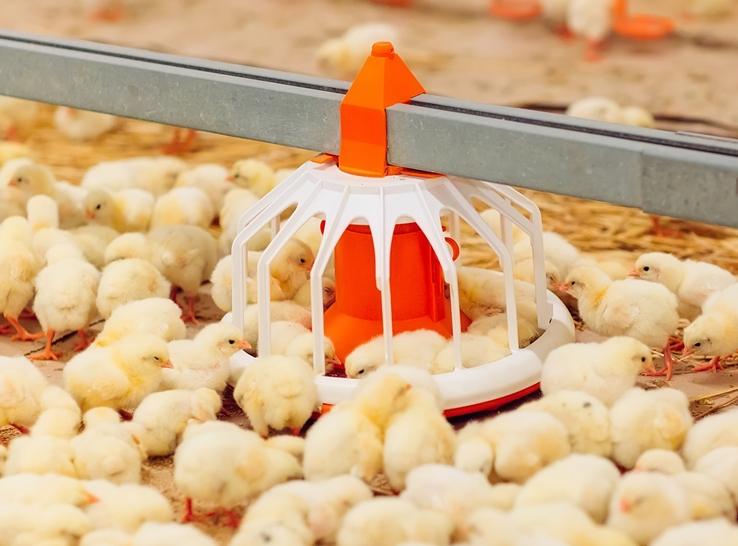
Heat stress causes birds to reduce their feed intake significantly. This leads directly to lower body weight in broilers, reduced egg production in layers, and poorer shell quality. Adjusting what you feed and how you feed it during hot weather is essential to protecting production performance.
i. Increase feeding frequency: Offer feed more often in smaller amounts rather than less frequently in large amounts. This keeps feed fresh and encourages intake.
ii. Avoid feeding broilers during the hottest hours of the day: Feed generates metabolic heat as it is digested. Feeding during cooler parts of the day, morning and evening, reduces the additional heat burden on birds during peak temperature hours.
iii. Increase nutrient density: Since birds eat less during hot weather, the feed they do consume must deliver more nutrition per kilogram. Increase the concentration of key nutrients to compensate for reduced intake.
iv. Reduce dietary energy from protein and fat carefully: Metabolizing protein and fat generates heat. One gram of fat produces 22.5% more metabolic heat than carbohydrates. Adjust energy sources thoughtfully to reduce this heat increment without compromising nutritional adequacy.
v. Add extra vitamins and trace minerals: Include 20 to 30% more vitamins and trace minerals than standard formulations to offset losses caused by increased water intake and physiological stress.
vi. Supplement vitamin C: Vitamin C maintains blood vessel integrity under heat stress. Add 200 to 500 grams per ton of feed during hot periods.
vii. Supplement vitamin E: Add vitamin E at 50 grams per ton of feed to support immune function and reduce oxidative stress caused by heat.
viii. Increase available phosphorus: Higher phosphorus levels support metabolic function during heat stress.
ix. Add sodium bicarbonate for layers: Include soda bicarbonate at 0.1% in the diet to improve eggshell quality, which deteriorates during heat stress.
x. Use antifungal agents consistently: Hot, humid conditions promote mould growth in stored and mixed feed. Regular use of antifungal additives protects feed quality.
xi. Balance limiting amino acids: Ensure methionine and lysine levels are adequate. Balancing these amino acids improves feed utilization efficiency and supports better performance under stress conditions.
xii. Increase calcium in layer diets: Raise calcium levels to between 3% and 3.5% in layer feed during hot weather to maintain shell quality.
xiii. Include vitamin A and E in the diet: Add vitamin A at 8,000 IU and vitamin E at 250 mg per kilogram of diet for better performance and stress resistance.
Read Also: Worm infestation in Poultry: Signs and Treatment
4. General Management Practices for Poultry
Good day-to-day management during hot weather makes a significant difference to how well birds cope with heat stress. These practical steps reduce the heat load on the flock and improve comfort and survival rates.
i. Manage litter properly: Use fresh litter at about 2 inches thickness. Rake or stir the litter 2 to 3 times daily during cooler hours to release trapped moisture and heat.
ii. Provide 10% extra floor space in summer: Reducing stocking density lowers the heat generated by the birds themselves within the house.
iii. Avoid overcrowding at all times: Every additional bird in a space adds to the thermal load on the house. Overcrowding during summer is one of the fastest ways to trigger mortality.
iv. Schedule stressful procedures for cool hours: Shifting, transportation, debeaking, and vaccination should only be done at night or during the coolest hours of the day. These activities add stress that compounds the effects of heat.
v. Cool severely heat-stressed birds in water: Birds showing severe signs of heat stress can be dipped in cool water for 2 to 3 minutes with their head and neck kept above the water level.
vi. Install fans throughout the shed: Pedestal, ceiling, or exhaust fans improve air circulation and the wind chill effect across the flock.
vii. Use foggers inside the shed: Foggers can reduce shed temperature by 5 to 10°C depending on the system used.
viii. Whitewash or paint the shed exterior: White lime or white paint on the outer walls and roof can reduce internal shed temperature by up to 2°C.
ix. Wet side curtains: Curtains on the sides of the shed, kept damp with water, cool incoming air through evaporation before it reaches the birds.
x. Install exhaust fans and pad cooling systems: In larger sheds, fitting three exhaust fans on one side and an evaporative cooling pad on the other, covering the full 200-foot length, seals the sides and can bring temperature down by more than 8°C.
xi. Use roof sprinklers: Sprinklers on top of or inside the shed reduce radiant heat from the roof directly.
xii. Situate the house away from other buildings: Isolation allows free air movement around the structure, improving natural ventilation.
xiii. Build the roof at an adequate height: A roof height of 2.6 to 3.5 meters from foundation to roof line provides maximum natural ventilation.
xiv. Provide a 1-meter roof overhang: This length of overhang cuts out direct sun and rain from entering the house through the sides.
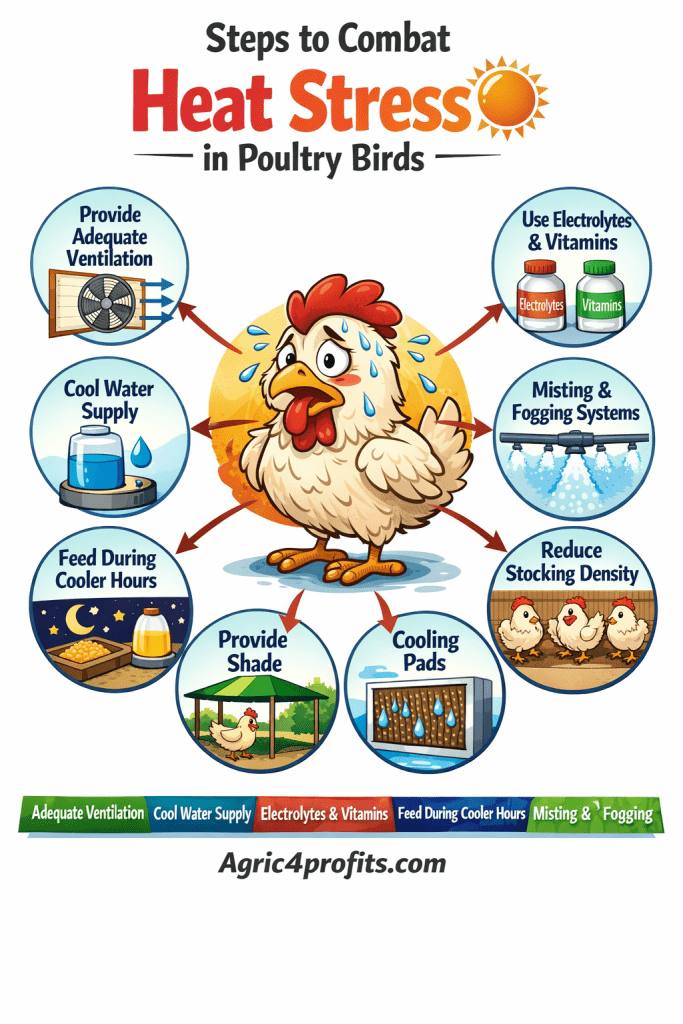
Summary on Steps to Combat Heat Stress in Poultry Birds
| Area | Key Actions |
|---|---|
| Housing | East-west orientation, roof insulation, optimal width, fan-driven air movement, whitewashed roof, tree shading, adequate overhang. |
| Water | Cool water always available, electrolytes during hot hours, 25% more waterers, covered tanks, salt addition, adjusted vaccine volumes. |
| Feed | Higher nutrient density, feeding during cool hours, extra vitamins C and E, balanced amino acids, antifungal use, increased calcium for layers. |
| General Management | Extra floor space, cool-hour scheduling of procedures, litter management, foggers, fans, pad cooling, house positioning and roof height. |
Frequently Asked Questions About Steps to Combat Heat Stress in Poultry Birds
1. What is heat stress in poultry and when does it become dangerous?
Heat stress occurs when a bird’s body cannot release heat fast enough to maintain its normal body temperature. It becomes dangerous when environmental temperatures consistently exceed the bird’s comfort zone, typically above 85°F for most poultry. At temperatures above 95°F, water consumption can quadruple and the risk of heat stroke and mortality rises significantly without active management.
2. How does heat stress affect egg production in layers?
Heat stress causes layers to reduce feed intake, which lowers the energy and nutrients available for egg production. It also disrupts calcium metabolism, leading to thinner eggshells and increased numbers of cracked or broken eggs. Prolonged heat stress can reduce total egg output significantly and extend the recovery time needed for the flock to return to peak production.
3. Why is water the most critical factor during summer heat management?
Water is the primary mechanism birds use to regulate their body temperature through panting. During hot weather, water consumption rises to 3 to 4 times the normal rate. Even a brief interruption in water supply during peak heat can cause heat stroke and rapid mortality. No other single management factor has as immediate an impact on bird survival during heat stress as water availability.
4. Why should broilers not be fed during the hottest hours of the day?
Digesting feed generates metabolic heat inside the bird’s body. During the hottest hours of the day, when the bird is already struggling to release heat, adding the heat from digestion worsens the situation. Feeding broilers during the cooler morning and evening hours reduces the metabolic heat burden during peak temperature periods and helps maintain feed intake overall.
5. What role do electrolytes play in managing heat stress?
Panting and excessive water consumption during heat stress cause birds to lose important electrolytes, particularly sodium, potassium, and chloride. These minerals regulate fluid balance, nerve function, and muscle activity. Supplementing electrolytes in the drinking water during hot hours replaces what is lost and helps birds maintain normal physiological function under stress.
6. How much extra space do birds need in summer?
Provide at least 10% more floor space per bird during summer compared to standard stocking densities. Each additional bird in the shed adds to the total heat generated by the flock. Reducing stocking density is one of the most effective and lowest-cost ways to reduce the thermal load inside the house during hot weather.
7. What is the benefit of whitewashing the roof of a poultry house?
White surfaces reflect solar radiation rather than absorbing it. Painting the roof white or applying whitewash can reduce the amount of radiant heat transmitted into the house through the roof, lowering internal temperatures by up to 2°C. Combined with insulation and false ceilings, this can make a meaningful difference to bird comfort during the hottest months.
8. Why do foggers help reduce heat in poultry houses?
Foggers release fine water droplets into the air. As these droplets evaporate, they absorb heat from the surrounding air, reducing the temperature inside the shed. Depending on the system and ambient humidity, foggers can reduce shed temperature by 5 to 10°C. They work best in hot, dry conditions and are less effective in very humid environments where evaporation is slower.
9. When should stressful procedures like vaccination be scheduled during summer?
All stressful activities including vaccination, debeaking, shifting, and transportation should be done at night or during the coolest hours of the day, typically early morning before sunrise or late evening after sunset. Adding the stress of handling and procedures to the existing thermal stress during peak heat hours significantly increases the risk of mortality and production losses.
10. What are the signs that birds are severely heat stressed and what should I do immediately?
Severely heat-stressed birds pant rapidly with beaks open, hold their wings away from their bodies, become lethargic, stop eating, crowd near water sources, and may collapse. Immediate actions include increasing air movement with fans, activating foggers, providing cool water with electrolytes, and if necessary, briefly dipping individual birds in cool water for 2 to 3 minutes keeping the head and neck above water. Reduce stocking density where possible and address any gaps in ventilation without delay.
Do you have any questions, suggestions, or contributions? If so, please feel free to use the comment box below to share your thoughts. We also encourage you to kindly share this information with others who might benefit from it. Since we can’t reach everyone at once, we truly appreciate your help in spreading the word. Thank you very much for your support and for sharing!
Read Also: Methods of Livestock Breeding in the Tropical Environment