


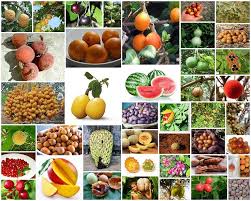
Fruits and vegetables provide a range of compounds, many of which have multiple roles, contributing to immediate good health and protection against diseases that develop over time, such as cancer, heart conditions, stroke, hypertension, birth defects, cataracts, and diabetes.
Fruits and vegetables are widely recognized as excellent sources of nutrients, including minerals and vitamins, and serve as valuable supplements for food in a world faced with scarcity.
West Africa is endowed with a wide array of fruits, including pineapple, bananas, pawpaw, mango, cashew, oranges, lemon, and African bush mango, as well as numerous vegetables. The previous article discussed foods such as yam, cassava, and potatoes, which belong to the roots and tubers class.
This article focuses on the fruits and vegetables food class, highlighting their structure, nutritional composition, and food applications. Examples of foods in this class include oranges, guava, tomatoes, and green leafy vegetables.
Structural Characteristics of Mango Fruit
West Africa is blessed with a wide range of fruits, such as mango, pawpaw, pineapple, and oranges. For the purpose of discussing fruit structure, this article examines mango and pineapple. The mango fruit is roughly oval in shape, with uneven sides.
It is a drupe, with an outer flesh surrounding a stone. The flesh is soft and bright yellow-orange in color. The skin of the fruit is yellow-green to red. In mango, the pericarp is well differentiated into an outer thin epicarp, a middle fleshy edible mesocarp, and an inner stony and hard endocarp.
Read Also: Things to do to make your catfish grow faster within a short period of time
Structural Characteristics of Pineapple Fruit
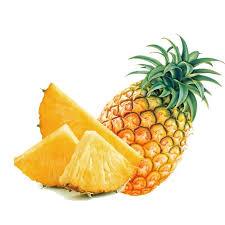
Pineapple is the third most commercially important tropical fruit. The pineapple fruit is a compound fruit that develops through the fusion of many individual fruitlets. These small fleshy fruitlets are fused together around the fibrous central stem, referred to as the core.
Each fruitlet develops from a hermaphrodite flower, which is self-sterile although it has both male and female parts. Pineapple (Ananas comosus L., Family Bromeliaceae) is an important tropical fruit consumed in many parts of the world as a fresh and processed product. In recent years, it has become one of the most demanded exotic fruits.
Nutritional Composition of Tropical Fruits
Fruits are rich in vitamins, especially vitamin C, and minerals. The main sugars in fruits are glucose, fructose, and sucrose. Some fruits are low in carbohydrates and, consequently, low in calories. However, higher carbohydrate values have been reported in fruits like bananas.
The protein content of fruits is low. The moisture content of fresh fruits at maturity is generally high. Moisture content determines how fresh the fruits were at harvest or how long they have been stored before analysis. Fruits and vegetables, as sources of dietary fiber, normalize blood glucose levels.
Fiber slows the rate at which food leaves the stomach and delays the absorption of glucose following a meal. Fibers also increase insulin sensitivity. As a result, high intake of fiber plays a role in the prevention and treatment of type 2 diabetes.
The main contribution of fruits and their products to nutrition is their supply of vitamins, especially ascorbic acid (vitamin C). Guava is among the richest sources of vitamin C, while bananas are rich in potassium.
The table below shows the nutritional composition of some tropical fruits per 100g:
| Fruit | Moisture (g) | Energy (Kcal) | Protein (g) | Fat (g) | Carbohydrates (g) | Fiber (g) | Ash (g) | Vitamin C (mg) | Vitamin A (Mcg RE) | Potassium (mg) | Magnesium (mg) | Calcium (mg) | Iron (mg) |
|---|---|---|---|---|---|---|---|---|---|---|---|---|---|
| Guava | 86.10 | 51 | 0.82 | 0.60 | 11.88 | 5.4 | 0.60 | 183.5 | 792 | 284 | 10 | 20 | 0.31 |
| Pineapple | 86.50 | 49 | 0.39 | 12.39 | 1.20 | 1.2 | 0.29 | 15.4 | 23 | 113 | 14 | 7 | 0.37 |
| Mango | 81.71 | 65 | 0.51 | 0.27 | 17.00 | 1.8 | 0.5 | 27.7 | 389 | 156 | 9 | 10 | 0.13 |
| Oranges | 86.75 | 47 | 0.94 | 0.12 | 11.75 | 2.4 | 0.44 | 53.2 | 205 | 181 | 10 | 40 | 0.10 |
| Avocado | 74.27 | 161 | 1.98 | 15.32 | 7.39 | 5.0 | 1.04 | 7.9 | 612 | 599 | 39 | 11 | – |
Nutritional Composition of Green Leafy Vegetables
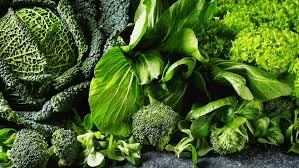
Green leafy vegetables constitute an indispensable component of the human diet in Africa, particularly in West Africa. They are generally consumed as cooked complements to major staples like cassava, cocoyam, guinea corn, yam, maize, millet, rice, unripe plantain, and banana.
Most meals based on these staples are considered incomplete without a generous serving of cooked vegetables. These vegetables grow abundantly in the rainy season when they are more readily available than in the dry season. Numerous green leafy vegetables in the Nigerian ecosystem can provide adequate quantities of micronutrients in the diet.
1. Nutritional Composition of Fluted Pumpkin and Water Leaf
- i. Fluted Pumpkin (Telfairia occidentalis): The leaves of this crop are important food vegetables for many people, especially in the mid-western parts of Nigeria. The local names include “Ugu” in Igbo and “Iroko” in Yoruba. The leaves are highly cherished as cooked vegetables, and the seeds are used in soups.
The leaf contains (per 100g) 30.5% dry weight, 2.5% crude protein, 3.0 ± 0.15% crude lipid, 8.3 ± 0.50% crude fiber, and 8.4 ± 0.50% total ash. The potassium, calcium, magnesium, and iron contents of ash are 594, 144, 100, and 120 mg/100g dry weight, respectively.
ii. Water Leaf: Water leaf vegetables are rich sources of vitamins A and C and minerals such as iron, calcium, phosphorus, sodium, and potassium. They contain a high amount of zinc, important for many enzyme functions and keeping the skin fresh.
2. Nutritional Composition of Bitter Leaf and Other West African Vegetables
Bitter leaf has high protein (33.3%), fat (2.1%), crude fiber (29.2%), ash (11.7%), and minerals (sodium, calcium, magnesium, zinc, and iron), phytate (10.54 mg/100g), and tannin (0.6%) content. The table below shows the nutritional content of common West African vegetables per 100g:
| Vegetables | Moisture (g) | Carbohydrate (g) | Protein (g) | Fat (g) | Fiber (g) | Ash (g) | Vitamin C (mg) |
|---|---|---|---|---|---|---|---|
| Amaranthus hybridus | 84.0 | 7.0 | 4.6 | 0.2 | 1.8 | 2.9 | 40.5 |
| Bitter leaf | 21.6 | 64.4 | 22.2 | 2.7 | 10.9 | 10.0 | 34.5 |
| Indian spinach (Basella alba) | 93.4 | 2.9 | 1.6 | 0.3 | 0.6 | 11.0 | 62.0 |
| Water leaf | 90.8 | 4.4 | 2.4 | 0.4 | 1.4 | 2.0 | 280.0 |
| Fluted pumpkin | 86.0 | Trace | 4.3 | 0.8 | 2.3 | 6.0 | 340.0 |
Structure and Nutritional Composition of Tomatoes
Tomato (Lycopersicon esculentum Mill.) is one of the most important nutritious vegetable crops consumed by humans. It belongs to the family Solanaceae and is cultivated in almost all home gardens and in the field due to its adaptability to a wide range of soils.
It is widely cultivated in tropical, subtropical, and temperate climates and ranks third in terms of world vegetable production. It is rich in vitamin A, vitamin C, carbohydrates, proteins, fats, fibers, and potassium. The seeds are located inside the locular cavities and are enclosed in gelatinous membranes. Tomatoes can be either bilocular or multilocular.
Most cultivated varieties, except cherry tomatoes, have four or five locules. The locules are surrounded by the pericarp, which includes the inner wall (columella), the radial wall (septa), and the outer wall.
The pericarp and the placenta comprise the fleshy tissue of the tomato. Tomatoes are rich in vitamin A and potassium and contain lycopene, an antioxidant with numerous health benefits.
Read Also: The Best Source of Water for Fishes in Concrete Ponds
Structure and Nutritional Composition of Cucumber, Carrot, and Eggplant
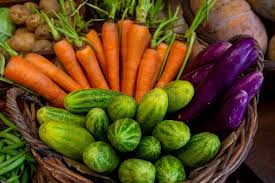
1. Nutritional Composition of Cucumber
Cucumber (Cucumis sativus) is approximately 96% water and contains minerals, vitamins, provitamin A, 11% potassium, 2% calcium, and 10% sodium chloride. The chemical composition is detailed in referenced sources (Butnariu and Butu, 2014).
2. Nutritional Composition of Carrot
Carrot (Daucus carota) contains the highest amount of β-carotene among all vegetables. Its consumption increases resistance to ultraviolet rays, giving the skin a smooth and healthy coloring. Carrots contain vitamins, levulose, dextrose, salts, minerals (iron up to 7% and potassium 235 mg%), carotene, asparagine, daucarine, and pectin. The nutritional composition per 100g is as follows:
| Component | Value/100g (unit) | Phytochemicals | Value/100g (unit) |
|---|---|---|---|
| Energy | 41 kcal | Vitamin C | 5.9 mg |
| Water | 88.29 g | Thiamin | 0.066 mg |
| Protein | 0.93 g | Riboflavin | 0.058 mg |
| Total lipids (fat) | 0.24 g | Niacin | 0.983 mg |
| Carbohydrate | 9.58 g | Vitamin B6 | 19 µg |
| Total dietary fiber | 2.8 g | Folate, DFE | 19 µg |
| Sugar, total | 4.74 g | Vitamin B12 | 0.00 µg |
| Calcium | 33 mg | Vitamin A, RAE | 835 µg |
| Iron | 0.30 mg | Vitamin A, IU | 16706 IU |
| Magnesium | 12 mg | Vitamin E | 0.66 mg |
| Phosphorus | 35 mg | Vitamin D | 0.0 µg |
| Potassium | 320 mg | Vitamin D | 0 IU |
| Sodium | 69 mg | Vitamin K | 13.2 µg |
| Zinc | 0.24 mg |
3. Nutritional Composition of Eggplant
Eggplant (Solanum melongena) contains starch, minerals, and vitamins. A serving of 100g eggplant provides 20 kcal. The chemical composition is detailed in referenced sources (Butnariu and Butu, 2014).
Food Applications of Fruits and Vegetables
Many fruits and vegetables, such as carrots, tomatoes, eggplant, and eggplant leaves, are eaten raw. Fruits and vegetables can also be cooked before consumption. Vegetables are added to many dishes as sources of vitamins and to improve visual appeal through garnishing.
Fruits and vegetables are incorporated into salads and used to produce juices and drinks, such as orange juice and ugu drink. Fruits serve as natural flavorants in drinks, cakes, and other products.
They are also used to make jams and other preserves. Pectin, extracted from fruit peels, is an important food thickening and gelling agent.
West Africa is endowed with a variety of fruits and vegetables, which are important sources of vitamins and minerals. Common fruits include mango, pineapple, pawpaw, guava, and oranges, while common vegetables include fluted pumpkin leaves, spinach, carrots, and tomatoes.
Fruits and vegetables contain high amounts of water and are low in carbohydrates and proteins. Tomatoes contain an important phytochemical called lycopene, which offers numerous health benefits, such as reducing the risk of developing chronic illnesses.
Fruits and vegetables provide significant amounts of vitamins and minerals but low protein and carbohydrate content. They are used in the preparation of soups and sauces, salads, and many are consumed raw or cooked.
Fruits and vegetables are utilized in the production of juices, beverages, jams, and preserves. Pectin, an important food thickener, is extracted from fruit peels.
Do you have any questions, suggestions, or contributions? If so, please feel free to use the comment box below to share your thoughts. We also encourage you to kindly share this information with others who might benefit from it. Since we can’t reach everyone at once, we truly appreciate your help in spreading the word. Thank you so much for your support and for sharing!