


Deterioration is a continuous process that begins the moment an animal is slaughtered or a plant is harvested and continues until the item is no longer recognizable as food or is reduced to dust.
Some techniques used to slow down these continuous changes include freezing, drying, blanching, the use of additives, and canning. This article discusses the concept of food deterioration, its major causes, and effective techniques to curb it.
Understanding Food Deterioration
1. Definition of Food Deterioration
Food deterioration is defined as a series of continuous degradative changes occurring in a food item that may affect its wholesomeness, result in a reduction of its quality, and/or alter its serviceability.
Some deterioration occurs through the spontaneous breakdown of complex organic molecules. Food can also be consumed by other animals, notably certain insects and rodents. However, most spoilage of food meant for human consumption is caused by microorganisms, which effectively compete with humans for limited and valuable food resources.
To prevent microbe-caused food spoilage, two main strategies are employed:
- Obstructing colonization by reducing access to susceptible foodstuffs.
- Inhibiting population growth and limiting population size by creating an unfavorable environment.
Because microbes are small, have enormous populations, and often disperse as resistant air-, water-, or soilborne spores, they rapidly colonize unprotected foodstuffs. Colonization can be retarded by covering or isolating foods, but it can be prevented only by sealing sterile food in an impermeable container.
For example, many fruits, nuts, and bird eggs are encased in relatively impermeable skins, shells, or waxy layers that resist microbial invasion. This is the principle behind canning.
The alternative, more commonly employed strategy is to retard spoilage by creating conditions that inhibit the growth or limit the size of microbial populations. Washing food, for example, removes some microbes from the surface, and techniques such as pasteurization and irradiation kill microbes.
Read Also: Sheep and Goat Housing Complete Guide
Major Causes of Food Deterioration
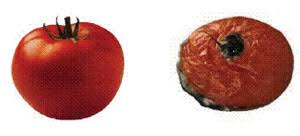
Food deterioration is caused by six major factors:
- Microorganisms
- Action of enzymes
- Chemical reactions
- Physical changes
- Insects
- Rodents
These causes are not isolated in nature. Bacteria, insects, and light, for example, can all operate simultaneously to deteriorate food in the field or in a warehouse. Similarly, factors such as high temperature, moisture, and air affect the multiplication and activities of bacteria, as well as the chemical and enzymatic activities of the food.
At any one time, many forms of deterioration may be in progress, depending on the food and environmental conditions. Total food preservation, an ideal that can only be approached, requires eliminating or minimizing all these causes that may affect a susceptible food.
1. Deterioration by Microorganisms
The microorganisms primarily involved in food deterioration are bacteria, molds, and yeasts. There are thousands of genera and species of microorganisms, with several hundred associated in one way or another with food products.
Not all cause food spoilage, and many types are used in preserving foods, such as lactic-acid-producing organisms in cheese, sauerkraut, and some types of sausage. Other microorganisms are used for alcohol production, as in wine or beer making, or for flavor production in other foods.
i. Bacteria
Bacteria are unicellular microorganisms with various forms, although three principal shapes predominate: spherical (cocci), rod-shaped (bacilli), and spiral (spirilla). Some bacteria produce spores that are remarkably resistant to heat, chemicals, and other adverse conditions. Bacterial spores are far more resistant than yeast or mold spores and more resistant to most processing conditions than natural food enzymes. All bacteria associated with foods are small.
ii. Molds
Molds are larger and more complex in structure than bacteria and yeast. They grow by a network of hair-like fibers called mycelia and produce fruiting bodies that generate mold spores referred to as conidia. The blackness of bread mold and the blue-colored veins of blue cheese are due to the conidia, while beneath the fruiting heads, the hair-like mycelia anchor the mold to the food.
iii. Yeasts
Yeasts are somewhat larger than bacteria, approximately 20 microns in individual cell length and about half this size in diameter, but smaller than molds. Most yeasts are spherical or ellipsoidal in shape. Yeasts are associated with nearly all types of food products. Foods such as fresh vegetables, meat, poultry, and cheese often contain yeasts, but in these foods, bacteria outgrow the yeasts.
2. Action of Food Enzymes
The second major cause of food deterioration is the action of food enzymes. Enzymes are organic catalysts produced by the cells of animals, plants, or bacteria. Microorganisms possess enzymes that produce fermentation, rancidity, and putrefaction of foods. Likewise, uninfected food plants and animals have their own enzyme complement, the activity of which largely survives harvest and slaughter.
Unless these enzymes are inactivated by heat, chemicals, or other means, they continue to catalyze chemical reactions within foods. Some of these reactions, if not allowed to go too far, are desirable, such as the continued ripening of tomatoes after picking and the natural tenderizing of beef during aging. However, ripening and tenderizing beyond an optimum point become food deterioration.
The weakened tissues become susceptible to microbial infections, and deterioration reaches the point of rotting. This can occur in the field, commissary, or home refrigerator, given sufficient time.
3.Chemical Reactions and Physical Changes as Causes of Deterioration
i. Chemical Reactions
Chemical reactions, excluding the action of enzymes, are another major cause of food deterioration. These reactions are sometimes complex and subtle, responsible for deteriorative changes such as oxidation, color changes, reactions between a food container and its contents, and the coagulation of proteins.
ii. Physical Changes: Low Temperature
Physical changes may not cause a food to become spoiled, but they result in deteriorative changes that may render the food item unsuitable for its intended use. Some physical changes include:
a. Freezing and Undesirable Changes: Freezing can cause undesirable changes, such as the destruction of emulsions and texture. For example, freezing may cause emulsified products like salad dressing and mayonnaise to lose their emulsion, resulting in the separation of fat and water into distinct layers. Fruits and vegetables that are frozen and then thawed will have their texture disrupted.
b. Cold Damage: Cold damage to foods does not necessarily require freezing. Many fruits and vegetables have optimum temperature requirements after harvest.
When held at common refrigeration temperatures of about 41ºF (5ºC), several fruits and vegetables, such as bananas, lemons, squash, and tomatoes, are weakened or killed, leading to deteriorative processes like off-color development, surface pitting, and various forms of decay.
These products should be held at temperatures no lower than 50ºF (10ºC) for maximum quality retention, providing an exception to the generalization that cold storage preserves all foods.
iii. Physical Changes: High Temperature
Within a moderate temperature range of 50º–100ºF (10º–38ºC), for every 18ºF (10ºC) rise in temperature, the rate of chemical reactions approximately doubles. This includes enzymatic and nonenzymatic reactions. Excessive heat can denature proteins, break emulsions, dry out foods by removing moisture, and destroy vitamins.
a. Effect on Vegetables: Excessive heat in green vegetables causes cell walls and membranes to lose integrity, releasing acids and enzymes. This results in a soft texture, off-colors, and off-flavors.
b. Effect on Muscle Tissue: Excessive heat denatures proteins in muscle tissue, causing them to clump together and inactivating enzymes. This leads to toughening of texture, loss of water-holding capacity, cooked or caramel flavors, and off-colors.
Physical Changes: Dehydration
Dehydration, defined as the loss of water from a food product, is another form of physical change causing deterioration. Foods, especially fresh, chilled, and frozen, are susceptible to dehydration. Signs include dryness or shriveling on the surface and the development of off-colors, usually a darkening effect.
iv. Physical Changes: Mechanical Damage
Mechanical damage affects the appearance of food and makes it more susceptible to other forms of deterioration. Damaged areas serve as entry points for microorganisms. Additionally, mechanical abrasion destroys cell walls, liberating inherent enzymes that initiate autolysis, leading to softening of texture, off-colors, and off-flavors.
v. Insects and Rodents
Insects are particularly destructive to cereal grains, fruits, and vegetables. When insects eat, they damage the food and create openings for bacteria, yeast, and mold infections. For example, a small insect hole in a melon can lead to total decay from bacterial invasion.
Rodents consume food and contaminate it with filth, such as urine and droppings, which may harbor disease-causing bacteria like those responsible for salmonellosis, leptospirosis, and murine typhus. One rat fecal dropping can contain several million bacteria, and particles from dried or crushed droppings can be blown or carried into food.
Control of Insects and Rodents: Insects and rodents can be effectively controlled by:
- Pest-proofing buildings to keep pests out.
- Depriving pests of food and shelter through good housekeeping practices.
- Using appropriate control measures to exterminate pests.
Read Also: Guide On How To Increase Goats Milk
Techniques to Curb Food Deterioration

Spoilage organisms are not originally an integral part of foods but are widely present in water, soil, air, and other animals. Healthy living plants and animals can ward off bacteria and fungi, but once slaughtered or harvested, their defenses deteriorate, making their tissues susceptible to spoilage microbes.
Good manufacturing practices with strict attention to sanitation and hygiene can prevent colonization by many, but not all, microbes and are the most important first step in delaying the spoilage process. Microbes require specific conditions for growth, and managing the environment of foods can delay spoilage. Key techniques include:
1. Control of Temperature and Moisture
Many microbes grow slowly or not at all at low temperatures, and refrigeration can prolong the lag phase and decrease the growth rate of microbes. Keeping foods such as grains and cereal products dry reduces water activity, which many microbes require for growth, thus helping to preserve them.
2. Control of Oxygen
Some microbes require oxygen, others are killed by it, and some are facultative. Managing the atmosphere during storage in packaging can retard or prevent the growth of some microbes. Several types of modified atmosphere packaging (MAP) have been developed to retard the growth of pathogenic and spoilage organisms.
3. Freezing
Freezing slows microbial growth and enzymatic activity by lowering the temperature to levels where most microbes cannot thrive, preserving food quality for extended periods.
4. Drying
Drying reduces water activity in foods, creating an environment unsuitable for microbial growth. This technique is commonly used for grains, fruits, and vegetables.
5. Blanching
Blanching involves briefly heating foods, typically vegetables, to inactivate enzymes that cause deterioration. This helps maintain color, texture, and nutritional value.
6. Use of Additives
Food additives, such as preservatives, can inhibit microbial growth or chemical reactions. Examples include antioxidants to prevent oxidation and antimicrobial agents to control spoilage organisms.
7. Canning
Canning involves sealing food in impermeable containers and heat-processing it to sterilize the contents, preventing microbial colonization and extending shelf life.
By employing these techniques, food deterioration can be significantly delayed, ensuring food remains safe, wholesome, and suitable for consumption.
Do you have any questions, suggestions, or contributions? If so, please feel free to use the comment box below to share your thoughts. We also encourage you to kindly share this information with others who might benefit from it. Since we can’t reach everyone at once, we truly appreciate your help in spreading the word. Thank you so much for your support and for sharing!