



Eating a banana at night can be a simple, natural way to support better sleep and overall relaxation. This popular fruit is packed with key nutrients like potassium, magnesium, tryptophan, and fiber, which work together to promote restful sleep, ease muscle tension, and stabilize mood.
Rich in potassium and magnesium, bananas help relax muscles, reduce nighttime cramps, and calm the nervous system. They contain tryptophan, an amino acid that the body converts into serotonin and melatonin—hormones essential for mood regulation and the sleep-wake cycle.
The natural carbohydrates in bananas provide a gentle energy source without heaviness, curbing late-night hunger while being easy to digest. Fiber aids overnight digestion, prevents discomfort, and supports gut health.
Bananas also contribute to heart health by helping regulate blood pressure through potassium, and their low-calorie nature makes them an ideal bedtime snack for weight management.
Enjoy one medium banana about 30-60 minutes before bed for optimal benefits.
Nighttime Banana Consumption
1. Natural Sleep Aid: Magnesium and potassium promote relaxation and prepare the body for sleep.
2. Low-Calorie Snack: Around 100 calories per medium banana—satisfying without heaviness.
3. Easy Digestion: Gentle on the stomach, avoiding disruptions during rest.
Benefits of Magnesium in Bananas for Relaxation
1. Muscle Relaxation: Acts as a natural relaxant to ease tension and prevent cramps.
2. Nervous System Support: Reduces restlessness and anxiety for calmer nights.
3. Sleep-Inducing Properties: Helps regulate neurotransmitters for easier sleep onset.
Read Also: 10 Medicinal Health Benefits of Cat’s Whiskers (Orthosiphon stamineus)
Boosting Serotonin Levels for Better Sleep
1. Tryptophan Conversion: Turns into serotonin for calmness and happiness.
2. Serotonin-Melatonin Link: Supports melatonin production to regulate sleep cycles.
3. Mood Stabilization: Lowers stress and anxiety for peaceful sleep.
Promoting Digestive Health Overnight
1. Fiber-Rich Content: Soluble and insoluble fiber aids digestion and prevents constipation.
2. Prebiotic Benefits: Feeds good gut bacteria for better gut health.
3. Gentle on Stomach: Soothes discomfort, acid reflux, and promotes restful digestion.
4. Balanced Gut Flora: Maintains healthy microbiome essential for well-being.
5. Reducing Acid Reflux: Natural antacid effect minimizes nighttime disruptions.
Regulating Blood Pressure During Sleep
1. High Potassium Content: Balances sodium to keep blood pressure stable.
2. Reduced Hypertension Risk: Supports healthy circulation.
3. Relaxing Blood Vessels: Improves flow for natural nighttime relaxation.
Supporting Muscle Recovery While You Rest
1. Magnesium for Muscle Relaxation: Reduces cramps and aids recovery.
2. Electrolyte Balance: Potassium maintains proper muscle function.
3. Reducing Muscle Soreness: Helps faster recovery after activity.
Managing Cravings and Late-Night Snacking
1. Stabilizing Blood Sugar Levels: Slow-release sugars prevent crashes.
2. Promoting Fullness: Fiber increases satiety to curb hunger.
3. Serotonin Boost: Reduces emotional eating.
4. Satisfying Sweet Cravings: Natural sweetness without excess calories.
Bananas as a Low-Calorie Nighttime Snack
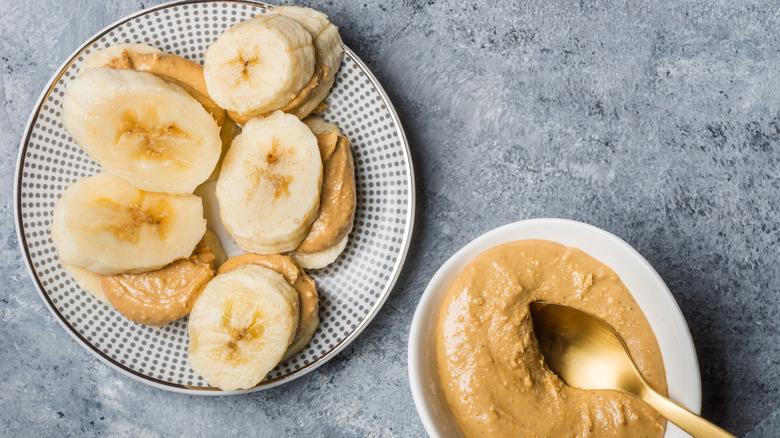
1. Low in Calories: Nutrient-dense with minimal calories.
2. Nutrient-Dense: Provides vitamins B6, C, potassium, and more.
3. Easy to Digest: No discomfort for peaceful rest.
4. Portable and Convenient: Ready-to-eat anytime.
Scientific Evidence and Case Studies on Benefits of Eating Banana at Night
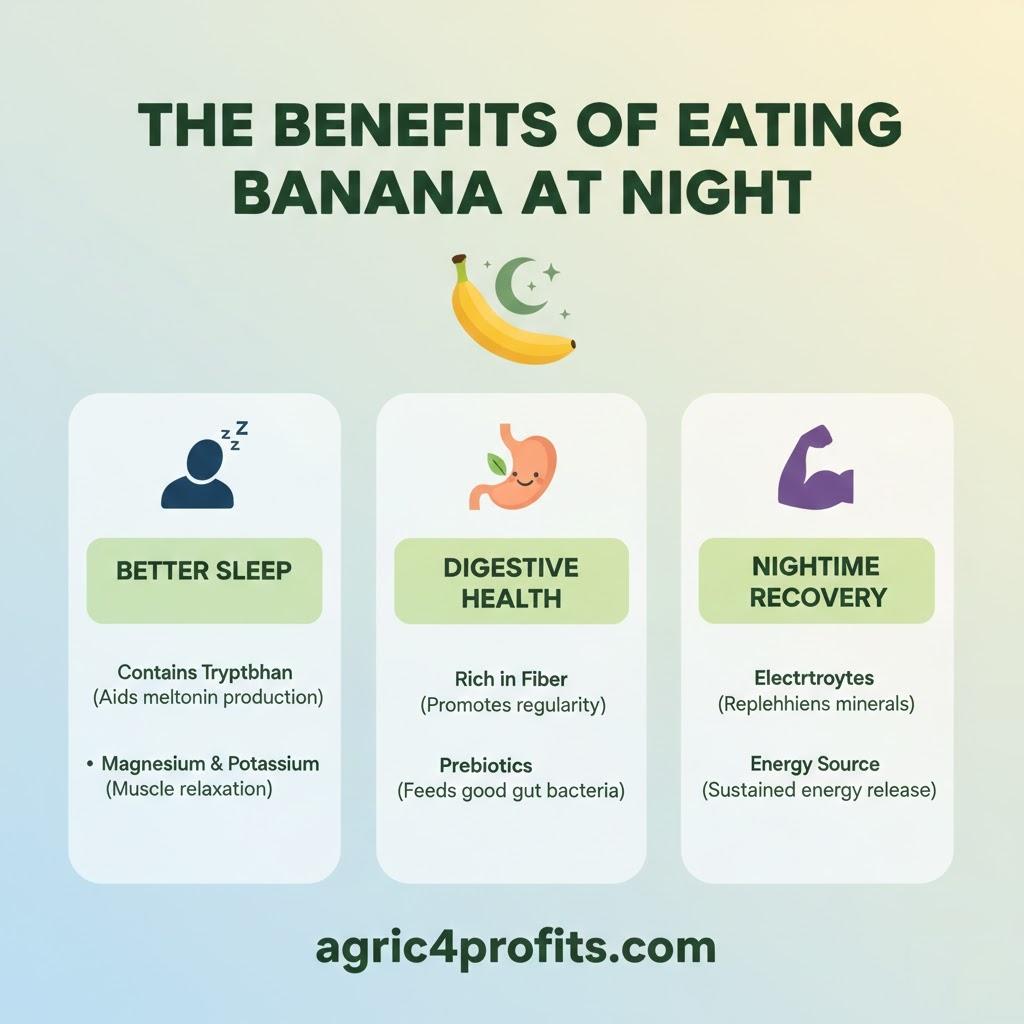
1. Sleep Quality Improvement: Magnesium and tryptophan support melatonin production and relaxation.
2. Muscle Cramp Reduction: Potassium and magnesium ease nighttime cramps.
3. Digestive Support: Fiber promotes gut health and prevents overnight discomfort.
4. Blood Sugar Stability: Moderate GI prevents fluctuations that disrupt sleep.
5. Stress and Mood Benefits: Serotonin boost from tryptophan reduces anxiety.
Summary of The Benefits of Eating Banana at Night
| Aspect | Key Details |
|---|---|
| Key Nutrients | Potassium, magnesium, tryptophan, fiber, vitamin B6, vitamin C |
| Primary Benefits | Better sleep quality, muscle relaxation, reduced cramps, mood stabilization, digestive aid |
| Sleep Mechanisms | Tryptophan → serotonin → melatonin; magnesium relaxes nerves/muscles |
| Other Advantages | Low-calorie snack, curbs hunger, stabilizes blood sugar, supports heart health |
| Best Time | 30-60 minutes before bed |
| Considerations | Choose ripe bananas; pair with nut butter if desired for added protein |
| Overall Recommendation | Simple, natural bedtime snack for improved rest and recovery |
Frequently Asked Questions
1. Why do bananas help with sleep when eaten at night?
Bananas contain magnesium for muscle relaxation and tryptophan, which boosts serotonin and melatonin for better sleep regulation.
2. How does potassium in bananas benefit nighttime rest?
Potassium relaxes muscles, prevents cramps, and helps regulate blood pressure for calmer sleep.
3. Can eating a banana at night improve mood?
Yes, tryptophan converts to serotonin, which stabilizes mood and reduces stress for easier relaxation.
4. Are bananas good for digestion before bed?
Yes, their fiber supports digestion, prevents constipation, and soothes the stomach without causing discomfort.
5. Do bananas help prevent nighttime muscle cramps?
Yes, high potassium and magnesium levels relax muscles and reduce cramp occurrences.
6. Is a banana a good low-calorie bedtime snack?
Absolutely—a medium banana has about 100 calories, is nutrient-dense, and satisfies hunger without heaviness.
7. How do bananas stabilize blood sugar overnight?
Their moderate glycemic index and fiber allow slow sugar release, preventing spikes or crashes.
8. Can bananas reduce stress before sleep?
Yes, magnesium calms the nervous system, and serotonin from tryptophan lowers cortisol and anxiety.
9. Should I eat a banana alone or with something else?
Alone works well, but pairing with almond butter adds protein for extra satiety without disrupting benefits.
10. Are there any downsides to eating bananas at night?
Generally safe, but very ripe ones may cause slight digestive upset in sensitive individuals—opt for moderately ripe.
Do you have any questions, suggestions, or contributions? If so, please feel free to use the comment box below to share your thoughts. We also encourage you to kindly share this information with others who might benefit from it. Since we can’t reach everyone at once, we truly appreciate your help in spreading the word. Thank you very much for your support and for sharing!
Disclaimer: This article is for educational and informational purposes only. The health benefits described are based on scientific research and traditional knowledge. They ayre not a substitute for professional medical advice, diagnosis, or treatment. Always consult a healthcare professional before using any herb or natural remedy for medical purposes.
Read Also: Do Landfills Decompose? A Closer Look at the Process