


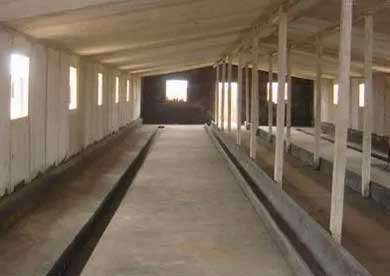
Today, we are going to talk about the ideal number of blocks to raise above ground level when constructing a poultry pen house. This is a question many farmers ask, and it matters more than most people think.
A lot of farmers make the mistake of raising blocks too high above the ground. When this happens, birds lose access to proper ventilation, and poor airflow inside a poultry house is a serious problem. It affects the health of the birds, their comfort, and ultimately their productivity.
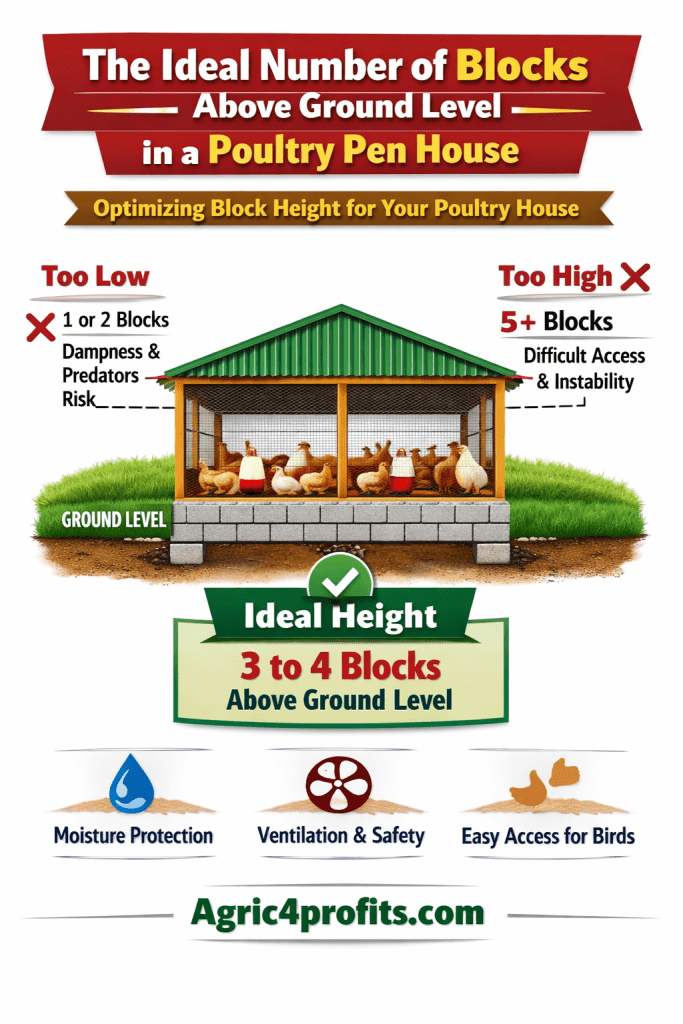
The ideal number of courses of blocks to raise above ground level is either 1 or 2 blocks at most. This height gives the birds access to good ventilation without exposing them to unnecessary risks. As for how many blocks need to go underground, that depends on the topography of the land. Some land is flat, some is uneven, and the depth of the foundation will vary based on what the ground demands.
Getting the structure of your poultry house right from the start saves you a lot of problems later. The size, orientation, walls, roof, floor, and even where you hang your light bulbs all play a role in how well the house functions. This guide walks you through every key aspect of poultry house construction and orientation so you can build something that works well for your birds and for your farm.
Understanding the type of house you need is also the first step. Different categories of birds require different housing setups. A broiler house is not the same as a layer house, and a breeder house has its own requirements. Knowing which house fits your operation helps you plan and build more effectively.
Below is a breakdown of the different types of poultry houses and the key orientation factors every farmer should know before breaking ground.
1. Different Types of Poultry Houses
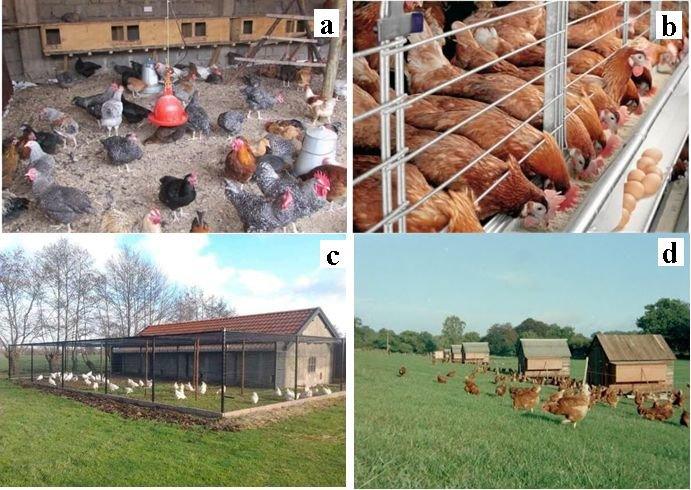
Not all poultry houses serve the same purpose. The type of house you build should match the age, category, and purpose of the birds you intend to raise. Here is a look at the main types:
i. Brooder/chick house: It is used to brood and rear egg-type chicks from 0 to 8 weeks of age.
ii. Grower house: It is used to grow egg-type birds from 9 to 18 weeks of age.
iii. Brooders cum grower house: Here, the birds are reared from 0 to 18 weeks of age, covering the entire brooding and growing period of egg-type chickens.
iv. Layer house: In which birds over 18 weeks of age are reared, usually up to 72 weeks of age.
v. Broiler house: In which broilers are reared up to 6 weeks of age.
vi. Breeder house: In which both male and female breeders are maintained at the appropriate sex ratio.
vii. Environmentally controlled (EC) house: In which the entire environment is managed in such a way that conditions remain optimal for the birds’ growth.
2. Poultry House Orientation
Getting the orientation of your poultry house right is just as important as the materials you use. A well-oriented house makes ventilation easier, reduces heat stress, and gives your birds a more stable living environment. The sections below cover each key orientation factor in detail.
A. Direction
The poultry house should be positioned so that the long axis runs in an east-west direction. This prevents direct sunlight from hitting the birds throughout the day and helps keep the interior cooler, especially during hot seasons.
B. Size
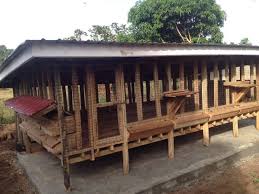
Each broiler requires one square foot of floor space, while a layer requires two square feet of floor space under a deep-litter system of rearing. The size of the house depends on the number of birds you plan to raise. Always calculate your bird numbers first before deciding on the dimensions.
C. Length
The length of the house can be of any extent. The number of birds to be reared and the availability of land will determine how long your poultry house needs to be. There is no fixed maximum, but the layout should still allow for easy management and airflow.
Read Also: How to prevent Rats from invading your Poultry House
D. Width
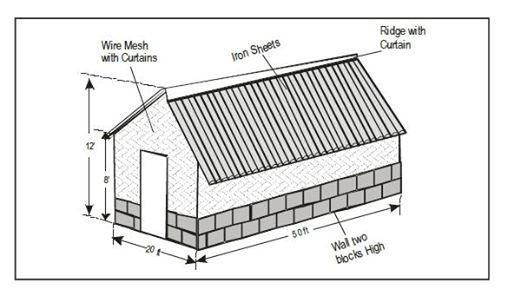
Open-sided poultry houses in tropical countries should have a width of not more than 22 to 25 feet. This allows for proper ventilation and aeration, especially at the mid-portion of the house. Sheds wider than this will not provide adequate airflow during hot weather.
If the width of the shed exceeds 25 feet, ridge ventilation at the middle line of the roof top with a proper overhang becomes necessary. Hot air and harmful gases that are lighter than air naturally rise and escape through ridge ventilation.
In environmentally controlled poultry houses, the width can be 40 feet or more since ventilation is managed using exhaust fans.
E. Height
The height of the sides, measured from the foundation to the roof line, should be 6 to 7 feet at the eaves and 10 to 12 feet at the centre. In cage houses, the height is determined by the type of cage arrangement used, whether 3-tier or 4-tier.
F. Foundation
A good foundation is essential to prevent water from seeping into the poultry shed. The foundation should be made of concrete, with 1 to 1.5 feet below the surface and 1 to 1.5 feet above the ground level. A solid foundation protects the entire structure and keeps the interior dry.
G. Floor
The floor should be made of concrete with a rat-proof design and must be free from dampness at all times. The floor should also extend 1.5 feet outside the wall on all sides. This extension helps prevent rats and snakes from entering the house through the base of the walls.
H. Doors
The door must open outward in the case of deep-litter poultry houses. The recommended door size is 6 x 2.5 feet. A foot bath should be constructed at the entry point and kept filled with a disinfectant. This helps control the spread of disease from outside the house.
I. Side Walls
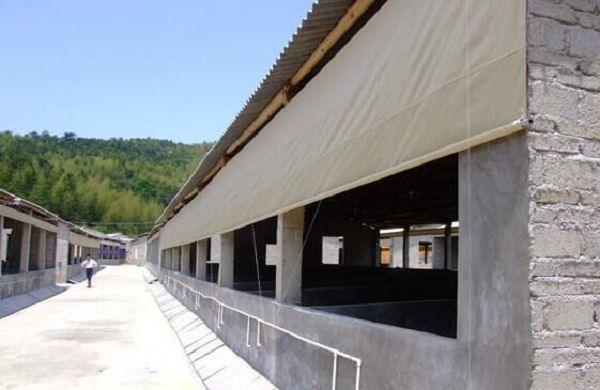
The side wall should be 1 to 1.5 feet in height, roughly at the level of the birds’ backs. This wall protects the birds during rainy weather and cold conditions while still allowing sufficient ventilation. In cage houses, no side wall is needed.
J. Roof
The roof of the poultry house can be thatched, tiled, asbestos, or concrete, depending on the budget and available materials. Common roof types include shed, gable, half-monitor, full-monitor, flat concrete, gambrel, and gothic. The gable type is mostly preferred in tropical countries like India because it handles rain and heat well.
K. Overhang
The overhang of the roof should not be less than 3.5 feet. This measurement is important because it prevents rainwater from entering the shed during heavy rainfall, keeping the interior dry and the litter in good condition.
L. Lighting
Lights should be placed 7 to 8 feet above the ground level and hung from the ceiling. If incandescent bulbs are used, the spacing between two bulbs should be 10 feet. For fluorescent lights, the interval between fittings should be 15 feet. Proper lighting supports egg production in layers and overall bird activity.
Summary on Poultry House Construction and Orientation
| Topic | Key Points |
|---|---|
| Blocks Above Ground | Raise only 1 to 2 courses of blocks above ground level to allow proper ventilation for the birds. |
| Brooder/Chick House | Used for egg-type chicks from 0 to 8 weeks of age. |
| Grower House | Used for egg-type birds from 9 to 18 weeks of age. |
| Layer House | Houses birds over 18 weeks, usually up to 72 weeks of age. |
| Broiler House | Used for broilers up to 6 weeks of age. |
| EC House | Fully controlled environment optimized for bird growth. |
| Direction | Long axis should run east-west to prevent direct sunlight on birds. |
| Width | Maximum 22 to 25 feet for open-sided houses; up to 40 feet for EC houses. |
| Height | 6 to 7 feet at the eaves, 10 to 12 feet at the centre. |
| Foundation | Concrete foundation, 1 to 1.5 feet below and above ground level. |
| Floor | Concrete, rat-proof, damp-free, extended 1.5 feet outside the walls. |
| Doors | Open outward, size 6 x 2.5 feet, with a disinfectant foot bath at entry. |
| Side Walls | 1 to 1.5 feet high, at bird back level, for protection and ventilation. |
| Roof | Thatched, tiled, asbestos, or concrete. Gable type preferred in tropical regions. |
| Overhang | Minimum 3.5 feet to keep rainwater out of the shed. |
| Lighting | Hung 7 to 8 feet high; 10 feet apart for bulbs, 15 feet apart for fluorescent lights. |
Frequently Asked Questions About Poultry House Construction and Orientation
1. How many courses of blocks should be raised above ground level in a poultry house?
The ideal number is 1 to 2 courses of blocks above ground level. Raising more than this can block ventilation and affect the health and comfort of the birds inside the house.
2. Why does the direction of a poultry house matter?
The long axis of the house should run east-west. This orientation prevents direct sunlight from hitting the birds during the hottest parts of the day, which helps reduce heat stress and keeps the interior temperature more stable.
3. How much floor space does each bird need in a poultry house?
Each broiler needs at least one square foot of floor space. A layer of birds needs two square feet under a deep-litter system. Always calculate your flock size before deciding on the dimensions of your house.
4. What is the maximum recommended width for an open-sided poultry house?
The maximum recommended width is 22 to 25 feet for open-sided houses in tropical countries. Wider sheds do not get adequate natural ventilation during hot weather. If the house must exceed 25 feet, ridge ventilation at the rooftop becomes necessary.
5. What type of roof is best for a poultry house in a tropical country?
The gable roof is most preferred in tropical regions. It handles heat and rainfall effectively and is widely used in countries with hot and humid climates.
6. Why should the floor of a poultry house extend beyond the walls?
The floor should extend 1.5 feet outside the wall on all sides to prevent rats and snakes from entering through the base. A concrete floor with a rat-proof design also keeps the interior free from dampness.
7. What is the purpose of a foot bath at the entrance of a poultry house?
A foot bath filled with disinfectant is placed at the entry to reduce the risk of disease being carried into the house on footwear. It is a simple but effective biosecurity measure.
8. How high should lights be placed inside a poultry house?
Lights should be hung 7 to 8 feet above the ground level from the ceiling. For incandescent bulbs, the spacing between each bulb should be 10 feet. For fluorescent tube lights, the spacing should be 15 feet.
9. What is an environmentally controlled poultry house?
An environmentally controlled (EC) house is one where the temperature, humidity, ventilation, and lighting are all managed artificially. Exhaust fans and other systems are used to maintain conditions that are optimal for the birds regardless of the weather outside.
10. How deep should the foundation of a poultry house go?
The foundation should be made of concrete and extend 1 to 1.5 feet below the ground surface and 1 to 1.5 feet above it. A solid foundation prevents water seepage and keeps the structure stable over time.
Do you have any questions, suggestions, or contributions? If so, please feel free to use the comment box below to share your thoughts. We also encourage you to kindly share this information with others who might benefit from it. Since we can’t reach everyone at once, we truly appreciate your help in spreading the word. Thank you very much for your support and for sharing!