


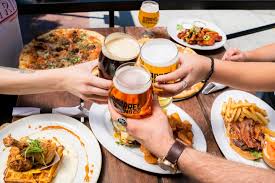
The meal/drink experience means different things to different people, and different establishments offer varied services in terms of prices, level of service, and menu extent.
A customer’s satisfaction depends on the reasons behind their choice, often tied to the quality of agricultural products. The food and beverage operator is expected to meet and even exceed customers’ expectations.
Defining the Meal and Drink Experience
The ‘meal/drink experience’ may be defined as a series of events both tangible and intangible that a customer experiences when eating out. It is difficult to define exactly where a meal/drink experience usually starts, and indeed ends, although it is usually assumed that the main part of the experience begins when a customer enters a restaurant and ends when they leave.
However, any feelings the customer may have when they arrive at the restaurant, and when they leave, should also be taken into account and included as part of the total meal/drink experience.
The series of events and experiences the customer undergoes when eating out may be divided into those tangible aspects of the product, that is the food and drink, often sourced from agricultural produce, and those intangible aspects such as service, atmosphere, mood, etc.
For the product offered by the restaurant to be acceptable to the customer, the tangible and intangible components must be combined and perceived by the customer as one total product, not a number of disjointed parts.
It is therefore the duty of the restaurant owner or manager to construct this complete product and present it to the customer.
The different components of the meal/drink experience that may be identified and should be considered by the catering facility, particularly those emphasizing farm-to-table practices, include the following:
Read Also: Goats Farming Complete Practical Guide
Food and Drink Quality in Agriculture
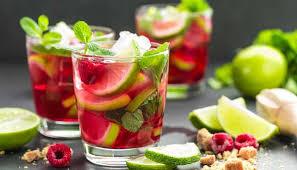
The kind of food and drink that people choose to consume away from home depends mainly on the amount of money they are prepared to pay for it within a given set of circumstances at a specific point in time. Apart from the cost aspect, the factors of particular concern to the customer, especially in relation to agricultural sourcing, include:
- The type and choice of food and drink available.
- The quality of the product offered (e.g., fresh or convenience foods; chateau bottled or non-chateau bottled wine).
- The quantity of product offered, i.e., the portion sizes.
- The consistent standard of the product (a customer returning to the restaurant and repeating their order of an item would expect the product to be very similar to what they had eaten/drank before).
- The range of textures, flavours, aromas, and colours offered by a food dish, or taste, aroma, and colour offered by a drink.
- That the food and drink is served at the appropriate temperature.
- That the presentation of the food and drink enhances the product offered.
- The perceived value for money.
These factors are critical in agricultural contexts, where the freshness and origin of ingredients significantly influence customer satisfaction.
Variety in Menu Choice for Agricultural Products
The type of menu offered by an establishment and the variety of menu choice should also conform to the requirements of the total meal experience.
At the lower level of the market, the choice of menu items in a restaurant is usually fairly limited for several reasons. Firstly, price: if a customer is paying ₦2500 for a three-course meal, the range of menu items, including those sourced from local farms, that can be made available within the cost limits of such an operation is obviously more limited than in operations where the customer’s average spending power is higher.
Secondly, the amount of time taken to consume meals at this level of the market may vary between less than half an hour and one hour but will rarely exceed this; of this amount of time, the customer in these establishments takes proportionately little in studying the menu choice.
Thirdly, customers frequenting this lower level of the market may feel uncomfortable if presented with a very large menu selection and may therefore prefer a more limited, but still varied, menu choice, often featuring locally sourced agricultural products.
In high-class restaurants where the average spending power is above ₦10,000 per head, the menu selection is normally much greater. In these establishments, which encourage a luxury meal experience, the minimum amount of time customers usually spend on a meal is one and a half hours and may be three to four hours depending on the size of the group and the occasion.
The proportion of this time devoted to reading the menu and selecting from the menu items is correspondingly greater; customers frequenting these types of establishments would also expect to be offered a large menu selection, including a number of chef’s specialities and other dishes, often highlighting premium agricultural ingredients.
The menu choice offered by a restaurant is therefore dependent on several interrelated factors the price the customer is willing to pay; the amount of time available for the meal experience; the level of the market in which the restaurant is situated; and consequently, the types of customers likely to frequent that type of operation.
Further considerations affecting the choice of menu from the caterer’s point of view include the production and service facilities available, the skills of the staff, the availability of agricultural commodities, and the potential profitability of the menu.
Level of Service in Agricultural Dining
Broadly speaking, the higher the cost of the meal to the customer, the more service the customer expects to receive. In a self-service cafeteria where a customer is spending approximately ₦3,000 for a three-course luncheon, the degree of service they will receive is comparatively little; the customer collects their own food from the service counters, carries it to a table, and probably clears their dishes from the table at the end of their meal.
As the cost of the meal to the customer increases, so will the amount of service they receive. At the top end of the catering market, where the customer may be paying over ₦10,000 per head for a meal, full waiter silver service would be provided, often emphasizing the presentation of farm-fresh ingredients.
The actual service of the food and beverages to the customer may be described as ‘direct’ service; part of a restaurant’s total service, however, also comprises ‘indirect’ services. These include the provision of cloakroom facilities somewhere for the customer to leave coats and bags safely and the availability of a telephone for customer use.
It is therefore important for a restaurant operation, particularly those showcasing agricultural products, to consider not only the service of the food and beverages for which the staff are usually adequately trained but also the indirect service aspects of the operation, which the customer particularly notices.
Value for Money in Farm-to-Table Dining
The concept of value for money varies from one sector of the market to another, and indeed from one customer to another. In the majority of cases, however, a customer will frequent a restaurant not only because of its food and service but also because they feel it gives them value for money, particularly when featuring high-quality agricultural produce.
At the lower end of the market, inclusive price meals are often offered, e.g., by many steakhouse operations, so that a prospective client is aware in advance of the total cost of the meal, which helps alleviate any concern the customer may have about being able to pay.
At the other end of the market, menu items are often charged separately, because at this level of the market, the total cost of the meal is not as important a factor to the customer as perhaps the other aspects of the operation, such as the standard of the food or the level of service offered, particularly when showcasing locally sourced or organic ingredients.
Read Also: Introduction to Ruminant Animals Production
Interior Design in Agricultural-Themed Restaurants
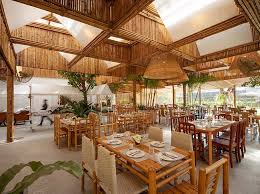
The interior design of a restaurant is one of the first physical aspects of a catering operation that a customer will come into contact with. This first impression of the restaurant is very important.
A potential customer passing by may like the look of the establishment, perhaps designed to reflect agricultural themes, and decide to eat there; the customer who has planned to eat in the restaurant and likes what they see when they enter will feel pleased with their choice of restaurant.
The interior design of a restaurant contributes greatly to the creation of its image, often emphasizing a connection to agriculture through rustic or natural decor.
The importance of interior design to a catering facility cannot be over-emphasized, and it is necessary that professional advice is obtained from experienced designers.
Atmosphere and Mood in Farm-to-Table Settings
The atmosphere or mood of a restaurant is a difficult aspect of an operation to define but is often described as an intangible ‘feel’ inside a restaurant. Not all restaurants have an obvious type of atmosphere; others try to deliberately create one, such as a farm-to-table ambiance with earthy tones and natural elements.
The atmosphere of a restaurant is affected by many different aspects of the operation the decor and interior design of the restaurant, the table seating arrangements, the service accompaniments, the dress and attitude of the staff, the tempo of the service, the age, dress, and sex of the other customers, etc.
All these various aspects combine to produce the restaurant’s atmosphere, and it is important that all these elements combine and complement one another to present a picture of totality to the customer.
Should one of these aspects be out of keeping with the others, disharmony may result in the customer’s image of the restaurant, and the customer will invariably leave remembering a small aspect.
Customer Expectations in Agricultural Dining
A single customer or group of customers arriving at a restaurant for a meal brings with them a series of expectations regarding that restaurant – the type of service they will receive, the price they will pay, the expected atmosphere and mood of the restaurant, etc.
The customer’s expectations may therefore be varied and numerous, ranging from the restaurant they frequent because they want to be seen there and participate in its social atmosphere to the small quiet restaurant they may go to because of its intimate and personal nature, often tied to its agricultural focus.
Upon arrival at the restaurant, if the product presented to the customer is in harmony with their expectations, it is very likely that the customer will be pleased with their choice and have a relaxed and enjoyable meal.
Should the customer sense disharmony, however, between their expectations of the restaurant and the actual product they find, for example, it is too intimate for the occasion, they may not enter the restaurant but choose another.
If the disharmony is not realized until the customer is seated at the table, it is unlikely that they will leave but will have a hurried and uncomfortable meal.
There is therefore a need for the customer to identify and associate themselves with a restaurant for a particular meal occasion. They may not always identify with the same restaurant, as their needs and expectations may vary from one meal experience to the next.
For example, at a business lunch, a customer may require an expensive haute cuisine restaurant with an atmosphere conducive to discussing business; such a restaurant, however, may not be suitable for the same customer to take their wife and family for a special occasion.
A customer therefore has different needs and expectations on different meal occasions, and similarly at different times of the day, for example, lunch and dinner.
These alternating needs of customers should be identified by a restaurant and catered for, so that the restaurant offering formal business lunches may offer special function catering in the evening when the demand for business meals is minimal.
There is a danger in these situations, however, that restaurants may be led into catering for mixed markets, and it is important therefore for a restaurant offering different levels of service at different times of the day to keep them completely separate and not attempt to be ‘all things to all people’.
Those operations that have taken this approach invariably adjust downwards to a lower socio-economic market segment than the one to which they were originally catering.
Location and Accessibility for Agricultural Restaurants
The location of the restaurant is one of the few, if not the only, unchangeable aspects of the operation and therefore requires considerable thought and attention at the initial planning stage.
The restaurant’s location in relation to its present markets should not only be considered but also its location to possible future markets.
For example, a city restaurant may rely heavily on several large firms in the surrounding area for the majority of its lunchtime trade; should several of these firms leave the area, this would seriously affect the restaurant’s trade.
Accessibility to the restaurant is another important factor, particularly if it is situated out of a town and not within easy reach by public transport.
In these cases, the majority of the restaurant’s clientele would travel by private transport, and thought must be given to car parking spaces for the customers. For agricultural-themed restaurants, proximity to farms or rural areas may enhance the farm-to-table appeal.
Staff and Their Role in Agricultural Dining
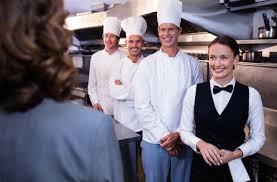
Staff employed by a restaurant operation should complement the meal experience of the customers, and they are able to do this in a variety of ways – their attitude to customers, their age and sex, their uniform, the tempo of their service, etc.
The number of staff serving in a restaurant is closely related to the prices charged by the establishment and the level of service it offers. In self-service operations, very few service staff are required; in some establishments, the ratio of staff to customers is as low as one member of staff to 20-40 customers.
However, in luxury haute cuisine restaurants offering silver service, often showcasing premium agricultural products, the ratio may be as high as one member of staff to eight customers.
These latter types of operations are charging the customer for this extra attentive service and must therefore be seen to have an adequate number of staff. Not only does the number of staff in a restaurant contribute to the meal experience, but also their attitude to customers and the tempo of their service.
In a large industrial cafeteria where the ratio of service staff to customers is low, and the speed of throughput is important, the staff are required to work at a fast and efficient speed, and where possible, leave the customers to serve themselves.
In a luxury restaurant, the tempo of the staff to customers is considerably slower and more relaxed because of the high ratio of service staff to customers. It should be noted that the attitude of the staff is almost totally influenced by the management attitude and the environmental climate in which the staff are working.
Additionally, such things as the levels of skills of the staff, their visual cleanliness, as well as their sex, age, and nationality are of importance. Finally, the uniforms of the service staff should be appropriate for the level of the catering operation, and again, this physical aspect of the restaurant must be seen as part of the establishment’s totality.
In some lower market level operations, the staff may only be provided with overalls; this is in complete contrast to high-class restaurants, particularly in hotels, where there is a very strict demarcation of uniform styles according to the status of the service personnel.
In agricultural dining settings, staff may also be trained to educate customers about the origin of ingredients, enhancing the farm-to-table experience.
Do you have any questions, suggestions, or contributions? If so, please feel free to use the comment box below to share your thoughts. We also encourage you to kindly share this information with others who might benefit from it. Since we can’t reach everyone at once, we truly appreciate your help in spreading the word. Thank you so much for your support and for sharing!