


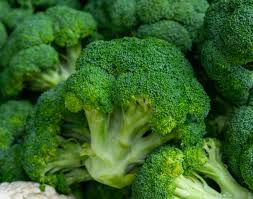
Broccoli (Brassica oleracea var. italica) is a green vegetable that resembles a miniature tree. It belongs to the species Brassica oleracea and is closely related to cabbage, Brussels sprouts, kale, and cauliflower—all part of the cruciferous vegetable family.
There are three main varieties of broccoli:
- Calabrese broccoli
- Sprouting broccoli
- Purple cauliflower (despite its name, a type of broccoli)
Broccoli is a true nutritional powerhouse, loaded with vitamins, minerals, fiber, and bioactive compounds that support overall health.
Here are the top 14 health benefits of broccoli:
1. Packed With Vitamins, Minerals, and Bioactive Compounds
One cup (91 g) of raw broccoli contains:
- Carbs: 6 g
- Protein: 2.6 g
- Fat: 0.3 g
- Fiber: 2.4 g
- Vitamin C: 135% of the RDI
- Vitamin A: 11% of the RDI
- Vitamin K: 116% of the RDI
- Vitamin B9 (folate): 14% of the RDI
- Potassium: 8% of the RDI
- Phosphorus: 6% of the RDI
- Selenium: 3% of the RDI
Broccoli can be eaten raw or cooked—both are healthy, though cooking methods affect nutrient levels. Steaming has the least negative impact, while boiling reduces vitamin C, soluble protein, and sugar more significantly. Even half a cup (78 g) of cooked broccoli provides 84% of the RDI for vitamin C—more than half an orange.
Summary: Broccoli is exceptionally rich in essential nutrients. Cooking affects composition slightly, but it remains a top-tier healthy food raw or cooked.
2. Contains Potent Antioxidants That Offer Health-Protective Effects
Broccoli’s high antioxidant content is one of its greatest strengths. Antioxidants neutralize free radicals, reducing inflammation and cell damage.
It is especially rich in glucoraphanin, which converts to the powerful antioxidant sulforaphane during digestion. Test-tube and animal studies suggest sulforaphane may lower blood sugar, cholesterol, oxidative stress, and chronic disease risk—though more human research is needed.
Broccoli also supplies lutein and zeaxanthin, antioxidants that protect the eyes from oxidative damage.
Summary: Broccoli delivers multiple potent antioxidants that support cellular health and may offer broad protective benefits.
Read Also: Wonderful Facts about Broccoli you need to know About
3. Bioactive Compounds May Contribute to Reduced Inflammation
Broccoli contains several bioactive compounds with anti-inflammatory effects. Kaempferol, a flavonoid, shows strong anti-inflammatory activity in animal and test-tube studies.
A small human study in tobacco smokers found that eating broccoli significantly reduced inflammation markers. Multiple compounds likely work together for this benefit.
Summary: Broccoli’s bioactive compounds demonstrate anti-inflammatory potential in studies, though more human data is needed.
4. May Protect Against Certain Types of Cancer
Cruciferous vegetables like broccoli contain bioactive compounds that may reduce cell damage from chronic diseases. Multiple small studies link higher intake to lower risk of breast, prostate, gastric/stomach, colorectal, renal/kidney, and bladder cancers.
Isothiocyanates (sulforaphane, indole-3-carbinol) boost detox enzymes, act as antioxidants, and may influence estrogen levels to reduce breast cancer risk.
Summary: Broccoli shows promising cancer-preventive effects in studies, but more human research is required for definitive claims.
5. Antioxidants and Fiber May Aid Blood Sugar Control
Broccoli may improve blood sugar regulation, especially in diabetes. One human study found daily broccoli sprout consumption significantly reduced insulin resistance in type 2 diabetes patients.
Animal research showed lower blood sugar and less pancreatic cell damage in diabetic rats given broccoli extract. Its fiber content also supports better glycemic control.
Summary: Broccoli’s antioxidants and fiber likely contribute to improved blood sugar and diabetic management.
6. May Support Heart Health in a Variety of Ways
Broccoli benefits cardiovascular health through multiple mechanisms. It reduces “bad” LDL cholesterol and triglycerides while increasing “good” HDL cholesterol (shown in studies with broccoli sprout supplements).
Sulforaphane may prevent or reverse inflammation-related damage to blood vessel linings from chronic high blood sugar. Fiber intake is linked to lower heart disease risk, and B vitamins help regulate homocysteine—a risk factor for coronary artery disease.
Summary: Broccoli supports heart health by improving cholesterol, reducing inflammation, and protecting blood vessels.
7. Promotes Healthy Digestion and Reduced Constipation
Broccoli’s high fiber and antioxidants support bowel regularity and gut health. A mouse study on a broccoli diet showed reduced colon inflammation and favorable gut bacteria changes.
A human study found easier defecation among broccoli eaters compared to controls.
Summary: Broccoli aids digestion, regularity, and gut bacteria balance—though more human research is needed.
8. May Slow Mental Decline and Support Healthy Brain Function
Nutrients and bioactive compounds in broccoli may protect brain health. A study of 960 older adults linked one daily serving of dark green vegetables (like broccoli) to slower age-related mental decline.
Animal studies showed kaempferol reduced brain injury and inflammation after stroke-like events, while sulforaphane supported brain tissue recovery after injury or low oxygen exposure.
Summary: Early research suggests broccoli compounds protect brain tissue—more human studies are needed.
Read Also: 11 Recipes that will make you love Broccoli
9. May Help Slow the Aging Process
Aging is driven by oxidative stress and declining metabolic function. Sulforaphane in broccoli may slow biochemical aging by increasing antioxidant gene expression.
Diet quality, including broccoli intake, influences genetic expression and age-related disease risk.
Summary: Sulforaphane shows potential to slow aging at the cellular level—more human research is required.
10. Vitamin C Content Supports a Healthy Immune System
Vitamin C is critical for immune function, and broccoli is an outstanding source. A half-cup (78 g) of cooked broccoli provides 84% of the RDI—more than many fruits. Daily intake of 100–200 mg of vitamin C helps prevent infections.
Summary: Broccoli’s high vitamin C content strongly supports immune health.
11. May Support Dental and Oral Health
Broccoli supplies vitamin C and calcium—both linked to lower periodontal disease risk. Kaempferol may help prevent periodontitis, and sulforaphane could reduce oral cancer risk.
Some claim raw broccoli removes plaque and whitens teeth, but evidence is limited.
Summary: Nutrients in broccoli support oral health and may reduce certain dental risks—more research is needed.
12. May Promote Healthy Bones and Joints
Broccoli is rich in vitamin K and calcium—essential for strong bones. It also provides phosphorus, zinc, and vitamins A and C. Early test-tube research suggests sulforaphane may help prevent osteoarthritis.
Summary: Broccoli supplies key bone-supporting nutrients and shows early promise for joint health.
13. Nutrient Content May Support a Healthy Pregnancy
Broccoli provides folate (vitamin B9), crucial for fetal brain and spinal cord development. Animal studies suggest maternal broccoli consumption may support healthier newborn cognitive outcomes.
Summary: Folate and other nutrients in broccoli are vital for healthy pregnancy—more research is ongoing.
14. May Protect Your Skin From Sun Damage
Bioactive compounds in broccoli may shield skin from UV radiation damage and reduce skin cancer risk. Animal studies showed reduced tumor growth with broccoli extract after UV exposure; small human studies reported similar protective effects.
Summary: Early research indicates broccoli extract may protect against UV-induced skin damage and cancer—more studies are needed.
Read Also: 5 Reasons why Broccoli is Good for your Health
In conclusion, broccoli is a nutrient-rich vegetable that may enhance health in many ways—reducing inflammation, improving blood sugar control, boosting immunity, supporting heart health, and more. It’s a valuable part of a balanced diet, though no single food guarantees perfect health. Include broccoli regularly alongside varied whole foods for optimal benefits.
Scientific Evidence and Case Studies on Broccoli Health Benefits
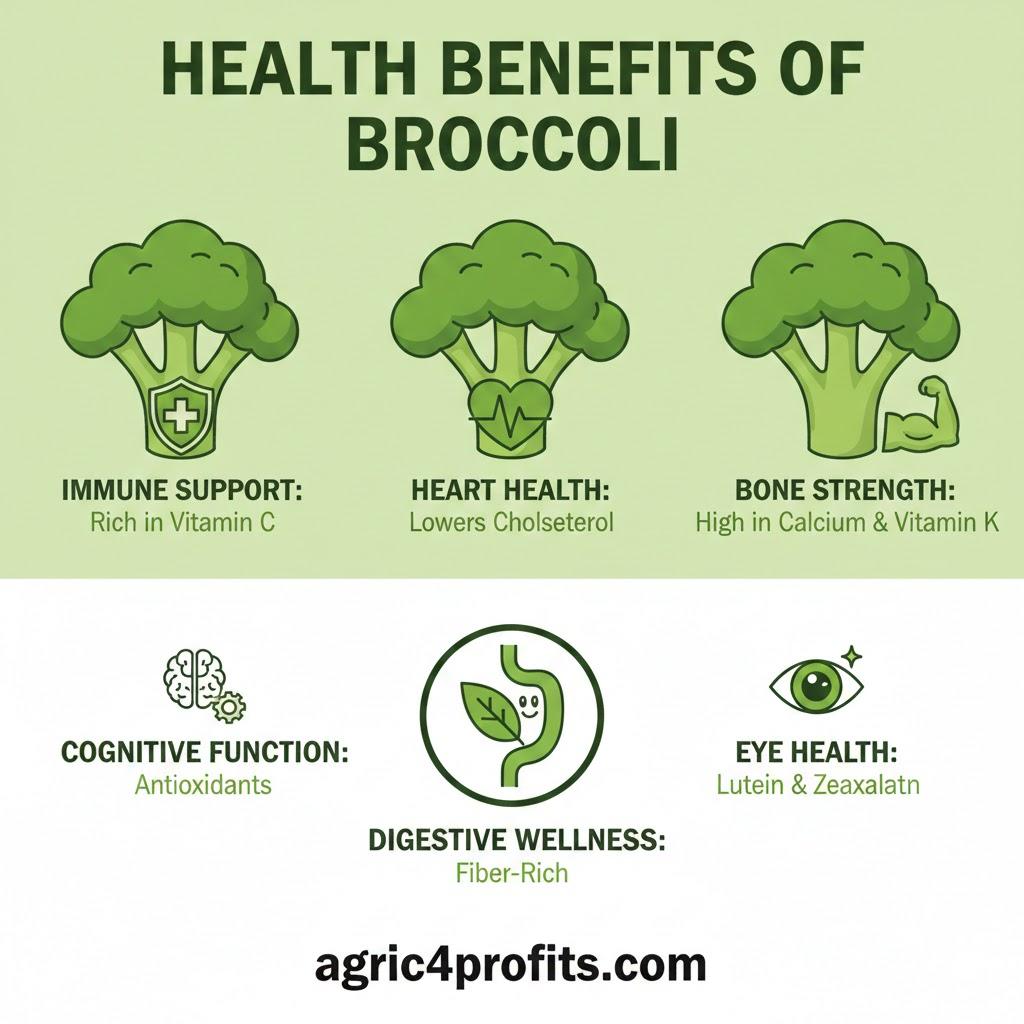
1. Blood Sugar & Diabetes Control: Broccoli sprout extract (sulforaphane) reduced fasting glucose by ~10% in obese type 2 diabetes patients (2017 Science Translational Medicine).
2. Cancer Protection: Isothiocyanates boost detox enzymes and reduce oxidative stress; linked to lower risk of breast, prostate, colorectal, and other cancers.
3. Anti-Inflammatory Effects: Kaempferol and sulforaphane reduce inflammation markers in smokers and block joint-damaging enzymes in osteoarthritis models.
4. Heart Health Support: Reduces LDL cholesterol/triglycerides, increases HDL; protects blood vessels from inflammation-related damage.
5. Brain & Aging Protection: Supports slower cognitive decline (observational studies); sulforaphane and kaempferol reduce neural inflammation and injury in animal models.
Summary of Broccoli: Top 14 Health Benefits
| Aspect | Key Points |
|---|---|
| What is Broccoli? | Brassica oleracea var. italica; cruciferous vegetable; rich in vitamins C/K/A, folate, fiber, sulforaphane, glucosinolates. |
| Nutritional Highlights | Per cup raw: 31 kcal, 2.4 g fiber, 135% DV vitamin C, 116% DV vitamin K, good folate, potassium, antioxidants. |
| Main Health Benefits | High nutrient density; potent antioxidants; reduced inflammation; cancer prevention; blood sugar control; heart health; digestion; brain protection; anti-aging; immune support; oral health; bone/joint health; pregnancy support; UV skin protection. |
| Best Consumption | Raw or lightly steamed to preserve nutrients; pair with healthy fats for better absorption of fat-soluble vitamins. |
| Recommendations | Include regularly (80–100 g daily); add to salads, stir-fries, soups, or eat steamed/roasted. |
| Safety Note | Generally safe; monitor vitamin K if on blood thinners; raw may cause gas in some. |
| Overall Value | One of the most nutrient-dense foods with strong evidence for chronic disease prevention, detoxification, and whole-body health support. |
Frequently Asked Questions
1. Why is broccoli considered one of the healthiest vegetables?
It’s extremely nutrient-dense—high in vitamins C/K, fiber, sulforaphane, and antioxidants—with very few calories.
2. How does broccoli help prevent cancer?
Sulforaphane and isothiocyanates boost detox enzymes, reduce oxidative stress, and may lower risk of breast, prostate, colorectal, and other cancers.
3. Can broccoli improve blood sugar control?
Yes—sulforaphane reduced fasting glucose in type 2 diabetes studies; fiber also supports better glycemic control.
4. Does broccoli support heart health?
It lowers LDL cholesterol/triglycerides, reduces inflammation in blood vessels, and helps regulate homocysteine levels.
5. Is broccoli good for brain health?
Early research shows it may slow age-related cognitive decline and protect neural tissue via sulforaphane and kaempferol.
6. How does broccoli aid digestion?
High fiber promotes regularity and healthy gut bacteria; sulforaphane helps control H. pylori and supports stomach lining.
7. Can broccoli slow aging?
Sulforaphane may increase antioxidant gene expression, potentially slowing biochemical aging processes.
8. Is broccoli safe during pregnancy?
Yes—rich in folate for fetal brain/spinal development; animal studies suggest additional cognitive benefits.
9. What’s the best way to eat broccoli?
Lightly steamed, stir-fried, or raw to retain nutrients; over-boiling reduces key compounds like sulforaphane.
10. Are there any risks to eating broccoli?
Generally safe; high vitamin K may affect blood thinners; raw can cause gas; cook if you have thyroid concerns.
Do you have any questions, suggestions, or contributions? If so, please feel free to use the comment box below to share your thoughts. We also encourage you to kindly share this information with others who might benefit from it. Since we can’t reach everyone at once, we truly appreciate your help in spreading the word. Thank you very much for your support and for sharing!
Disclaimer: This article is for educational and informational purposes only. The health benefits described are based on scientific research and traditional knowledge. They ayre not a substitute for professional medical advice, diagnosis, or treatment. Always consult a healthcare professional before using any herb or natural remedy for medical purposes.