


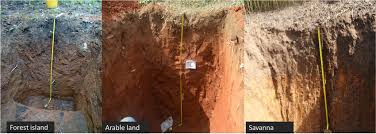
The classification of the major soil types of the Nigerian Savanna has been difficult because it is not based on a uniform classification and standard scale.
But recently, the National Soil Correlation Committee and the Federal Department of Agricultural Land Resources have worked in different areas of the country to come up with their classification into types. Four major soil types have been shown to occur in the Nigerian Savanna region.
Read Also: How to Grow, Use and Care for Yellow Groove Bamboo (Phyllostachys aureosulcata)
Major Soil Types in the Nigerian Savanna
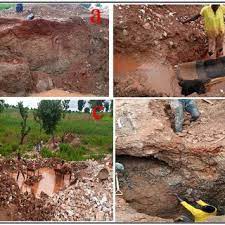
The four major soil types that occur in the Nigerian Savanna region are:
1. Entisols / Inceptisols
2. Alfisols (USDA) or Luvisols (FAO)
3. Ultisols (USDA) or Acrisols (FAO)
4. Vertisols or Pellic and Chromic Vertisols (FAO)
5. Oxisols are also present but on a much smaller scale and found mainly in the southern fringes of Nigeria.
Features of the Major Soil Types in the Nigerian Savanna
1. Entisols / Inceptisols
These are recently formed, young and immature sandy, well-drained, shallow soils with weak profile development or differentiation. They have little or no clear distinct horizons formed.
They are derived mainly from recent Aeolian deposits and are almost always low in organic matter, available phosphorus (P), and cation exchange capacity (CEC).
Their weak profile development is due to three interplay factors:
i. Sandy nature of parent material
ii. Dry or semi-arid climatic conditions
iii. Constant deposition of recent alluvial materials
These soils are generally suited for the growth of sorghum, millet, groundnut, cowpea, maize, and cotton. The fadama soils associated with them are very fertile and popular for dry season cultivation of vegetables, sugarcane, and paddy rice when waterlogged (flooded).
2. Alfisols (USDA) / Luvisols (FAO)
These soils are generally mildly acidic and less leached.
They are derived from pre-Cambrian crystalline basement complex rocks and found mainly in the Guinea and derived savanna zones (with average rainfall about 6600 mm).
They are coarse in texture with pH (water) between 5.5–7.0.
Organic matter is low and total nitrogen hardly exceeds 0.1%.
Available phosphorus is low (less than 10 ppm), while exchangeable cation levels are moderate, but CEC is very low (>5 meq/100g of soil).
The dominant clay mineral is kaolinite; hence cation and water holding capacities are low.
These soils are poorly structured in the plough layers, and bulk density increases after cultivation, causing impeding root development.
3. Ultisols (USDA) / Acrisols (FAO)
These soils are similar to Alfisols but are much more developed, weathered, and leached.
They have a lower base saturation level than Alfisols.
Organic matter and CEC are low, showing the presence of kaolinites and oxide clay minerals.
Exchangeable aluminium levels are high, the soil reaction is acidic, and fertility is impoverished.
4. Vertisols (Pellic and Chromic Types – FAO)
These are heavy, cracking clay soils with more than 35% clay and a high content of expanding clay minerals.
They shrink and swell with changes in moisture content.
They are high in basic cations (Ca²⁺, Mg²⁺, K⁺), but low in organic matter, nitrogen (N), phosphorus (P), and micronutrients.
These soils are found in the northeastern region (Borno, Bauchi, Gombe, Taraba), and also in parts of Plateau, Sokoto, and Kebbi States. Crops suited for production include wheat, cotton, rice, and sorghum.
Problems of tillage, poor drainage, flooding, and erosion affect wide-scale utilisation.
All the vertisols in Nigeria are equivalent to pellic or chromic vertisols (FAO).
5. Oxisols (USDA) / Ferralsols / Nitosols (FAO)
These are extremely weathered and leached soils, consisting of mixtures of kaolinites, iron oxides, and quartz.
They are deep, well-drained, and reddish in colour with a clear granular structure.
They have very low fertility levels, resulting in mainly shifting cultivation practices.
These soils are mainly limited to the southern fringes like the Ankpa area in Kogi State, where annual rainfall is high (about 1800 mm).
Read Also: How to Grow, Use and Care for Yellow Indiangrass (Sorghastrum nutans)
Soil Management Practices of the Soil Types for Efficient Use
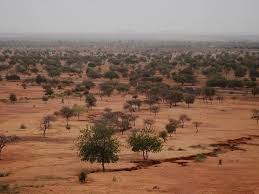
Soils of the Nigerian Savanna are seen as relatively infertile, and it is believed that the addition of chemical fertilisers together with other agricultural inputs (improved seed, pesticide application) is necessary, otherwise crop productivity will continue to decrease.
Fertility under natural forest is satisfactory because they have a dark thick layer of surface (top) soil rich in nutrients necessary for plant growth.
Low crop productivity does not always follow when land is put into agricultural use. Soil changes that decrease crop productivity result from cropping system, leaching, and soil erosion.
The worst is soil erosion, especially in the humid rainforest areas of Southern Nigeria. Even if adequate amounts of fertiliser are applied to highly eroded soil, its efficiency would be highly reduced.
Once the topsoil is eroded, it becomes difficult to return the land to full production.
Thus, for soil conservation, soil should be used according to its capabilities and limitations, but this may be difficult due to socio-economic challenges.
How to Maintain These Soil Types in the Nigerian Savanna
1. Entisols / Inceptisols
These soils are managed by the addition of organic manure and crop residue incorporation to help bind the soil particles together.
2. Alfisols / Luvisols
Since the dominant soil clay is kaolinite, with low organic matter, CEC, and water holding capacity, these soils are managed by adding organic manure to increase organic matter content.
3. Ultisols / Acrisols
Due to acidic soil reaction, these soils are managed by liming to reduce soil acidity.
4. Vertisols
The wide-scale utilisation problems associated with vertisols—tillage, poor drainage, flooding, and erosion—require the following management practices:
i. Construction of drains
ii. Ploughing to increase aeration and soil workability
iii. Addition of organic matter, NPK fertiliser, and other types of fertilisers
5. Oxisols / Ferralsols / Nitosols
As the dominant minerals are kaolinite, iron oxides, and quartz, these soils are managed by liming to reduce acidity.
From the discussion in this article, four major soil types are recognised in the Nigerian Savanna. These are Entisols / Inceptisols, Alfisols, Ultisols, and Vertisols (USDA classification). Oxisols are present but on a very small scale and found only in the southern part of the Nigerian Savanna.
Because of the nature of the parent materials and climatic conditions of their locations, different management practices are applied to enhance the fertility of each soil type ranging from the addition of organic manure and fertilisers to liming and drain construction.
Soil conservation and good management practices improve soil fertility beyond simply preventing soil loss. Soil erosion is a clear indication of poor soil management, whether from inadequate nutrients or improper cropping systems.
Do you have any questions, suggestions, or contributions? If so, please feel free to use the comment box below to share your thoughts. We also encourage you to kindly share this information with others who might benefit from it. Since we can’t reach everyone at once, we truly appreciate your help in spreading the word. Thank you so much for your support and for sharing!