


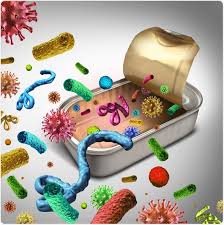
Microbial food spoilage occurs as a consequence of either microbial growth in a food or release of microbial extracellular and intracellular enzymes in the food environment.
Some detectable parameters associated with spoilage of different types of foods include changes in color, odor, and texture; formation of slime; accumulation of gas (or foam); and accumulation of liquid.
Spoilage by microbial growth occurs much faster than spoilage by microbial extra- or intracellular enzymes in the absence of viable microbial cells.
Between initial production and final consumption, different methods are employed to preserve the acceptance qualities of foods, which include the reduction of microbial numbers and growth. Yet microorganisms grow and cause food spoilage, which for some foods could be relatively high.
Categories of Food Poisoning Microorganisms
- Organisms that produce toxins in the food.
- Organisms that multiply in the intestinal tract and produce toxins that cause symptoms.
- Organisms that invade the body but generally remain in the region of the intestinal tract or cause widespread systemic infection.
- Other microbial infections.
Read Also: How to determine if your Housing is Conducive for your Fishes
Microorganisms Producing Toxins in Food
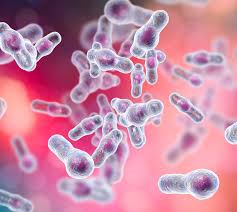
The main examples of organisms that produce toxins in the food include Clostridium botulinum, Staphylococcus aureus, and some strains of Bacillus cereus. The problem here is more of intoxication than infection, and if the food contains a significant amount of the toxin, subsequent cooking will not reduce the risk of food poisoning.
Clostridium botulinum and Food-Borne Botulism
Botulism is food poisoning caused by eating food containing a poisonous bacterium called Clostridium botulinum. There are three main types of botulism: food-borne botulism caused by eating foods that contain the botulism toxin; wound botulism caused by toxin produced from a wound infected with Clostridium botulinum; and infant botulism caused by consuming the spores of the botulinum bacteria, which then grow in the intestines and release toxin.
All three forms of botulism are fatal and constitute medical emergencies. Food-borne botulism is particularly dangerous because eating a batch of Clostridium botulinum-contaminated food can poison a large number of people.
Clostridium botulinum is found in the soil but grows in many meats and vegetables. Clostridium botulinum spores are killed by boiling, while the toxins may be destroyed by moist heat at 80°C for 30 minutes.
The spores grow best in the absence of oxygen, making improperly processed foods in sealed containers a perfect environment for their growth. If food contaminated by the bacterium Clostridium botulinum is not properly canned or bottled, the bacteria produce a toxin called botulin, which causes botulism.
Within 8 to 36 hours of ingestion of the contaminated food, the botulin toxin paralyzes nerves regulating muscle function, resulting in respiratory failure as the muscles that control breathing weaken.
The toxin also affects the central nervous system and interrupts nerve impulses, but the mind continues to function normally. Symptoms of botulism usually appear 18 to 36 hours after ingestion of the contaminated food.
Disability progresses from difficulty in walking and swallowing, with impaired vision and speech, to occasional convulsions, and ultimately to paralysis of the respiratory muscles, suffocation, and death, all within a few hours or days, depending on the amount of toxin ingested.
The most direct way to confirm diagnosis is to demonstrate the presence of botulin in the patient’s serum or stool by injecting serum or stool into mice and looking for signs of botulism. Botulism antitoxin may be effective if administered early.
Surgical opening of the trachea and use of a respirator may be lifesaving. Physicians may try to remove contaminated food still in the gut by inducing vomiting or using enemas.
The respiratory failure and paralysis that occur with severe botulism may require a patient to be on a ventilator for weeks. Research into the use of botulism in biological warfare has produced a toxoid, an inactivated poison for use in a vaccine, to induce immunity.
Staphylococcus aureus and Food-Borne Poisoning
The most common species of Staphylococcus is Staphylococcus aureus, found on the skin, mouth, external ear, and in the nostrils of many healthy individuals. Another species, Staphylococcus epidermidis, is very widespread but not normally pathogenic.
These bacteria cannot cause serious infections under the right conditions. They may infect wounds or give rise to endocarditis (inflammation of the heart membrane) if the host’s immune system is weak.
They may also cause pneumonia and internal abscesses. They do not form spores but can survive for several weeks in dry conditions. Some strains can withstand high temperatures; they do not often grow outside the body but may do so in meat, milk, or dirty water.
The various species of Staphylococcus multiply rapidly at room temperature and may directly infect the gastrointestinal tract. Due to careless food handling, workers may sneeze or cough on food or may have infected pimples or wounds on the hands or face and transmit the bacteria to the food.
Staphylococcus aureus infections are characterized by the presence of pus and formation of abscesses. Staphylococcus is responsible for skin pustules (pimples containing pus), boils and carbuncles (severe skin abscesses), impetigo (contagious skin infection forming pimples and sores), infections of wounds and burns, breast abscesses, whitlow, osteomyelitis, bronchopneumonia, septicemia, acute endocarditis, food poisoning, and scalded skin syndrome.
Symptoms of staphylococcal infection include nausea, vomiting, and diarrhea, which develop within 1 to 8 hours after exposure to the bacteria. Treatment is usually by a combination of fluid and electrolyte replacement, but deaths rarely occur.
Read Also: How many plots of land do I need to start fish farming?
Microorganisms Multiplying in the Intestinal Tract and Producing Toxins
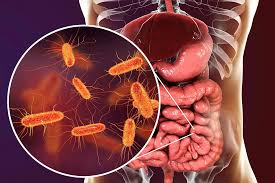
Organisms may multiply in the intestinal cavity (for example, Bacillus cereus and Clostridium perfringens) and produce relatively rapid symptoms after eating the contaminated food, with the infection lasting for only a day or so.
Other organisms, including the various pathogenic strains of Escherichia coli, Aeromonas species, and Vibrio cholerae, invade and multiply inside the cells of the intestinal wall and secrete toxins. The onset of symptoms from such organisms is typically one to two days, and the symptoms may last for several days.
Escherichia coli and Food-Borne Poisoning
Escherichia coli is a harmless, Gram-negative, motile, nonsporulating, rod-shaped, facultative anaerobic bacterium. It is a normal inhabitant of the intestinal tract of humans, warm-blooded animals, and birds.
Because it is normally present in millions per gram of the content of the large intestine, it has long been used as an index organism of possible fecal contamination and the presence of enteric pathogens in food and water. E. coli strains cause diarrhea, particularly in infants, and are designated as Enteropathogenic Escherichia coli (EPEC). Current evidence indicates that pathogenic strains of E. coli are more than one type.
They are subdivided into six groups based on their ability to produce toxins and to adhere to and invade epithelial cells: enterotoxigenic E. coli (ETEC), enteropathogenic E. coli (EPEC), enteroinvasive E. coli (EIEC), enterohemorrhagic E. coli (EHEC), enteroaggregative E. coli (EAEC), and diffuse-adhering E. coli (DAEC). E. coli O157:H7 is the principal serotype associated with enterohemorrhagic colitis.
The organism is destroyed by pasteurization temperatures and time and killed at 64.3°C in 9.6 seconds. The cells survive well in food at –20°C. E. coli infection is a potentially fatal form of food poisoning caused by certain strains of the bacterium Escherichia coli. About 5 million E. coli normally inhabit the human and animal intestinal tract and are vital to processing vitamins in the diet. However, several strains are pathogenic and cause gastroenteritis.
Strains known as enteropathogenic strains are associated with undercooked meat and are a common cause of diarrhea in infants but rarely produce gastroenteritis in adults. Other “enterotoxigenic” strains are the main cause of “travelers’ diarrhea.”
A relatively large number of E. coli (100 million or more) are normally required to cause infections, which are generally associated with food and water contaminated by feces.
Enteroinvasive strains of E. coli invade cells of the intestines, causing dysentery with bloody diarrhea. These are highly virulent strains, and ingestion of just a few organisms may cause infection. Outbreaks of such infection have been associated with undercooked hamburgers and unpasteurized milk.
The enterohemorrhagic strains are also highly virulent, causing both bloody diarrhea and possibly fatal systemic infection. In particular, the strain E. coli O157:H7, which also exists in animals and humans, is thought to be a virally infected, highly toxic strain of E. coli. Ingestion of as few as 10 organisms may cause intestinal hemorrhaging and possible kidney failure.
The fatality rate from the infection is 50 percent in children and the elderly. The main source of infection is undercooked contaminated beef. Once infected, people in confined areas can transmit the pathogen.
Certain rare strains of the bacterium Escherichia coli cause food poisoning in young children, the elderly, and people with impaired immune systems. E. coli O157:H7, normally found in the intestines and fecal matter of humans and animals, can survive in meat if the meat is not cooked beyond 155°F. Outbreaks are due mainly to contaminated cooked meats bought from local retail butchers.
These incidents emphasize the need for improved food regulations, preparation, and hygiene as bacteria from meat surfaces are incorporated during grinding and cutting, and subsequent insufficient cooking. Symptoms of E. coli infection appear after four to nine days and include bloody diarrhea, cramping, pain, and fever.
Complications of E. coli infection include septicemia, kidney failure, and brain damage. Currently, there is no cure for E. coli infection. Patients recover once the infection has run its course, although digestive and renal problems may persist.
Prevention of E. coli infection involves maintaining high standards of food hygiene, including always washing hands before handling food, scalding utensils used to prepare meat, keeping raw meat separate from other foods, and thoroughly cooking food to 70°C.
Vibrio cholerae and Cholera Infection
Vibrio cholerae causes cholera, a severe infectious disease endemic to tropical countries and occasionally spreading to temperate climates. The major means of infection is through the use of contaminated water in the preparation of foods such as fruits and vegetables.
Ready-to-eat foods may be contaminated by storage in contaminated containers or by sprinkling with contaminated water. The symptoms of cholera are diarrhea and the loss of water and electrolytes in the stool. In severe cholera, the patient develops violent diarrhea, vomiting, thirst, muscle cramps, and sometimes circulatory collapse.
Death can occur as quickly as a few hours after the onset of symptoms. The mortality rate is greater than 50% in untreated cases but falls to less than 1% with effective treatment.
Prevention of the disease is a matter of sanitation, and treatment consists mainly of intravenous or oral replacement of fluids and salts containing the correct mixture of sodium, potassium, chloride, bicarbonate, and glucose.
A vaccine made from dead bacteria is commercially available and offers partial protection for a period of three to six months after immunization.
Microorganisms Causing Systemic Infections via the Intestinal Tract
Microorganisms like Campylobacter, Salmonella, Shigella, and Yersinia remain in the intestinal tract. The onset of symptoms is relatively slow, and the infection may persist for weeks.
Organisms that invade and cause systemic infections in the body include Listeria monocytogenes, Salmonella typhi, and Salmonella paratyphi. The onset of symptoms may occur many days after consuming the contaminated food, and symptoms may persist for many weeks.
Salmonella and Food-Borne Infections
Salmonella is transmitted through contaminated poultry, eggs, and other foods. Three species are recognized: Salmonella typhi, S. choleraesuis, and S. enteritidis, which have more than 1,400 antigenically distinct serotypes. S. typhi causes typhoid fever. S. typhimurium, a serotype of S. enteritidis, causes salmonella gastroenteritis, a type of food poisoning characterized by abdominal pain, fever, nausea, vomiting, and diarrhea.
The incubation period is 8 to 48 hours, and an attack may last from three to seven days. Mild cases are usually treated with antidiarrheal remedies, while more severe cases require antibiotics.
S. enteritidis occurs in most flocks of hens; thus, undercooked chicken or eggs are the usual source of infection. Careful cleaning and thorough cooking of food prevent Salmonella infections.
Typhoid Fever Caused by Salmonella typhi
Typhoid fever is an acute infectious disease caused by the bacillus Salmonella typhi, transmitted through milk, water, or solid food contaminated by feces of typhoid victims or carriers. The incubation period of Salmonella typhi lasts one to three weeks.
The bacteria collect in the small intestine, from where they enter the bloodstream and induce the first symptoms chills followed by high fever. Victims may also experience headache, cough, vomiting, and diarrhea.
The disease spontaneously subsides after several weeks in most instances, but in about 20 percent of untreated cases, the disease progresses to pneumonia, intestinal hemorrhage, and even death.
Control of typhoid includes pasteurization of milk, purification of water supplies, recognition of carriers, improvement of sewerage facilities, and inoculation of people exposed to the disease, such as hospital employees and travelers to areas with poor sanitary facilities.
Other Microbial Infections Causing Food Poisoning
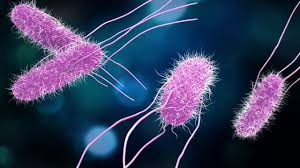
Clostridium perfringens is found mainly in poultry products and causes a mild form of food poisoning. Symptoms last only a day and start about 8–22 hours after ingestion, including abdominal pain, nausea, diarrhea, and vomiting. Shigella is found in chicken spread, fruit, and fish salad.
It is characterized by the sudden appearance of abdominal pains, cramps, diarrhea, fever, and vomiting, with the presence of blood, pus, and mucus in stools of about 35% of infected patients.
Staphylococcal Food Intoxication
Staphylococcal food poisoning, also known as staphylococcal gastroenteritis or staph food poisoning, is caused by toxins of Staphylococcus aureus. It is considered one of the most frequently occurring foodborne diseases worldwide. S. aureus are Gram-positive cocci that occur singly or in grape-like clusters and are nonmotile, noncapsular, and nonsporulating.
S. aureus can be isolated from foods by culturing. An enumeration technique is used in one or more selective differential agar media to determine the load of viable cells of S. aureus, followed by several biochemical tests, such as hemolysis, coagulase, thermonuclease reactions, or the ability of a pure culture to produce enterotoxin, to link the potential causes of food poisoning outbreaks.
In serological methods, the enterotoxins are purified and examined by one of several recommended immunological methods. Not only are these tests very sensitive, but they also allow the identification of the types of enterotoxins involved in a food poisoning case.
Botulism Caused by Clostridium botulinum
Botulism is caused by the consumption of food containing the potent botulinum toxin of Clostridium botulinum. Botulism occurs from the ingestion by the infant of C. botulinum spores that germinate, grow, and produce toxins in the gastrointestinal tract of humans and cause specific symptoms. C. botulinum is a Gram-positive rod that occurs as single cells or in small chains.
Many are motile, obligate anaerobes and form single terminal spores. Cells are sensitive to low pH. C. botulinum can be determined by enumeration techniques using selective agar media and anaerobic incubation, followed by biochemical and toxicological testing.
The presence of toxins in the food is more often tested. This involves injection of a food extract intraperitoneally to mice. Development of characteristic neurological symptoms, followed by death in 92 hours, suggests the presence of toxins.
Salmonella enterica and Foodborne Diseases
Salmonella enterica serovar Typhi and Paratyphi were considered the major causes of worldwide foodborne and waterborne diseases in humans caused by Salmonella. The Salmonella cells are Gram-negative, nonsporulating, facultative anaerobic motile rods.
They form gas while growing in media containing glucose. Generally, they ferment dulcitol but not lactose, utilize citrate as a carbon source, produce hydrogen sulfide, decarboxylate lysine and ornithine, do not produce indole, and are negative for urease.
They are mesophilic with an optimum growth temperature between 35°C and 37°C but generally have a growth range of 5°C–46°C. They are killed by pasteurization temperatures and sensitive to low pH (4.5 or below) and do not multiply at a water activity (AW) of 0.94, especially in combination with a pH at 5.5 and below.
The cells survive under frozen and dried states for a long time. They are capable of multiplying in many foods without affecting the acceptance qualities.
In recent years, Salmonella outbreaks associated with low-moisture foods, including peanuts, almonds, peanut butter, spices, and wheat flours, indicate that they can survive at an AW of as low as 0.2 for an extended period (over 1000 days).
The methods involve pre-enrichment of a sample of food in a nutrient broth, followed by selective enrichment, streaking on a selective-differential agar medium, and biochemical and serological confirmation. Several rapid methods, based on specific immunological characteristics and nucleotide base sequence in the nucleic acids, have been developed.
Campylobacter Species and Gastroenteritis
Campylobacter species cause human gastroenteritis, with C. jejuni and C. coli being prominent. C. jejuni is a Gram-negative, motile, nonsporulating, rod-shaped bacterium. The cells are small, fragile, and spirally curved. The strains are microaerophilic and catalase- and oxidase-positive.
The strains require a microaerophilic environment of approximately 5% oxygen, 8% CO₂, and 87% N₂ for growth. Growth temperature ranges between 32°C and 45°C, with an optimum of approximately 42°C. They grow better in amino acids than in carbohydrates.
They generally grow slowly and are not good competitors while growing with other bacteria. They generally do not grow well in many foods. They are sensitive to many environmental parameters, including oxygen (in air), NaCl (above 2.5%), low pH (below 5.0), temperature (below 30°C), heat (pasteurization), and drying.
Isolation of Campylobacter spp. from a suspected sample requires specific methods. After developing the method and incorporating it to isolate suspected foodborne pathogens, C. jejuni has been confirmed as a causative agent in many foodborne illnesses.
The foods implicated most often in campylobacteriosis are raw milk and improperly cooked chicken. Although several Campylobacter spp. have been associated with foodborne campylobacteriosis, C. jejuni has been isolated in most incidents.
Frequently Asked Questions (FAQs) About Food Poisoning Microorganisms
1. What causes microbial food spoilage, and how is it detected?
Microbial food spoilage results from microbial growth or the release of microbial enzymes in food. Detectable signs include changes in color, odor, texture, slime formation, gas or foam accumulation, and liquid buildup. Spoilage by microbial growth is faster than by enzymes alone.
2. Which microorganisms produce toxins directly in food, and why is this dangerous?
Clostridium botulinum, Staphylococcus aureus, and some Bacillus cereus strains produce toxins in food, causing intoxication rather than infection. These toxins, like botulin, are not neutralized by cooking, posing a severe risk of food poisoning.
3. How does Clostridium botulinum cause botulism, and what are its symptoms?
Clostridium botulinum produces botulin toxin in improperly processed, oxygen-free foods like canned goods. Symptoms appear 18–36 hours after ingestion, including difficulty walking, swallowing, impaired vision, speech, convulsions, respiratory paralysis, and potentially death.
4. What role does Staphylococcus aureus play in food poisoning?
Staphylococcus aureus, often transferred via careless food handling, produces toxins causing nausea, vomiting, and diarrhea within 1–8 hours. It is commonly associated with foods like meat and milk and is characterized by pus-forming infections.
5. How do Escherichia coli strains cause food poisoning?
Pathogenic E. coli strains, like E. coli O157:H7, cause diarrhea, dysentery, or systemic infections through contaminated food or water. Symptoms, appearing 4–9 days after ingestion, include bloody diarrhea, cramping, and fever, with severe cases leading to kidney failure or death.
6. What is cholera, and how is it transmitted?
Cholera, caused by Vibrio cholerae, is a severe disease transmitted through contaminated water used in food preparation. Symptoms include violent diarrhea, vomiting, and dehydration, with untreated cases having a mortality rate over 50%. Sanitation and fluid replacement are key for prevention and treatment.
7. How does Salmonella cause foodborne illness, and what foods are commonly involved?
Salmonella, particularly S. typhi and S. enteritidis, causes gastroenteritis or typhoid fever through contaminated poultry, eggs, or other foods. Symptoms include abdominal pain, fever, and diarrhea, with incubation periods of 8–48 hours for gastroenteritis and 1–3 weeks for typhoid.
8. Why is Campylobacter a concern in foodborne illnesses?
Campylobacter, especially C. jejuni, causes gastroenteritis through raw milk or undercooked chicken. It requires a microaerophilic environment and is sensitive to environmental factors, but its association with foodborne outbreaks highlights the need for proper food handling and cooking.
Do you have any questions, suggestions, or contributions? If so, please feel free to use the comment box below to share your thoughts. We also encourage you to kindly share this information with others who might benefit from it. Since we can’t reach everyone at once, we truly appreciate your help in spreading the word. Thank you so much for your support and for sharing!