



Examination of a product for indicator organisms can provide simple, reliable, and rapid information about process failure, postprocess contamination, contamination from the environment, and the general level of hygiene under which the food was processed and stored.
To serve as indicators of food sanitary quality, ideal indicators of product quality or shelf life should meet the following criteria:
- Indicator organisms should be present and detectable in all foods whose quality is to be assessed.
- Their growth and numbers should have a direct negative correlation with product quality.
- They should be easily detected and enumerated and be clearly distinguishable from other organisms.
- They should be enumerable in a short period, ideally within a workday.
Indicator Microorganisms in Food Safety
Microorganisms used to establish microbiological criteria are called indicator organisms. The presence of indicator microbes suggests a potential microbial hazard. The presence of generic Escherichia coli in a food sample indicates possible fecal contamination.
These criteria might be used to address existing product quality or to predict the shelf life of the food. The aerobic plate count (APC) is a common technique used to determine the total number of indicator microorganisms in a food product.
It may be a component of microbiological criteria assessing product quality when those criteria are used to monitor foods for compliance with standards or guidelines set by various regulatory agencies, monitor foods for compliance with purchase specifications, and monitor adherence to Good Manufacturing Practices (GMPs).
The Howard mold count, yeast and mold count, heat-resistant mold count, and thermophilic spore count are other methods commonly used to indicate the quality of different food products, intended for use in low-acid, heat-processed canned foods.
Read Also: Methods of Castration in Sheep and Goat
Maintaining Personal Hygiene in Food Processing

Personal hygiene begins at home, with the essential elements for good hygiene being a clean body, clean hair, and clean clothing. Hair in food can be a source of both microbiological and physical contamination. Hairnets and beard covers should be worn to assure food product integrity.
Long-sleeved smocks should be worn to cover arm hair. Clean uniforms, aprons, and other outer garments that are put on after the employee arrives at work can help minimize contamination. While working, clothing should be kept reasonably clean and in good repair.
Removal of smocks, laboratory coats, or aprons should take place when leaving the work area to go to the employee break room, restroom, or exiting the building.
Personal items such as meals and snacks should be stored in a locker or break room area located away from processing areas or areas where equipment and utensils are washed.
The only jewelry allowed in a food plant is a plain wedding band and/or one small post earring in each ear. No other jewelry is to be worn because it may fall into the product, present a safety hazard, or cannot be adequately sanitized against bacterial transmission.
It should be removed prior to entering the processing facility. Employees must wear different colored smocks when moving from a raw processing area to the cooked processing side.
They should also step into a sanitizer footbath between the two processing areas to eliminate bacteria on their shoes.
No employee who is affected with, has been exposed to, or is a carrier of a communicable disease, the flu, or a respiratory problem, or any other potential source of microbiological contamination shall work in any area where there is a reasonable possibility that food or food ingredients can be contaminated.
The number one symptom of a foodborne illness is diarrhea. Other symptoms include fever, dizziness, vomiting, and sore throat with fever or jaundice. Any employee with these symptoms should not be allowed to work around food.
If an employee has been diagnosed with a foodborne illness, exclude them from the establishment and contact the local health department. The health department must be notified if the employee has been diagnosed with one of the following foodborne illnesses: Salmonella typhi, Shigella species, shiga toxin-producing E. coli, or hepatitis A virus.
Key Factors for Effective Food Sanitation
To minimize the access of microorganisms in foods, the microbiological quality of the environment to which a food is exposed (food contact surfaces) and the ingredients added to a food should be of good microbiological quality. To achieve these goals, several factors need to be considered, which are briefly discussed here.
Sanitary Design of Food Processing Plants
At the initial design stage of a food-processing plant, an efficient sanitary program must be integrated to provide maximum protection against microbial contamination of foods. This includes both the exterior and interior of the plant.
Some elements to consider are a specific floor plan, approved materials used in construction, adequate lighting, air ventilation, direction of airflow, separation of processing areas for raw and finished products, sufficient space for operation and movement, approved plumbing, water supply, sewage disposal system, waste treatment facilities, drainage, soil conditions, and the surrounding environment.
Regulatory agencies have specifications for many of these requirements and can be consulted at the initial stage of planning to avoid costly modifications.
Ensuring Quality of Water, Ice, Brine, and Curing Solutions
Water is used as an ingredient in many foods and is also used in some products after heat treatment. The microbiological quality of this water, especially if the foods are ready-to-eat types, should not only be free from pathogens but also be low (if not free) in spoilage bacteria such as Pseudomonas spp.
This is particularly important for foods kept at low temperatures for extended shelf life. The ice used for chilling unpackaged foods also should not contaminate a food with pathogenic and spoilage bacteria.
Water used for chilling products, such as chicken at the final stage of processing, can be a source of cross-contamination of a large number of birds from a single bird contaminated with an enteric pathogen. Similarly, the warm water used to defeather chicken can be a source of thermoduric bacteria.
Brine and curing solutions used in products such as ham, bacon, turkey-ham, and cured beef brisket can be a source of microbial contamination. To reduce this, brine and curing solutions should be made fresh and used daily.
Storing brine for extended periods before use may reduce the concentration of nitrite through formation and dissipation of nitrous oxide and may reduce the shelf life of the products.
Maintaining Air Quality in Food Processing
Some food-processing operations, such as spray drying of nonfat dry milk, require large volumes of air that come into direct contact with the food. Although the air is heated, it does not kill all the microorganisms present in the dust of the air and thus can be a source of microbial contamination of foods.
The installation of air inlets to obtain dry air with the least amount of dust and filtration of the air is important to reduce microbial contamination from this source.
Training Personnel for Sanitation and Hygiene
A processing plant should have an active program to teach plant personnel the importance of sanitation and personal hygiene to ensure product safety and stability.
The program should not only teach how to achieve good sanitation and personal hygiene but also monitor the implementation of the program. People with an illness or infection should be kept away from handling the products.
Designing Equipment for Microbial Safety
The most important microbiological criterion to be considered during the design of food processing equipment is that it should protect food from microbial contamination. This can be achieved if the equipment does not contain dead spots where microorganisms harbor and grow or that cannot be easily and readily cleaned in place or by disassembling.
Some equipment, such as meat grinders, choppers, slicers, and several types of conveyor systems, may not be cleaned and sanitized effectively and therefore serve as a source of contamination to a large volume of product. This is particularly important for products that come in contact with equipment surfaces after heat treatment and before packaging.
Read Also: Ruminant Animals: A Comprehensive Guide
Cleaning Food Processing Facilities Effectively
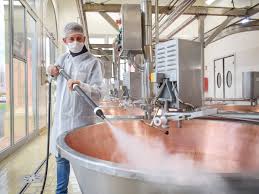
Cleaning is used to remove visible and invisible soil and dirt from food-processing surroundings and equipment. The nature of soil varies greatly with the type of food processed, but chemically it consists of lipids, proteins, carbohydrates, and some minerals.
Although water is used for some cleaning, to increase efficiency, chemical agents or detergents are used with water. In addition, some form of energy with the liquids, such as spraying, scrubbing, or turbulent flow, is used for better cleaning. Many types of detergents are available, and they are selected based on the need.
The effectiveness of a cleaning agent to remove soil from surfaces depends on several characteristics, such as efficiency in emulsifying lipids, dissolving proteins, and solubilizing or suspending carbohydrates and minerals.
Also, a detergent should be noncorrosive, safe, easily rinsed, and compatible, when required, with other chemical agents. The detergents frequently used in food processing facilities are synthetic, which can be anionic, cationic, or nonionic. Among these, anionic detergents are used with higher frequency.
Examples of anionic detergents include sodium lauryl sulfate and different alkyl benzene sulfonates and alkyl sulfonates. Each molecule has a hydrophobic or lipophilic (nonpolar) segment and a hydrophilic or lipophobic (polar) segment.
The ability of a detergent to remove dirt from a surface is attributed to the hydrophobic segment of a molecule. They dissolve the lipid materials of the soil on the surface by forming micelles with the polar segments protruding outside in the water.
The concentration of a detergent at which micelle formation starts is called the critical micelle concentration (CMC), which varies with the detergent. The concentration of a detergent is used above its CMC level.
The frequency of cleaning depends on the products being processed and the commitment of management to good sanitation.
From a microbiological standpoint, prior microbiological evaluation of a product can give an indication of the frequency of cleaning necessary in a particular facility.
Cleaning of the equipment is done either after disassembling the equipment or by the Clean-in-Place (CIP) system. Because of its efficiency and lower cost, CIP cleaning has become popular. The system uses detergent solutions at high pressure. Because microorganisms can grow in some detergent solutions, they preferably should be prepared fresh (not exceeding 48 hours).
Sanitizing Food Processing Equipment for Safety
Efficient cleaning can remove some microorganisms along with the soil from food contact surfaces, but it cannot ensure complete removal of pathogens. To achieve this goal, food contact surfaces are subjected to sanitation after cleaning.
The methods should effectively destroy pathogenic microorganisms as well as reduce the total microbial load. Several physical and chemical methods are used for sanitation of food processing equipment.
Physical agents used for sanitation of food processing equipment include hot water, steam, hot air, and UV irradiation. UV irradiation is used to disinfect surfaces. Hot water and steam, although less costly and efficient for destroying vegetative cells, viruses, and spores (especially steam), can be used only in a limited way.
Chemical sanitizers are used more frequently than physical sanitizers. Several groups of sanitizers are approved for use in food processing plants. They vary greatly in their antimicrobial efficiency. Some of the desirable characteristics used in selecting a chemical sanitizer are effectiveness for a specific need, nontoxicity, non-corrosiveness, no effect on food quality, ease of use and rinsing, stability, and cost-effectiveness.
Important factors for antimicrobial efficiency are exposure time, temperature, concentrations used, pH, microbial load and type, microbial attachment to surfaces, and water hardness. Some sanitizers, designated as detergent sanitizers, can both clean and sanitize.
They can be used in a single operation instead of first using detergent to remove soil and then using sanitizers to control microorganisms. The mechanisms of antimicrobial action and the advantages and disadvantages of some sanitizers used in food-processing plants are briefly discussed below.
Chemical Sanitizing Agents for Food Safety
1. Chlorine-Based Sanitizers
Some chlorine compounds used as sanitizers include liquid chlorine, hypochlorites, inorganic or organic chloramines, and chlorine dioxide. Chlorine compounds are effective against vegetative cells of bacteria, yeasts and molds, spores, and viruses.
Clostridial spores are more sensitive to chlorine compounds than bacilli spores. The antimicrobial action of chlorine compounds is due to the oxidizing effect of chlorine on the –SH group in many enzymes and structural proteins. Damage to membranes, disruption of protein synthesis, reactions with nucleic acids, and interference with metabolism have been suggested.
The germicidal action of liquid chlorine and hypochlorites is produced by hypochlorous acid (HOCl). It probably enters the cell and reacts with the –SH group of proteins. HOCl is stable at acidic pH and is thus more effective; at alkaline pH, it dissociates to H+ and OCl– (hypochlorite ions), which reduces its germicidal effectiveness.
They are also less effective in the presence of organic matter. Chloramines (inorganic or organic), such as Chloramine T, release chlorine slowly but are less active against bacterial spores and viruses.
They are effective, to some extent, against vegetative cells at alkaline pH. Chlorine dioxide is more effective at alkaline pH and in the presence of organic matter.
Chlorine compounds are fast-acting against all types of microorganisms, less costly, and easy to use. However, they are unstable at higher temperatures and with organic matter, corrosive to metals, can oxidize food, and are less active in hard water.
2. Iodophores
Iodophores are prepared by combining iodine with surface-active compounds, such as alkylphenoxypolyglycol. Because of the surface-active compounds, they are relatively soluble in water. Iodophores are effective against Gram-positive and Gram-negative bacteria, bacterial spores, viruses, and fungi.
Their germicidal property is attributed to elemental iodine (I2) and hypoiodous acid, which oxidize the –SH group of proteins, including key enzymes. They are more effective at acidic pH and higher temperatures, and in the presence of organic matter, they do not lose germicidal properties as rapidly as chlorine does.
However, their effectiveness is reduced in hard water. They are fast-acting, noncorrosive, easy to use, nonirritating, and stable. Iodophores are expensive, less effective than hypochlorites against spores and viruses, can cause flavor problems in products, and react with starch.
3. Quaternary Ammonium Compounds
Quaternary ammonium compounds (QACs) can be used as detergent sanitizers because they have cleaning properties along with germicidal abilities. However, they are principally used as sanitizers. They are synthesized by reacting tertiary amines with alkyl halides or benzyl chloride. The cationic group is hydrophobic, and the anionic group is hydrophilic.
QACs can act as bactericides in high concentrations and when used in solution. However, they form a film on the equipment surface, in which state they are bacteriostatic. They are more effective against Gram-positive bacteria than many Gram-negative bacteria, bacterial spores, fungi, and viruses.
The antimicrobial action is produced by the denaturation of microbial proteins and destabilization of membrane functions. They are more effective against microorganisms at acidic pH and higher temperatures. Their effectiveness is not greatly reduced in the presence of organic matter.
However, they are less effective in hard water. QACs are advantageous as sanitizers because they are highly stable, non-corrosive, non-irritating, non-toxic, show residual bacteriostatic effect, and exhibit a detergent effect.
The disadvantages are high cost; low activity against many Gram-negative bacteria, spores, and viruses; incompatibility with anionic synthetic detergents; and the requirement for rinsing before use because of film formation on equipment surfaces. Some Gram-negative bacteria, such as Pseudomonas spp., can grow in diluted QAC solutions.
4. Hydrogen Peroxide
Hydrogen peroxide (H2O2) is a very effective germicide and kills vegetative cells, spores, and viruses. It is used for sanitation of equipment and containers used in the aseptic packaging of foods and beverages. Equipment and container surfaces can be sterilized in 15 minutes with a 30 to 50% solution; the treatment time can be reduced if the temperature of the solution is raised to 65.6 to 71.7°C (150 to 160°F). Use of H2O2 in vapor phase can also be effective in killing microorganisms on food contact surfaces. Organic materials greatly reduce the germicidal effect of H2O2.
Microbiological Standards and Guidelines for Food Safety
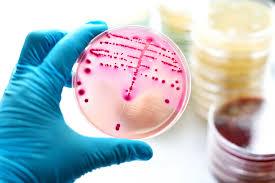
Microbiological standards, specifications, and guidelines are useful in keeping the microbial load of foods at acceptable levels by various methods, one of which is by controlling their access to foods. Microbiological standards of food are set and enforced by regulatory agencies to increase consumer safety and product stability.
A standard dictates the maximum microbial level that can be accepted in a food. With proper sanitation and quality control, this level is generally attainable. Some examples are maximum acceptable levels of standard plate counts (SPCs) of Grade A raw milk, 100,000/ml; pasteurized Grade A milk, SPC 20,000/ml and coliforms <10/ml.
However, very few foods have microbiological standards, while many foods and food ingredients have microbiological specifications.
A specification indicates the maximum permissible microbial load for the acceptance of a food or food ingredient. It should be attainable and agreed upon by the buyers and sellers of the products. It is not set up or enforced by regulatory agencies. In the U.S., the military has microbiological specifications for foods purchased for army rations.
For example, dried whole egg has the following specifications: aerobic plate count (APCs), 25,000/g; coliforms, 10/g; and Salmonella, negative in 25/g. The specifications discourage mixing a microbiologically poor-quality product with a good-quality product.
Microbiological guidelines are generally set either by regulatory agencies or food processors to help generate products of acceptable microbiological qualities.
A guideline is set at a level that can be achieved if a food-processing facility uses good cleaning, sanitation, and handling procedures. It also helps detect if a failure has occurred during processing and handling, thus alerting the processor to take corrective measures.
Frequently Asked Questions (FAQs)
- What are indicator organisms, and why are they important in food sanitary quality?
Indicator organisms are microorganisms used to assess the microbiological quality of food, indicating potential hazards like process failure or contamination. Their presence, such as Escherichia coli suggesting fecal contamination, helps evaluate hygiene levels and predict shelf life, ensuring food safety and quality. - How does the aerobic plate count (APC) contribute to food safety assessments?
The aerobic plate count (APC) measures the total number of indicator microorganisms in a food product. It is used to monitor compliance with regulatory standards, purchase specifications, and Good Manufacturing Practices (GMPs), providing insight into the overall hygiene and quality of the food. - What personal hygiene practices are essential in food processing facilities?
Essential practices include maintaining a clean body, hair, and clothing, wearing hairnets and beard covers, using long-sleeved smocks, and storing personal items away from processing areas. Only plain wedding bands and small post earrings are allowed, and employees must avoid working if showing symptoms of foodborne illness. - Why is the design of a food processing plant critical for sanitation?
A well-designed plant minimizes microbial contamination through features like approved construction materials, proper ventilation, separated raw and finished product areas, and adequate plumbing. Consulting regulatory agencies during planning ensures compliance and reduces the need for costly modifications. - How does water quality affect food safety in processing?
Water used in food processing, especially for ready-to-eat foods, must be free of pathogens and low in spoilage bacteria like Pseudomonas spp. Poor water quality, such as in chilling or defeathering processes, can lead to cross-contamination, affecting food safety and shelf life. - What role do chemical sanitizers play in food processing equipment sanitation?
Chemical sanitizers, such as chlorine compounds, iodophores, quaternary ammonium compounds (QACs), and hydrogen peroxide, are used to destroy pathogens and reduce microbial load on food contact surfaces after cleaning. Their effectiveness depends on factors like pH, temperature, and exposure time. - How do microbiological standards and specifications differ in food safety?
Microbiological standards are set by regulatory agencies to enforce maximum acceptable microbial levels for safety, like in milk. Specifications, agreed upon by buyers and sellers, define permissible microbial loads for acceptance, such as for military rations, and are not regulatory. - Why is training personnel important for food sanitation?
Training ensures personnel understand sanitation and personal hygiene practices, reducing contamination risks. Programs teach and monitor compliance, ensuring employees handle food safely and avoid working when ill, thus maintaining product safety and stability.
Do you have any questions, suggestions, or contributions? If so, please feel free to use the comment box below to share your thoughts. We also encourage you to kindly share this information with others who might benefit from it. Since we can’t reach everyone at once, we truly appreciate your help in spreading the word. Thank you so much for your support and for sharing!