


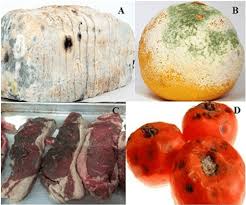
In the previous article, the use of a test kit for bacterial count was discussed. In this article, food spoilage, its causes, and its effects on food nutrients will be explored. Most natural foods have a limited life.
Perishable foods such as fish, meat, milk, bread, tomatoes, and potatoes have a short life span. Other foods last for a considerably longer time but decompose eventually. Once food has been harvested, gathered, or slaughtered, it begins to deteriorate until it becomes unfit for consumption.
Defining Food Spoilage
Food is considered contaminated when unwanted microorganisms are present. Most often, contamination is natural, but sometimes it is artificial. Natural contamination occurs when microorganisms attach to foods during their growing stages.
For instance, fruits are often contaminated with yeasts because yeasts ferment the carbohydrates in fruits. Artificial contamination occurs when food is handled or processed, such as when fecal bacteria enter food through improper handling procedures.
Food spoilage is a disagreeable change or departure from the food’s normal state. Such a change can be detected with the senses of smell, taste, touch, or vision.
Changes in food depend on the composition of the food and the microorganisms present, resulting from chemical reactions related to the metabolic activities of microorganisms as they grow in the food.
Read Also: Feed Lot Fattening of Rams Practice
Signs of Food Spoilage
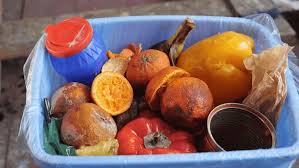
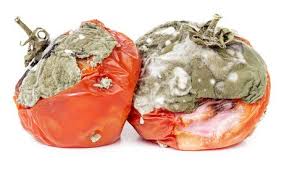
Signs of food spoilage may include an appearance different from the food in its fresh form, such as a change in color, texture, an unpleasant odor, or an undesirable taste. The item may become softer than normal. If mold occurs, it is often visible externally on the item.
Causes of Food Spoilage
Food spoilage is caused by two main factors:
- Natural decay in foods
- Contamination by microorganisms
Natural Decay in Foods
This occurs due to moisture loss and the action of enzymes.
1. Moisture Loss
Moisture loss mostly affects fruits and vegetables, which contain large amounts of water. Fruits and vegetables continue to respire after harvesting, losing water through their leaves and skin. Such water could be replaced from the soil through the roots when not harvested.
The water retains the structures of the plant cells, making them look fresh. After harvesting, lost water cannot be replaced, so the vegetable or fruit shrinks, becomes limp, and its skin becomes wrinkled and leathery. Moisture loss also occurs in foods like meat, fish, and cheese due to evaporation of water from the surface.
2. Enzyme Action in Foods
Food spoilage can also result from the action of enzymes present in the food. Enzymes are chemicals found in all foods. They speed up chemical changes that result in loss of flavor, color, and texture.
As enzymes are mainly composed of protein, they are sensitive to heat. They are active at temperatures found in a kitchen on a warm sunny day and remain slightly active at low temperatures, such as those in a freezer.
This is why there is a limit to the time food can be stored in a freezer. Enzyme activity stops when heated above 70°C. Heat treatment by blanching (i.e., pouring boiling water on the food) is recommended.
Some enzymes remain inactive until the food is harvested or slaughtered. Once activated, such enzymes speed up decay by breaking down tissues and components of the food through processes like oxidation, browning, and ripening.
i. Oxidation
When oxidation occurs (i.e., when food comes into contact with oxygen), enzymes cause the destruction of certain nutrients, such as vitamin C, thiamine, and carotene.
ii. Browning
Enzymes cause browning in certain foods when exposed to air. When food such as an apple or yam is cut or bruised, the exposed surface discolors and turns brownish due to enzyme activity.
iii. Ripening
Enzymes are involved in the ripening process of certain foods like fruits and vegetables. For example, unripe bananas contain starch, which is gradually converted to sugars, making the banana very sweet, with its skin changing from green to yellow. Eventually, the skin turns dark brown, rendering it unfit for consumption.
The activity of enzymes in food makes it easier for microorganisms responsible for food spoilage to enter.
Contamination by Microorganisms
The main microorganisms responsible for food contamination are bacteria, molds, and yeasts. These microorganisms are invisible to the naked eye but can be seen under a microscope. They multiply rapidly in the correct moisture, food, and temperature conditions. These conditions must be avoided to reduce the risk of food spoilage.
1. Molds
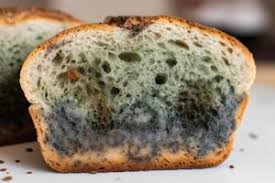
Molds, classified as fungi, develop a multicellular structure visible to the naked eye. They grow from cells called spores present in the air, settling and multiplying on suitable foods. At this stage, they appear as a fluffy, colored mass, and the food is said to have gone moldy.
Molds grow readily in moist conditions, at temperatures between 20°C and 40°C, on foods like meat, cheese, fruit, and bread, especially if stored in damp conditions. Molds may remain active at refrigerator temperatures but are destroyed by heat above 70°C.
They thrive in slightly acidic environments, attacking citrus fruits and the surface of jams. Food contaminated with mold may appear safe to eat, as only the outer part is affected, but substances produced by molds can migrate into the food and harm organs. It is advisable to discard moldy food completely rather than removing only the moldy part.
2. Yeasts
Yeasts are microscopic fungi found in the air, soil, and on fruit surfaces. Some tolerate high acidic, salt, and sugar concentrations and can grow without oxygen.
Yeast activity is used in baking and brewing to produce bread, doughnuts, and alcoholic beverages through fermentation. However, yeasts can cause spoilage in syrups, fruits, fruit juices, and jams, as they can survive without air.
Yeast cells reproduce by budding. A small projection appears at the edge of the parent cell, receiving cytoplasm and nutrients. As the bud grows, the nucleus moves toward it and divides, forming a new nucleus.
When the bud is almost as large as the parent cell, a wall forms, separating it, and it breaks away. Rapid reproduction can form long chains of yeast cells. Yeasts grow best at temperatures between 25°C and 30°C, requiring oxygen, warmth, food, and moisture. Extreme heat destroys yeasts, with most being destroyed above 60°C.
3. Bacteria
Bacteria are the most widespread microorganisms in food. They are minute, single-celled organisms of various shapes. Under ideal conditions, they divide every 20 minutes, allowing millions to develop in contaminated food quickly.
They are more dangerous than molds and yeasts because food may be severely infected without smelling, tasting, or looking bad. Many bacteria are harmless, but some, known as pathogens, cause illness.
To prevent infection, conditions favoring bacterial growth must be avoided. Bacteria are active over a wide temperature range, with some thriving at 75°C and others at 5°C, causing storage issues.
Some bacteria form spores to survive unfavorable conditions, such as incorrect acidity, temperature, or lack of moisture. While normal bacteria are destroyed by boiling, some spores survive for hours, resuming activity when conditions improve, contaminating preserved foods. Bacteria are killed in acidic environments, making them less problematic in fruit preservation and jam-making.
Pasteurization of milk destroys disease-causing bacteria but not all bacteria. Freezer temperatures must be low enough to prevent bacterial activity. Some bacteria die in the freezer, but others remain inactive and grow again when food thaws. Removing moisture by drying or adding large quantities of sugar and salt creates unsuitable conditions for bacteria, aiding food preservation.
Read Also: The Systems of Sheep Production
Reasons for Preventing Food Spoilage
- Deterioration may cause food to be wasted.
- Contaminated food can cause illness, and in severe cases, this is known as food poisoning.
- Money is saved when food commodities are kept from spoilage.
- Preventing spoilage maintains the nutritive value of food.
- It ensures food is available for use at all times.
Effects of Spoilage on Food Commodities
- Proteins putrefy when contaminated, causing protein foods to rot and produce a bad smell.
- Fats and oils go rancid, causing foods containing them to smell and taste bad when old.
- Cooked cereals become marshy and slimy when affected by microorganisms, a condition known as serenasis.
- Flour products smell and taste unpleasant when spoiled, described as stale.
- Fruits and vegetables rot, ferment, and decay.
Consequences of Food Spoilage
Some spoiled foods are harmless to eat, with only diminished quality. However, foods with certain types of spoilage may be harmful. Uncooked or undercooked animal flesh that spoils is typically toxic, and consumption can result in serious illness or death. The toxic effects from consuming spoiled food are known colloquially as “food poisoning” and more properly as “foodborne illness.”
Preventing Food Spoilage
Several methods can prevent, delay, or reduce food spoilage:
1. Preservatives expand the shelf life of food, allowing sufficient time for harvesting, processing, selling, and storage in homes.
2. Refrigeration increases the shelf life of certain foods and beverages, though it does not preserve them indefinitely.
3. Freezing preserves food longer, though it has limitations.
4. Canning preserves food for extended periods, whether at home or commercially. Canned food is vacuum-packed to exclude oxygen, preventing bacterial growth, though it does not preserve food indefinitely.
5. Drying allows foods to last a long time, sometimes nearly indefinitely.
Reducing Spoilage in Restaurants
With tight budgets, restaurants must minimize spoilage to save money. Here are tips to reduce food spoilage in restaurant kitchens:
- Avoid overbuying fresh produce. Sales reps may push bulk purchases of items like lettuce or tomatoes, but if more than one case cannot be used within a week, spoilage risks increase, leading to money loss. Only buy what can be sold within a week.
- Keep everything labeled and organized in walk-in coolers, freezers, and dry storage to ensure food safety and use older food first (FIFO) before it spoils.
- Inspect food orders upon arrival. Cases of fresh produce may arrive spoiled or near spoilage (DOA). Send back such orders and discuss with the sales rep. If issues persist, consider a new vendor.
- Keep beer and wine at constant temperatures. Fluctuating temperatures can cause beer to taste “skunked” and wine to become bitter. Ensure dry storage areas maintain a consistent temperature.
Food spoilage is nearly unavoidable in restaurants, but staying organized and buying only what is needed can minimize it. Avoid discarding questionable foods prematurely, but follow the rule: “When in doubt, throw it out!” A little spoilage is better than risking customer health.
Frequently Asked Questions About Food Spoilage
- What is food spoilage, and how can it be detected?
Food spoilage is a disagreeable change from a food’s normal state, detectable through changes in smell, taste, touch, or vision, such as altered color, texture, unpleasant odor, or undesirable taste. - What are the main causes of food spoilage?
Food spoilage is caused by natural decay (moisture loss and enzyme action) and contamination by microorganisms like bacteria, molds, and yeasts. - How do enzymes contribute to food spoilage?
Enzymes in food speed up chemical changes, causing loss of flavor, color, and texture through processes like oxidation, browning, and ripening, making food more susceptible to microbial spoilage. - Why are bacteria considered more dangerous than molds or yeasts in food spoilage?
Bacteria are more dangerous because heavily contaminated food may not smell, taste, or look bad, yet can contain pathogens that cause illness. - What are some effective methods to prevent food spoilage?
Methods include using preservatives, refrigeration, freezing, canning, and drying to extend shelf life and prevent microbial growth. - How can restaurants reduce food spoilage?
Restaurants can reduce spoilage by avoiding overbuying fresh produce, labeling and organizing storage (FIFO), inspecting deliveries, and maintaining consistent storage temperatures for items like beer and wine. - What are the health risks of consuming spoiled food?
Consuming spoiled food, especially uncooked or undercooked animal flesh, can lead to foodborne illness, commonly known as food poisoning, which can cause serious illness or death. - Why is it recommended to discard moldy food entirely?
Moldy food should be discarded because substances produced by molds can migrate into the food, potentially harming organs, even if only the outer part appears affected.
Do you have any questions, suggestions, or contributions? If so, please feel free to use the comment box below to share your thoughts. We also encourage you to kindly share this information with others who might benefit from it. Since we can’t reach everyone at once, we truly appreciate your help in spreading the word. Thank you so much for your support and for sharing!