


Microbial growth refers to cell growth and an increase in cell population. For growth to occur, suitable materials, energy sources, and water must be provided. The type of nutrient supplied depends on the organism’s natural habitat.
Cultivation Methods for Microorganisms
Culture media can be grouped based on their components, divided into two categories:
- Defined or synthetic medium (known components)
- Complex medium (unknown ingredients)
Defined or Synthetic Medium for Microbial Cultivation
This medium contains known components, typically including a carbon source, nitrogen, sulfur, phosphorus, and various minerals. These elements are often derived from carbon dioxide (CO₂). Defined media are widely used in agricultural research.
Complex Medium for Microbial Cultivation
This medium includes ingredients of unknown chemical composition, such as yeast extract, peptone, or meat extract, providing carbon, nitrogen, sulfur, and phosphorus. Complex media are commonly used in routine cultivation in agriculture, incorporating ingredients of unknown composition.
Read Also: Cold Weather Poultry Diseases and How to Manage them
Types of Culture Media in Agriculture
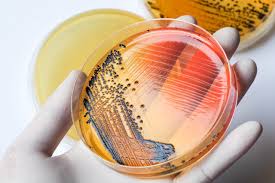
There are four main types of media:
- General-purpose media
- Enriched media
- Selective media
- Differential media
General-Purpose Media for Microbial Growth
These support the growth of a wide range of microorganisms. Examples include nutrient agar (solid), nutrient broth (liquid), tryptic soy agar (solid), tryptic soy broth (liquid), and potato dextrose agar (used for fungi).
Enriched Media for Enhanced Microbial Growth
These are general-purpose media fortified with blood or other special nutrients, such as blood agar, to enhance microbial growth in agricultural studies.
Selective Media for Targeted Microbial Growth
These media favor the growth of specific microorganisms while inhibiting others. Examples include MacConkey agar (used to differentiate between lactose-fermenting and non-lactose-fermenting bacteria), Endo agar, and Eosin Methylene Blue agar.
Differential Media for Microbial Identification
These media differentiate between groups of bacteria and can tentatively identify microorganisms. For example, blood agar distinguishes between hemolytic and non-hemolytic bacteria.
Nutrient and Environmental Requirements for Microbial Growth
All microbes require nutrients such as carbon, hydrogen, oxygen, nitrogen, sulfur, phosphorus, magnesium, iron, and trace elements. These may be sourced from inorganic or organic materials. Organisms also need energy, derived from sugars or sunlight. Sugars come from various food sources, while sunlight is utilized by photosynthetic organisms.
Water is essential, serving as a medium for chemical reactions within the cell and facilitating the movement of soluble substances into the cell and waste out of it. The amount of liquid water available in food is known as water activity.
Different organisms have varying water requirements: bacteria thrive in high water activity, yeast in moderate, and molds in the least. When foods are dried for preservation, microbes are deprived of water.
However, if water levels rise during damp storage, the food will increasingly support mold growth, followed by yeast, and finally bacteria.
Microbial Growth Curve in Agricultural Contexts
Bacteria divide by binary fission, with one parent cell yielding two daughter cells. The time required for bacteria to double under optimal conditions is called the “generation time,” which depends on environmental conditions. Bacterial populations in a culture vessel undergo several phases of growth:
- Lag phase
- Exponential or logarithmic phase
- Stationary phase
- Death or decline phase
Read Also: Layers or Broilers which One is More Profitable in Poultry Farming? Find Out!
Lag Phase of Microbial Growth
After inoculation into a medium, bacterial cells undergo a period of adaptation to their environment. Necessary enzymes and metabolites are produced, and the population increases in size and metabolic activity. No reproduction occurs, and the duration depends on the inoculum size, culture medium, and environmental factors.
Exponential or Logarithmic Phase of Microbial Growth
Once adapted, cells multiply rapidly until reaching the maximum population the environment can support. This phase is represented by a straight line on the growth curve, with high reproduction and minimal cell death.
Stationary Phase of Microbial Growth
Growth slows due to nutrient depletion, waste accumulation, overcrowding, or toxin production. The number of cells dying equals those produced, resulting in no net increase, shown as a horizontal line on the growth curve.
Death or Decline Phase of Microbial Growth
Nutrient depletion and toxic waste accumulation reduce viable cells. Reproduction is minimal, and cell death is high. If not transferred to a favorable environment, most cells die, though some may persist by utilizing nutrients from dead cells.
Factors Influencing Microbial Growth in Agriculture
Different microbes require specific physical and chemical conditions for optimal growth, including:
1. Temperature: Three temperature ranges affect growth:
Minimum temperature range
Optimum temperature range (+10–15°C)
Maximum temperature range
Below the minimum, multiplication ceases; above the minimum, growth accelerates until the optimum, where growth is highest. Beyond the maximum, growth stops.
Microorganisms are classified by temperature requirements:
2. Psychrophiles: Thrive in cold environments (e.g., refrigerators, freezers), spoiling stored food. Examples include Penicillium and Bacillus species. Optimum temperature: +10–15°C.
3. Mesophiles: Found in warm-blooded animals or soil/water, with an optimum temperature of 37°C (human body temperature). Examples include Streptococcus pyogenes and Staphylococcus aureus.
4. Thermophiles: Prefer higher temperatures (45–55°C).
5. pH: Microorganisms grow within specific pH ranges:
6. Neutrophiles: Prefer neutral environments (near pH 7). Most microbes are neutrophiles.
7. Acidophiles: Thrive in acidic conditions, unaffected by pickling, which prevents spoilage by neutrophiles.
8. Alkalinophiles: Prefer alkaline environments.
9. Oxygen: Oxygen requirements vary:
10. Aerobic organisms: Require oxygen for metabolic processes.
11. Anaerobic organisms: Thrive without oxygen and may not survive in its presence.
12. Facultative anaerobic organisms: Adapt to the presence or absence of oxygen.
13. Microaerophilic organisms: Need minimal oxygen for growth.
14. Water Activity (aw): Most microbes grow between aw of 0.90–0.99, containing dissolved nutrients and gases. Dried foods resist microbial growth, but increased water activity allows mold, yeast, and bacterial growth.
15. Pressure and Salinity: These also influence microbial growth in agricultural settings.
Isolation of Pure Microbial Cultures for Agricultural Research
Microorganisms coexist in mixed cultures in nature. A pure culture, derived from a single cell, is essential for studying specific species. Aseptic techniques prevent contamination during isolation, involving:
- Sterilization of media and glassware using an autoclave at 121°C for 15 minutes.
- Transfer methods, including streak plate, spread plate, or pour plate methods.
Pure cultures are maintained in test tubes or MacConkey bottles with solidified agar slants, stored in refrigerators, freezers, liquid nitrogen, or freeze-dried (lyophilization). Glycerol storage at low temperatures is also used.
Control of Microbial Growth in Agriculture
Microbial growth can benefit or harm agriculture, necessitating control to:
- Prevent infections in plants, animals, or humans.
- Avoid food spoilage and damage to commodities.
- Prevent contamination in industrial processes or lab materials.
Control methods include:
1. Heat Application: High temperatures damage cell structures, killing microbes.
2. Sterilization: Destroys or removes all living cells, spores, or viruses, using moist heat (autoclave) or dry heat (hot air oven, flaming, incineration).
3. Chemical Substances: Antimicrobial agents like disinfectants, antiseptics, sanitizers, and antibiotics inhibit or kill microbes.
4. Disinfection: Kills or inhibits disease-causing microbes on inanimate objects, though some spores may persist (e.g., chlorine).
5. Antiseptics: Prevent infections on living tissues, reducing microbial levels (e.g., potassium iodide).
6. Sanitization: Reduces microbial populations on objects to safe levels, used in food industries (e.g., hypochlorite).
7. Irradiation: Uses gamma rays, X-rays, or ultraviolet rays to damage bacterial DNA, preventing replication.
Conditions Influencing Antimicrobial Effectiveness in Agriculture
1. Population Size: Larger populations require longer exposure for antimicrobial agents to work.
2. Population Composition: Young cells, spores, or resistant cells prolong antimicrobial action.
3. Concentration/Intensity of Agent: Incorrect concentrations may foster resistant cells.
4. Duration of Exposure: Longer contact enhances effectiveness.
5. Temperature: Higher temperatures improve antimicrobial efficacy.
6. Local Environment: Factors like food, water hardness, or dirt reduce effectiveness.
7. pH: The agent’s pH impacts its efficacy.
Products of Microbial Growth in Agriculture
Microbial growth produces waste products, either retained in cells and released upon death or secreted into the medium. These include:
- Gases (e.g., CO₂, H₂S)
- Acids (e.g., lactic, propionic, acetic)
- Alcohol
- Aromatic compounds (flavors or off-flavors)
- Antibiotics
- Toxins
These products can affect food quality, soil health, or agricultural processes.
Frequently Asked Questions (FAQs) About Microbial Growth in Agriculture
- What is microbial growth, and why is it important in agriculture?
Microbial growth refers to the increase in cell size and population of microorganisms. In agriculture, it is critical because microbes can enhance soil fertility, aid in nutrient cycling, or cause food spoilage and plant diseases, necessitating proper management. - What are the main types of culture media used in agricultural microbiology?
The main types are general-purpose media (e.g., nutrient agar), enriched media (e.g., blood agar), selective media (e.g., MacConkey agar), and differential media (e.g., blood agar for hemolytic bacteria differentiation). - How does water activity affect microbial growth in food preservation?
Water activity determines the availability of liquid water for microbial growth. Bacteria require high water activity, yeast moderate, and molds the least. Drying foods reduces water activity, preventing microbial growth, but damp storage can promote mold, yeast, and bacterial growth. - What are the phases of the microbial growth curve, and how do they apply to agriculture?
The phases are lag (adaptation), exponential (rapid multiplication), stationary (balanced growth and death), and death (decline due to nutrient depletion). Understanding these helps manage microbial growth in soil, compost, or food storage. - How does temperature influence microbial growth in agricultural settings?
Temperature affects growth rates, with psychrophiles thriving in cold (e.g., food spoilage in refrigerators), mesophiles at human body temperature (e.g., soil bacteria), and thermophiles at high temperatures (e.g., compost). Optimal temperatures maximize growth. - Why is controlling microbial growth important in agriculture?
Controlling microbial growth prevents plant and animal infections, food spoilage, and contamination in agricultural processes, ensuring food safety and quality. - What methods are used to isolate pure microbial cultures in agricultural research?
Aseptic techniques, including sterilization (autoclaving at 121°C for 15 minutes) and transfer methods (streak, spread, or pour plate), are used to isolate pure cultures for studying specific microbes. - How do antimicrobial agents work in agriculture, and what factors influence their effectiveness?
Antimicrobial agents like disinfectants, antiseptics, and irradiation kill or inhibit microbes. Their effectiveness depends on population size, composition, agent concentration, exposure time, temperature, pH, and environmental factors like dirt or water hardness.
Do you have any questions, suggestions, or contributions? If so, please feel free to use the comment box below to share your thoughts. We also encourage you to kindly share this information with others who might benefit from it. Since we can’t reach everyone at once, we truly appreciate your help in spreading the word. Thank you so much for your support and for sharing!