


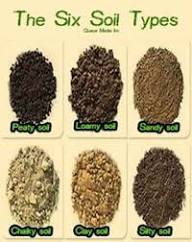
Soil classification deals with the systematic categorisation of soils based on distinguishing characteristics as well as criteria that dictate choices in use. Soil classification is a dynamic subject, from the structure of the system itself, to the definitions of classes, and finally in the application in the field.
Soil classification can be approached from the perspective of soil as a material and soil as a resource. Development of sustainable agricultural systems such as alley farming is an attempt to reduce degradation of natural resources and to find environmentally compatible ways of increasing production and promoting broad-scale development.
Read Also: How to Extract and Package Snail Slime (Snail filtrate) for Commercial Use
Soil Resources for Agricultural Intensification
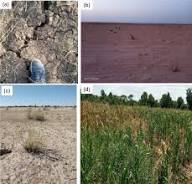
Intensification of agriculture on land currently used for traditional farming requires a thorough knowledge of the soil as a resource and attributes of the land. Information on distribution, potential, and constraints of major soils is needed, so that the most appropriate soil management systems can be designed.
In addition, knowledge on land capability and suitability is also essential to determine the best land use for sustained crop production. This article reviews current systems used to classify Nigerian soils and land capabilities.
Characteristics of Nigerian Soils
Soil is the thin layer covering the entire earth’s surface, except for open water surfaces and rock outcrops. The properties of soil are determined by environmental factors.
Five dominant factors are often considered in the development of the various soils:
- the climate
- parent materials (rocks and physical and chemical derivatives of same),
- relief
- organisms (fauna and flora)
- the time factor. There are a large number of different soils, reflecting different kinds and degrees of soil-forming factors and their combinations.
Soil Profile and Classification Systems
Scientists have developed different systems of soil classification to group soils of similar properties in one class, allowing them to exchange information on soils found in different areas. Soil classification also helps in determining the best possible use and management of soils. Soil classification is, however, a controversial subject at both national and international levels.
There is lack of agreement for a common classification system, because soil scientists do not agree on the characteristics for differentiating and classifying soils.
Although many soil classification systems exist; however, two systems are widely used: The USDA Soil Taxonomy and the FAO/UNESCO legend. The classification of soils starts with examination of soil profiles.
Morphologically, soils are composed of a series of horizons. Soil horizons are layers of different appearance, thickness, and properties which have arisen by the action of various soil-forming processes.
The horizons are normally parallel to the surface. Collectively, the horizons make up what is called the soil profile or soil “pedon”. A soil profile is defined as a vertical section of the soil to expose layering.
Hierarchy of Soil Taxonomy Categories
There are six levels in the hierarchy of categories: Orders (the highest category), suborders, great groups, subgroups, families, and series (the lowest category) (USDA, 1978).
Read Also: Proper Layers Management Practices for Better Performance
Suborders in Soil Classification
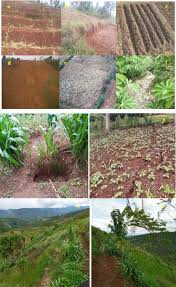
It is the next level of generalisation. It permits more statements to be made about a given soil. In addition to morphological characteristics, other soil properties are used to classify the soil. The suborder focuses on genetic homogeneity like wetness or other climatic factors.
There are 47 suborders within the 10 orders. The names of the suborders consist of two syllables. The first connotes the diagnostic properties; the second is the formative element from the soil order name. For example, an Ustalf is an alfisol with an ustic moisture regime (associated with subhumid climates).
Great Groups for Specific Soil Properties
The great group permits more specific statements about a given soil as it notes the arrangement of the soil horizons. A total of 230 great groups (140 of which occur in the tropics) have been defined for the 47 suborders.
The name of a great group consists of the name of the suborder and a prefix suggesting diagnostic properties. For example, a Plinthustalf is an ustalf that has developed plinthite in the profile. Plinthite development is selected as the important property and so forms the prefix for the great group name.
Descriptions of Soil Orders for Agricultural Use
Brief Descriptions of the Ten Soil Orders according to Soil Taxonomy
| SOIL ORDERS | DESCRIPTION |
|---|---|
| ALFISOLS | Soils with a clayey B horizon and exchangeable cation (Ca + Mg + K + Na) saturation greater than 50% calculated from NH4OAc-CEC at pH7. |
| ULTISOLS | Soils with a clayey B horizon and base saturation less than 50%. They are acidic, leached soils from humid areas of the tropics and subtropics. |
| OXISOLS | Oxisols are strongly weathered soils but have very little variation in texture with depth. Some strongly weathered, red, deep, porous oxisols contain large amounts of clay-sized Fe and Al oxides. |
| VERTISOLS | Dark clay soils containing large amounts of swelling clay minerals (smectite). The soils crack widely during the dry season and become very sticky in the wet season. |
| MOLLISOLS | Prairie soils formed from colluvial materials with dark surface horizon and base saturation greater than 50%, dominating in exchangeable Ca. |
| INCEPTISOLS | Young soils with limited profile development. They are mostly formed from colluvial and alluvial materials. Soils derived from volcanic ash are considered a special group of Inceptisols, presently classified under the Andept suborder (also known as Andosols). |
| ENTISOLS | Soils with little or no horizon development in the profile. They are mostly derived from alluvial materials. |
| ARIDISOLS | Soils of arid region, such as desert soils. Some are saline. |
| SPODOSOLS | Soils with a bleached surface layer (A2 horizon) and an alluvial accumulation of sesquioxides and organic matter in the B horizon. These soils are mostly formed under humid conditions and coniferous forest in the temperate region. |
| HISTOSOLS | Soils rich in organic matter such as peat and muck. |
Factors Influencing Soil Types in Agriculture
Soil classification deals with the systematic categorisation of soils based on distinguishing characteristics as well as criteria that dictate choices in use. Topography, geological processes, climatic conditions, vegetation, and human interferences play major roles in determination of soil types.
Do you have any questions, suggestions, or contributions? If so, please feel free to use the comment box below to share your thoughts. We also encourage you to kindly share this information with others who might benefit from it. Since we can’t reach everyone at once, we truly appreciate your help in spreading the word. Thank you so much for your support and for sharing!