


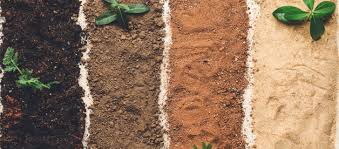
Soils are a mixture of different things: rocks, minerals, and dead, decaying plants and animals. Soil can be very different from one location to another, but generally consists of organic and inorganic materials, water, and air. The inorganic materials are the rocks that have been broken down into smaller pieces.
The size of the pieces varies. It may appear as pebbles, gravel, or as small as particles of sand or clay. The organic material is decaying living matter. This could be plants or animals that have died and decay until they become part of the soil.
The amount of water in the soil is closely linked with the climate and other characteristics of the region. The amount of water in the soil is one thing that can affect the amount of air.
Very wet soil, like that found in a wetland, probably has very little air. The composition of the soil affects the plants and therefore the animals that can live there.
Read Also : Vegetative Structure of Seed Plants: The Leaf
Major Components of Soil
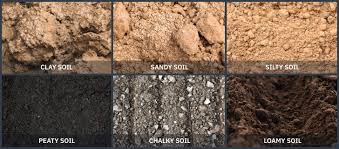
Soils consist of four major components:
- Mineral (or inorganic)
- Organic
- Water
- Air
The relative proportions of these four soil components vary with soil type and climatic conditions. The approximate proportions (by volume) of the four soil components in a mineral soil under optimum conditions for plant growth can be reviewed.
Mineral Components in Soil
Mineral particles are inorganic materials derived from rocks and minerals. They are extremely variable in size and composition.
Types of Primary and Secondary Minerals
Primary minerals are formed at high temperature and pressure, under reducing conditions without free oxygen. These minerals are mainly present in soils as sand and silt particles. They are not crystallized and deposed from molten lava.
Secondary minerals are formed at low temperature and pressure through oxidation. They are the weathering product of primary minerals, either through alteration of their structure or through re-precipitation. Secondary minerals are usually present in soil as clay particles.
Size of Soil Particles
The mineral particles present in soils vary enormously in size from boulders and stones down to sand grains and minute clay particles that cannot be seen by an optical microscope. An arbitrary division is made by size-grading soil into material:
- That passes through a sieve with 2-mm diameter holes – the fine earth (consisting of sand, silt, and clay particles)
- That is retained on the sieve (> 2 mm)
- the coarse fragments (gravel, cobbles, and stones)
Coarse fragments (diameter > 2 mm) are defined as rock fragments and do not include fragments of pads or concretions.
Soil Texture and Its Importance
Soil texture refers to the relative proportions of sand, silt, and clay in a soil. It is often the first and most important property to be determined when describing a soil, since many conclusions can be drawn from this information (water intake or infiltration, water storage in the soil, soil aeration, soil fertility, trafficability, etc.).
Read Also : Different Classes of Snail Feed Based on their Nutritional Requirements
Weathering Processes in Soil Formation
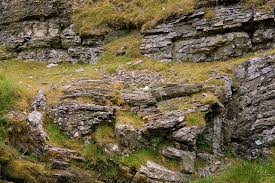
Weathering refers to the breakdown and changes in rocks and sediments at or near the Earth’s surface brought about by biological, chemical, and physical agents or combinations thereof. Weathering also involves the synthesis of new (secondary) minerals that are of great importance in soil (e.g., clay minerals).
Examples of physical weathering include processes such as crystal growth, thermal expansion, moisture swelling, abrasion, etc.
Chemical weathering consists of the following processes:
1. Hydration: intact water molecules bind to a mineral, transforming hematite into ferrihydrate.
2. Hydrolysis: water molecules split into their hydrogen and hydroxyl components, and hydrogen replaces a cation from the mineral structure (e.g., transformation of feldspar to kaolinite).
3. Dissolution (or solution): water is capable of dissolving many minerals by hydrating the cations and anions until they become dissociated from each other and surrounded by water molecules (e.g., dissolution of gypsum).
4. Carbonation: weathering is accelerated by the presence of acids that increase the activity of hydrogen ions in water. For example, when carbon dioxide dissolves in water (a process enhanced by microbial and root respiration), the carbonic acid (H2CO3) produced hastens the chemical dissolution of calcite into limestone (or marble).
5. Oxidation-reduction: minerals that contain Fe, Mn, or S are especially susceptible to oxidation-reduction reactions. When, for example, iron is oxidized from divalent to trivalent form, the change in valence and ionic radius causes destabilizing adjustments in the crystal structure of the mineral.
Biological weathering effects include:
- The breakup of rock particles by roots
- The transfer and mixing of materials by burrowing animals
- The formation of organo-mineral complexes (soil biological processes produce organic acids that can solubilize Al and Si ions, which are removed from a mineral by this process).
Most Common Elements in Soils
The median and range of various elements present in soils from around the world are given in Table 1. The elements that are found in soils in the highest quantities are O, Si, Al, Fe, C, Ca, K, Na, and Mg.
These are also major elements found in the Earth’s crust and in sediments. Oxygen is the most prevalent element in the Earth’s crust and in soils. It comprises about 47% of the Earth’s crust by weight and more than 90% by volume.
Contents of Some Elements in Soils, the Earth’s Crust, and Sediments (extracted from Sparks, 2003)
| Element | Soils (mg/kg) Median | Soils (mg/kg) Range | Earth’s Crust (mean) | Sediments (mean) |
|---|---|---|---|---|
| O | 490,000 | – | 474,000 | 486,000 |
| Si | 330,000 | 250,000-410,000 | 277,000 | 245,000 |
| Al | 71,000 | 10,000-300,000 | 82,000 | 72,000 |
| Fe | 40,000 | 2,000-550,000 | 41,000 | 41,000 |
| C (total) | 20,000 | 7,000-500,000 | 480 | 29,400 |
| Ca | 15,000 | 700-500,000 | 41,000 | 66,000 |
| Mg | 5,000 | 400-9,000 | 23,000 | 14,000 |
| K | 14,000 | 80-37,000 | 21,000 | 20,000 |
| Na | 5,000 | 150-25,000 | 23,000 | 5,700 |
| Mn | 1,000 | 20-10,000 | 950 | 770 |
| Zn | 90 | 1-900 | 75 | 95 |
| Mo | 1.2 | 0.1-40 | 1.5 | 2 |
| Ni | 50 | 2-750 | 80 | 52 |
| Cu | 30 | 2-250 | 50 | 33 |
| N | 2,000 | 200-5,000 | 25 | 470 |
| P | 800 | 35-5,300 | 1,000 | 670 |
| S (total) | 700 | 30-1,600 | 260 | 2,200 |
Particle and Bulk Density in Soils
Particle density (ρσ) is the mass of solids (Ms) per volume of solids (Vs).
ρσ = Ms / Vs
In most mineral soils, the mean density of the particles is about 2.6-2.7 gm/cm³ (or 2600 – 2700 kg/m³). Soils with a high content of iron oxides and various heavy minerals have a particle density of 5.2-5.3 gm/cm³, while soils with high organic matter content can have a particle density as low as 1.3 gm/cm³.
Bulk density (ρb) is the mass of solids (Ms) per total soil volume (Vt).
ρb = Ms / Vt
ρb = Ms / (Vs + Va + Vw)
Vs = volume of solids; Va = volume of air; Vw = volume of water
Bulk density is always smaller than ρσ. Since, in a general case, pores constitute half the volume, ρb is about half of ρσ, namely 1.3-1.35 g/cm³ (or 1300-1350 kg/m³).
Soil is made up of an extensive variety of substances, minerals, and rocks. These substances can be categorized into four main groups: organic materials, inorganic materials, air, and water.
Do you have any questions, suggestions, or contributions? If so, please feel free to use the comment box below to share your thoughts. We also encourage you to kindly share this information with others who might benefit from it. Since we can’t reach everyone at once, we truly appreciate your help in spreading the word. Thank you so much for your support and for sharing!