


Soil is an important factor for crop and livestock production. Plants depend on it for support, nutrients, water, and air, while animals rely on it for the grazing materials they need. It takes 300–1,000 years for nature to build a single inch of soil.
It therefore follows that when soils are destroyed, it will take many generations before they can be built up again for productive use. The process by which soil is removed in part or whole by rainwater or wind is called soil erosion.
Some understanding of how soil erosion occurs and the factors that influence it will help in appreciating measures for control.
Read Also: Various Types Of Fruits And Their Nutritional Value
Concept of Soil Erosion in Agricultural Land Use
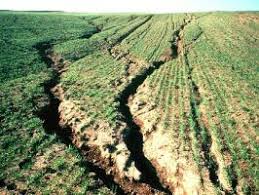
The term erosion comes from erodere, a Latin verb meaning “to gnaw.” Soil erosion is defined as part of the overall process of denudation that includes the physical breakdown, chemical solution, and transportation of materials.
Soil erosion occurs in both temperate and tropical regions and is widely considered a serious threat to the long-term viability of agriculture in many parts of the world. This concern is not without precedent.
Erosion requires an agent, either wind or water. The level of erosion in any given location is determined by the interaction of several factors including climatic erosivity, soil erodibility, and land use or management.
Climatic erosivity is often more severe in tropical areas, especially where rainfall occurs in fewer but more intense events. Soils in the tropics are often highly erodible due to their shallow depth and low structural stability.
Although some tropical soils are not highly erodible in the absence of human disturbance, they remain susceptible to rapid fertility decline.
The consequences of soil erosion are frequently more severe in the tropics than in temperate regions due to the generally poor fertility of the subsoil.
Since climatic erosivity and soil erodibility are largely natural conditions, land use and management practices are the decisive factors in determining the extent of erosion and land degradation.
On a given plot of agricultural land, erosion can range from severe to negligible depending on the cropping system. Vegetative cover plays a crucial role in erosion prevention, as thick vegetation significantly reduces erosion.
In some cases, a vicious cycle occurs where erosion reduces soil productivity, resulting in poor crop cover and hence more erosion. This “self-reinforcing feedback” illustrates the challenge faced by smallholder farmers in developing countries.
Due to limited access to external resources, productivity is already low. Poor crop cover leads to more severe erosion, further reducing future yields and exacerbating the problem.
Read Also: Cultivation Methods For Different Fruit Trees And Bushes
Causative Agents of Soil Erosion in Agricultural Environments
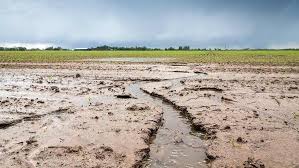
1. Geologic Erosion
This is a natural process of weathering that occurs at slow rates in all soils as part of long-term soil formation. It takes place over geologic time and is not influenced by human activity. The wearing down of rocks and the development of soil profiles are due to geologic erosion.
Low erosion rates are necessary for natural soil formation. However, soil erosion becomes a concern when it exceeds a critical threshold and accelerates.
Rainfall is one of the most natural causes of erosion. The impact of raindrops on topsoil dislodges soil particles, which are then carried away. When this water dries, it can leave behind gullies and large surface cracks that can be harmful to rural and farming land.
Wind is another natural factor. It lifts and transports soil particles, leading to decomposition of the soil structure. Although wind alone may not cause as much damage, its combination with water significantly increases erosion severity.
Ice and snowfall are also natural agents that negatively affect crop yields, gardens, farmland, and other landscapes.
2. Accelerated Erosion
Accelerated erosion is driven by human activities such as deforestation, slash-and-burn agriculture, intensive ploughing, uncontrolled grazing, and biomass burning. Control and management of soil erosion are essential because once the fertile topsoil is removed, the remaining soil becomes less productive even with the same input levels.
Although erosion cannot be entirely eliminated, it must be reduced to a manageable or tolerable level to minimise its negative impact on productivity.
The effects of erosion vary depending on the soil profile, terrain, management practices, and climate. Specific tolerable erosion rates vary by soil type.
In well-developed, deep soils, moderate erosion may not significantly affect productivity, whereas the same erosion rate could have severe consequences in shallow, sloped areas.
Therefore, critical erosion limits should be established based on soil type, ecological region, land use, and farming system.
Major Drivers of Soil Erosion in Agriculture
Human activities such as deforestation, overgrazing, intensive farming, poor soil management, cultivation on steep slopes, and urbanisation are key drivers of soil erosion. Factors such as land use, topography, climate, and socio-economic and political conditions also influence erosion.
In developing countries, soil erosion is often linked to poverty. Farmers with limited resources are unable to adopt conservation measures.
Subsistence farming practices compel farmers to repeatedly exploit small plots (0.5–2 hectares) for food, often without applying erosion-reducing techniques. The leading causes of accelerated erosion are:
1. Deforestation
2. Overgrazing
3. Mismanagement of cultivated soils
It is estimated that 35% of soil erosion is caused by overgrazing, 30% by deforestation, and 28% by excessive cultivation.
At the end of this article, the concept, causative agents, and drivers of soil erosion have been examined. Soil erosion is defined as part of the overall denudation process involving the breakdown, chemical dissolution, and transportation of materials.
It is a major concern in both temperate and tropical regions and poses a threat to long-term agricultural viability. Erosion is driven by natural agents such as wind and water, while its intensity depends on factors including climatic erosivity, soil erodibility, and land use or management.
Do you have any questions, suggestions, or contributions? If so, please feel free to use the comment box below to share your thoughts. We also encourage you to kindly share this information with others who might benefit from it. Since we can’t reach everyone at once, we truly appreciate your help in spreading the word. Thank you so much for your support and for sharing!