


Spices are classified in various ways. This is necessary for easier identification of the spices. The diverse forms of spices highlight the natures in which the spices exist during their marketing and usefulness. In this article, the classification, forms of spices, culinary benefits, and therapeutic values of spices will be discussed.
Classifying Spices by Origin and Active Principles
Classification of spices based on the origin and active principle present categorizes them as follows:
1. Pungent Spices: These are spices with a very strong flavor. They are useful in food industries, pharmaceuticals, and cosmetics industries. Such spices include pepper, ginger, and chilies.
2. Aromatic Fruits: Examples include cardamom, nutmeg, mace, fenugreek, aniseed, caraway, dill, celery, cumin, and coriander.
3. Aromatic Barks: Examples include cinnamon and cassia.
4. Phenolic Spices Containing Eugenol: Examples include clove and pimento.
5. Colored Spices: Examples include paprika, saffron, and turmeric.
Classifying Spices by Plant Parts Used
Basic classification of spices based on the parts used includes:
1. Leaves and/or Branches of Aromatic Plants: All or part of the plant can be used. Examples include basil, bay leaf, parsley, rosemary, tarragon, thyme, oregano, and chervil.
2. Ripened Fruits or Seeds of Plants: Examples include dill, fennel, coriander, fenugreek, berberis, and black pepper.
3. Roots or Bulbs of Certain Plants: Examples include garlic, onion, celery, and ginger.
Read Also: Different Systems of Rearing Rabbits
Classifying Spices by Cotyledons and Taste

1. Based on Cotyledons
i. Dicotyledoneae: Examples include chili, paprika, red pepper, sesame, chamomile, chicory, tarragon, cubeba, long pepper, pepper, mace, nutmeg, bay leaf, cassia, cinnamon, star-anise, mustard, wasabi, allspice, clove, anise, caraway, celery, chervil, coriander, cumin, dill, fennel, and parsley.
ii. Monocotyledoneae: Examples include garlic, onion, saffron, cardamom, ginger, turmeric, and vanilla.
2. Based on Degree of Taste
i. Hot Spices: Examples include capsicum, black and white peppers, ginger, and mustard.
ii. Mild Spices: Examples include paprika and coriander.
iii. Aromatic Spices: Examples include allspice, cardamom, cassia, cinnamon, clove, cumin, dill, fennel, fenugreek, mace, and nutmeg.
Exploring Forms of Spices
1. Whole and Powdered Spices
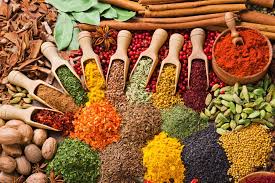
Spices are available in many forms such as whole spices, dried spices, ground spices, etc.
i. Whole Spices
Examples include cardamom, black pepper, clove, turmeric, ginger, cinnamon, and cassia. Consumers and chefs frequently use fresh spices to give a fresh taste to foods. The “fresh” taste consumers seek from spices comes initially from their aroma.
This aroma is due to the volatile component of the spice. It can be lost during harvesting, storing, processing, or handling. For some spices, the fresh forms have different flavor profiles than the dried forms, examples being ginger, galangal, cilantro, or basil.
Fresh ginger has more pungency than dried ginger because of higher levels of pungent-producing gingerol, which, during storage, degrades to the milder shogoals that are found in larger amounts in dried ginger.
Flavor is intact in a whole spice and is more slowly released than with the ground spice, especially when subjected to preparation techniques such as frying or roasting, during which time the whole spice slightly cracks open.
ii. Powdered or Ground Spices
Spices are often used in their dried forms because they are not subject to seasonal availability, are easier to process, have a longer shelf life, and have a lower cost. These dried forms are most frequently used for processed products or for wholesale usage.
Dried spices come whole, finely or coarsely ground, cracked, and as various-sized particulates. Spices are ground by milling them to various-sized particulates.
This grinding also generates rapid air movement and heat that dissipate some of the volatile oils and even change some natural flavor notes through oxidation.
Also, most dried spices retain a higher overall flavor concentration than fresh spices. For example, one pound of dried garlic has an equivalent flavor of five pounds of fresh garlic.
2. Concentrates, Oils, and Oleoresins
i. Concentrates
Flavor is a combination of taste, aroma, and texture. The sensations of sweet, piney, sour, bitter, spicy, sulfury, earthy, and pungent are derived from an overall combination of aroma (due to volatile components) and taste (mainly due to non-volatile components) in a spice.
Crunchiness, smoothness, or chewiness adds to a spice’s overall flavor perception. Spice extractives, which are highly concentrated forms of spices, contain the volatile and non-volatile oils that give each spice its characteristic flavor. An example is tamarind concentrate.
ii. Oils and Oleoresins
Essential oils, such as oil of basil, oil of caraway, or oil of black pepper, are produced by grinding, chopping, or crushing the leaf, seed, stem, root, or bark; then cold expressing, dry distilling, or extracting through distillation (using water, steam, or steam and water) and recovering the distillate oil with a solvent.
Sometimes the oil is distilled from a whole spice, such as the leaf or flower, or from a broken spice. Depending upon the method of extraction, the nature of the volatiles can differ with the same type of spice.
Read Also: Sheep and Goat Housing Complete Guide
Preservative Properties of Spices
1. Overview of Spices as Preservatives
Spices play a key role in food safety by acting as antimicrobial agents in foods. The antimicrobial properties of different spices have been recognized, which depend on type, composition, concentration, microbial species, and storage condition. Various spices have been known for their preservative properties.
This role of spices in ensuring food safety cannot be overemphasized. The preservative property of spices is reported to be due to their volatile oils and oleoresins. Essential oils of thyme and oregano are effective fumigants against fungi attacking stored grains.
Essential oils of nutmeg, ginger, and cloves were effective against insects infesting maize in storage. Gould (1989) linked the activities of various essential oils with impairment of a variety of enzyme systems, including those involved in energy production and structural component synthesis.
2. Turmeric’s Role in Prolonging Food Shelf Life
Turmeric (haldi), a rhizome of Curcuma longa, is a flavorful yellow-orange spice. Its plant is 3 feet in height and has lance-shaped leaves and spikes of yellow flowers that grow in a fleshy rhizome or underground stem. An orange pulp contained inside the rhizome constitutes the source of turmeric medicinal powder.
The most active component of turmeric is curcumin, which makes up 2–5% of the spice. Turmeric has been shown to inhibit the growth of numerous microorganisms, including bacteria, viruses, and fungi.
For instance, turmeric was shown to inhibit the growth of Helicobacter pylori, which is associated with the development of gastric and colon cancers. Turmeric extract has also shown activity against food-borne pathogens.
The bactericidal activities of turmeric against Escherichia coli BL-21 strain were reported by another study (Sathishkumar et al., 2010). Turmeric exhibits antifungal activity against numerous strains of fungus. This spice can also inhibit the production of aflatoxin.
3. Other Herbal Extracts and Their Role in Food Preservation
Ginger, onion, and garlic are traditional edible and medicinal plants. They are regularly used as seasonings to enhance the sensory quality of foods. Blends of aqueous extracts of ginger, onion, and garlic had a synergistic effect, while at high concentrations of the composite solution, an adverse effect on odor and overall acceptance was observed.
A diluted solution of the composite extract could therefore be a natural, promising preservative for stewed pork, considering the comprehensive effects of antioxidation, anti-bacteria, and sensory quality, which could extend the shelf life for about 5–6 days.
Do you have any questions, suggestions, or contributions? If so, please feel free to use the comment box below to share your thoughts. We also encourage you to kindly share this information with others who might benefit from it. Since we can’t reach everyone at once, we truly appreciate your help in spreading the word. Thank you so much for your support and for sharing!