


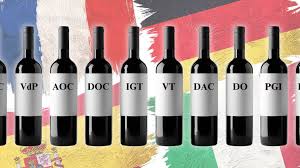
An appellation is a legally defined and protected geographical indication used to identify where the grapes for a wine were grown. Restrictions other than geographical boundaries, such as permissible grape varieties, maximum grape yields, alcohol levels, and other quality factors, may also apply before an appellation name may legally appear on a wine bottle label.
The rules governing appellations depend on the country in which the wine was produced. Historically, wines have been known by names reflecting their origin and sometimes style. For example, Bordeaux, Rioja, Mosel, and Chianti are legally defined names reflecting the traditional wines produced in the named region.
These naming conventions, or “appellations” (as known in France), dictate not only where the grapes in a wine were grown but also which grapes were used and how they were vinified. The appellation system is strongest in the European Union, but a related system, the American Viticultural Area, restricts the use of certain regional labels in America, such as Napa Valley, Santa Barbara, and Willamette Valley.
In most of the world, wine labeled Champagne must be made from grapes grown in the Champagne region of France and fermented using a specific method, based on international trademark agreements included in the 1919 Treaty of Versailles.
However, in the United States, a legal definition called semi-generic has enabled United States winemakers to use certain generic terms (Champagne, Hock, Sherry, etc.) if the actual appellation of origin appears next to the term.
More recently, wine regions in countries with less stringent location protection laws, such as the United States and Australia, have joined with well-known European wine-producing regions to sign the Napa Declaration to Protect Wine Place and Origin, commonly known as the Napa Declaration on Place.
This is a “declaration of joint principles stating the importance of location to wine and the need to protect place names.” The Declaration was signed in July 2005 by four United States winegrowing regions and three European Union winegrowing regions.
Regional Wine Classifications and Vineyard Rankings
Many regional wine classifications exist as part of tradition or appellation law. The most common are based on vineyard sites and include the Bordeaux Wine Official Classification of 1855. However, some regions classify their wines based on style, like the German wine classification system.
Vineyard classification has a long history, dating from early examples in Jurançon in the 14th century, in 1644 when the Council of Würzburg ranked the city’s vineyards by quality, and the early five-level designation of vineyards based on quality in Tokaj-Hegyalja in 1700. Other well-known classifications include:
- Classification of Saint-Émilion wine of Bordeaux.
- Classification of Graves wine of Bordeaux.
- Cru Bourgeois of Bordeaux (Médoc).
- Classified estates of Provence.
Read Also: Types and Recommended Duration for your Physical Activity
Classification by Vinification Methods and Wine Styles

Wines may be classified by vinification methods, resulting in categories such as:
- Red wine.
- White wine.
- Sparkling/semi-sparkling wine.
- Still wine.
- Organic wine.
- Table wine.
- Cooking wine.
The color of wine is not determined by the juice of the grape, which is usually clear, but rather by the presence or absence of the grape skin during fermentation. Attempts have been made to classify wines by style, which is difficult to define.
Subjectively, it involves a combination of color, taste, alcoholic strength, and several other factors. These are influenced by grape variety or varieties used, climate and soil conditions in the region of production, and the method of vinification. By this method, wines are classified as:
- Dessert wine.
- Fortified wine.
- Fruit wines.
- Rosé wines.
Read Also: How to determine if your Housing is Conducive for your Fishes
Classification by Vintage and Varietal Composition

A vintage wine is one made from grapes that were all, or primarily, grown in a single specified year and are accordingly dated as such. Consequently, it is not unusual for wine enthusiasts and traders to save bottles of an especially good vintage wine for future consumption.
However, there is some disagreement and research about the significance of vintage year to wine quality. Most countries allow a vintage wine to include a portion of wine that is not from the labeled vintage.
A varietal wine is made from a dominant grape, such as Chardonnay or Cabernet Sauvignon. The wine may not be entirely of that one grape, and varietal labeling laws differ. In the United States, a wine needs to be composed of at least 75 percent of a particular grape to be labeled as a varietal wine.
In the European Union, a minimum of 85 percent is required if the name of a single varietal is displayed, and if two or more varietals are mentioned, these varietals combined must make up 100 percent, and they must be listed in descending order. For example, a mixture of 70 percent Chardonnay and 30 percent Viognier must be called Chardonnay-Viognier rather than Viognier-Chardonnay.
Frequently Asked Questions (FAQs) About Wine Classification
1. What are the primary methods used to classify wines?
Wines are classified by place of origin or appellation, vinification methods and style, sweetness, vintage, or varietal used. Each method reflects different aspects of production, region, or grape composition.
2. What is an appellation, and how does it affect wine labeling?
An appellation is a legally protected geographical indication identifying where grapes were grown, often with rules on grape varieties, yields, and alcohol levels. It ensures the wine reflects the region’s characteristics, as seen in names like Bordeaux or Champagne.
3. How does the appellation system differ between the European Union and the United States?
The European Union has a strong appellation system dictating grape origin, varieties, and vinification methods. In the United States, the American Viticultural Area system restricts regional labels, but semi-generic terms like Champagne can be used if the true origin is specified.
4. What is the significance of the Napa Declaration on Place?
Signed in July 2005 by United States and European Union wine regions, the Napa Declaration emphasizes protecting wine place names to highlight the importance of location in wine identity and quality.
5. How are wines classified by vinification methods and style?
Vinification methods classify wines as red, white, sparkling, still, organic, table, or cooking wines, based on fermentation processes. Style classifications, like dessert, fortified, fruit, or rosé wines, consider color, taste, and production factors.
6. What are some examples of regional wine classifications?
Regional classifications include the Bordeaux Wine Official Classification of 1855, Saint-Émilion and Graves classifications in Bordeaux, Cru Bourgeois in Médoc, and classified estates in Provence, often based on vineyard quality or style.
7. What defines a vintage wine, and why is it significant?
A vintage wine is made primarily from grapes grown in a single year, labeled with that year. Enthusiasts value vintage wines for their unique quality, though some debate the importance of vintage year to overall wine quality.
8. How do varietal wine labeling laws differ between the United States and the European Union?
In the United States, a varietal wine must contain at least 75 percent of the named grape. In the European Union, a single varietal requires 85 percent, and blends of multiple varietals must total 100 percent, listed in descending order, such as Chardonnay-Viognier for a 70/30 blend.
Do you have any questions, suggestions, or contributions? If so, please feel free to use the comment box below to share your thoughts. We also encourage you to kindly share this information with others who might benefit from it. Since we can’t reach everyone at once, we truly appreciate your help in spreading the word. Thank you so much for your support and for sharing!