


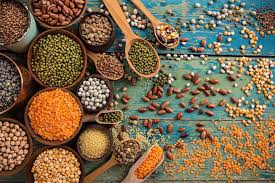
Beneficial microorganisms are used in foods in several ways. These include actively growing microbial cells, nongrowing microbial cells, and metabolic by-products and cellular components of microorganisms. An example of the use of growing microbial cells is the conversion of milk to yogurt by bacteria.
Nongrowing cells of some bacteria are used to increase shelf life of refrigerated raw milk or raw meat. Many by-products, such as lactic acid, acetic acid, some essential amino acids, and bacteriocins produced by different microorganisms, are used in many foods. Finally, microbial cellular components, such as single-cell proteins (SCPs), dextran, cellulose, and many enzymes, are used in food for different purposes.
These microorganisms or their by-products or cellular components have to be safe, food grade, and approved by regulatory agencies. When the microbial cells are used in such a way that they are consumed live with the food (as in yogurt), it is very important that they and their metabolites have no detrimental effect on the health of the consumers.
When a by-product (such as an amino acid) or a cellular component (such as an enzyme) is used in a food, the microorganisms producing it have to be regulated and approved, and the by-product and cellular component have to be safe.
If a food-grade microorganism is genetically modified, its use in food has to be approved, especially if the genetic material used is obtained from a different source or is synthesized. Thus, the microorganisms used for these purposes have to meet some commercial and regulatory criteria.
Characteristics of some microorganisms used in the processing of foods (designated as fermented foods) are discussed in this article. Many of these microorganisms are used to produce several by-products and cellular components used in foods.
Read Also: Plant Breeding For Disease and Pest Resistance and Their Inheritance
Role of Fermentation in Food Production
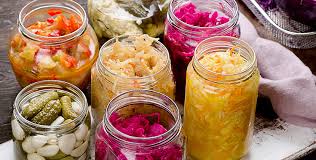
Food fermentation involves a process in which raw materials are converted to fermented foods by the growth and metabolic activities of the desirable microorganisms. The microorganisms utilize some components present in the raw materials as substrates to generate energy and cellular components, to increase in population, and to produce many usable by-products (also called end products) that are excreted in the environment.
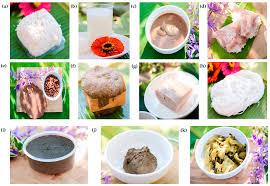
The unused components of the raw materials and the microbial by-products (and sometimes microbial cells) together constitute fermented foods. The raw materials can be milk, meat, fish, vegetables, fruits, cereal grains, seeds, and beans, fermented individually or in combination. Globally, more than 3,500 types of fermented foods are produced. Many ethnic types are produced and used in small localities by small groups of people.
Many of the fermented foods consumed currently have been produced and consumed by humans for thousands of years. The process not only produced new foods but also helped preserve the excess of raw materials both of plant and animal origins. The basic principles developed by the ancient civilizations are used even today to produce many types of fermented foods by a process known as natural fermentation.
In this method, either the desirable microbial population naturally present in the raw materials or some products containing the desirable microbes from a previous fermentation (called back slopping), are added to the raw materials. Then the fermentation conditions are set so as to favour growth of the desirable types but prevent or retard growth of undesirable types that could be present in the raw materials.
In another type of fermentation, called controlled or pure culture fermentation, the microorganisms associated with fermentation of a food are first purified from the food, identified, and maintained in the laboratory.
When required for the fermentation of a specific food, the microbial species associated with this fermentation are grown in large volume in the laboratory and then added to the raw materials in very high numbers. Then the fermentation conditions are set such that these microorganisms grow preferentially to produce a desired product.
These microbial species, when used in controlled fermentation, are also referred to as starter cultures. Many of these microbial species are present in raw materials that are naturally fermented, along with other associated microorganisms, some of which may contribute to the desirable characteristics of the products.
Characteristics of Lactic Starter Cultures
Bacterial species from 12 genera are included in a group designated as lactic acid bacteria because of their ability to metabolize relatively large amounts of lactic acids from carbohydrates. The genera include Lactococcus, Leuconostoc, Pediococcus, Streptococcus, Lactobacillus, Enterococcus, Aerococcus, Vagococcus, Tetragenococcus, Carnobacterium, Weissella, and Oenococcus.
Many of the genera have been created recently from previously existing genera and include one or a few species. For example, Lactococcus and Enterococcus were previously classified as Streptococcus Group N and Group D, respectively.
Vagococcus is indistinguishable from Lactococcus, except that these bacteria are motile. Weissella and Oenococcus are separated from Leuconostoc. Tetragenococcus includes a single species that was previously included with Pediococcus (Pediococcus halophilus).
Carnobacterium was created to include a few species that were previously in genus Lactobacillus and are obligatory heterofermentative. However, species from the first five genera, i.e., Lactococcus, Leuconostoc, Pediococcus, Streptococcus, and Lactobacillus, are used as starter cultures in food fermentation. The status of others, except Tetragenococcus halophilus and Oenococcus oeni, with respect to use in food, is not yet clear.
1. Lactococcus in Dairy Fermentation
This genus includes several species, but only one species, Lactococcus lactis, has been widely used in dairy fermentation. It has three subspecies (ssp.), ssp. lactis, ssp. cremoris, and ssp. hordniae, but only the first two are used in dairy fermentation.
The biovar L. lactis ssp. lactis biovar diacetylactis is also used in dairy fermentation. The cells are ovoid, ca. 0.5 to 1.0 µm in diameter, present in pairs or short chains, nonmotile, nonsporulating, and facultative anaerobic to microaerophilic. They grow well between 20 and 30ºC, but do not grow in 6.5% NaCl or at pH 9.6.
In a suitable broth they can produce ca. 1% L (+)-lactic acid and reduce the pH to ca. 4.5. Subsp. cremoris can be differentiated from subsp. lactis by its inability to grow at 40ºC, in 4% NaCl, ferment ribose, and hydrolyze arginine to produce NH3.
Biovar diacetylactis, as compared with others, produces larger amounts of CO2 and diacetyl from citrate. They are generally capable of hydrolyzing lactose and casein and also ferment galactose, sucrose, and maltose. The natural habitats are green vegetation, silage, the dairy environment, and raw milk.
2. Streptococcus in Dairy Fermentation
Only one species, Streptococcus thermophilus, has been used in dairy fermentation. A change in designation to S. salivarius ssp. thermophilus has been suggested but not made. The Gram-positive cells are spherical to ovoid, 0.7 to 0.9 µm in diameter, and exist in pairs to long chains. The cells grow well at 37 to 40ºC, but can also grow even at 52ºC. They are facultative anaerobes.
2. Leuconostoc in Food Fermentation
The Gram-positive cells are spherical, arranged in pairs or in chains, non-motile, non-sporulating, catalase negative and facultative anaerobes. The species grow well between 20 and 30ºC, with a range of 1 to 37ºC. Glucose is fermented to D (–)-lactic acid, CO2, ethanol, or acetic acid, with the pH reduced to 4.5 to 5.0.
The species grow in milk but may not curdle. Also, arginine is not hydrolyzed. Many form dextran while growing on sucrose. Citrate is utilized to produce diacetyl and CO2. Some species can survive 60ºC for 30 min. Leuconostoc species are found in plants, vegetables, silage, milk and some milk products, and raw and processed meats.
Five known species are: Leuconostoc mesenteroides, L. paramesenteroides, L. lactis, L. carnosum, and L. gelidum. L. mesenteroides has three subspecies: subsp. mesenteroides, ssp. dextranicum, and ssp. cremoris. L. mesenteroides ssp. cremoris and L. lactis are used in some dairy and vegetable fermentation.
Many of these species, particularly L. carnosum and L. gelidum, have been associated with spoilage of refrigerated vacuum-packaged meat products. Leuconostocs are morphologically heterogeneous and may contain genetically diverse groups of bacteria. Recently, two new genera have been produced from it: Weissella and Oenococcus.
O. oeni is found in wine and related habitats and is used for malolactic fermentation in wine.
3. Pediococcus in Fermented Foods
The cells are spherical and form tetrads, but can be present in pairs. Single cells or chains are absent. They are Gram-positive, non-motile, non-sporulating, facultative anaerobes. They grow well between 25 and 40ºC; some species grow at 50ºC. They ferment glucose to L (+)- or DL-lactic acid, some species reducing the pH to 3.6. Some species can ferment sucrose, arabinose, ribose, and xylose.
Lactose is not generally fermented, especially in milk, and milk is not curdled. Some strains may have weak lactose-hydrolyzing capability, especially in broth containing lactose as a carbohydrate source.
Some species are found in plants, vegetables, silage, beer, milk, and fermented vegetables, meats, and fish. The genus has seven to eight species, of which P. pentosaceus and P. acidilactici are used in vegetables, meat, cereal, and other types of fermented foods.
They have also been implicated in ripening and flavour production of some cheeses as secondary cultures. These two species are difficult to differentiate, but compared with P. acidilactici, P. pentosaceus ferments maltose, does not grow at 50ºC, and is killed at 70ºC in 5 min. P. halophilus, used in fermentation of high-salt products, is now classified as T. halophilus.
Read Also: Deep Litter Poultry Production System
4. Lactobacillus in Diverse Food Fermentation
The genus Lactobacillus includes a heterogeneous group of Gram-positive, rod-shaped, usually non-motile, non-sporulating, facultative anaerobic species that vary widely morphologically and in growth and metabolic characteristics. Cells vary from very short to very long rods, slender or moderately thick, often bent, and can be present as single cells or in short to long chains.
While growing on glucose, depending on a species, they produce either only lactic acid [L (+), D(–), or DL] or a mixture of lactic acid, ethanol, acetic acid, and CO2. Some species also produce diacetyl. Many species utilize lactose, sucrose, fructose, or galactose, and some species can ferment pentoses.
Growth temperature can vary from 1 to 50ºC, but most that are used as starter cultures in controlled fermentation of foods grow well between 25 to 40ºC. Several species involved in natural fermentation of some foods at low temperature can grow well from 10 to 25ºC. While growing in a metabolizable carbohydrate, depending on a species, the pH can be reduced between 3.5 and 5.0.
They are distributed widely and can be found in plants, vegetables, grains, seeds, raw and processed milk and milk products, raw, processed, and fermented meat products, and fermented vegetables. Some are found in the digestive tract of humans, animals, and birds.
Many have been associated with spoilage of foods. Among the large number of species, some have been used in controlled fermentation (dairy, meat, vegetables, and cereal), some are known to be associated with natural fermentation of foods, a few are consumed live for their beneficial effect on intestinal health, and some others have an undesirable effect on foods.
On the basis of their metabolic patterns of hexoses and pentoses, the species have been divided into three groups:
1. Group I: Ferment hexoses (and disaccharides such as lactose and sucrose) to produce mainly lactic acids and do not ferment pentoses (such as ribose, xylose, or arabinose).
2. Group II: Depending on the carbohydrates and the amounts available, either produces mainly lactic acid, or a mixture of lactic, acetic, and formic acids, ethanol, and CO2.
3. Group III: Species ferment carbohydrates to a mixture of lactate, acetate, ethanol, and CO2.
The three Lactobacillus delbrueckii subspecies are used in the fermentation of dairy products, such as some cheeses and yogurt. They grow well at 45ºC and ferment lactose to produce large amounts of D (–) lactic acid. β-galactosidase in these subspecies is constitutive. L. acidophilus and L. reuteri are considered beneficial intestinal microbes (probiotic) and present in the small intestine.
L. acidophilus is used to produce fermented dairy products and also either added to pasteurized milk or made into tablets and capsules for consumption as probiotics. It metabolizes lactose, and produces large amounts of D(–)-lactic acid. However, in L. acidophilus, β-galactosidase is generally inducible.
L. helveticus is used to make some cheeses and ferment lactose to lactic acid (DL). L. casei ssp. casei is used in some fermented dairy products. It ferments lactose and produces L(+)-lactic acid. Some strains are also used as probiotic bacteria. Strains of L. casei ssp. rhamnosus (also called L. rhamnosus) are now used as a probiotic bacterium.
Some strains of L. johnsonii are also used in probiotics. L. plantarum is used in vegetable and meat fermentation. It produces DL-lactic acid. L. curvatus and L. sake can grow at low temperatures (2 to 4ºC) and ferment vegetable and meat products. L. sake is used to ferment sake wine. L. kefir is important in the fermentation of kefir (ethnic fermented sour milk).
L. sanfrancisco is associated with other microorganisms in the fermentation of San Francisco sourdough bread. L. viridescens, L. curvatus, and L. sake are associated with spoilage of refrigerated meat products.
5. Oenococcus in Wine Fermentation
O. oeni, previously designated as L. oeni, has the general characteristics of Leuconostoc spp. It is found in the winery environment. It is sometimes used to accelerate malolactic fermentation in wine. The cells transport malate in wine and metabolize it to lactic acid and CO2. This process reduces the acidity of wine.
Do you have any questions, suggestions, or contributions? If so, please feel free to use the comment box below to share your thoughts. We also encourage you to kindly share this information with others who might benefit from it. Since we can’t reach everyone at once, we truly appreciate your help in spreading the word. Thank you so much for your support and for sharing!