


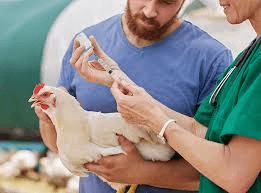
Vaccination is one of the most important investments a poultry farmer can make. In broiler production, where large numbers of birds are raised in close proximity and the pressure to reach market weight quickly is constant, disease outbreaks can be devastating. A single outbreak of Newcastle disease, Gumboro, or coccidiosis can wipe out a significant portion of a flock within days, erasing weeks of feed costs and management effort in one blow. A well-structured vaccination program is the most reliable defense against this kind of loss.
The way vaccination works is straightforward in principle. A vaccine introduces a controlled form of a disease-causing organism into the bird’s body. This triggers the immune system to produce antibodies specifically designed to fight that organism. The next time the bird encounters the real disease, its immune system is already prepared. The response is faster, stronger, and often enough to prevent the disease from taking hold at all. Without vaccination, a bird encountering the disease for the first time has no such preparation, and the outcome can be severe illness, poor growth, reduced productivity, or death.
Not all vaccines work the same way, and not all vaccination methods are equally suited to every situation. Some vaccines use live organisms that are still capable of mild infection but produce strong immunity. Others use weakened or killed organisms that stimulate the immune system with less risk of causing disease. The method of administration also varies, from eye drops and nasal sprays to drinking water delivery and injection, and using the wrong method for a given vaccine can completely undermine the protection it is meant to provide.
Equally important is how vaccines are handled before and during administration. Vaccines are fragile biological products. Many require cold chain storage from the moment they leave the manufacturer until the moment they are used. A vaccine that has been left at room temperature for too long, mixed hours before it is needed, or administered with contaminated equipment will not provide the immunity it promises. In fact, it may provide no protection at all, giving the farmer a false sense of security at the worst possible time.
This guide covers the full broiler vaccination program from day one to market age, explains the different types of vaccines and production forms, walks through correct handling and storage procedures, and details all major administration methods available to poultry farmers. It also covers how to monitor whether a vaccine has worked and what to look for if something goes wrong. Whether you are a first-time broiler farmer or an experienced producer looking to sharpen your health management practices, this is your complete reference.
Read Also: 12 Poultry Eggs Fascinating Facts you must know about
1. Broiler Vaccination Schedule
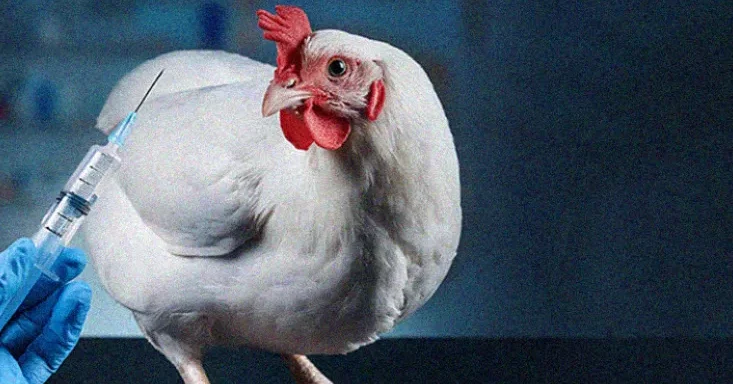
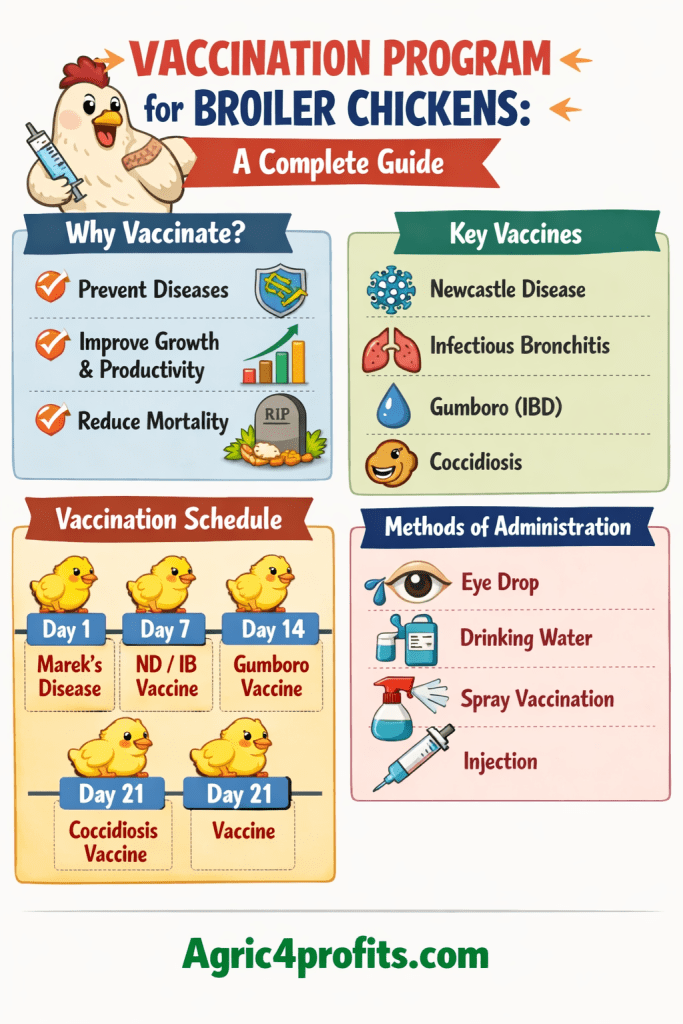
The table below outlines the standard vaccination program for broiler chickens from day one through to point of lay. Always consult your veterinarian or poultry consultant before beginning, as this schedule may be adjusted based on disease pressure in your region, the specific breeds you are raising, or recommendations from your supplier.
| Age | Vaccination / Treatment |
|---|---|
| 1 – 5 Days | NDV Intra Ocular (I/O) Vaccine |
| 1 – 7 Days | Antibiotics and Multivitamins |
| 11 – 13 Days | Anti-Coccidial (1st dose) |
| 14th Day | Vitamins |
| 15 – 16 Days | Anti-Gumboro (1st dose) |
| 17 – 19 Days | Vitamins |
| 21st Day | NDV (Lasota) Vaccine |
| 22 – 23 Days | Vitamins |
| 24 – 26 Days | Anti-Coccidial (2nd dose) |
| 27th Day | Vitamins |
| 28 – 30 Days | Anti-Gumboro (2nd dose) |
| 31 – 32 Days | Vitamins |
| 37 – 41 Days | Anti-CRD Vaccine |
| 42 – 43 Days | Vitamins |
| 44 – 46 Days | Anti-Coccidial (3rd dose) |
| 47th Day | Vitamins |
| 48 – 56 Days | NDV (Komorov) Vaccine |
| 10 – 12 Weeks | Deworming |
| 16 – 17 Weeks | NDV K (Point of Lay) |
Note: This vaccination program is subject to change based on the recommendation of your consultant or veterinary doctor. Certain emergency occurrences may also require sudden treatment or vaccination of your flock, so always keep a qualified expert accessible.
2. Why Vaccination Matters in Broiler Production
Vaccination plays a central role in the health management of any poultry flock. There are numerous diseases that can be effectively prevented by vaccinating birds before they are exposed to those diseases in the field. Here is why it matters:
i. How Vaccines Work: A vaccine stimulates the bird’s immune system to produce antibodies that fight the specific organism the vaccine targets. When the bird later encounters the real disease in the environment, its immune system recognizes it and responds quickly, often preventing the disease from taking hold at all.
ii. Natural Infection vs. Vaccination: A natural infection triggers the same antibody response, but the key difference is control. Natural disease is uncontrolled and can cause severe damage, poor growth, reduced productivity, and death. Vaccination provides a controlled way to trigger immunity with minimal harm to the birds.
iii. Protecting Future Production: Birds that become diseased through natural infection often become unthrifty and non-productive, even if they survive. Vaccination prevents this outcome by preparing the immune system before it faces the real threat.
3. Types of Poultry Vaccines for Broiler Chickens
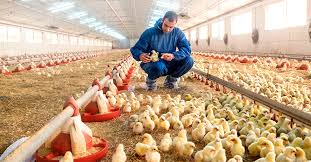
Not all vaccines are made the same way. Understanding the differences helps farmers and farm managers make better decisions about which products to use and how to handle them correctly.
i. Live Vaccine: The active component of this vaccine is a live organism that causes the disease. Because it is still alive, it can induce a mild form of the disease in birds that have had no previous contact with it. In many cases, vaccinated birds can also infect non-vaccinated birds housed with them. This type of vaccine tends to produce strong, long-lasting immunity.
ii. Attenuated Vaccine: With this type, the organism has been weakened through special manufacturing procedures so that it can no longer cause the serious form of the disease. At worst, birds may contract a very mild form of the illness. The vaccine still triggers the immune system effectively and generally produces a good level of protection with fewer risks than a fully live vaccine.
iii. Killed Vaccine: In this case, the disease organism has been completely killed. It cannot cause any form of the disease, but it still stimulates the immune system to produce antibodies. The level of immunity produced is often weaker than that from live or attenuated vaccines, so killed vaccines may require booster doses to maintain adequate protection.
4. Poultry Vaccine Production Forms
Vaccines are produced and sold in three main forms, each with its own storage and preparation requirements:
i. Liquid Vaccine: This is in fluid form and is ready to use straight from the packaging. It requires careful cold-chain handling to maintain potency from storage through to administration.
ii. Freeze-Dried Vaccine: This type comes in two separate packs: one containing the freeze-dried vaccine material and one containing a diluent, usually a sterile saline solution. The two must be combined correctly just before use. The freeze-dried component must be kept below freezing during storage, while the diluent should be kept just above freezing.
iii. Dust Vaccine: This vaccine is prepared in a dry form specifically for administration as a dust or powder. It is less commonly used but remains an option for certain vaccines and specific flock management setups.
Vaccines are sold in dose lots, meaning the number on the pack indicates how many birds can be vaccinated with that amount when the recommended administration technique is used. Always use the correct vaccine strain for the diseases present in your region, which can only be confirmed through veterinary advice.
Read Also: Poultry Farming and Adverse Season as a Stressor
5. Handling Vaccines on the Farm
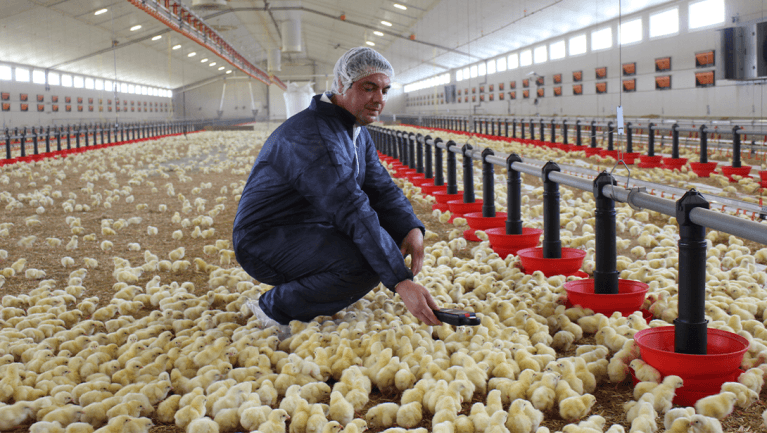
Vaccines are fragile biological products. Poor handling almost always results in a rapid loss of potency, which means the birds will not develop the immunity the vaccine was meant to provide. Here is how to handle vaccines correctly from receipt through to administration:
A. On Receipt of the Vaccine
When the vaccine arrives at the farm, check and record the following before doing anything else:
i. Transport Condition: Verify that the vaccine was transported in the recommended manner, which is usually in a chilled or frozen state. Prolonged exposure to atmospheric temperature causes a rapid and often irreversible loss of potency.
ii. Vaccine Type: Confirm that the vaccine delivered is the one you ordered. Using the wrong vaccine will not provide the intended protection and could create problems for your vaccination schedule.
iii. Quantity: Check that the correct number of doses has been delivered. Too few doses means some birds will go unvaccinated.
iv. Expiry Date: Always check the expiry date before use. An expired vaccine carries a significant risk of not producing the immunity required, even if it was handled and stored correctly up to that point.
B. Storage and Preparation
i. Store Immediately: As soon as the vaccine arrives, place it into the recommended storage conditions. Read the manufacturer’s instructions carefully. Freeze-dried material should be kept below freezing and its diluent just above freezing. Liquid vaccines are generally stored just above freezing temperature.
ii. Prepare Only What You Need: Remove vaccines from storage immediately before use. Only reconstitute enough for immediate needs and repeat through the day as required. Never mix what is needed for an entire day at the start of the day and leave it standing. Vaccines lose efficacy very quickly once mixed.
iii. Use an Ice Bath: After mixing, protect vaccines by holding them in an ice bath throughout the vaccination session. Some vaccines have a very short life once mixed. For example, Marek’s Disease vaccine lasts only about 1.5 hours after mixing when held in an ice bath, and much less at higher temperatures.
C. General Handling Rules
i. Follow Administration Guidelines: Always use the recommended administration technique for each vaccine. Do not vary the method without specific veterinary advice.
ii. Clean Equipment: Thoroughly clean and sterilize all vaccinating equipment after every use to prevent contamination in subsequent sessions.
iii. Destroy Unused Vaccine: Always destroy unused mixed vaccines after the task is complete. Some vaccines have the potential to cause harm to people or the environment if not disposed of properly.
iv. Do Not Vaccinate Sick Birds: Never vaccinate birds that are showing signs of disease or stress. Vaccination of sick or stressed birds can result in poor immunity development and may worsen their condition.
6. Vaccination Administration Methods
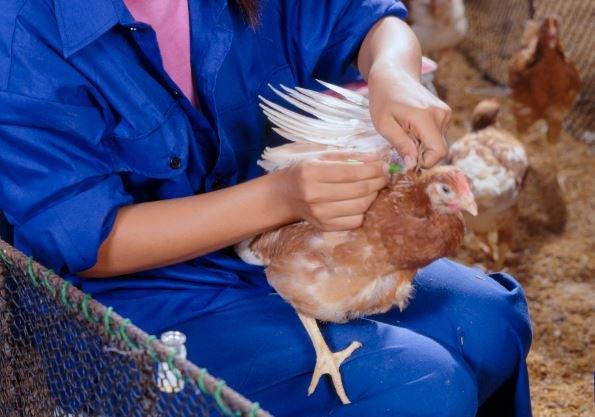
There are several ways to administer vaccines to poultry. Using the correct method for each vaccine is critical. Using the wrong method will often result in complete failure of the vaccine to produce the desired immunity. Some methods require handling every bird individually, which is time-consuming and stressful for both birds and operators. Others, such as water-based delivery, are far less demanding.
A. Individual Bird Methods
i. In-Ovo Vaccination: This method delivers the vaccine directly into the embryo before hatch. The vaccine can be applied to different areas of the egg, including the allantoic sac, the amniotic fluid, the body of the embryo, or the yolk sac. Injection into the air cell is generally not effective. The optimal injection window is the late stage of development, typically between days 18 and 19 of incubation. Vaccination too early increases the risk of reduced hatchability and late embryo death. Vaccination too late significantly increases the risk of eggshell breakage. A double-needle system, where a larger outer needle penetrates the shell and a smaller inner needle enters the embryo, minimizes trauma and reduces the risk of contamination. The key advantage of in-ovo vaccination is that immunity development begins before hatch, offering protection from the first hours of the chick’s life. Currently, Marek’s disease, Newcastle disease, infectious laryngotracheitis, and infectious bursal disease vaccines are routinely delivered this way in many countries.
ii. Intramuscular Injection: This method introduces the vaccine directly into the muscle, usually the breast muscle, using a hypodermic needle or automatic syringe. It is relatively quick with the right equipment and does not harm the bird when done correctly. Care must be taken to administer the exact dose to each bird and to ensure the needle does not pass through into a key organ. Hygiene is essential to prevent contamination from bird to bird.
iii. Subcutaneous Injection: Similar to the intramuscular method, but here the vaccine is injected under the skin, typically at the back of the neck, rather than into the muscle. Care must be taken to ensure the vaccine actually enters the bird and is not simply deposited in feathers or fluff, especially with very young chicks. Dose accuracy should be checked regularly throughout the session.
iv. Ocular (Eye Drop): The vaccine is delivered into one of the bird’s eyes using an eyedropper. From there, it travels into the respiratory tract via the lacrimal duct. The dropper must deliver the exact recommended dose. Too little results in inadequate immunity, while too much means the vaccine runs out before the entire flock is covered.
v. Nasal: The vaccine is introduced into the bird’s nostrils, either as a fine dust or as a liquid drop. The applicator must consistently deliver the correct dose for the vaccine being used.
vi. Oral: The vaccine dose is given directly into the bird’s mouth. From there, it may enter the respiratory system or continue into the digestive tract before being absorbed into the body.
vii. Cloacal: This method introduces the vaccine into the mucous membranes of the cloaca using an abrasive applicator. The applicator is inserted into the vaccine then into the bird’s cloaca and twisted vigorously to cause a controlled abrasion. The vaccine enters through this abrasion. The technique is time-consuming, stressful to the birds, and requires strict hygiene to prevent contamination from bird to bird. It is generally not used on commercial farms.
viii. Feather Follicle: A group of adjacent feathers or fluff is removed from young birds and the vaccine is brushed into the empty follicles with a short, stiff-bristled brush. Good hygiene is essential to prevent contaminants from entering through the open follicles alongside the vaccine.
ix. Wing Stab: A special grooved needle is dipped into the vaccine so that vaccine fills the groove. The needle is then pushed through the web of the wing, behind the leading edge and away from the body attachment. The site must be free of bone and muscle to avoid injury. A common problem is vaccine being wiped from the needle by feathers or fluff before it reaches the wing web, so care must be taken to select a clean site.
B. Group Administration Methods
i. Drinking Water: The vaccine is added to the drinking water, making this one of the least stressful and most time-efficient methods available. However, there is significant room for error if the correct technique is not followed carefully. Key requirements include: all equipment must be clean and completely free of detergents and disinfectants; only cold, clean, drinking-quality water should be used; the stopper of the vaccine bottle must be opened under water; the water in the drinkers should be consumed by the birds before the vaccination water is introduced; and steps must be taken to ensure all birds drink during the vaccination window so every bird receives an adequate dose.
ii. Spray: The vaccine is sprayed onto the chickens or into the air above them using a suitable atomizer. The vaccine lands on the birds and some is inhaled. Birds also pick at the shiny droplets on each other, ingesting additional vaccine. This is a low-stress, low-labor method well suited to large flock sizes.
7. Monitoring Vaccination Effectiveness
Administering the vaccine is only part of the process. Confirming that the vaccine has worked is equally important. Here is how to monitor vaccination effectiveness:
A. Physical Signs of a Successful Vaccine Take
i. Fowl Pox Wing Stab Check: Within 7 to 10 days after fowl pox vaccination via wing stab, a small pimple of about 0.5 to 1 cm in diameter should appear at the vaccination site. This is called a “take” and confirms the vaccine has successfully entered the body and triggered a response. If the pimple is larger than expected and has a cheesy core, it indicates contamination was introduced with the vaccine or through dirty equipment. A routine check would involve inspecting about 100 birds for every 10,000 vaccinated.
ii. Infectious Bronchitis Reaction: Birds vaccinated against infectious bronchitis often show a mild systemic reaction around 5 to 7 days after vaccination. This may include a slight cough, slightly elevated temperature, and brief lethargy. These are normal signs that the immune system is responding. If no signs appear at all, it may be worth investigating whether the vaccine worked.
B. Laboratory Testing
i. Blood Titre Testing: Where physical signs are absent or unclear, blood samples can be taken and sent to a laboratory for testing. The lab checks for the presence and level of the appropriate antibodies in the blood, known as the titre. A low or absent titre after vaccination is a sign that immunity has not developed properly and re-vaccination may be necessary.
C. Reasons for Vaccination Failure
If there is no evidence that the vaccine worked, the most likely causes are:
i. Faulty Technique: The vaccine was not correctly introduced into the target site during administration. This is one of the most common reasons for failure and is entirely preventable with proper training and supervision.
ii. Faulty Vaccine: The vaccine was too old, stored incorrectly, or mixed improperly before use. In rare cases, a manufacturing fault may also be responsible.
iii. Pre-Existing Immunity: The birds may already be immune due to maternal or passive immunity passed from parent birds, previous vaccination, or prior natural exposure to the causal organism. In this case, the vaccine has nothing new to trigger and no measurable response will appear.
Summary on Vaccination Program for Broiler Chickens
| Topic | Key Points |
|---|---|
| Purpose of Vaccination | Triggers immune system to produce antibodies that prevent or limit disease. |
| First Vaccination | NDV Intra Ocular vaccine given at 1 to 5 days old. |
| Types of Vaccines | Live, attenuated (weakened), and killed vaccines; each offers different immunity levels. |
| Vaccine Production Forms | Liquid (ready to use), freeze-dried (mix before use), and dust forms. |
| Storage Rule | Freeze-dried: below freezing. Liquid: just above freezing. Follow manufacturer instructions. |
| Key Handling Rule | Only mix what is needed immediately; never pre-mix a full day’s supply in advance. |
| Ice Bath Rule | Keep mixed vaccines in an ice bath during use; some (e.g. Marek’s) last only ~1.5 hrs once mixed. |
| Administration Methods | In-ovo, intramuscular, subcutaneous, ocular, nasal, oral, cloacal, feather follicle, wing stab, water, spray. |
| Most Common Farm Method | Drinking water and spray are least stressful and most practical for large flocks. |
| Monitoring Success | Check for physical “takes” (fowl pox), systemic reactions (IB), or blood titre testing. |
| Main Causes of Vaccine Failure | Poor technique, expired or improperly stored vaccine, or pre-existing immunity in the flock. |
| Important Caution | Never vaccinate sick or stressed birds. Always consult a vet for schedule adjustments. |
Frequently Asked Questions About Vaccination Program for Broiler Chickens
1. When should I start vaccinating broiler chickens?
Vaccination typically begins at 1 to 5 days old with the NDV Intra Ocular vaccine. Antibiotics and multivitamins are also administered during the first week of life to support early health and stress management. Always confirm your starting schedule with a qualified poultry veterinarian.
2. What diseases are covered in a standard broiler vaccination program?
A standard program covers Newcastle disease (NDV), Gumboro (Infectious Bursal Disease), coccidiosis, Chronic Respiratory Disease (CRD), and Marek’s disease among others. Deworming is also included at 10 to 12 weeks. The specific diseases targeted may vary based on your region’s disease pressure.
3. What is the difference between a live vaccine and a killed vaccine?
A live vaccine contains a living organism capable of inducing a mild infection, which tends to produce stronger, longer-lasting immunity. A killed vaccine uses a dead organism that cannot cause disease but still triggers the immune system. Killed vaccines generally produce weaker immunity and may require booster doses.
4. How should vaccines be stored on the farm?
Freeze-dried vaccines should be stored below freezing, while their diluent and most liquid vaccines should be kept just above freezing. Always read the manufacturer’s storage instructions for each specific vaccine and never leave vaccines at room temperature for extended periods.
5. Can I mix vaccine for the whole day at once?
No. Never mix more vaccine than you need for immediate use. Vaccines lose their potency rapidly once mixed and left standing. Only reconstitute what is needed for the next session and prepare fresh amounts as you work through the day.
6. What is in-ovo vaccination and what are its advantages?
In-ovo vaccination delivers the vaccine directly into the embryo between days 18 and 19 of incubation, before the chick hatches. Its main advantages are that immunity begins developing before hatch, every chick in the hatch can be vaccinated uniformly, human handling of birds after hatch is reduced, and high-tech machines standardize the dose accurately. It is commonly used for Marek’s disease, Newcastle disease, and infectious bursal disease.
7. What is the safest way to vaccinate a large flock with minimal stress?
Drinking water and spray vaccination are the least stressful and most practical methods for large flocks. Both allow the entire flock to be vaccinated without individual handling. The drinking water method requires clean equipment and careful management of water availability to ensure all birds receive an adequate dose.
8. How do I know if a vaccine has worked?
For fowl pox, look for a small take pimple at the wing stab site within 7 to 10 days. For infectious bronchitis, a mild cough and slight lethargy around 5 to 7 days after vaccination indicate the immune system is responding. For other vaccines, blood titre testing at a laboratory can confirm whether adequate antibody levels have been produced.
9. What should I do if vaccination seems to have failed?
First review your technique to confirm the vaccine was introduced into the correct site and with the correct equipment. Then check whether the vaccine was within its expiry date and had been stored and mixed correctly. If technique and storage were both correct, consult your vet about re-vaccination and about the possibility that the flock already had pre-existing immunity.
10. Should I vaccinate birds that appear sick?
No. Never vaccinate birds that are showing signs of disease or stress. Vaccinating sick birds can result in poor immunity development and may worsen their condition. Address the illness first and consult your veterinarian about when it is safe to resume the vaccination program.
Do you have any questions, suggestions, or contributions? If so, please feel free to use the comment box below to share your thoughts. We also encourage you to kindly share this information with others who might benefit from it. Since we can’t reach everyone at once, we truly appreciate your help in spreading the word. Thank you very much for your support and for sharing!
Read Also: Ways To Generate Income From Chemical Wastes