


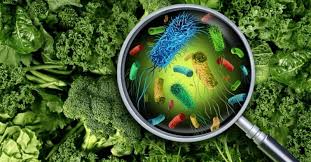
Microbial food contaminants include bacteria, viruses, mycotoxins from certain fungi, and parasites. Viruses are very tiny organisms, smaller than bacteria, that require a host cell to grow. Several negative health issues are caused by virus-contaminated foods.
Parasites, such as worms, can be consumed alongside inadequately cooked foods and have been known to cause adverse health effects. Mycotoxins, secondary metabolites of some fungi, pose serious health concerns, particularly in developing countries. Mycotoxins are produced on grains and other foods that have not been adequately dried and stored.
In the previous article, the definition of food contamination, types of food contaminants, events causing food contamination, and food contamination caused by bacteria were discussed.
The illnesses caused by foodborne bacteria, such as botulism, shigellosis, and salmonellosis, were emphasized. In this article, food contamination caused by viruses, parasites, and mycotoxins will be considered, along with methods for eliminating food contamination caused by microbiological agents.
Read Also: How to Extract and Package Snail Slime (Snail filtrate) for Commercial Use
Understanding Viruses as Food Contaminants

1. Definition of Viruses
Viruses are very tiny organisms that can grow and survive only in a host cell. They enter food and water due to poor hygienic conditions. Viruses can only multiply and grow inside a living cell. They are highly resistant to heat, drying, freezing, radiation, and other conditions and can survive for a long time in food or the environment.
Viruses may enter food during processing or transportation through person-to-person contact. Awareness of the importance of viruses as food contaminants encourages good hygiene practices to minimize the transmission of viral illnesses. The table below shows the major viruses and their associated health risks.
Major Viruses and Their Health Risks
| Major Viruses | Health Risks |
|---|---|
| Hepatitis A virus | Fever, abdominal discomfort |
| Norwalk virus | Nausea, vomiting, diarrhea, abdominal pain (gastroenteritis), headache, low-grade fever |
| Rotavirus | Vomiting, watery diarrhea, fever, abdominal pain |
Read Also: Economic Importance, Uses, and By-Products of Watermelon Shoots
Parasites as Food Contaminants

1. Overview of Parasitic Contamination
Parasites, including worms and protozoa, can enter food or water and infect people through these routes. They require an ambient environment and proper hosts to survive.
Contamination of food occurs through fecal matter due to poor personal hygiene of food handlers, improper disposal of human feces, inadequate sewage treatment, and the use of untreated sewage for crop cultivation. The table below lists the major parasites and their associated risks.
Major Parasites and Their Contamination Risks
| Major Parasites | Risk of Contamination |
|---|---|
| Giardia lamblia | Diarrhea, abdominal cramps, fatigue, nausea, flatulence (intestinal gas), weight loss |
| Entamoeba histolytica | Dysentery (severe, bloody diarrhea) |
| Ascaris lumbricoides | Intestinal, lung infection |
| Diphyllobothrium latum | Attaches to intestinal wall |
| Cryptosporidia | Respiratory, gastrointestinal illness |
| Trichinella spiralis | Attaches to intestinal wall, enters the blood and lymphatic system |
| Toxoplasma gondii | Neurological disorders, particularly schizophrenia, bipolar disorder |
| Taenia solium | Attaches to intestinal wall |
| Anisakis spp. | Anisakiasis |
Mycotoxin Contamination Issues
1. Definition of Mycotoxins
Mycotoxins are secondary metabolites produced by molds, belonging to the biological contamination category. While many fungi can produce mycotoxins, this potential is species-specific.
Mycotoxins cause several adverse effects on humans, animals, and crops, making their contamination a worldwide concern. The incidence of mycotoxins depends on the temperature and humidity of a region prone to fungal growth.
Exposure to mycotoxins can occur through ingestion, dermal contact, or inhalation without involving the producer fungi. These fungal toxins are considered abiotic hazards originating from biotic sources. The disease caused by mycotoxins, known as mycotoxicoses, results in various acute and chronic effects.
Mycotoxins may contaminate food during several stages of the food chain, from soil to plate. Contamination can occur in food through infection of crops, not only when directly consumed by humans but also when consumed as feed.
Ingested mycotoxins may accumulate in body organs and enter food or feed through agricultural products, meat, milk, or eggs. Various foods, such as cereals, legumes, nuts, spices, fruits, and their products, are susceptible to mycotoxin contamination.
Major Mycotoxins and Their Producer Microorganisms
| Mycotoxin Name | Producer Microorganism |
|---|---|
| Aflatoxins | Aspergillus flavus, A. parasiticus, A. bombycis, A. ochraceoroseus, A. nomius, A. pseudotamari |
| Ochratoxins (Ochratoxin A) | Aspergillus ochraceus, A. carbonarius, A. melleus, A. sclerotiorum, A. sulphureus, Pichia verrucossum |
| Trichothecenes | Fusarium spp. |
| Zearalenone | Fusarium, F. culmorum, F. graminearum, F. sporotrichioides |
| Fumonisins | Fusarium proliferatum, F. verticillioides |
| Tremorgenic toxins | Penicillium |
| Ergot alkaloids | Claviceps |
| Moniliformin | Fusarium species (mainly F. proliferatum) |
Control Measures for Microbial Food Contamination
1. Strategies to Mitigate Contamination
Microbial contamination poses significant challenges in food safety. The table below outlines key contamination issues, their frequency or impact, and methods to improve food safety.
Control Measures for Microbial Contamination
| Microbial Contamination Issue | Frequency/Impact | How to Improve |
|---|---|---|
| Contamination of raw materials | Fresh vegetable products are implicated as sources of infection. Inappropriate suppliers’ processes or improper storage may cause microbial contamination. | Apply good agricultural practices and enhance hygienic performance in crops and on farms. Establish effective cleaning/sanitizing programs. Request a product inspection report from suppliers containing a self-evaluation document to ensure materials are not contaminated by pathogens or toxins. |
| Risk in food packaging | Air combined with packaging in the food supply chain is a major potential source of pathogenic microorganisms. | Use appropriate air filters combined with production processes to control high-risk microbial aerosol generation. Implement good hygienic practices in food processing and supply a product inspection report to ensure products are not contaminated by pathogens or toxins. |
| Risk in food refrigeration | Inappropriate refrigeration systems can cause microbial contamination, resulting in significant food product loss. | Refrigerate food products to reduce the temperature of meat and vegetables to a point where the growth rate of spoilage microorganisms is slowed, and the growth of most pathogenic microorganisms is prevented. Supply a refrigeration inspection report. |
| Risk in transportation and food service operations | Unsuitable and untimely transportation services, product handling at the destination, or incorrect temperatures can cause microbial contamination and food loss. | Employ time and temperature control at all stages of transportation. Use good personal hygiene. Establish effective cleaning/sanitizing programs. Supply product inspection report forms at the product’s destination for all products from the initial process to the final destination. |
Viruses, protozoa, and mycotoxins are significant agents of food contamination. Viruses are highly resistant to heat, drying, freezing, and radiation, making prevention of contamination the most effective strategy.
Parasites, including worms and protozoa, contaminate foods like pork through fecal contact and require proper cooking to be eliminated. Mycotoxins, produced by certain fungi, pose serious health risks and contaminate grains, legumes, and nuts when not properly dried or stored, particularly in hot and humid environments.
Do you have any questions, suggestions, or contributions? If so, please feel free to use the comment box below to share your thoughts. We also encourage you to kindly share this information with others who might benefit from it. Since we can’t reach everyone at once, we truly appreciate your help in spreading the word. Thank you so much for your support and for sharing!