


Water pollution refers to the contamination or pollution of water bodies or their sources, which usually occurs as a result of human activities.
Understanding Land Pollution in Agricultural Systems
Land pollution is the deterioration or degradation of the earth’s surface or soil. It is the deposition of solid or liquid materials on the land in a way that can contaminate the soil and groundwater and even threaten public health.
In this article, the focus is on water and land pollution, specifically examining freshwater reserves, urban pollutants, and industrial pollutants in relation to agriculture.
Sources of Water and Soil Pollution in Agriculture
Water and soil pollutants represent two major categories of environmental pollution. Water- and soil-polluting substances are often due to man-made wastes such as household garbage, manufacturing and agricultural wastes, fertilizers used by farmers, oil spills, and radioactive materials.
Read Also: How To Start A Piggery Project
Freshwater Reserves and Agricultural Impacts
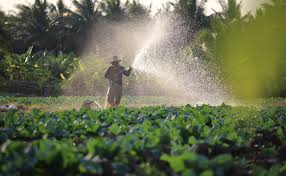
The amount of freshwater is maintained constant by the hydrological cycle. This cycle involves evaporation from oceans and inland waters, transpiration from plants, precipitation, infiltration into the soil, and runoff of surface water into lakes and rivers. The infiltrated water is used for plant growth and recharges groundwater reserves.
Although the global supply of available freshwater is sufficient to maintain life, the worldwide distribution of freshwater is not even. In some areas, the supply is limited because of climatic conditions or cannot meet the demands of high population density.
In other places, although there is no shortage of freshwater, the water supply is contaminated with industrial chemicals and is thus unfit for human use. Moreover, fish and other aquatic species living in chemically contaminated water become unfit for human consumption.
Thus, water pollution deprives humans and other species of two essential ingredients for survival: water and food.
In the urban setting, pervious areas are replaced with impervious ones (such as streets, parking lots, and shopping centers).
Groundwater replenishment is greatly reduced, and runoff is considerably increased by these changes. Thus, urbanization not only contributes to water pollution; it also increases the possibility of floods.
Nitrogen Overload in Agricultural Runoff
As humanity became increasingly dependent on fossil fuels and nitrogen-containing fertilizers, the production of nitrogen oxides increased substantially. The inorganic nitrogen compounds began to accumulate in the soil as the denitrifying microorganisms are unable to deal with the overload.
The nitrates and nitrites deposited on the land percolate through the soil and pollute the groundwater. They are also washed out with agricultural runoff into rivers, lakes, and estuaries, promoting an excessive growth of algae and other aquatic plants.
Growth of microorganisms and bacterial digestion of the decaying plants consume the oxygen dissolved in the water, a process called eutrophication. Because aquatic species require 5–6 ppm of dissolved oxygen, excessive growth causes oxygen depletion and thus kills fish by suffocation.
Transport Mechanisms of Water Pollutants in Agriculture
The transport of pollutants into water may occur in three ways:
- Via point sources, which have a well-defined origin, such as the outlet from a plant or from a municipal sewer line.
- Via nonpoint sources that lack any well-defined point of origin, such as runoff from fields or streets.
- Via air, with wind or air currents.
Although all types of pollution sources present a serious problem, point sources can be controlled, at least in principle. Nonpoint sources are difficult to control, whereas transport in the air is impossible to control at all and can be prevented only by discontinuing the use of harmful substances.
Urban Pollutants Affecting Agricultural Water Systems
The sources of urban pollutants are municipal sewage, runoff from city streets and landfills, and industrial effluents.
1. Municipal Sewage and Agricultural Impacts
Municipal sewage consists mainly of human and animal waste; thus, it is rich in nitrogen-containing organic nutrients. In addition, it contains grit, suspended soil, detergents, phosphates, metals, and numerous chemicals. Raw sewage entering streams and lakes stimulates excessive growth of aquatic bacteria, algae, and other plants, leading to eutrophication.
2. Metabolizable Organic Matter in Agricultural Waters
The degree of pollution with metabolizable organic matter can be determined by a test called biological oxygen demand (BOD). This measures the amount of oxygen needed by aquatic microorganisms to decompose organic matter during a 5-day period. Hence, metabolizable organic pollutants are referred to as BOD pollutants.
3. Synthetic Organic Chemicals in Agricultural Runoff
The synthetic chemicals found in municipal wastewater originate from both household use and industry. Ordinary households in an industrialized society use substantial amounts of organic chemicals such as cleaning fluids, pharmaceuticals, cosmetics, and paints. Residual quantities of these substances may end up in the sewage.
Toxic chemicals in sewage create potential hazards to aquatic life and inhibit the biological process of degradation of contaminants. In addition, they potentiate the toxicity of sewage sludge that must be disposed of in landfills.
4. Storm Water Runoff and Agricultural Pollution
Storm water runoff from cities and villages presents another problem. This runoff contains salts from road deicing, street refuse, animal waste, food litter, residue from atmospheric deposition of sulfuric and nitric acid, metals, asbestos from automobile brakes, rubber from tires, hydrocarbons from motor vehicle exhaust condensates, oil and grease, soil and inorganic nutrients from construction sites, and a variety of other chemicals.
After a heavy downpour, the runoff from city streets and construction sites and leachates from landfills may bring a considerable quantity of pollutants into streams and lakes.
Lead Pollution in Agricultural Environments
Although lead pollution is essentially an urban problem, agricultural land, lakes, and rivers are also frequently affected. Lead has many toxic effects, including inhibition of red blood cell formation, kidney damage, and damage to the nervous system.
1. Sources of Lead Pollution in Agriculture
The sources of lead pollution are leaded gasoline, lead-based paint, and waste disposal.
2. Toxic Symptoms in Children from Agricultural Lead Exposure
Children are particularly susceptible to low-level lead intoxication, which creates a type of encephalopathy referred to as subclinical toxicity.
Read Also: Positive and Negative Effects of Drinking Garri
Soil Erosion and Its Impact on Agricultural Fertility
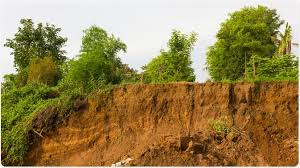
Soil erosion is a natural phenomenon caused by water and wind; it causes silting of lakes and rivers, it causes pollution of surface water with nutrients and pesticides, and it affects the fertility of the land.
Binding of Pollutants in Agricultural Soils
The capability of soil to bind and transport pollutants depends on the nature of the soil as well as on the chemical and physical properties of the pollutant.
Soil organic matter is responsible for binding nonionic and hydrophobic compounds. The inorganic matter interacts with ionic and polar compounds; it also has cation-exchange capacity. The size of soil particles is important.
The large surface area associated with very small particles provides a greater number of binding sites than the surface area of large particles.
Water solubility of a pollutant is another property that affects its interaction with the soil. Water solubility, in turn, is affected by factors such as salt concentration, pH, the presence of other organic compounds, and temperature.
Cropland Fertility and Agricultural Sustainability
Soil erosion is an important issue because it contributes to water pollution and affects cropland fertility. Although the predominant effect of erosion is loss of the topsoil, in some extreme cases, soil erosion leads to terrain deformation by the creation of gullies.
Other causes of land degradation are depletion of nutrients, compaction of the soil by cattle or heavy machinery, waterlogging, salinization, and acidification.
1. Salinization in Agricultural Lands
Excessive salt accumulated in the upper layers or on the surface of the soil inhibits plant growth, and consequently, the fertility of the land declines. In extreme cases, certain areas may become sterile.
Nutrients and Pesticides in Agricultural Runoff
Runoff from farms causes pollution by nutrients such as nitrates and phosphates from fertilizers and by animal waste originating from feedlots. Both nutrients and animal waste contribute to eutrophication of lakes and streams.
1. Nutrient Pollution in Agriculture
Nitrates are of special concern because of their potential toxicity. With their high water solubility, they leach easily from the soil and contaminate surface as well as groundwater.
In the soil, they may undergo reduction to nitrites. When ingested via drinking water, nitrites may cause methemoglobinemia and hypertension in children.
The chemical reaction between nitrites and some pesticides may lead to the formation of nitrosamines, which are known carcinogens and mutagens.
Phosphates move primarily with the eroding soil. Even when applied to the field as a soluble orthophosphate, it soon reverts to an insoluble form that is readily adsorbed to soil particles. As a result, phosphate builds up in the sediment.
Manure is a good fertilizer if used in moderate quantities on the fields. Large quantities of manure that accumulate in cattle feedlots produce leachate rich in organic nutrients as well as in phosphates, nitrates, and ammonia, creating a hazard of groundwater and surface water pollution.
The accumulated manure also contributes to air pollution by releasing nitrous oxide, which is formed in the soil from ammonia by oxidizing bacteria. N2O is converted in the air to nitric acid.
2. Pesticide Use in Agriculture
Pesticides (whether insecticides, herbicides, or fungicides) by their very nature and purpose are poisons. Even if their amount is minimal in comparison to that of silt, their impact on the environment may be considerable.
i. Persistence of Pesticides in Agricultural Environments
Concern with pesticides centers on their properties, such as selective toxicity, persistence in the environment, bioaccumulation potential, and mobility. Persistence in the environment is perhaps the most crucial factor in their acceptability. Accordingly, they are divided into three groups:
- Persistent, which decompose by 75–100% within 2–5 years.
- Moderately persistent, which decompose within 1–18 months.
- Nonpersistent, which decompose in 1–12 weeks.
The fact that a pesticide “decomposes” (i.e., loses the activity for which it was designed) does not necessarily mean that it becomes a harmless substance.
ii. Restrictions on Pesticides in Agriculture
Some of the most persistent pesticides (such as DDT, dieldrin, chlordane, and toxaphene) have been banned from use, and the use of others has been restricted.
Health and Environmental Effects of Agricultural Pesticides

Concern about the health effects of chlorinated hydrocarbon pesticides stems from the observation that many of them, such as DDT, aldrin, and chlordane, were shown to produce liver cancer in rodents.
Recently, concern about the effects of pesticides on human health and on the ecosystem began to move beyond cancer. It appears that some chlorinated hydrocarbon pesticides exert a multitude of toxic effects.
These pesticides are neurotoxic, mutagenic, and teratogenic, they exert toxic effects on the reproductive system, and they suppress the immune system. It has been suggested that these compounds act by mimicking or inhibiting estrogen receptors.
Endocrine disrupters, as they are called, not only affect women’s health but are also believed to be responsible for a decrease in sperm count and a rise in testicular cancer in humans.
Because of the environmental problems caused by persistent pesticides, there is now a tendency to use, whenever possible, the nonpersistent ones that by definition decompose in 1–12 weeks.
Alternative Agriculture for Sustainable Practices
Public concern over the presence of pesticide residues in fruits and vegetables and water pollution problems caused by conventional agricultural practices have led to a new trend in food production, alternative agriculture.
The aim of alternative agriculture is to limit dependence on fertilizers and pesticides and to prevent soil erosion. The techniques involve crop rotation, diversification of crops and livestock, use of nitrogen-fixing legumes, use of biological pest control, new tillage procedures, and planting cover crops after the harvest to prevent soil erosion.
Although alternative agriculture is at present in an experimental stage, it may eventually offer a means to sustainable and nonpolluting food production.
Industrial Pollutants Impacting Agricultural Systems
Industrial waste consists of a variety of pollutants, including sludges from the steel industry; toxic chemicals from chemical, mining, and paper industries; BOD contaminants from food processing plants; heat from power plants (conventional and nuclear) and from steel mills; and pH changes from the mining industry.
These pollutants represent a hazard not only to aquatic life but also to human health, either through direct exposure or indirectly through the consumption of contaminated fish or waterfowl.
The degree of hazard depends on the pollutants’ toxicity, rate of discharge, persistence and distribution in the aquatic system, and bioaccumulation potential.
Persistence is a function of the toxins’ biodegradability in water and of their vapor pressure. Some highly volatile compounds, when discharged into water, evaporate and become air pollutants.
1. Heat Pollution in Agricultural Water Systems
Power plants, conventional as well as nuclear, and the steel industry use large amounts of water for cooling purposes. The released water carries heat from the plants into rivers or lakes, and this heat increases the ambient water temperature in the vicinity of the release point.
The elevated temperature stimulates the metabolism of aquatic organisms, which in turn increases the demand for oxygen.
At the same time, the amount of dissolved oxygen decreases with increasing temperature. Thus, the effect of heat pollution is similar to that of BOD contaminants or nutrients.
Some aquatic species have difficulty adapting to the warmer environment. Other species adapt to the warmer water and congregate around discharge points in winter. If the plants are shut down temporarily, massive fish kills from temperature shock result.
Groundwater Pollution and Agricultural Implications
Although there are numerous sources of contaminants, they are all related to three potential roots:
- Water-soluble products that are stored or spread on the land surface.
- Substances that are deposited or stored in the ground above the water table.
- Material that is stored, disposed of, or extracted from below the water table.
Agricultural pollutants and waste disposed on land belong to the first category; waste disposed in landfills, leaking septic tanks, and leaking underground storage tanks, to the second one; and waste disposed in deep wells and waste originating from mining activities to the third.
Essentially, all chemicals that contact the ground, such as fertilizers and pesticides spread on the fields, especially if they are water soluble, present a potential hazard of groundwater contamination.
Do you have any questions, suggestions, or contributions? If so, please feel free to use the comment box below to share your thoughts. We also encourage you to kindly share this information with others who might benefit from it. Since we can’t reach everyone at once, we truly appreciate your help in spreading the word. Thank you so much for your support and for sharing!