


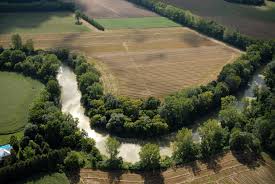
The watershed management implies the judicious use of all the resources, namely land, water, and vegetation in an area.
It also involves providing an answer to alleviate drought, moderate floods, prevent soil erosion, improve water availability, and increase food, fodder, fuel, and fiber on a sustained basis.
It aims to achieve maximum production with minimum hazard to natural resources and for the well-being of people.
The task of watershed management includes the treatment of land by using the most suitable biological and engineering measures in such a manner that the management work must be economical and socially acceptable.
Read Also: Cold Weather Poultry Diseases and How to Manage them
Definition of Watershed Management in Agricultural Systems

Watershed management is the study of the relevant characteristics of a watershed aimed at the sustainable distribution of its resources and the process of creating and implementing plans, programs, and projects to sustain and enhance watershed functions that affect the plant, animal, and human communities within a watershed boundary.
It may also be defined as the study of the relevant characteristics of a watershed aimed at the sustainable distribution of its resources and the process of creating and implementing plans, programs, and projects to sustain and enhance watershed functions that affect the plant, animal, and human communities within a watershed boundary.
Watershed management is the integrated use of land, vegetation, and water in a geographically discrete catchment or drainage area for the benefit of its residents, with the objective of maintaining the hydrological services that the watershed provides and of reducing or avoiding negative downstream or groundwater impacts.
This implies monitoring other ecological services such as soil productivity, biodiversity, carbon cycle, and climate change adaptation and mitigation, as well as socio-cultural services such as aesthetics, recreation, tourism, and heritage.
Key Elements of Watershed Management for Agricultural Planning
Three important elements in watershed management include: land, people, and management. All of these elements should be carefully studied and taken into full consideration in planning and implementing any watershed management program or project.
1. Land as a Physical Element in Watershed Management
This refers to land mass or a geomorphic article including soil, water, rocks, vegetation, animals, and other resources attached to it. Land has three dimensions, different qualities, and many forms.
In a watershed, there are also many types of land use and infrastructure. All their conditions and distributions affect watershed management.
2. People as Stakeholders in Watershed Projects
People refer to the inhabitants in the watershed and those in the downstream area related to the watershed. Their social, economic, and cultural conditions are extremely important in watershed management.
3. Management Structures for Watershed Implementation
It refers to policy, legislation, administration, institutional capability, technology, and resources of various government and private agencies in dealing with watershed management.
Read Also: The Nutritional Requirements and Deficiency Symptoms for Poultry Chickens
Objectives of Watershed Management in Agriculture

Features of a watershed that agencies seek to manage include water supply, water quality, drainage, stormwater runoff, water rights, and the overall planning and utilisation of watersheds. Therefore, the objectives of watershed management are as follows:
i. to protect, conserve and improve the land of watershed for more efficient and sustained production.
ii. identify and protect high-quality natural features including forested areas, floodplains, riparian buffers, wetlands, and contiguous greenways.
iii. to check soil erosion and to reduce the effect of sediment yield on the watershed.
iv. to rehabilitate the deteriorating lands.
v. to moderate the flood peaks at downstream areas.
vi. to increase infiltration of rainwater.
vii. to improve and increase the production of timbers, fodder, and wildlife resource.
viii. to enhance the groundwater recharge, wherever applicable.
ix. to reduce the occurrence of floods and the resultant damage by adopting strategies for flood management.
x. to provide standard quality of water by encouraging vegetation and waste disposal facilities.
xi. protect and improve the warm water and cool water fishery and conditions for other indigenous aquatic life and wildlife.
xii. maintain and/or increase the aesthetics of the water resources and recreational opportunities (parks and other facilities), including public access.
Do you have any questions, suggestions, or contributions? If so, please feel free to use the comment box below to share your thoughts. We also encourage you to kindly share this information with others who might benefit from it. Since we can’t reach everyone at once, we truly appreciate your help in spreading the word. Thank you so much for your support and for sharing!