



Wildlife conservation is a critical practice aimed at maintaining ecological balance and preserving species for future generations. Effective fish and game management involves manipulating wildlife populations and their habitats to achieve sustainable outcomes.
This article explores key methods and policies for wildlife conservation. It emphasizes practical approaches like population control and habitat management, alongside legislative frameworks that support these efforts.
Population Control Methods

Population control is essential to prevent overgrazing and habitat degradation in national parks. Various methods are employed to manage wildlife populations, particularly ungulates, to maintain ecological balance.
A. Natural Predation
Protecting large predators in parks is vital for natural population control. However, predation alone is insufficient to manage larger species like bison, moose, elk, and deer, often requiring additional artificial controls.
Predator protection efforts must be intensified to maintain ecological balance. Despite their role, predators cannot fully regulate ungulate numbers, necessitating supplementary measures to ensure habitat health.
B. Trapping and Transplanting
Historically, national parks like Yellowstone have relocated thousands of elk, deer, and other species. Since 1892, Yellowstone alone has supplied 10,478 elk for restocking, but high costs and filled game ranges limit this method’s sustainability.
Trapping and transplanting involve significant expenses, often costing several dollars per animal. With most U.S. big game ranges at capacity, this approach is not a practical long-term solution for population control.
C. Shooting Migratory Animals
Many park herds migrate outside boundaries, where public hunting can control numbers. Special regulations are needed, as migrations often occur after standard hunting seasons, requiring cooperation with surrounding states.
Public hunting outside parks is the most effective method for controlling ungulate populations. However, care must be taken to preserve migratory behaviors, as selective hunting may favor non-migratory individuals.
D. Controlled Shooting in Parks
When other methods are impractical, excess ungulates are removed by controlled shooting within parks. This is managed by competent National Park Service personnel, ensuring minimal disturbance to surviving animals.
Controlled shooting is conducted solely for population management, not recreation. Expert riflemen, under centralized direction, selectively cull herds to maintain ecological balance with minimal environmental impact.
Read Also: How to Convert Potato Wastes in Ethanol
Habitat Management Techniques
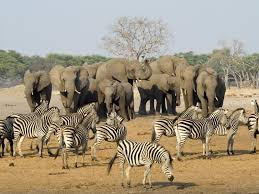
Habitat management enhances or reduces species populations based on ecological needs. It involves deliberate actions to shape ecosystems for wildlife production, even if not originally designed for this purpose.
Effective habitat management requires understanding historical ecosystems and testing management hypotheses. This ensures sustainable wildlife production while preserving biodiversity.
A. Introduction of Exotic Species
Introducing exotic species can alter ecosystems but often fails due to unpredictable behaviors. Exotic species may become pests, disrupt ecological communities, or introduce foreign diseases, as seen with Hawaiian birds.
Stocking exotics is costly and may reduce recreational hunting quality. Despite some successes, it often detracts from managing native species and requires rigorous pre-stocking analysis.
Key Challenges of Exotic Species Introduction:
1. Unpredictable Behavior: Exotic species may act as pests or fail in new environments.
2. Ecological Disruption: Introduced species can destabilize ecosystems, with restoration challenges.
3. High Costs: Selection, transportation, and quarantine processes are expensive.
4. Reduced Recreational Value: Native wildlife hunting may lose appeal post-stocking.
B. Research and Experimentation
Effective habitat management begins with historical research to understand original biotic associations. This is followed by ecological studies to formulate management hypotheses for testing.
Small-scale experiments, conducted away from public view, test these hypotheses. Once validated, management methods are applied to critical areas to enhance wildlife production sustainably.
Read Also: Recommended Equipment‘s and Tools Needed in Snail Farming Business
Wildlife Conservation Policy and Legislation
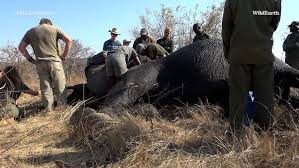
Wildlife conservation policies in Nigeria have evolved to balance preservation, recreation, and resource utilization. Legislation plays a crucial role in regulating these efforts.
A. Evolution of Wildlife Policy
Before Nigeria’s 1916 game law, wildlife conservation lacked formal policy. Early laws in 1916, 1928, and 1963 focused on preservation, reflecting abundant wildlife and a desire to protect it as a national heritage.
The creation of Yankari (1956) and Borgu (1962) Game Reserves introduced recreation and tourism. By 1967, the National Wildlife Conservation Committee emphasized bush meat production to address protein shortages.
B. Current Legislative Framework
Nigeria lacks a unified national wildlife conservation law. The 1916, 1928, and 1963 game laws, with modifications, govern different states, creating a fragmented legal landscape.
In 1973, the National Wildlife Conservation Committee proposed a unified “National Fauna Conservation Law.” The 1985 Endangered Species Decree further regulated international trade and traffic.
C. Law Enforcement Strategies
Law enforcement is the cornerstone of wildlife management, ensuring sustainable harvests. It preceded other tools like refuge establishment and habitat manipulation, as defined by Leopold’s game management principles.
Key Criteria for Effective Wildlife Laws:
1. Clear Public Need: Laws must articulate long-term public benefits.
2. Specific Objectives: Laws should target precise actions with measurable outcomes.
3. Cost-Effectiveness: Enforcement costs should not exceed social benefits.
4. Anticipate Impacts: Laws must avoid counterproductive results through careful planning.
Frequently Asked Questions
1. What is the primary goal of wildlife conservation in national parks?
The primary goal is to maintain ecological balance by controlling populations and preserving habitats for future generations, ensuring sustainable use for recreation, tourism, and meat production.
2. Why is natural predation insufficient for population control?
Large predators cannot fully regulate ungulate populations, especially larger species like bison and elk, requiring additional methods like controlled shooting or public hunting.
3. How does public hunting help manage park wildlife?
Public hunting outside park boundaries targets migratory herds, reducing excess populations. Special regulations ensure effective control while preserving migratory behaviors.
4. What are the risks of introducing exotic species?
Exotic species may become pests, disrupt ecosystems, introduce diseases, or fail to adapt, often requiring costly management and reducing native species’ recreational value.
5. How does Nigeria’s wildlife policy balance different goals?
Nigeria’s policy integrates preservation, recreation, tourism, and bush meat production, using buffer zones and cropping techniques to manage wildlife sustainably.
6. Why is there no unified wildlife conservation law in Nigeria?
Conservation is governed by regional laws from 1916, 1928, and 1963, with state-specific modifications. A 1973 proposal for a unified law remains unimplemented.
7. What role does law enforcement play in wildlife management?
Law enforcement ensures sustainable harvests, protects endangered species, and regulates exploitation, forming the foundation of effective wildlife management strategies.
Do you have any questions, suggestions, or contributions? If so, please feel free to use the comment box below to share your thoughts. We also encourage you to kindly share this information with others who might benefit from it. Since we can’t reach everyone at once, we truly appreciate your help in spreading the word. Thank you so much for your support and for sharing!