


This article discusses the storage of wine, an important consideration for wine that is being kept for long-term aging. While most wine is consumed within 24 hours of purchase, fine wines are often set aside for long-term storage. Wine is one of the few commodities that can improve with age and increase in value. It is therefore important that wine is stored in conducive conditions to avoid deterioration in quality.
Read Also: 7 Medicinal Health Benefits of Daffodils (Narcissus Plant)
Key Factors Affecting Wine Storage
The factors affecting wine in storage include the following.
1. Impact of Light on Wine
Strong, direct sunlight or incandescent light can adversely react with phenolic compounds in wine and create potential wine faults. Delicate, light-bodied white wines run the greatest risk from light exposure, as they are often packaged in darkly tinted wine bottles that offer some protection from the light.
Wines packaged in clear, light green, and blue colored bottles are the most vulnerable to light and may need extra precautions for storage. In the cellar, wines are stored in corrugated boxes or wooden crates to protect the wines from direct light.
2. Role of Humidity in Wine Preservation
Some degree of humidity is required to keep wines with cork enclosures from drying out. Even when wine bottles are stored on their sides, one side of the cork is still exposed to air. If the cork begins to dry out, it can allow oxygen to enter the bottle, filling the ullage space and possibly causing the wine to spoil or oxidize.
Excessive humidity can also pose the risk of damaging wine labels, which may hinder identification or hurt potential resale value. Some wine experts opine that 75 percent humidity is ideal for storage. However, there is very little significant research to definitively establish an optimal range.
Concern about humidity is one of the primary reasons why wine experts recommend that wine should not be kept in a refrigerator since the refrigeration process often includes dehumidifying, which can quickly dry out corks.
Some wine experts debate the importance of humidity for proper wine storage. Claims have been made that the relative humidity within a bottle be maintained at 100 percent regardless of the closure used or the orientation of the bottle. However, some experts hold that low humidity can still be detrimental to premium wine quality due to the risk of the cork drying out.
As a way of maintaining optimal humidity, it is recommended that half an inch of gravel be spread on the floor of a wine cellar and periodically sprinkle it with some water.
3. Importance of Temperature Control
Wine is very susceptible to changes in temperature; hence, temperature control is an important consideration in wine storage. If the wine is exposed to too high a temperature (in excess of 77°F (25°C)) for long periods of time, it may become spoilt or “cooked” and develop off flavors that taste raisiny or stewed.
The exact length of time that a wine is at risk of exposure to high temperatures will vary depending on the wine. For example, some wines such as Madeira is exposed to high temperatures during its winemaking. It is therefore able to sustain exposure to high temperatures more easily than other more delicate wines.
If the wine is exposed to too cold temperature, the wine can freeze and expand, causing the cork to be pushed out. This will allow more exposure of the wine to oxygen.
Dramatic temperature swings can also cause adverse chemical reactions in the wine that may lead to a variety of wine faults. Most experts recommend that wine be kept at constant temperatures between 50° and 59°F (10° and 15°C) with 52°F (11°C) being the most ideal temperature for storage and aging.
In general, a wine has a greater potential to develop complexity and a more aromatic bouquet if it is allowed to age slowly in a relatively cool environment. The lower the temperature, the more slowly a wine develops.
On the average, the rate of chemical reactions in wine doubles with each 18°F (8°C) increase in temperature. An expert even believes that wine can be exposed to temperatures as high as 120°F (49°C) for a few hours and not be damaged.
4. Effects of Vibration on Wine
Although anecdotal information regarding the contributions of vibration in wine storage states that it contributes to the accelerated aging of wine with adverse effects, this remains a research area with relatively little data. In a particular study, vibrations of different frequencies have been shown to have their own distinct effect on the chemistry of the wine though the authors have not stated whether the effects are detrimental to the quality of the wine or if the effects are caused by other aging factors.
5. Optimal Bottle Orientation for Storage
Most wine racks are designed to allow a wine to be stored on its side. The thinking behind this orientation is that the cork is more likely to stay moist and not dry out if it is kept in constant contact with the wine. Some wineries package their wines upside down in the box for much the same reason.
Research in the late 1990s suggested that the ideal orientation for wine bottles is at a slight angle, rather than completely horizontal. This allows the cork to maintain partial contact with the wine to stay damp but also keeps the air bubble formed by a wine’s ullage at the top rather than in the middle of the bottle if the wine is lying on its side.
Keeping the ullage near the top, it has been argued, allows for a slower and more gradual oxidation and maturation process. This is because the pressure of the air bubble that is the ullage space rises and falls depending on temperature fluctuation.
When exposed to higher temperatures, the bubble’s pressure increases (becomes positive relative to the air outside of the bottle), and if the wine is tilted at an angle, this compressed gas will diffuse through the cork and not harm the wine.
When the temperature falls, the process reverses. If the wine is completely on its side, then, this action will eject some wine through the cork. Through this “breathing” which can result from variations in temperature, oxygen may be repeatedly introduced into the bottle and as a result can react with the wine.
An appropriate and constant temperature is therefore preferred. Additionally, oxidation will occur more rapidly at higher temperatures and gases dissolve into liquids faster, the lower the temperature.
While most wines can benefit from lying on their side, Champagne and other sparkling wines tend to age better if they are kept upright. This is because the internal pressure caused by the trapped carbonic gas provides enough humidity and protection from oxygen.
A study found that Champagne stored on its side aged more quickly because oxygen was allowed to seep in after the Champagne corks lost their elasticity due to contact with the moist wine.
Read Also: Bacterial Canker (Stone fruit trees): Description, Damages Caused, Control and Preventive Measures
Duration of Wine Storage
Wine can be stored for short term or long term.
1. Short-Term Wine Storage
Short-term storage is for wine that can be consumed within 6 months, or bottles that are just from the store and intended to be consumed shortly or bottles that have been pulled from longer storage to be available for spur of the moment consumption.
The closest one can duplicate the conditions necessary for long-term storage, the better. However, small wine racks kept in a kitchen, dining room, pantry, or wherever are a satisfactory solution in the short term.
Keep the bottles stored so that:
- The bottle is on its side so the cork stays moist.
- The wines are at the lowest stable temperature possible.
- The location is free of vibration.
- The location is not a storage area for other items with strong odor.
Refrain from placing the rack on top of the refrigerator, close to the light and vibrates from the refrigerator compressor.
2. Long-Term Wine Storage
Long-term storage is for wine that one will keep for more than 6 months before consumption. If one plans to collect fine wines with benefit from bottle maturity (over 6 months), proper storage is critical. Before choosing a space, be sure it is big enough to house future purchases.
In some cases, empty space beneath a stairway is sufficient, or one may find it necessary to allow room for hundreds of wines stored as both individually racked bottles and full cases.
One will need something that is temperature-controlled, humidity, protects from vibration and UV rays. Dark, cool, stable environments work best for wine.
3. Storing Opened Wine Bottles
Keeping the wine as the winemaker intended overnight is no easy feat, given how rapidly a wine can degrade when exposed to oxygen. The biggest challenge with storing opened wine is the acetic bacteria often present and active in open bottles. Wine does not oxidize in the chemical way, but generally rather more rapidly as the bacteria feed, turning the wine to vinegar.
A typical wine left overnight without any special handling will not be drinkable due to oxidation. On the other hand, a wine that was not fully opened before may well be better in a night to continue evolving. There are four complementary solutions all of which minimize the effect of oxidation on the wine.
i. Vacuum corking: Vacuum corking works for the short term, longer if the wine started a little closed in the first place. The problem with this is that while some wines seem to benefit this way, others turn flat and dull.
ii. Gassing: Laying down a gas blanket works better, but a wine will still react a little with the “neutral” gas or continue interacting with the air mixed in earlier.
iii. Storage in a smaller bottle: A small bottle, of course, reduces the amount of oxygen in the bottle, but pouring into the smaller bottle is tedious and exposes the wine to more air.
iv. Refrigeration: Refrigeration is controversial. Some feel that refrigeration “kills” a wine, even white wine. However, when storing opened red wine, it needs to be allowed to warm up before drinking. Place it into the fridge soon after opening.
Suitable Places to Store Wine
Since the end of the 20th century, there has been growth in industries relating to wine storage. Some wine connoisseurs may prefer to store their wine at home in a dedicated room or closet. Other options involve purchases and rentals at off-site wine storage facilities that are specifically designed for the task. Wine can be stored in the following places:
1. Wine Cellar Storage
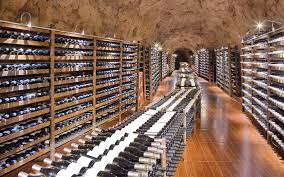
A wine cellar is a storage room for wine in bottles or barrels, or more rarely in carboys, amphorae, or plastic containers. In an active wine cellar, important factors such as temperature and humidity are maintained by a climate control system.
In contrast, passive wine cellars are not climate-controlled, and are usually built underground to reduce temperature swings. An aboveground wine cellar is often called a wine room, while a small wine cellar (less than 500 bottles) is sometimes termed a wine closet.
i. Active versus Passive Wine Cellars
Wine cellars can be either active or passively cooled. Active wine cellars are highly insulated and need to be properly constructed. They require specialized wine cellar conditioning and cooling systems to maintain the desired temperature and humidity. In a very dry climate, it may be necessary to actively humidify the air, but in most areas, this is not necessary.
Passive wine cellars must be located in naturally cool and damp areas with minor seasonal and diurnal temperature variations—for example, a basement in a temperate climate. Passive cellars may be less predictable, but cost nothing to operate and are not affected by power outages.
ii. Purpose of Wine Cellars
Wine cellars protect alcoholic beverages from potentially harmful external influences, providing darkness and a constant temperature. Wine is a natural, perishable food product.
Left exposed to heat, light, vibration, or fluctuations in temperature and humidity, all types of wine can spoil. When properly stored, wines not only maintain their quality but many actually improve in aroma, flavor, and complexity as they mature.
2. Wine Caves for Storage
These are subterranean structures for the storage and aging of wine. They are an integral component of the wine industry worldwide. The design and construction of wine caves represents a unique application of underground construction techniques.
The storage of wine underground offers the benefits of energy efficiency and optimum use of limited land area. Wine caves naturally provide both high humidity and cool temperatures; key to the storage and aging of wine.
3. Wine Accessories for Storage
A wine accessory is generally any equipment that may be used in the storing or serving of wine. Wine accessories include many items such as wine glasses, corkscrews, and wine racks.
i. Wine Racks for Bottle Storage
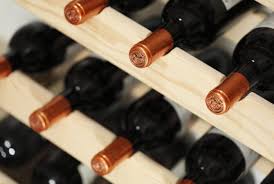
These are storage devices that hold wine bottles in an orientation facilitating long-term wine aging. Most wine racks are designed for a bottle to be stored on its side, with a slight slant downward towards the bottle’s neck.
This ensures that wine is always in contact with the cork, preventing the cork from drying out and the subsequent ingress of oxygen, which would ultimately spoil the wine. Wine racks can be made of many materials such as wood, steel, and stone, holding just several bottles to thousands. These racks also serve as decorative pieces in many homes.
Frequently Asked Questions about Wine Storage
- What are the key factors affecting wine storage?
The key factors affecting wine storage are light, humidity, temperature, vibration, and bottle orientation. Each of these elements can impact the quality and aging process of wine if not properly managed. - Why is light exposure harmful to wine?
Strong, direct sunlight or incandescent light can react with phenolic compounds in wine, causing potential faults. Delicate wines, especially light-bodied whites in clear or light-colored bottles, are most vulnerable and require protection, such as storage in dark boxes or crates. - What is the ideal humidity level for storing wine?
Some experts suggest 75 percent humidity is ideal to prevent corks from drying out, though there’s debate about the exact optimal range. Low humidity can cause corks to dry, allowing oxygen to enter and spoil the wine, while excessive humidity may damage labels. - What temperature is best for wine storage?
The ideal temperature for wine storage is between 50° and 59°F (10° and 15°C), with 52°F (11°C) often considered optimal. Constant temperatures prevent spoilage or adverse chemical reactions that can occur with high or fluctuating temperatures. - How should wine bottles be oriented during storage?
Most wines should be stored on their side or at a slight angle to keep the cork moist and prevent drying, which could allow oxygen ingress. Champagne and sparkling wines, however, age better upright due to internal pressure from carbonic gas. - What are the differences between active and passive wine cellars?
Active wine cellars use climate control systems to maintain temperature and humidity, requiring insulation and specialized equipment. Passive wine cellars, often underground, rely on naturally cool and damp conditions, are less predictable, but cost nothing to operate. - How can opened wine bottles be stored to minimize oxidation?
To minimize oxidation in opened wine bottles, use vacuum corking, gassing with a neutral gas blanket, transferring to a smaller bottle, or refrigeration. Each method helps reduce oxygen exposure, though refrigeration is controversial for some wines. - What are wine caves, and why are they used for storage?
Wine caves are subterranean structures designed for wine storage and aging. They provide energy-efficient, high-humidity, and cool environments, ideal for maintaining wine quality and optimizing land use.
Do you have any questions, suggestions, or contributions? If so, please feel free to use the comment box below to share your thoughts. We also encourage you to kindly share this information with others who might benefit from it. Since we can’t reach everyone at once, we truly appreciate your help in spreading the word. Thank you so much for your support and for sharing!