



Rheum ribes, commonly known as Curled Dock, is a robust perennial herbaceous plant that belongs to the Polygonaceae family. It is native to Europe and can be found in various other parts of the world, where it has been introduced as a naturalized species.
Curled Dock is characterized by its striking appearance, with long, curly leaves and a distinct reddish tinge in the stems. This plant has a long history of traditional medicinal and culinary uses.
The leaves of Curled Dock are large, lance-shaped, and typically measure between 15 to 60 centimeters in length. They have prominent veins and a curly or wavy edge, which gives the plant its common name.
The reddish coloration in the stems is a notable feature and makes Curled Dock easily identifiable. The plant’s inflorescence consists of small greenish flowers arranged in slender clusters that grow on tall, upright stems.
Curled Dock is highly adaptable and can thrive in a variety of habitats, from meadows and open fields to roadsides and disturbed areas. It is often considered a weed due to its aggressive growth and ability to colonize disturbed sites.
The plant is particularly resilient and can tolerate a wide range of soil conditions, making it a common sight in both urban and rural landscapes.
One of the most well-known uses of Curled Dock is in traditional herbal medicine. The plant has a history of being used to treat various ailments, with its roots, leaves, and seeds all holding potential medicinal properties.
The leaves are rich in vitamins, minerals, and antioxidants, and they have been used to make teas, infusions, and tinctures for their potential health benefits. Some traditional uses include the treatment of digestive issues, skin conditions, and as a mild laxative.
The Botanical Description of Rheum ribes (Curled Dock)
1. Life: Rheum ribes, commonly known as Curled Dock, is a perennial flowering plant that belongs to the Polygonaceae family. It exhibits distinct botanical features that aid in its identification.
2. Size and Growth: Curled Dock typically reaches a height of 30 to 120 centimeters (1 to 4 feet). It grows as a rosette in its early stages and develops a tall, erect stem as it matures.
3. Leaves: The leaves of Curled Dock are lance-shaped, with wavy or curled margins, giving the plant its name. They are green, often with reddish veins.
4. Flowers: The small, greenish-brown flowers of Curled Dock are clustered on a tall, branching stem. They have a unique appearance and are wind-pollinated.
5. Roots: The roots of Curled Dock are long, yellowish, and fleshy. They often have a distinctive, lemony scent when crushed.
6. Fruits: The plant produces small, triangular, and winged fruits, known as achenes, which contain the seeds.
7. Growth Habit: Curled Dock is a taprooted plant with a deep root system. It can be found in a wide range of habitats, including roadsides, meadows, and disturbed areas.
The Geographic Distribution of Rheum ribes (Curled Dock)
1. Native Range: Curled Dock is native to Europe and Asia, where it has a long history of traditional use for various purposes.
2. Introduction to New Regions: Due to human activity and the plant’s adaptability, Curled Dock has been introduced to many parts of North America, where it is often considered an invasive species.
3. Global Distribution: Today, Curled Dock can be found on almost every continent. It has naturalized in many regions and is commonly seen in disturbed habitats.
4. Preferred Habitats: Curled Dock thrives in a variety of environments, including grasslands, agricultural fields, and roadsides. It can tolerate a wide range of soil types and conditions.
5. Invasive Nature: In areas where it has become invasive, Curled Dock can outcompete native vegetation and disrupt local ecosystems.
The Chemical Composition of Rheum ribes (Curled Dock)
1. Anthraquinones: Curled Dock is known for its anthraquinone content, which includes compounds like emodin and chrysophanol. These compounds are responsible for the plant’s laxative properties.
2. Tannins: The plant also contains tannins, which contribute to its astringent qualities.
3. Flavonoids: Various flavonoids, such as quercetin and kaempferol, are present in Curled Dock, providing antioxidant properties.
4. Vitamins and Minerals: Curled Dock contains essential vitamins and minerals, including vitamin C, vitamin A, and iron.
5. Essential Oils: The plant has essential oils that give it a distinct aroma.
Rheum ribes, or Curled Dock, is a perennial plant with a unique botanical description, including curled leaves, small greenish-brown flowers, and long, fleshy roots.
Its geographic distribution spans the globe, and it is often found in disturbed habitats and regions where it has become invasive. The plant’s chemical composition includes anthraquinones, tannins, flavonoids, essential oils, and essential vitamins and minerals.
Understanding Curled Dock’s botanical characteristics, distribution, and chemical components is essential for identifying and appreciating its ecological and potential medicinal value.
Read Also: Cultural Control Measures of Pests
The Medicinal Health Benefits Of Rheum ribes (Curled Dock)
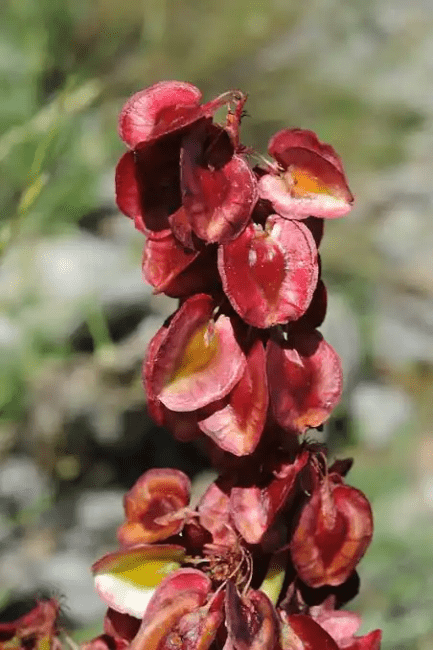
Rheum ribes, commonly known as Curled Dock, is a plant with a long history of traditional medicinal use. It offers various health benefits, and here, we list and explain these advantages.
1. Digestive Health: Curled Dock has been used to support digestive health, particularly in easing digestive discomfort and promoting regular bowel movements.
2. Laxative Properties: One of the primary traditional uses of Curled Dock is as a natural laxative. It can help alleviate constipation and maintain bowel regularity.
3. Detoxification: The plant’s laxative effects contribute to detoxification by aiding in the elimination of waste and toxins from the body.
4. Skin Health: Curled Dock is applied topically in some traditional remedies to address skin issues such as rashes, burns, and insect bites.
5. Anti-Inflammatory Effects: Some studies suggest that Curled Dock possesses anti-inflammatory properties, which may help reduce inflammation and alleviate certain conditions.
6. Antioxidant Properties: The presence of flavonoids in Curled Dock contributes to its antioxidant effects, helping combat oxidative stress.
7. Diuretic Properties: Curled Dock may act as a diuretic, promoting increased urine production and potentially aiding in conditions like edema.
8. Immune Support: While further research is needed, traditional uses of Curled Dock include immune support, although this aspect requires more scientific exploration.
9. Respiratory Health: In some traditional practices, Curled Dock is used to address coughs and respiratory issues, though scientific evidence is limited.
10. Liver Health: The plant is included in traditional herbal preparations aimed at supporting liver health and detoxification.
11. Cardiovascular Health: Curled Dock’s potential to lower cholesterol levels may contribute to cardiovascular health and reduce the risk of heart-related conditions.
12. Wound Healing: Topical applications of Curled Dock have been explored for their potential to promote wound healing, reduce inflammation, and prevent infection.
13. Bone Health: Some traditional systems of medicine use Curled Dock for its potential to support bone health and density.
14. Antimicrobial Effects: Curled Dock has been studied for its antimicrobial properties, particularly against certain bacteria and fungi.
15. Joint Health: Its anti-inflammatory effects are considered valuable for addressing joint pain and arthritis.
16. Weight Management: The laxative properties of Curled Dock may have applications in weight management programs by relieving occasional constipation often associated with weight gain.
The Methods of Usage to Achieve the Provided Health Benefits Of Rheum ribes (Curled Dock)
To use the medicinal health benefits of Rheum ribes, various methods of usage can be employed. Here, we list and explain 16 methods to achieve the provided health benefits of this versatile plant.
1. Herbal Teas: Curled Dock leaves can be used to make herbal teas that promote digestive health and provide relief from constipation.
2. Dietary Supplements: Curled Dock supplements, available in various forms such as capsules and tinctures, offer a convenient way to incorporate the plant’s benefits into your routine.
3. Topical Applications: Curled Dock extracts can be applied topically to address skin issues, support wound healing, and reduce inflammation.
4. Traditional Herbal Preparations: Traditional systems of medicine often use Curled Dock in herbal preparations, including tinctures and decoctions.
5. Culinary Use: Some cultures use Curled Dock leaves in salads and cooked dishes. However, this should be done with caution as certain parts of the plant can be bitter.
6. Skincare Products: Curled Dock extracts are utilized in skincare products like creams and ointments to address skin issues and promote skin health.
7. Essential Oils: Curled Dock essential oils, when available, can be used for aromatherapy and topical applications.
8. Infusions: Preparing herbal infusions from Curled Dock leaves is a soothing way to enjoy its digestive and detoxification properties.
9. Tinctures: Tinctures are liquid extracts of Curled Dock that can be added to water or other beverages.
10. Dietary Inclusion: Some people choose to incorporate Curled Dock leaves into their diet, whether through salads or as a cooked green.
11. Capsules: Curled Dock supplements are available in capsule form, making it easy to regulate dosage.
12. Decoctions: Preparing decoctions by boiling Curled Dock roots can be used for medicinal purposes.
13. Poultices: Curled Dock can be applied topically as poultices to address wounds, burns, and skin issues.
14. Combining with Other Herbs: Curled Dock can be combined with other herbs in herbal remedies to enhance its effects.
15. Syrups: Preparing syrups from Curled Dock extracts can provide a palatable way to enjoy its benefits.
16. Steam Inhalations: In respiratory health, inhaling steam from boiled Curled Dock preparations may offer relief from coughs and congestion.
Rheum ribes, or Curled Dock, offers a wide range of medicinal health benefits that can be harnessed through various methods of usage.
Whether you prefer herbal teas, dietary supplements, topical applications, or traditional herbal preparations, Curled Dock’s potential advantages for digestive health, skin care, detoxification, and more make it a valuable plant with a long history of use in herbal medicine.
Always use these methods responsibly and consult with a healthcare professional if you have any underlying health conditions or are taking medications.
Certainly, I’ll create a section on the side effects of using “Rheum ribes (Buckthorn)” medicinal plant with bold headings and list numbers:
The Side Effects Of Using Rheum ribes (Buckthorn) Medicinal Plant
1. Digestive Discomfort: The use of Rheum ribes, commonly known as Buckthorn, for medicinal purposes can sometimes lead to digestive discomfort. This may include symptoms like abdominal cramps, diarrhea, or loose stools. It’s important to be mindful of the dosage to avoid these effects.
2. Dehydration: Prolonged or excessive use of Buckthorn can lead to increased bowel movements and fluid loss. This may result in dehydration, characterized by symptoms such as excessive thirst, dry mouth, and dark yellow urine. It’s crucial to maintain proper hydration when using this plant.
3. Electrolyte Imbalance: Buckthorn’s laxative properties can cause an imbalance in electrolytes, specifically potassium levels. Low potassium levels, known as hypokalemia, can result in muscle weakness, irregular heartbeats, and other health issues. Monitoring electrolyte balance is essential when using this plant.
4. Cramping and Discomfort: Some individuals may experience abdominal cramping and discomfort as a side effect of using Buckthorn. These sensations can be unpleasant and may vary in intensity depending on the individual and dosage.
5. Dependence: Prolonged or frequent use of Buckthorn as a laxative can lead to dependence, where the body relies on the plant to produce bowel movements. This can result in a weakened natural digestive process and may necessitate increasing doses of the plant for the desired effect.
6. Potassium Loss: Buckthorn’s laxative action can lead to potassium loss through increased urine output and feces. Potassium is vital for various bodily functions, including maintaining proper heart function and muscle contractions. Potassium deficiency can have serious health implications.
7. Diarrhea: Buckthorn is known for its laxative effects, which can sometimes lead to diarrhea. Diarrhea can cause dehydration and discomfort, and in severe cases, it can be harmful to overall health.
8. Abdominal Pain: Some individuals may experience abdominal pain or discomfort as a result of using Buckthorn. This side effect can vary in intensity and duration.
9. 恶心和呕吐:在某些情况下,使用鼠李可能导致恶心和呕吐。这种副作用可能尤其令人痛苦,可能需要停止使用。
10. 过敏反应:虽然不常见,但可能会发生对鼠李的过敏反应。过敏反应的症状可能包括皮疹、瘙痒、荨麻疹、肿胀和呼吸困难。如果出现任何过敏迹象,应立即就医。
11. 电解质紊乱:除了钾失衡外,使用鼠李还可能导致其他电解质(如钠和镁)的紊乱。这些失衡可能导致一系列健康问题,需要就医。
12. 痉挛和肌肉无力:电解质(包括钾和镁)的流失可能导致肌肉痉挛和无力。这些症状会影响日常活动和整体健康。
13. 依赖泻药:频繁或长期使用鼠李可能导致依赖泻药来维持规律排便。这会破坏自然的消化过程,可能导致在没有该植物的帮助下难以排便。
14. 与药物相互作用:鼠李可能与某些药物发生相互作用,影响其吸收或疗效。如果您同时服用任何药物,务必咨询医疗专业人士。
15. 胃肠道刺激:在某些情况下,使用鼠李会刺激胃肠道,导致炎症和不适。
在使用山里红(鼠李)作为药物时,必须谨慎,并遵循推荐剂量。
如果您出现严重或持续的副作用,请咨询医疗专业人士以获取指导和可能的替代方案。
另请阅读:10 种关于 Tulbaghia violacea(社会大蒜)的药用健康益处
山里红(卷叶旱金莲)的科学研究和探讨

关于山里红,或称卷叶旱金莲的科学研究和探讨,为其特性和潜在应用提供了宝贵的见解。在此,我们列出并解释了这些调查中的一些关键发现。
1. 泻药作用:大量研究证实了卷叶旱金莲的泻药作用,这主要归因于其蒽醌含量。这些化合物能刺激肠道蠕动,缓解便秘。
2. 消化健康:研究探讨了卷叶旱金莲在支持消化健康方面的作用。它可以帮助缓解消化不良,促进规律的肠道蠕动。
3. 排毒:卷叶旱金莲的泻药特性已被应用于排毒和结肠清洁方面进行研究,使其成为排毒疗法的热门选择。
4. 护肤功效: 科学研究已探索了卷叶船形草在护肤品中的潜在用途,因为它具有抗菌和抗炎特性。它可能有助于解决痤疮和湿疹等皮肤问题。
5. 抗氧化特性: 研究已在卷叶船形草中发现抗氧化剂,这有助于其对抗氧化应激和保护细胞免受损伤的能力。
6. 免疫调节作用: 尽管还需要进一步的研究,但一些研究表明卷叶船形草可能具有免疫调节作用,可能增强免疫系统的反应。
7. 心血管影响: 研究已考察了卷叶船形草降低胆固醇水平的潜力及其对心脏健康和心血管疾病预防的意义。
8. 抗炎特性: 卷叶船形草的抗炎作用已在关节健康和减轻炎症方面进行了研究。
9. 伤口愈合: 卷叶船形草提取物的局部应用已被研究其促进伤口愈合和减轻炎症的潜力。
10. 抗菌活性: 一些研究已探讨了卷叶船形草的抗菌特性,特别是其对特定细菌和真菌的有效性。
11. 肝脏支持: 卷叶船形草在传统草药疗法中用于支持肝脏和排毒。科学研究已考察了它对肝脏健康的影响。
12. 激素效应: 研究 侧重于卷叶败酱的激素效应,特别是在激素平衡和解决激素相关疾病的背景下。
13. 骨骼健康: 科学研究探索了卷叶败酱通过促进骨密度来支持骨骼健康的潜力。
使用卷叶败酱药用植物的安全预防措施和建议
在使用卷叶败酱的药用特性时,务必采取安全预防措施并遵循建议,以确保积极安全的使用体验。
在此,我们列出并解释使用卷叶败酱药用植物的安全预防措施和建议。
1. 剂量: 使用卷叶败酱补充剂或草药制剂时,请遵循推荐的剂量和指南。过量食用可能导致不良反应。
2. 过敏反应: 注意潜在的过敏反应,可能包括皮肤皮疹、瘙痒或呼吸道症状。如果发生此类反应,请停止使用。
3. 药物相互作用: 卷叶败酱补充剂可能与某些药物,如血液稀释剂发生相互作用。在使用前,特别是如果您正在服用药物,请咨询医疗专业人士。
4. 怀孕和哺乳期: 由于可用的安全性数据有限,孕妇和哺乳期妇女应避免使用卷叶败酱补充剂。
5. 血压: 卷叶大黄可能会降低血压。低血压患者在使用补充剂时应监测自己的血压水平。
6. 过量摄入: 过量摄入卷叶大黄补充剂可能导致蒽醌类物质的积累,从而可能产生负面影响。
7. 外用: 使用卷叶大黄提取物进行外用时,请确保患处清洁,并遵循正确的伤口护理实践。
8. 儿童和宠物: 请将卷叶大黄补充剂和产品置于儿童及宠物无法触及的地方,以免误食造成伤害。
9. 咨询医疗专业人士: 如果您有潜在的健康状况或正在服用药物,请在将卷叶大黄纳入您的健康方案之前咨询医疗专业人士。
有关 Rheum ribes (卷叶大黄) 药用植物的常见问题解答
1. 卷叶大黄的主要药用用途是什么?
卷叶大黄主要以其泻药特性而闻名,是一种天然的便秘治疗方法。
2. 使用卷叶大黄是否有任何已知副作用?
可能的副作用包括过敏反应、消化不适以及与某些药物的相互作用。
3. 卷叶大黄可以用于护肤吗?
卷叶大黄提取物因其抗菌和抗炎特性而用于护肤产品,对痤疮和湿疹等皮肤问题有益。
4. 卷叶海藻对孕妇或哺乳期妇女安全吗?
由于安全数据有限,不建议孕妇和哺乳期妇女使用卷叶海藻补充剂。
5. 卷叶海藻会与血液稀释剂发生相互作用吗?
是的,卷叶海藻补充剂可能会与血液稀释剂发生相互作用,因此在使用前咨询医疗专业人士非常重要。
6. 卷叶海藻如何支持消化健康?
卷叶海藻的泻药特性有助于缓解便秘和促进规律排便,从而促进消化健康。
7. 卷叶海藻可能有哪些心血管益处?
研究探讨了卷叶海藻降低胆固醇水平的能力,这可能对心脏健康和心血管疾病预防有影响。
8. 卷叶海藻可以用于治疗关节疼痛和炎症吗?
卷叶海藻的抗炎作用已在关节健康和减轻炎症方面进行了研究。
9. 卷叶海藻在传统草药医学中如何用于肝脏支持?
卷叶海藻在传统草药制剂中被使用,因为它可能支持肝脏健康并促进排毒。
10. 卷叶海藻有哪些激素效应?
研究集中于卷叶海藻的激素效应,特别是在激素平衡和解决与激素相关的疾病方面。
11. 卷叶海藻可以用于促进骨骼健康吗?
科学研究已经探索了卷叶西洋菜在促进骨密度以支持骨骼健康方面的潜力。它可能有助于维持健康的骨骼,并可能降低骨骼相关疾病的风险。
12. 卷叶西洋菜如何促进伤口愈合?
局部使用卷叶西洋菜提取物可以通过减少炎症和提供抗菌作用来促进伤口愈合,从而防止感染。
13. 局部使用卷叶西洋菜有哪些特定的注意事项?
在局部使用卷叶西洋菜提取物时,请确保患处清洁,并遵循适当的伤口护理实践,以防止感染并促进有效愈合。
14. 卷叶西洋菜对儿童和宠物安全吗?
卷叶西洋菜补充剂和产品应存放在儿童和宠物接触不到的地方,因为摄入可能导致不良反应。
15. 卷叶西洋菜可以用于呼吸系统问题吗?
虽然卷叶西洋菜有时在传统实践中用于治疗咳嗽和呼吸系统问题,但关于其在这方面的疗效的科学证据有限。
16. 如果我对卷叶西洋菜过敏该怎么办?
如果您出现过敏反应,例如皮疹、瘙痒或呼吸系统症状,请停止使用,并在必要时寻求医疗救助。
17. 我可以将卷叶西洋菜与其他草药结合使用吗?
是的,卷叶西洋菜可以与其他草药结合使用以增强其效果,但请咨询草药师或医疗保健专业人员以获取指导。
18. 使用卷叶当归补充剂时,我应该如何监测我的血压?
低血压患者在使用卷叶当归补充剂时应监测其水平,以确保血压保持在健康范围内。
19. 卷叶当归可以长期使用吗?
虽然它可以用于短期目的,例如偶尔缓解便秘,但长期使用的安全性仍需考虑。请咨询医疗专业人士以获取指导。
20. 使用卷叶当归有什么禁忌症吗?
如果您已知对其过敏,或者您怀孕、哺乳或正在服用可能与其相互作用的药物,请避免使用卷叶当归。
您有什么问题、建议或贡献吗?如果有,请随时使用下面的评论框分享您的想法。我们也鼓励您将此信息分享给可能受益于它的人。由于我们无法一次性接触到所有人,我们非常感谢您在传播信息方面的帮助。非常感谢您的支持和分享!
免责声明:本文仅供教育和信息参考。所述健康益处基于科学研究和传统知识。它们不能替代专业的医疗建议、诊断或治疗。在使用任何草药或天然疗法用于医疗目的之前,请务必咨询医疗专业人士。
另请阅读:关于长颈鹿的有趣事实