


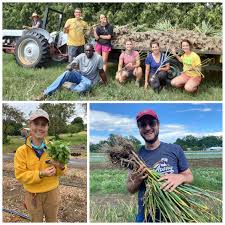
Taxonomy refers to the science of classifying things through naming and identification. Projects can be classified into different categories, which are explained below.
1. Classification Based on the Type of Activity
Projects can be classified as industrial and non-industrial projects. Industrial projects focus on the production of goods, while non-industrial projects include healthcare, education, irrigation, soil conservation, pollution control, highways, water supply, and similar ventures.
Non-industrial projects are typically government-funded, benefiting society as a whole, making it difficult to quantify the exact benefits.
Reda Also: Astilbe Flowers – All you need to know
2. Classification Based on Project Location
🌿 Go Organic on Your Farm: Instead of harmful chemical pesticides and fertilisers, try our organic farming products — including neem oil spray, bio-pesticides, natural plant treatments, organic seeds and seedlings, suckers, and many more organic products that are safe for your health, your family, your soil and your harvest. Shop Now →
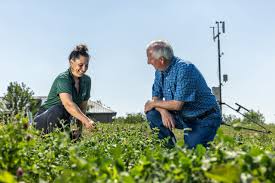
Projects can be national or international. National projects are within a country's borders, while international projects are carried out in other countries.
International projects can be government-led or private sector initiatives. They often involve higher risks and complexities. Types of international projects include fully owned subsidiaries abroad, joint ventures, and mergers or acquisitions.
3. Classification Based on Project Completion Time
🔧 Free Farm Tool Available: Use our free Agric4Profits Farm Tools to calculate your farm profits, formulate feeds, identify pests and diseases on both your crops and animal farms, plan your planting and harvesting season, including many more farm tasks to get free expert advice and recommendations — completely free, no registration required. Access Free Tools →
Projects can be categorized as normal or crash projects. Normal projects do not have strict time constraints, while crash projects must be completed within a set timeframe, even at a higher cost. For instance, canal lining before the monsoon season is an example of a crash project.
4. Classification Based on Ownership
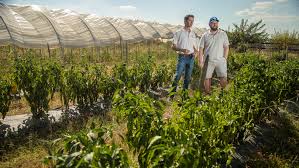
Projects are categorized as private sector, public sector, or joint sector projects. Private sector projects are profit-driven and fully owned by the investors.
Public sector projects are state-owned, often seen in sectors requiring government intervention due to strategic importance or large-scale investment needs, such as defense or natural resource management.
💬 Have a Farming Question? Join thousands of farmers across Africa on the Agric4Profits Community — ask questions, share experiences and connect with agricultural experts. It is completely free. Ask Your Question Now →
Joint sector projects involve ownership shared between the government and private entrepreneurs, blending public funding with private sector expertise.
5. Classification Based on Size
Projects are classified by size into small, medium, or large, based on the required investment. The government periodically sets investment thresholds for these categories.
For example, in Nigeria, small-scale projects involve investments of up to one million, while large-scale projects exceed 100 million. Projects in between are considered medium-scale.
Read Also: Angelonia Flowers – All you need to know
6. Classification Based on Need
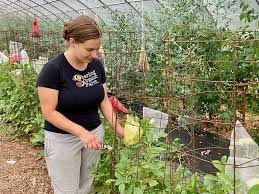
Projects are classified based on need into categories like new projects, balancing projects, expansion projects, modernization projects, replacement projects, diversification projects, backward integration projects, and forward integration projects.
i. New Project: A new project is created to meet a customer need by either developing a new product or meeting a market gap where demand exceeds supply.
📖 Want to Go Deeper on This Topic?
Our expert agricultural ebooks cover poultry, fish farming, different crops production, snail farming, organic farming, mushrooms, sheep, cattle, flowers, pig farming, goat farming, agribusiness, etc. in practical step-by-step detail — written by agricultural professionals for African farmers.
Browse All Farming Ebooks →ii. Balancing Project: Ensures production units operate at optimal capacity by matching input and output levels across production stages. Any imbalance can limit overall production capacity.
iii. Expansion Project: Increases production capacity for existing products, typically when there is a growing market demand. Expansion can be achieved through additional capacity or acquisition of a similar business.
iv. Modernization Project: Upgrades technology and processes to avoid obsolescence. Ignoring modernization can lead to inferior products, higher costs, and potential business closure.
v. Replacement Project: Replaces outdated machinery to reduce maintenance costs, ensure consistent production, and maintain operational efficiency.
vi. Diversification Project: Involves expanding into related or unrelated product lines. Related diversification adds products closely linked to the current offering, while unrelated diversification explores new, distinct product lines.
vii. Backward Integration Project: Focuses on producing raw materials or inputs previously purchased from suppliers, improving control over production.
viii. Forward Integration Project: Adds value to the existing production line by incorporating additional processes at the end stages, enhancing the final product.
This classification system provides a structured way to understand different types of agricultural projects, ensuring appropriate planning and resource allocation based on the project's specific requirements.
Do you have any questions, suggestions, or contributions? If so, please feel free to use the comment box below to share your thoughts. We also encourage you to kindly share this information with others who might benefit from it. Since we can’t reach everyone at once, we truly appreciate your help in spreading the word. Thank you so much for your support and for sharing!
Read Also: Cordyline Care 101: A Complete Guide
Frequently Asked Questions
We will update this section soon.
🌱 Take Your Farming Further With Agric4Profits
Based on what you just read, here are free resources and products from Agric4Profits that can help your farm right now:
- 🛒 Visit Our Marketplace — Organic neem oil, bio-pesticides, seeds and farming products
- 📚 Read Premium Content — Advanced guides for serious and profitable farming
- 🎓 Join Our Free Academy — Structured free training for farmers across Africa
- 🔧 Use Our Free Farm Tools — Profit calculators, feed formulation, pest identifier and more
- 💬 Join Our Farming Community — Connect with farmers across all 54 African countries
- ❓ Ask a Farming Question — Get answers from experienced farmers and agricultural experts
Please cite this content in academic work, research, or publications.