


Arrowroot (Maranta arundinacea. L) is the starch that’s obtained from the rhizomes of a perennial herb called Maranta arundinacea. It can be used to aid digestion, treat urinary tract infections, and help to fight foodborne pathogens, relieve mouth pain and boost your immune system.
Arrowroot (Maranta arundinacea), is actually a starch rich, creeping underground rhizome that belongs to the Marantaceae family plants. The plant is native to the tropics of South America, where it has a long history of cultivation by native peoples and is widely grown in the Caribbean islands, Philippines and South America for its fine, easily digestible edible starch rich tubers.
Arrowroot is cultivated primarily as a source of food starch which is found in cylindrical rhizomes. Some of the common names are Arrow Head, Arrow-root, Arrowroot, Bermuda Arrowroot, Maranta, Obedience Plant, St. Vincent Arrowroot and West Indian Arrowroot. It is widely considered an easily digested and nutritious starch.
The herb is extracted from the fleshy roots, called rhizomes, of the arrowroot plant through an elaborate process of washing, peeling, soaking, and drying in the sun. Indians used arrowroot medicinally, they believed that is would draw out toxins in wounds made from poisoned arrows. The best way to use Arrowroot for healing is to take it internally by mixing the powder into juice or any other beverage.
Arrowroot (Maranta arundinacea. L) is a locally grown tuber crop in Indonesia. The arrowroot starch has high digestibility and is commonly used as a thickener in many foods such as puddings and sauces, cookies and other baked goods. Arrowroot is bland, making it suitable for neutral diets, especially for people who are feeling nauseous.
Some people believe that arrowroots help to soothe upset stomachs, which is the reason why many health food stores in Indonesia display arrowroot cookies. The arrowroot tuber contains plenty of starch and other compounds. The starch from arrowroot flour has a nutrition composition of 11.9% water, 0.58% ash, 25.9% amylose, 0.14% protein, 0.84% fat, 8.7% insoluble dietary fiber, and 5.0% soluble dietary fiber.
Recent study suggested that the arrowroot flour is a potential source of prebiotics. However, information on the immunostimulatory effects of polysaccharides from arrowroot is limited. The objective of this research is to evaluate the immunostimulatory effects of the arrowroot tuber extracts and various oligosaccharides in vitro and in vivo.
According to research, there are increasing evidences that diet can modulate immune function in body. Activation of the immune response in our body contributes to our health by reducing the risk of chronic disease or boosting natural immune protection.
There are many substances that promote an immune response. The immunoglobulin production stimulating factors in foodstuffs contributing to development of functional food is of recent high interest.
Read Also: Anise (Pimpinella Anisum): Importance and Health Benefits
Arrowroot Plant Description
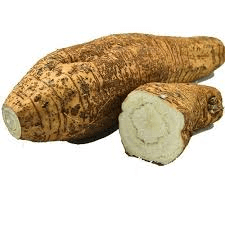
Arrowroot is a clumping perennial herb growing up to 30–130 cm high with erect slender stems often apically branched. It is found growing in warm, humid areas and normally prefers well-drained, alluvial and volcanic soils.
Arrowroot is cultivated primarily as a source of food starch which is found in cylindrical rhizomes. Basal leaves are 4–8; cauline leaves 1–8; alternate, petiole 3.5–20 cm in basal leaves, often absent in cauline leaves; pulvinus 0.2–1.8 cm, glabrous, adaxially slightly tomentose; lamina ovate- oblong, 3.5–35 by 3–11 cm, pale-green, adaxially sparsely pilose, abaxially glabrous or sparsely pilose, base rounded to truncate, apex acuminate.
Flowers on common pedicel; sepals green, narrowly ovate, corolla white, tubular, base inflated, lobes 8–10 mm; staminodes white, obovate, ovary three-loculed, densely pubescent, to sub-glabrous. Fruit is green or reddish-brown tinged, dehiscent, sub globose capsule, 7–8 mm by 4–5 mm and seeds are brown, rugose with basal aril.
Arrowroot Rhizome
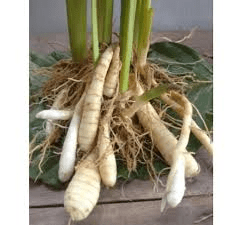
Arrowroot is an easily digested starch extracted from the roots of the arrowroot plant and is cultivated as a source of food starch which is found in cylindrical rhizomes. It is not exactly a root but rather an underground mass of roots or root system.
Rhizome are normally sympodial, cylindric, fleshy, starchy and loosely scaly, about 25 cm long, and 13 cm in diameter (10 inches x 5 inches) and is white, cream-white/light red in color.
The weight is about 30 to 50 g per rhizome. Arrowroot has thin, light-brown skin and white colored flesh. They have a mild flavor and wonderful taste which is ideal for many food items, so it has been used in several food items since ancient times. Arrowroot is highly valued by herbal healthcare specialists mainly because of its demulcent as well as antidiarrheal qualities.
Nutritional Value of Arrowroot
Apart from their mild flavor and wonderful taste, arrowroot is a good source of nutrients, Vitamins and Minerals. Consuming 120 gram of arrowroots offers 406 µg of Vitamin B9, 2.66 mg of Iron, 0.319 mg of Vitamin B6, 118 mg of Phosphorus, 0.145 mg of Copper, 0.172 mg of Vitamin B1, 2.032 mg of Vitamin B3, 16.07 g of Carbohydrate, 545 mg of Potassium, 5.09 g of Protein and 0.209 mg of Manganese.
Read Also: Annatto (Bixa orellana L.): Importance and Health Benefits
Nutritional Profile
Arrowroot is a starchy root vegetable similar to yam, cassava, sweet potato, and taro.
Like many starches, it’s high in carbs but offers various nutrients. A 1-cup (120-gram) serving of sliced, raw arrowroot contains the following:
- Calories: 78
- Carbs: 16 grams
- Fiber: 2 grams
- Protein: 5 grams
- Fat: 0 grams
- Folate: 102% of the Daily Value (DV)
- Phosphorus: 17% of the DV
- Iron: 15% of the DV
- Potassium: 11% of the DV
Arrowroot has a higher protein content than other tubers, packing 5 grams per 1 cup (120 grams), compared with 2.3 grams in the same amount of yam.
Additionally, it provides over 100% of the DV for folate (vitamin B9), which is essential for development during pregnancy and DNA formation. Low levels of this vitamin are associated with an increased risk of birth defects and chronic diseases like cancer.
What’s more, arrowroot offers significant amounts of phosphorus, iron, and potassium.
Health Benefits of Arrowroot
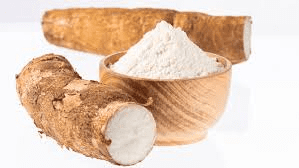
There are numerous health advantages of consuming Arrowroot. A number of the well-known health advantages are listed below-
1. Aids Digestive System
Arrowroot powder has been used as an aid for digestion for over a century, documented as early as 1900. In recent years, research has shown arrowroot to be an effective natural cure for diarrhea.
Research determined the effectiveness of the powder to decrease diarrhea as well as constipation in patients with Irritable Bowel Syndrome (IBS) and discovered it to be exceptionally successful. Not only does it greatly reduce occurrences of diarrhea, but it also reduces abdominal pain.
Another study concentrated on the use of arrowroot for digestive health in areas of the world where severe diarrhea is common. Research on 3 groups of villages in south India discovered arrowroot water significantly decreased the incidence of diarrhea that was due to poor water and food quality.
While the particular reasons for decrease in digestive problems has yet to be determined, there is sufficient evidence, both historically and in recent years, that arrowroot is an excellent, all-natural, reasonable treatment for problems with digestion. To prevent constipation, it’s suggested that you don’t take arrowroot with other medications or supplements used to alleviate diarrhea.
2. Circulation Issues
Arrowroot consists of significant levels of copper and iron. These two crucial minerals are essential parts of red blood cells, which makes arrowroot very good for preventing anemia, which is considered by weakness, fatigue, and cognitive disorders. Besides, by increasing circulation, you encourage oxygenation of your body’s organ systems and extremities, which can boost your energy levels.
3. Boosts Immune Function
The extracts of arrowroot powder display cytotoxic actions that help in building immunity. It means Maranta arundinacea extract increases the production of cells within the immune system.
An evaluation of the immunostimulatory effect of arrowroot in 2012 proved that those same tuber extracts encouraged the immune systems of cells, both when tested in vitro (in test tubes) and in vivo (in a live animal), again proving the usefulness of arrowroot in boosting immune system health.
4. Metabolic Processes
High concentration of vitamin B within arrowroot makes it an important enzymatic and metabolic substance. The B-vitamin is very important in regulating processes throughout your body, from hormonal release to circadian rhythms, which means that you never want a deficiency in that department!
5. Heart Health
Arrowroot consists of significant levels of potassium which mean it can be a definite line of defense against heart-related problems. Potassium is a vasodilator, meaning that it relaxes the tension in the blood vessels and arteries, thus lowering blood pressure and decreasing your risks of atherosclerosis, heart attacks, and strokes. Potassium is also known as a cognitive enhancer, encouraging the flow of oxygenated blood to the brain.
6. Safe for Infants
Due to its starchy content as well as mild flavor, arrowroot is a safe ingredient to use in food for infants. You can use this starch in many several recipes for your infant or older children, without worrying about it causing tummy aches or other digestion issues.
Arrowroot is also a common ingredient in teething cookies for babies. As a virtually allergen-free product, it’s an ideal gum-soothing component that poses little to no risk of allergic reaction.
Read Also: How to Grow Herbs and Spices in Urban Areas
7. Birth Defects
One particular member of the B family of vitamins is folate, which is found abundantly in arrowroot. Researches have shown that folate is important for expecting mothers, since it can help to prevent neural tube defects in their unborn child. Folate is also an essential factor in DNA synthesis and healthy cell division, thus promoting rapid healing and healthy growth.
8. Weight Loss Concerns
Arrowroot is low in calories as compared to other starches like potatoes, yams or cassava. Due to this, people trying to remain on a diet can get complex carbohydrates and a wealth of nutrients, as well as a healthy dose of dietary fiber, and disregard the desire to snack between meals. Arrowroot fills you up and gives you the minerals and vitamins your body needs.
9. Treats Urinary Tract Infection
Women are more prone to urinary tract infections, or “UTI’s,” and are frequently recommended cleanliness and foods to help stave off future infection as well as calm inflammation. One such food is Arrowroot can be one of the effective home remedies for bladder infections or UTIs.
Arrowroot is a demulcent, which is simply a calming substance used to relieve pain in inflamed or irritated mucous membranes. As it earned its name by serving as a treatment for poisonous arrow wounds, it’s no surprise that this useful plant relieves inflammation.
The antiseptic features of arrowroot help treat UTI’s and also prevent some future flare-ups, so doctors often recommend common ingestion of it for women with frequent infections.
10. Stomach Concerns
Celiac disease seems to be the new global disease, and people are looking for gluten-free alternative to traditional starches and wheat. Arrowroot is one of the best gluten-free substances, making it very popular in recent years, as it can prevent the gastrointestinal discomfort, pain, and danger that those handling gluten intolerance must face every day.
11. Fights Foodborne Pathogens
One interesting feature of arrowroot is its capability to fight foodborne pathogens that cause illness. Research has demonstrated a reduction in pathogens in various foods, particularly liquid foods such as soup. Here, arrowroot tea hugely reduced the amount of salmonella virus in the soups that were tested.
This is yet another reason why arrowroot is a suggested medicinal food ingredient to keep the digestive system safe. It also speaks to some far-reaching effects it might have to help protect people in third-world countries from some of the more common infections due to poor water quality.
12. Growth and Development
When compared to other root vegetables and starches acquires from tubers, arrowroot has a higher concentration of protein, an important component of any diet. By increasing our dietary intake of plant proteins, which are easier to process than animal proteins, we can assure healthy growth and development.
How to Eat
- Arrowroot rhizome and starch are used as food in the form of puddings, pastries, jellies, cakes, biscuits, cookies hot sauces and used with beef, tea, milk, meal, broth and noodles in Vietnamese and Korean cuisines.
- It offers easily digestible, nourishing food for kids and people with dietary restrictions and convalescents.
- It is well suited as weaning food for infants from breast milk.
- Arrowroot makes clear, shimmering fruit gels and avoids ice crystals from forming in homemade ice cream.
- It can also be used as a thickener for acidic foods, such as Asian sweet and sour sauce.
- The absence of gluten in arrowroot flour makes it useful as a replacement for wheat flour in baking.
Other Traditional Uses and Benefits of Arrowroot
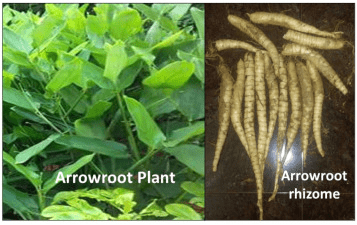
- Traditionally the tuberous rhizomes are used in the treatment of diarrhea.
- Arrowroot is mainly useful as an easily digested, nourishing diet for patients especially for bowel complaints as it has demulcent properties.
- Arrowroot starch in jelly form is appropriate as weaning food for infants.
- Smashed rhizomes are applied topically for injuries from poisoned arrows, scorpion and black spider bites and to arrest gangrene.
- Freshly expressed juice mixed with water is used as antidote internally for vegetable poisons.
- For relief of mouth and gum pain, you can apply the powder directly to the gums.
Other Facts
- Arrowroot was found to be a food, feed, fuel and fiber resource.
- Arrowroot can be used as screens between neighboring houses.
- It provides outstanding compost and mulch.
- Shoot tips and leaves can be utilized as feed for pigs, goats and chickens.
- Individual leaves are used as plates during picnics.
Scientific Evidence and Case Studies on Arrowroot (Maranta arundinacea. L): Importance and Health Benefits
1. Antidiarrheal effects: Arrowroot powder reduces diarrhea duration and stool frequency in patients with irritable bowel syndrome, alleviating abdominal pain and improving bowel consistency.
2. Immunostimulatory activity: Extracts from arrowroot tubers enhance immune cell production and cytokine release, demonstrating potential as a prebiotic to boost overall immune function.
3. Antimicrobial properties: Arrowroot starch inhibits growth of foodborne pathogens like Salmonella in liquid foods, reducing contamination risks in soups and similar preparations.
4. Wound healing: Topical application of arrowroot rhizome paste promotes healing of wounds and prevents gangrene by drawing out toxins and reducing inflammation.
5. Gluten-free alternative: As a digestible starch, arrowroot flour serves as an effective substitute in baking for those with celiac disease, preventing gastrointestinal discomfort associated with gluten intake.
Nutritional Value Of Arrowroot (Maranta arundinacea. L): Importance and Health Benefits
1. High in folate: Provides over 100% of daily needs per serving, supporting DNA synthesis, cell division, and preventing birth defects during pregnancy.
2. Rich in iron: Supplies 15% of daily value, aiding in red blood cell formation and preventing anemia while improving oxygen circulation.
3. Good source of potassium: Offers 11% of daily requirements, helping regulate blood pressure, support heart health, and enhance cognitive function.
4. Contains phosphorus: Delivers 17% of daily intake, essential for bone health, energy metabolism, and cellular repair.
5. Protein content: Higher than many tubers at 5 grams per cup, promoting growth, development, and easier digestion compared to animal proteins.
6. Dietary fiber: Includes both soluble and insoluble types, aiding digestion, preventing constipation, and supporting gut health as a prebiotic.
7. B vitamins: Abundant in B6, B1, and B3, regulating metabolism, hormone production, and enzymatic processes throughout the body.
Summary of Arrowroot (Maranta arundinacea. L): Importance and Health Benefits
| Aspect | Key Points |
|---|---|
| Plant Description | Perennial herb native to South America, grown for starchy rhizomes; prefers humid, well-drained soils; features ovate leaves and white flowers |
| Nutritional Profile | High in carbs, folate, iron, potassium, phosphorus; low calories; gluten-free starch with protein and fiber for digestion and health |
| Health Benefits | Aids digestion, boosts immunity, supports heart health, prevents birth defects, treats UTIs, fights pathogens, promotes weight loss and infant safety |
| Traditional Uses | Treats diarrhea, wounds, poisons; demulcent for bowel issues; weaning food; applied topically for bites and gum pain |
| Other Facts | Used in foods like puddings, gels; provides compost, mulch, animal feed; screens plants; plates from leaves |
Frequently Asked Questions
1. What is arrowroot?
Arrowroot is a starchy rhizome from the Maranta arundinacea plant, used as a gluten-free thickener and nutritious food source.
2. How does arrowroot benefit digestion?
It acts as a demulcent to soothe upset stomachs, reduce diarrhea, and alleviate constipation, especially in IBS patients.
3. Is arrowroot safe for infants?
Yes, its mild flavor and easy digestibility make it ideal for weaning foods and teething cookies without causing allergies or tummy issues.
4. Can arrowroot help with weight loss?
Arrowroot is low in calories, high in fiber, and provides complex carbs to promote satiety and reduce snacking.
5. What nutrients are in arrowroot?
It is rich in folate, iron, potassium, phosphorus, protein, and B vitamins, supporting overall health and metabolism.
6. Does arrowroot boost immunity?
Extracts from arrowroot enhance immune cell production and act as prebiotics to strengthen the body’s defenses.
7. How is arrowroot used in cooking?
As a thickener for sauces, puddings, and gels; gluten-free flour substitute in baking; prevents ice crystals in ice cream.
8. Can arrowroot treat urinary tract infections?
Its antiseptic and demulcent properties help relieve inflammation and prevent recurrent UTIs, especially in women.
9. What are traditional uses of arrowroot?
Used for treating poisoned wounds, diarrhea, spider bites; as an antidote for poisons; applied to gums for pain relief.
10. Is arrowroot good for heart health?
High potassium content acts as a vasodilator to lower blood pressure and reduce risks of heart attacks and strokes.
Do you have any questions, suggestions, or contributions? If so, please feel free to use the comment box below to share your thoughts. We also encourage you to kindly share this information with others who might benefit from it. Since we can’t reach everyone at once, we truly appreciate your help in spreading the word. Thank you very much for your support and for sharing!
Disclaimer: This article is for educational and informational purposes only. The health benefits described are based on scientific research and traditional knowledge. They are not a substitute for professional medical advice, diagnosis, or treatment. Always consult a healthcare professional before using any herb or natural remedy for medical purposes.
Read Also: How to Make Biofuel from Waste Materials