


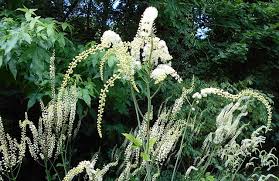
Black cohosh (Cimicifuga racemosa) which belongs to the buttercup family of plants. It is used as a herbal treatment for night sweats, hot flashes, and other menopause symptoms. In some cases, it is utilized as a natural substitute for hormone replacement medication (HRT).
The effectiveness of black cohosh (Cimicifuga racemosa) in treating the symptoms of menopause is examined in this article. This page also highlights the risks and cautions associated with using black cohosh.
After being introduced to European colonists by Native American Indians, black cohosh spread throughout Europe. In Europe, it became a typical course of therapy for women’s health difficulties by the middle of the 20th century.
Black cohosh has also been documented as being used in traditional Chinese medicine as an anti-inflammatory and analgesic.
Although it is no longer employed as an insect repellant, one of its nicknames, “Bugbane,” was created due to this use.
One more, known as “snakeroot,” got its name from the practice of frontiersmen who used it to heal rattlesnake bites. Although current experts have never examined its effectiveness against snake bites, it is an intriguing notion.
A smooth (glabrous) herbaceous perennial, black cohosh grows to a height of 25–60 cm and produces huge, complex leaves from an underground rhizome (9.8–23.6 in).
The basal leaves have a coarsely toothed (serrated) margin and can be up to 1 m (3 ft 3 in) long and wide. They grow in repeated sets of three leaflets (tripinnately compound).
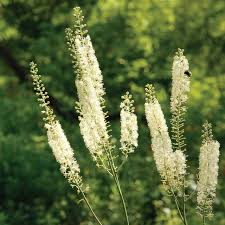
On a tall stem measuring 75–250 cm (30–98 in) in height, the blooms are produced in late spring and early summer and grow in racemes as long as 50 cm (20 in).
The blooms are composed of tightly packed clusters of 55–110 white, 5–10 mm (0.2–0.39 in) long stamens encircling a white stigma without petals or sepals. Flies, gnats, and beetles are drawn to the blossom’s distinctively sweet, fetid scent.
Read Also: Black Cohosh – Importance and Health Benefits
8 Health Benefits of Black Cohosh (Cimicifuga racemosa)

Native Americans employed the rhizomes and roots in traditional medicine. Its extracts are produced as nutritional supplements or herbal medications.
Because of this, the majority of dietary supplements containing black cohosh are not well-studied or advised for use in the safe and effective treatment of any disease or the symptoms of menopause.
1. Reduces Menopause Symptoms
Much research has concentrated on the use of black cohosh for controlling menopause symptoms, particularly hot flashes.
Many studies have graded symptoms on a scale rather than comparing them to a placebo, which is often why some research is ambiguous. The particular ingredients and dosages of the supplement have also varied across numerous research.
Despite conflicting results, many believe that black cohosh is a reliable natural treatment for menopause comfort. Studies and systematic evaluations have discovered that taking it regularly often lowers the frequency and severity of uncomfortable symptoms that frequently overwhelm women with hormone issues.
More good news: people without menopause might also experience problems like hot flashes. When consuming black cohosh, breast cancer survivors who have finished their treatment have seen a reduction in symptoms like perspiration. A current study is also looking at how to treat flashes in men who have received prostate cancer treatment.
2. Helps To Reduce Sleep Disturbances
The sleep disturbance that frequently follows this change is one element that makes other menopause symptoms worse.
Sleep is essential for naturally regulating hormones since, even during normal life stages, lack of sleep affects hormone control and production.
In a recent clinical experiment, it was discovered that adding black cohosh to the diet of postmenopausal women with sleep issues significantly improved their quality of sleep.
Many other advantages, including assistance with weight loss, emotional stabilization, enhanced energy levels, and more, may result from avoiding sleep deprivation.
Read Also: Reasons why Black Currant is good for your Health
3. Treatment For Diabetes
Recent groundbreaking research has shown the beneficial effects of black cohosh extract on type II diabetes. Despite the fact that this was a pilot trial, the findings suggested that the extract Ze 450 may help diabetic patients lose weight and improve how their bodies handle insulin.
4. Helps Manage Polycystic Ovary Syndrome
Black cohosh has also been investigated in relation to PCOS, which may be connected to its actions in potentially curing diabetes. Initial findings imply this herb has a beneficial effect on the illness and may be able to treat it as effectively as the pharmaceutical drugs it has been compared to.
5. Provides Safe Alternative To Hormone Replacement Therapy
If used for more than ten years, hormone replacement therapy (HRT) may increase a woman’s risk of developing breast cancer, making it potentially risky as a menopause relief option. This is why the thought of alternate solutions appeals to many women and professionals.
Black cohosh is regarded as a significant component of the list of effective, natural treatments for menopause alleviation.
6. May Reduce Osteoporosis
The majority of plants, including black cohosh, contain biologically active chemical substances. There is evidence of phytoestrogens in the tissues and organs of Actaea Racemosa (plant-derived estrogens).
A few of the plant’s biological components have also been demonstrated to lessen osteoporosis-related bone loss. One specific chemical molecule, called ACCX, has provided an optimistic lead in a new category of osteoporosis treatments.
7. Helps Treat Uterine Fibroids
Uterine fibroids are benign growths of the uterus that frequently manifest during a woman’s most fertile years. These are frequently treated using a medicine called Tibolone, a synthetic steroid, outside of the United States. Other hormone-based medications are widely utilized in the U.S.
In a 2014 study that evaluated the usage of black cohosh and tibolone to treat these fibroids, it was discovered that the extract of Actaea Racemosa was more effective than the synthetic equivalent.
This herb’s ability to treat fibroids may also help lessen PMS symptoms including menstrual cramps and painfully heavy bleeding.
8. May Reduce Anxiety
This herb has historically been used to alleviate sadness and anxiety. Despite being long dismissed as little more than a hoax, a current study has suggested that it might significantly affect anxiety symptoms.
According to research on animals, one of Actaea Racemosa’s cyclobutane glycoside compounds appears to exert sedative and anti-anxiety effects on rats by acting on GABA receptors.
Read Also: Bane berry Flowers – All You Need to Know
Nutritional value of Black Cohosh (Cimicifuga Racemosa)
1. Triterpene Glycosides: These are the primary bioactive compounds found in the rhizomes and roots of Black Cohosh, including actein and cimicifugoside. They are highly valued for their role in modulating the nervous system and are the standard marker used to determine the potency of herbal extracts.
2. Isoferulic Acid: A significant phenolic acid that acts as a potent antioxidant within the plant. It helps protect cells from oxidative stress and is believed to contribute to the herb’s ability to manage inflammatory responses in the body.
3. Caffeic Acid: This organic compound is known for its anti-inflammatory and immunomodulatory properties. In Black Cohosh, it works alongside other phenolic derivatives to provide a broad spectrum of cellular protection.
4. Formononetin: An isoflavone that was historically believed to provide estrogenic activity. While recent research suggests its concentration is low, it remains a key component of interest for its potential to interact with hormone receptors.
5. Fukinolic Acid: This is a specialized hydroxycinnamic acid derivative unique to certain plants in the buttercup family. It possesses antioxidant properties that support the overall chemical stability of the herb’s extract.
6. Salicylic Acid: Naturally occurring in the roots, this compound is a precursor to modern aspirin. It contributes to the traditional use of Black Cohosh as a remedy for mild pain, rheumatism, and muscle aches.
7. Tannins: These polyphenolic biomolecules provide the plant with astringent qualities. Tannins help in the contraction of tissues and can provide a protective effect on the mucous membranes of the digestive tract.
8. Phytosterols: These plant-derived fats are structurally similar to cholesterol. They are included in the herb’s nutritional profile for their ability to help manage lipid levels and support healthy cellular membrane function.
9. Fatty Acids: Black Cohosh contains various miscellaneous fatty acids, including palmitic and oleic acids. These essential lipids are vital for maintaining the structural integrity of cells and supporting the absorption of fat-soluble compounds.
10. Volatile Oils: These complex mixtures of odorous compounds provide the herb with its distinct aromatic profile. They are often associated with the plant’s ability to act as a mild sedative or antispasmodic during periods of physical tension.
Scientific Evidence and Case Studies on Black Cohosh (Cimicifuga Racemosa)
1. Management of Menopausal Vasomotor Symptoms: In a clinical review by Hedaoo et al. (2024) titled “Exploring the Efficacy and Safety of Black Cohosh (Cimicifuga racemosa) in Menopausal Symptom Management,” researchers found that the herb significantly reduces the frequency and intensity of hot flashes and night sweats. The study suggests that the plant exerts a “vasorelaxation” effect, which is particularly beneficial for women who cannot use traditional hormone replacement therapy.
2. Selective Estrogen Receptor Modulation: A study by Ruhlen et al. (2008) titled “Black Cohosh: Insights into its Mechanism(s) of Action” explored how the plant interacts with the body. The research indicated that instead of acting like a direct estrogen, Black Cohosh functions as a selective estrogen receptor modulator (SERM), affecting only specific tissues like the brain and bones while remaining neutral in the breast and uterus.
3. Psychiatric and Physical Symptom Reduction: In a randomized clinical trial, Mohammad-Alizadeh-Charandabi et al. (2013) evaluated the “Efficacy of black cohosh (Cimicifuga racemosa L.) in treating early symptoms of menopause.” The trial demonstrated that after 8 weeks of treatment, participants experienced a 77% reduction in total Greene Climacteric Scale scores, which measure psychiatric, physical, and vasomotor symptoms.
4. Opioid Receptor Interaction: Research by Nikolić et al. (2015) in “Nitrogen-Containing Constituents of Black Cohosh: Chemistry, Structure Elucidation, and Biological Activities” revealed that the herb contains alkaloids that act as partial agonists at the human mu-opiate receptors. This provides a scientific basis for the herb’s traditional use in managing pain and mood disturbances associated with hormonal shifts.
5. Bone Health and Osteoblast Promotion: A study by Jöhrer et al. (2020) titled “Structure-Guided Identification of Black Cohosh (Actaea racemosa) triterpenoids with In Vitro Activity against Multiple Myeloma” also touched upon bone metabolism. The researchers found that triterpenoids like actein promote the growth and differentiation of osteoblasts, suggesting a potential role for Black Cohosh in preventing postmenopausal osteoporosis.
Frequently Asked Questions About Black Cohosh (Cimicifuga Racemosa)
1. Is Black Cohosh safe for the liver?
While most people tolerate it well, there have been rare reports of liver damage. It is important to use standardized extracts and consult a healthcare provider if you have a history of liver disease.
2. How long does it take for Black Cohosh to start working?
It typically takes 4 to 8 weeks of consistent use to see a significant reduction in menopausal symptoms like hot flashes or mood swings.
3. Does Black Cohosh contain real estrogen?
No, it does not contain estrogen. It contains compounds that may mimic some effects of estrogen in certain parts of the body, such as the brain and bones, without affecting the uterus or breast tissue.
4. Can men take Black Cohosh?
While it is primarily marketed for women’s health, men sometimes use it for its anti-inflammatory properties or to help manage certain symptoms of prostate health, though research in men is very limited.
5. What is the recommended dosage for menopause?
Clinical studies often use doses ranging from 20 mg to 160 mg of extract daily. Most commercial products are standardized to contain 2.5% triterpene glycosides.
Do you have any questions, suggestions, or contributions? If so, please feel free to use the comment box below to share your thoughts. We also encourage you to kindly share this information with others who might benefit from it. Since we can’t reach everyone at once, we truly appreciate your help in spreading the word. Thank you very much for your support and for sharing!
Disclaimer: This article is for educational and informational purposes only. The health benefits described are based on scientific research and traditional knowledge. They ayre not a substitute for professional medical advice, diagnosis, or treatment. Always consult a healthcare professional before using any herb or natural remedy for medical purposes.
Read Also: Dangers of Mole Rats to Your Farm