



Witch Hazel (Hamamelis virginiana) is a natural astringent and skin care product that is frequently applied topically. It can be used to treat a variety of conditions, including acne, swelling, infections, bites, redness, oiliness, ingrown hairs, burns, and more.
Witch hazel has a lot of advantages. It includes antioxidant and antibacterial substances, such as tannins, proanthocyanidins, and phenols, which help fight bacteria both inside and externally.
How frequently can you use witch hazel on your skin and face? What if you consume it internally?
The majority of people can safely use witch hazel topically daily as long as their skin doesn’t get overly dry or inflamed. If necessary, you can apply witch hazel directly to your skin using pads, gel, extract, ointments, etc. It is normally safe to take three to four teaspoons of witch hazel orally each day, though some people may experience stomach distress.
More witch hazel is not always better because it can dry up your skin if used excessively. Dryness irritates the skin and can cause rebound oil production, which can result in a breakout. Selecting a witch hazel product free of alcohol can reduce dryness.
Apply a small amount to a patch of skin on your arm or leg as a skin patch test to ensure you won’t have any negative side effects. If you suffer any signs of a severe allergic response, such as a rash, itching, or swelling (particularly of the face, tongue, or throat), extreme dizziness, difficulty breathing, swelling, etc., stop taking the product right once.
Although it might occasionally cause mild indigestion, nausea, or vomiting when taken internally, it is generally regarded as safe for most individuals.
Since taking large amounts has, in some extremely rare instances, been related to liver issues, keep your dosage moderate and always abide by the instructions. Because it contains a substance called safrole that may have cancer-causing properties, there is caution about ingesting high amounts of witch hazel.
Even though safrole is only present in trace amounts in witch hazel, it is thought to be an “agent that is possibly carcinogenic to humans” when ingested in larger amounts. According to some research, symptoms of safrole poisoning can include vomiting, stupor, vertigo, and pallor.
You may use it on your hair to make it cleaner, give it more volume, and make it shinier. Additionally, it can be taken orally as medicine to aid with conditions such as hemorrhoids, ear infections, sore throats, and more.
While generally quite safe, there are certain negative effects that could occur from using witch hazel, including skin dryness, an allergic reaction, upset stomach when taken internally, and even liver-related issues if used in large doses.
Witch hazel functions as a free radical scavenger since it is a natural antioxidant and anti-inflammatory. It, therefore, offers a defense against DNA harm and tumor development.
Free radical and oxidative stress damage accumulates over time as a result of exposure to things like UV light, pollution, a poor diet, stress, and other factors. Polyphenol-rich plants, like witch hazel, are utilized to make anti-aging dietary supplements that delay the onset of disease by defending cells.
Read Also: 7 Health Benefits of Ginkgo Biloba (Salisburia adiantifolia)
6 Health Benefits of Witch Hazel (Hamamelis virginiana)

1. Fights Insect Bite
Witch hazel is a common ingredient in commercial insect repellents and medications used to treat insect bites. Are you interested in mosquito bite removal methods? The consequences of bug bites, such as pain and swelling from stings, allergies, and irritations, are lessened by using witch hazel.
According to some research, using witch hazel cream to treat skin irritations can reduce symptoms just as well as creams made of synthetic chemicals, such as dexpanthenol, which is frequently used to treat skin irritations in kids.
Witch hazel extract includes isopropyl alcohol, another naturally occurring disinfectant that helps kill bacteria and prevent infections, thus it can also be used to hasten the healing of scabs or minor injuries.
2. Hair Cleanser
To help minimize oil accumulation in your hair, apply witch hazel. Your hair becomes glossier, healthier, and fuller as a result. When you sweat a lot, it’s also fantastic for removing hair odors, soothing an irritated scalp, and accelerating the healing of any bites or pimples at the base of the neck.
In one study, it was discovered that shampoo with witch hazel extracts relieved patients’ itchy, red, and irritated scalps. A portion of the 1,373 individuals who participated in the witch hazel study reported relief in their symptoms and a higher tolerance for other hair products.
3. Helps In Preventing Rashes
After shaving, you can use witch hazel on any area of the body to reduce razor burn, stop ingrown hairs from growing, stop germs from growing in the hair follicles, and delay bleeding from nicks and cuts. After waxing, some people like to use the toner on their skin along with other calming essential oils to lessen discomfort, swelling, and bleeding.
Read Also: 5 Health Benefits of Saw Palmetto (Serenoa repens)
4. Fights Ear Infections
Since “swimmer’s ear” and other ear infections are typically brought on by bacterial infections, witch hazel is a powerful antibacterial and can be used to treat ear canal irritations naturally.
Witch hazel helps break up wax, dry up oil, pus, and excess sweat, as well as treat infections and bacterial overgrowth in the ear. Apply a number of drops to a swab, then rub the inside of the ears to clean the outside.
5. Treats Sore Throat
To relieve an irritated, inflamed, or painful throat, some people prefer to drink witch hazel tea (not witch hazel water or a drink made with extract, which contains isopropyl alcohol).
Its natural astringent qualities make it useful for warding off throat-related illnesses, while its analgesic qualities ease the pain and discomfort brought on by coughs, strep throat, sore throats, sinus infections, tonsillitis, and other throat issues.
6. Strengthens and Protects Mouth Gum
Witch hazel can be used to treat blisters on the lips, inside cheeks, or gums to hasten to heal and relieve pain and discomfort. To stop bleeding, blisters, sores, bad breath odors, and gum infections, you can safely apply the extract to the interior of your mouth, especially when coupled with other healing oils like coconut oil or peppermint oil.
Additionally, witch hazel reduces infants’ toothache and teething pain, guards against infection after oral surgery, and treats mouth sores’ bleeding, and swelling.
Read Also: 6 Health Benefits of Pine Bark (Pinus massoniana)
Summary of Health Benefits of Witch Hazel
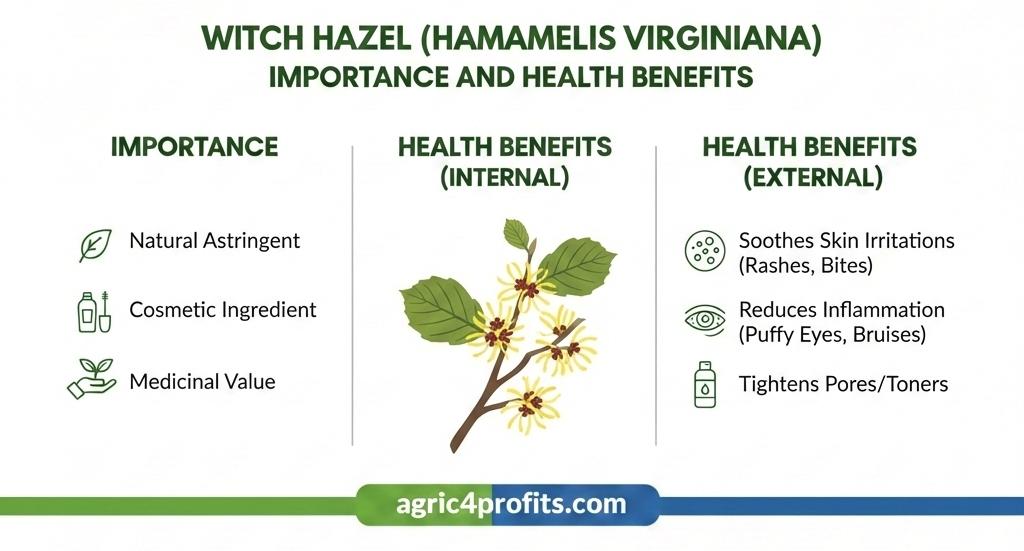
| Key Aspect | Description |
|---|---|
| Introduction and Uses | Witch hazel (Hamamelis virginiana) is a natural astringent derived from the plant, rich in tannins, phenols, and other antioxidants/antibacterials; commonly used topically for skin issues like acne, inflammation, bites, burns, and more. |
| Usage Guidelines | Daily topical application is generally safe (alcohol-free preferred to avoid dryness); oral use limited to 3-4 teaspoons daily; always patch test first. |
| Safety and Side Effects | Common: skin dryness, irritation, allergic reactions; Oral: stomach upset, nausea; Rare/high doses: liver concerns due to trace safrole (potential carcinogen when consumed excessively). |
| Antioxidant & Protective Effects | Functions as a free radical scavenger and anti-inflammatory, helping protect cells from oxidative stress, DNA damage, and supporting anti-aging benefits. |
| Main Health Benefits | Relieves insect bites & irritation; cleanses and conditions hair/scalp; prevents razor burn, ingrown hairs & rashes; combats ear infections; soothes sore throats (as tea); strengthens gums and treats oral sores/blisters. |
FAQ About Health Benefits of Witch Hazel
1. What is witch hazel?
Witch hazel (Hamamelis virginiana) is a natural astringent plant extract rich in tannins and antioxidants, widely used topically for skin care and various minor health issues.
2. How often is it safe to use witch hazel on the skin?
Most people can apply it topically daily, but avoid overuse to prevent dryness or irritation. Alcohol-free versions are gentler on the skin.
3. Can witch hazel be taken orally, and is it safe?
Yes, in moderation (typically 3–4 teaspoons per day), but it may cause stomach upset in some people. High doses should be avoided due to trace safrole content.
4. What are the main side effects of witch hazel?
Topical use may cause dryness or allergic reactions; oral use can lead to nausea, indigestion, or vomiting; rare high-dose concerns include liver issues.
5. How does witch hazel help with insect bites?
It reduces pain, swelling, and itching from bites and stings while its antibacterial properties help prevent infection and speed healing.
6. Can witch hazel improve hair and scalp health?
Yes, it removes excess oil, adds shine and volume, eliminates odors, soothes irritation, and relieves itchy or inflamed scalps.
7. How does witch hazel prevent rashes and razor burn?
It soothes post-shaving or waxing skin, reduces inflammation, prevents ingrown hairs, stops minor bleeding, and limits bacterial growth in follicles.
8. Is witch hazel effective for ear infections?
Its antibacterial action helps fight infections like swimmer’s ear, while it dries excess fluid, breaks up wax, and cleans the outer ear canal.
9. How can witch hazel help with sore throats?
Drinking witch hazel tea (alcohol-free) provides astringent and analgesic effects to reduce throat inflammation, pain, and discomfort from infections or irritation.
10. What oral health benefits does witch hazel offer?
It treats mouth sores, blisters, bleeding gums, bad breath, and infections; it also eases teething pain in infants and supports healing after dental procedures.
Do you have any questions, suggestions, or contributions? If so, please feel free to use the comment box below to share your thoughts. We also encourage you to kindly share this information with others who might benefit from it. Since we can’t reach everyone at once, we truly appreciate your help in spreading the word. Thank you very much for your support and for sharing!
Disclaimer: This article is for educational and informational purposes only. The health benefits described are based on scientific research and traditional knowledge. They ayre not a substitute for professional medical advice, diagnosis, or treatment. Always consult a healthcare professional before using any herb or natural remedy for medical purposes.
Read Also: Complete Composting Guide for Beginners