


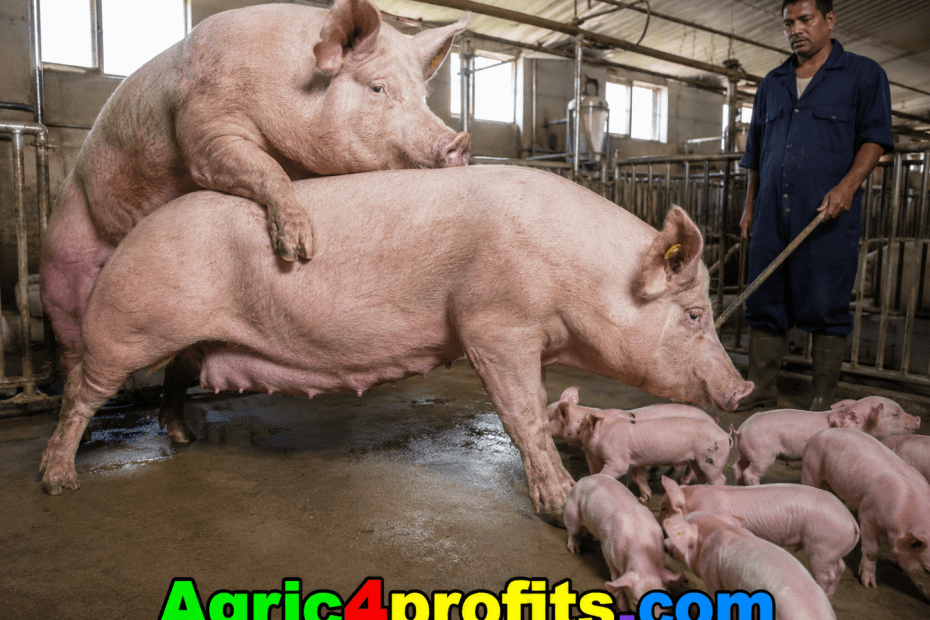
The success of swine production begins with good breeding choices, because every piglet inherits traits from both parents. Strong selection, management, and clean housing work together to produce animals that grow quickly and stay productive.
Good breeding stock does more than pass on useful traits. It also shapes litter size, feed efficiency, growth rate, temperament, and disease resistance, making boars and sows central to every pig farm.
When breeding animals are neglected, the entire enterprise suffers. Poor mating decisions, weak nutrition, and careless handling can reduce fertility, increase returns to service, and create avoidable losses that affect both output and profitability.
Because of this, the stockman must treat breeding pigs as valuable foundation animals. They need proper feeding, protection from parasites, regular exercise, and close observation so their reproductive performance remains strong through the production cycle.
This article explains the major breeding methods, the selection of boars and sows, heat detection, pregnancy care, farrowing, and piglet management. It also connects those practices with better farm efficiency and improved returns on investment.
1. Herd Mating and Hand Mating
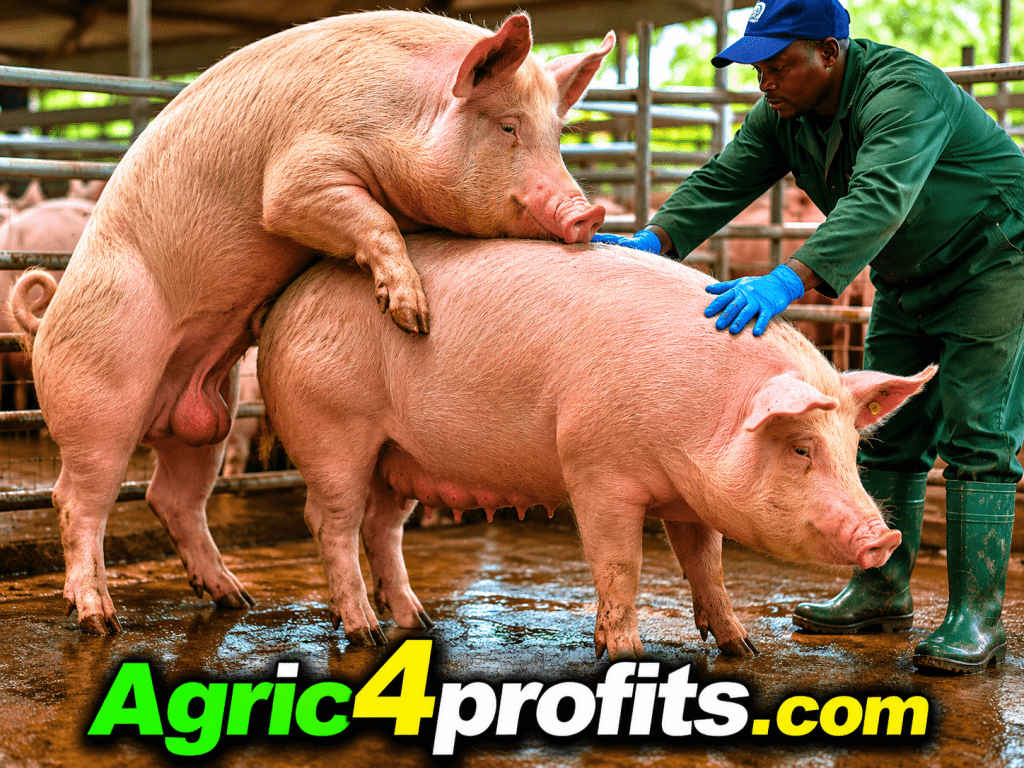
Herd mating is the simplest system, but it is also the least controlled. Males and females mix freely, so the farmer cannot decide which animals mate, when mating occurs, or which sire produced each litter.
🌿 Go Organic on Your Farm: Instead of harmful chemical pesticides and fertilisers, try our organic farming products — including neem oil spray, bio-pesticides, natural plant treatments, organic seeds and seedlings, suckers, and many more organic products that are safe for your health, your family, your soil and your harvest. Shop Now →
This method may seem convenient in small groups, yet it wastes planned breeding. Because heat detection is not closely monitored, weak animals may reproduce, while the best females can be serviced too early or late.
Hand mating gives the stockman more control and usually delivers better results. The boar is selected in advance, taken to the sow at the proper time, and allowed to mate in a quiet, supervised enclosure.
Controlled mating reduces confusion, helps the farmer record parentage, and makes it easier to apply principles already discussed in good swine management. It also limits fighting, injury, and unnecessary stress during service.
Another advantage of planned mating is that it supports better breeding decisions over time. When the farmer knows which pair produced which litter, he can compare growth, litter size, and overall performance more reliably.
🔧 Free Farm Tool Available: Use our free Agric4Profits Farm Tools to calculate your farm profits, formulate feeds, identify pests and diseases on both your crops and animal farms, plan your planting and harvesting season, including many more farm tasks to get free expert advice and recommendations — completely free, no registration required. Access Free Tools →
In well-managed systems, mating is not left to chance. The boar is introduced only when the sow is ready, the pen is safe and clean, and the attendant stays alert for successful mounting and service.
Farmers who want deeper guidance on setup and husbandry can study the broader ideas in the pig farming guide, which complements the breeding practices explained here on practical farms.
Whatever system is used, the goal remains the same: reliable conception, healthy litters, and a breeding herd that performs consistently without exhausting the boar or upsetting the sow during service.
Read Also : Different Breeds of Swine (Pigs)
2. Selecting Boars for Service
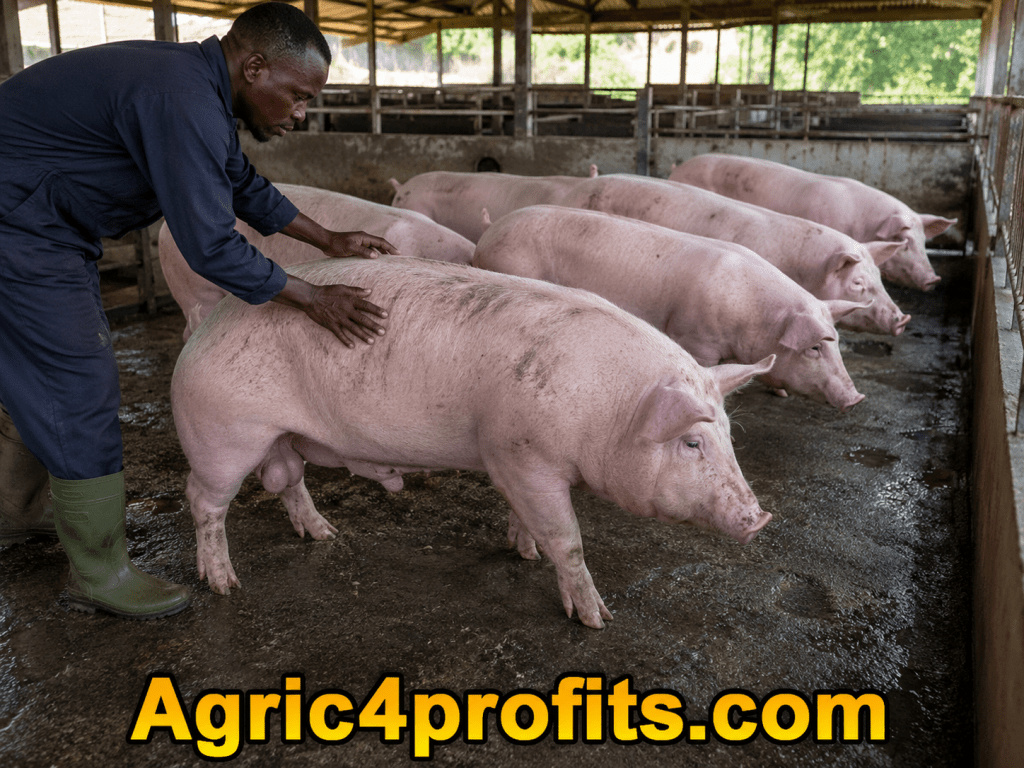
Selecting a boar for service requires more than choosing the biggest male on the farm. The farmer should examine growth rate, body structure, feed efficiency, libido, and soundness before any animal enters the breeding pen.
💬 Have a Farming Question? Join thousands of farmers across Africa on the Agric4Profits Community — ask questions, share experiences and connect with agricultural experts. It is completely free. Ask Your Question Now →
Performance testing is useful because it helps identify males that grow faster than average and carry less back fat. Those traits usually support leaner offspring, better feed conversion, and stronger commercial value for the herd.
1. Faster growth rate: Choose boars that reach weight quickly without appearing coarse, weak, or unhealthy, because rapid but balanced growth often signals good genetic potential for their progeny.
2. Low back fat: A breeding boar should not be excessively fat. Less back fat usually indicates better feed utilization and a higher chance of producing offspring with improved carcass quality.
3. Strong testicles and libido: The testicles should be firm, evenly sized, and well suspended. Good sexual drive is also important, because fertility depends on both physical soundness and willingness to mate.
4. Proper body conformation: A sound boar should stand squarely, move freely, and possess strong feet and legs. These features support stamina, reduce injury, and allow service to continue throughout the breeding season.
Young boars brought into a new herd should be dewormed, treated for external parasites, exercised daily, and fed properly so they can adjust to new smells, routines, and handling without becoming lazy or overweight.
3. Selection of Sows for Breeding
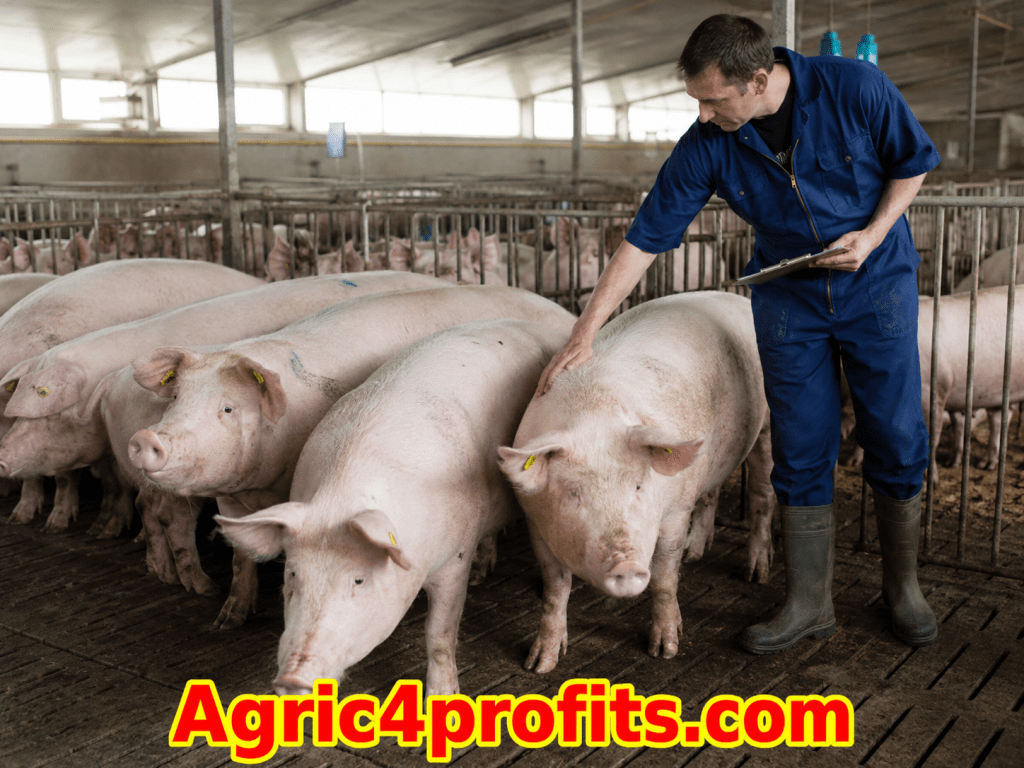
Selection of breeding sows should begin with close attention to udder quality and general health. A female that cannot rear a large litter will limit farm output, regardless of how promising the boar may be.
At least twelve normal teats are preferred, while fourteen is even better on a well-developed farm. Even spacing, good attachment, and symmetry matter because piglets need enough access to milk during the critical early days.
1. Strong litter size potential: Choose the largest and healthiest females from the litter, because early vigor often reflects better growth, stronger constitution, and greater reproductive promise later in life.
📖 Want to Go Deeper on This Topic?
Our expert agricultural ebooks cover poultry, fish farming, different crops production, snail farming, organic farming, mushrooms, sheep, cattle, flowers, pig farming, goat farming, agribusiness, etc. in practical step-by-step detail — written by agricultural professionals for African farmers.
Browse All Farming Ebooks →2. Good legs and feet: A breeding sow must walk well and stand firmly. Weak legs make it harder for her to mate, carry pregnancy comfortably, and nurse piglets without strain.
3. Proven family background: Good parents matter. Sows from lines that produce regular, well-sized litters usually pass on more useful traits than females with poor reproductive histories or weak maternal performance.
Once a suitable gilt has been chosen, housing becomes part of breeding success. Clean pens, balanced feed, and regular observation are necessary, and more practical advice is available in the complete beginner pig guide.
Breeders can also compare female lines with the guidance in different breeds of swine, which helps them choose stock with better structure and reproductive potential for the whole herd.
The best breeding females are not only fertile but also easy to manage. When sows are selected carefully and handled gently, the herd benefits from stronger piglets, fewer reproductive problems, and steadier production.
4. Mating Conditions and Heat Detection
Mating conditions strongly influence conception rate, because boars perform better in a properly designed service pen than in a crowded or unfamiliar space. A calm environment helps both animals settle and complete service more efficiently.
A boar should not begin serving until he is older than eight months. During the first two months of service, twice weekly is enough, because overuse can weaken fertility and reduce sperm quality.
After the boar has adapted, he may be used up to six times each week, depending on body condition and farm demand. Even then, close supervision is necessary to prevent exhaustion and declining performance.
Excessive service can lead to smaller litters and more sows returning to heat. For that reason, one boar is often recommended for about twenty sows or gilts, depending on age, vigor, and management.
Regular exercise is also important because it helps prevent leg weakness and keeps the boar fit for service. Many producers trim the feet when necessary, especially when hard flooring begins to create discomfort.
Heat detection remains essential, because pigs mate only during oestrus. A sow in heat may show restlessness, red and swollen vulva, mucus discharge, and mounting behavior, but some signs are subtle.
To improve detection, place the sow with the boar briefly each day around the expected heat period, while keeping the interaction calm and safe. The boar should usually be taken to the sow.
When the sow stands firmly under back pressure, mating should follow promptly, ideally with two services about twelve hours apart. If conception fails, the sow commonly returns to heat in about three weeks.
5. Management of Gilts and Sows
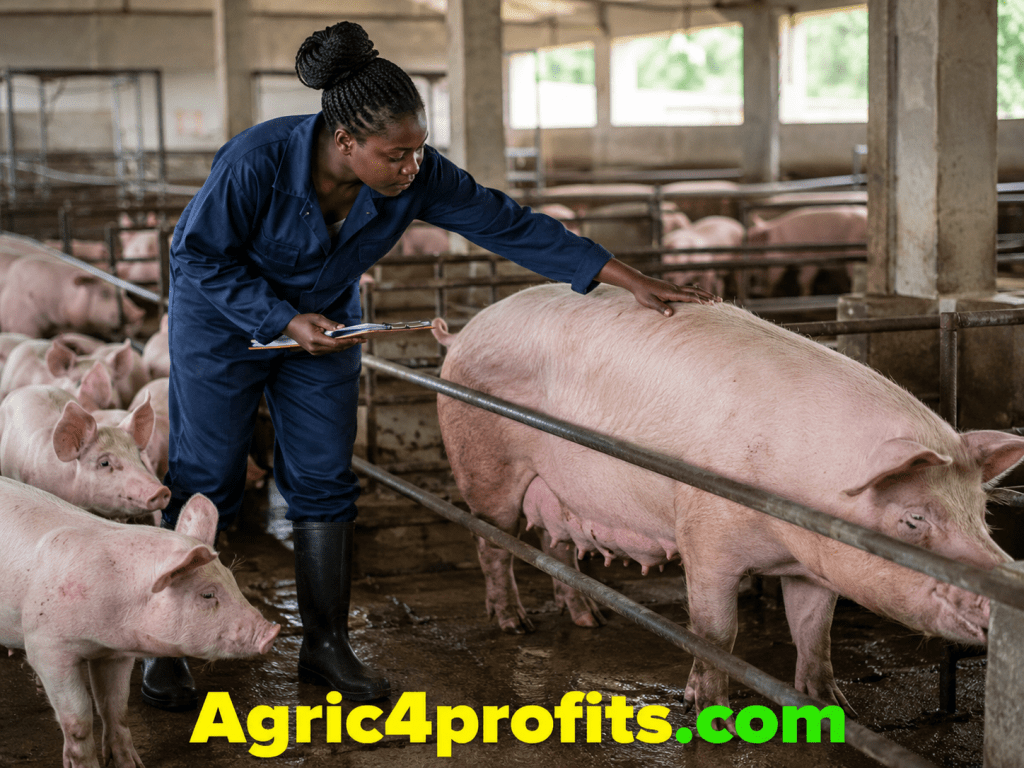
Managing gilts correctly begins long before the first mating. The main aim is to bring replacement females to puberty quickly, while still avoiding premature breeding that could damage future fertility and litter performance.
Early puberty allows the farmer to identify poor performers sooner and keep a pool of active young females ready for service. This approach supports better planning and relates closely to pig farm profitability.
Gilts should not become too fat, because excess body condition can delay heat and increase the chance of crushing piglets later. Adequate movement, balanced feeding, and clean housing are therefore essential throughout growth.
Sexual maturity may begin around four or five months, but the first service should wait until the gilt is physically ready. A mature body weight and stable frame matter more than early signs of heat.
A productive sow usually remains useful for several years when she is managed properly. Good feeding, rest, hygiene, and observation help preserve her usefulness and reduce premature culling from the breeding herd.
Careful nutrition is central at this stage, and farmers may benefit from reviewing pig feeding and feeds, because body condition affects fertility, milk production, and the health of both sow and litter.
Well-managed gilts also need routine observation for behavioural changes, lameness, and body condition. Farmers who combine these checks with practical breeding records usually make better replacement and culling decisions overall.
In modern herds, gilt management is not separate from overall production planning. It connects breeding, feeding, housing, and record keeping into one system that improves consistency and keeps future productivity strong.
Read Also : Advantages and Disadvantages of Pig Farming
6. Management of Pregnant Sows and Farrowing
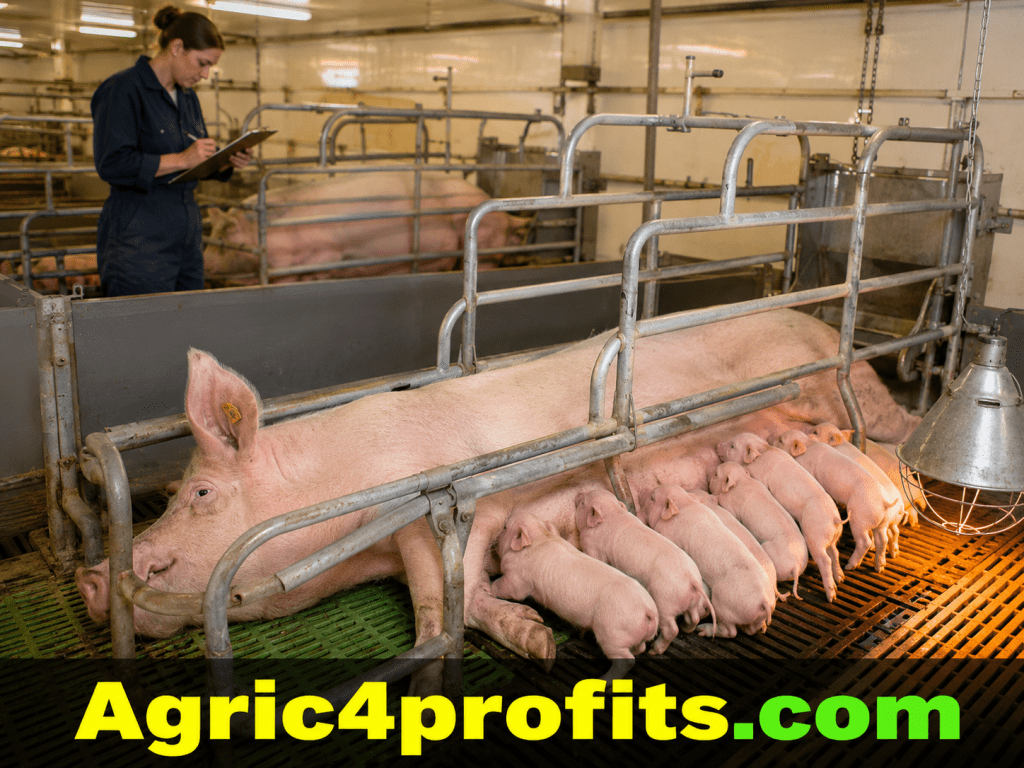
The gestation period of pigs is about 114 days, or three months, three weeks, and three days. During pregnancy, the sow must be protected from crowding, sudden stress, poor ventilation, and inadequate feeding.
Feed intake should rise carefully during pregnancy, especially in the last month when body demands increase. Farmers should adjust rations gradually and maintain clean water access so the sow stays healthy and comfortable.
Preparing the farrowing pen early helps prevent losses. The pen should be clean, dry, free from draughts, and disinfected thoroughly, because healthy surroundings reduce parasite pressure and support easier delivery.
Two weeks before farrowing, deworm the sow with products known to be safe during pregnancy. This simple step helps reduce internal parasite burden without risking the unborn litter at all.
The sow should be moved to the farrowing pen several days before delivery so she can settle down. Washing her body with soapy water and mild disinfectant removes dirt and parasite eggs before farrowing begins.
Provide short, clean straw to reduce the risk of piglets becoming trapped or crushed in long bedding. A good farrowing crate or pen design also protects piglets during the most dangerous first three days.
At farrowing, the sow may become restless, grunt, and start nesting before labour becomes stronger. The attendant should observe quietly, because pigs often farrow with little interference and usually complete delivery in several hours.
Once born, each piglet should quickly locate the teats and receive colostrum. The placenta should be removed or buried promptly, while creep feeding can begin later for piglets from about ten days of age.
7. Weaning and Growing Piglets
Weaning is the separation of piglets from the sow so they stop suckling and begin depending on solid feed. It commonly occurs between four and six weeks, depending on farm goals and litter strength.
After weaning, piglets should continue receiving warmth, clean water, and well-balanced feed. Good management at this stage reduces stress and supports smoother growth, especially when the feeding program is organised carefully.
By eight or nine weeks of age, the growing pig adapts better to a wider range of protein and energy sources. This period is important because efficient feed use has a strong effect on profitability.
Most feed consumed on a pig unit is used by growing and finishing pigs, so management during this stage matters greatly. Farmers can review the art and science of farming pigs for more guidance.
Young pigs also need proper bedding or ventilation, depending on the climate. In humid areas, a well-ventilated pen helps keep them comfortable, while dry litter materials protect them from cold and dampness.
Farmers should not overlook record keeping after weaning. Dates, weights, feed use, health treatments, and growth changes should be tracked carefully, because the data show which management decisions are working best.
Broader advice on housing, breeding, and farm setup is available through starting a piggery, which complements the breeding and farrowing practices described here. Farmers can also exchange ideas in the pigs farmers community.
Ultimately, the profitability of swine production depends on attention to every class of animal, from breeding boars to weaned piglets. Consistency, cleanliness, and planning keep the system productive and predictable.
Summary on Breeding Methods and Management of Swine
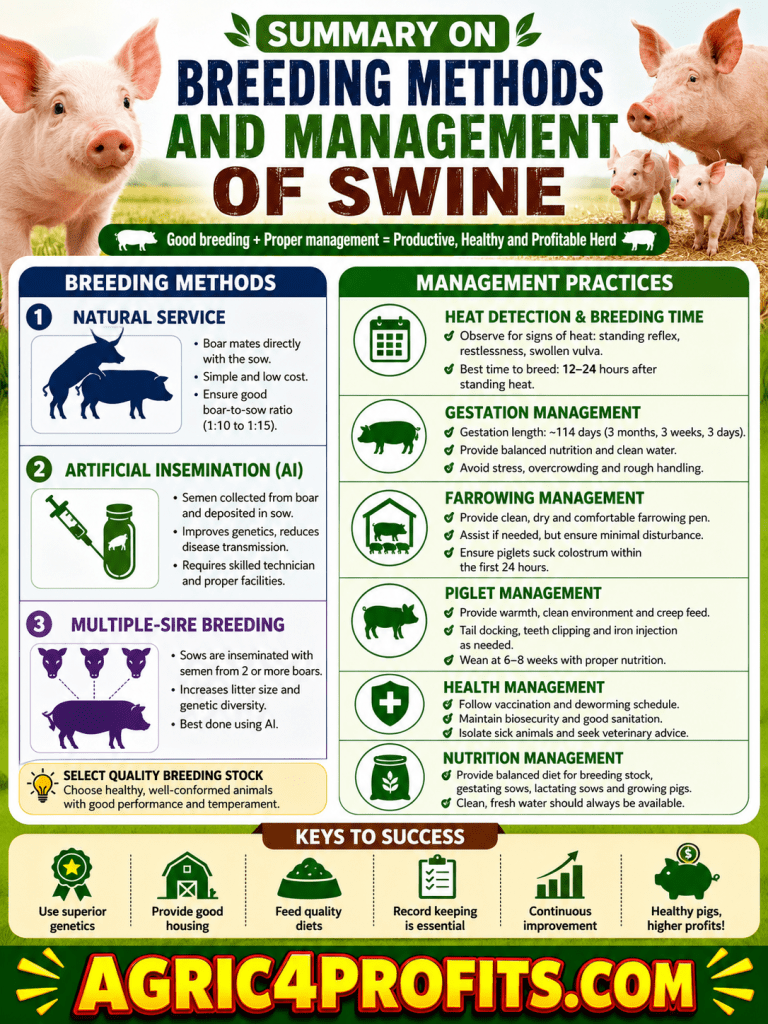
| Aspect | Summary |
|---|---|
| Breeding method | Herd mating is simple, while hand mating gives the farmer better control, record keeping, and breeding accuracy. |
| Boar selection | Choose boars with fast growth, low back fat, sound feet and legs, strong libido, and good body conformation. |
| Sow selection | Select healthy females with enough teats, strong legs, proven family background, and good maternal potential. |
| Mating conditions | Use a calm service pen, avoid overworking the boar, and watch for clear signs of heat before mating. |
| Pregnancy care | Protect pregnant sows from crowding, feed them properly, and prepare a clean farrowing pen in advance. |
| Piglet care | Support colostrum intake, creep feed young piglets, and wean them carefully so growth continues smoothly. |
Frequently Asked Questions About Breeding Methods and Management of Swine
1. What is the difference between herd mating and hand mating?
Herd mating allows animals to mix freely, while hand mating is controlled, planned, and supervised for better breeding results.
2. At what age should a boar start serving?
A boar should begin service after eight months of age, and only in moderation during the first two months.
3. How many teats should a breeding sow have?
A breeding sow should have at least twelve normal teats, and fourteen is even better on a well-managed farm.
4. What are the common signs of heat in pigs?
Common signs include restlessness, swollen vulva, mucus discharge, mounting behaviour, and standing still under pressure.
5. How long is the gestation period of a sow?
The gestation period is about 114 days, which is three months, three weeks, and three days.
6. When should piglets be weaned?
Piglets are usually weaned between four and six weeks of age, depending on management goals and litter strength.
7. Why is colostrum important for piglets?
Colostrum provides essential nutrients and antibodies that help newborn piglets survive and resist early disease.
8. Why is record keeping important in swine production?
Records help the farmer track breeding dates, litter sizes, growth, health treatments, and overall farm performance.
Do you have any questions, suggestions, or contributions? If so, please feel free to use the comment box below to share your thoughts. We also encourage you to kindly share this information with others who might benefit from it. Since we can’t reach everyone at once, we truly appreciate your help in spreading the word. Thank you very much for your support and for sharing!
Read Also : Sources and Classification of Hazardous Waste
🌱 Take Your Farming Further With Agric4Profits
Based on what you just read, here are free resources and products from Agric4Profits that can help your farm right now:
- 🛒 Visit Our Marketplace — Organic neem oil, bio-pesticides, seeds and farming products
- 📚 Read Premium Content — Advanced guides for serious and profitable farming
- 🎓 Join Our Free Academy — Structured free training for farmers across Africa
- 🔧 Use Our Free Farm Tools — Profit calculators, feed formulation, pest identifier and more
- 💬 Join Our Farming Community — Connect with farmers across all 54 African countries
- ❓ Ask a Farming Question — Get answers from experienced farmers and agricultural experts
Please cite this content in academic work, research, or publications.