


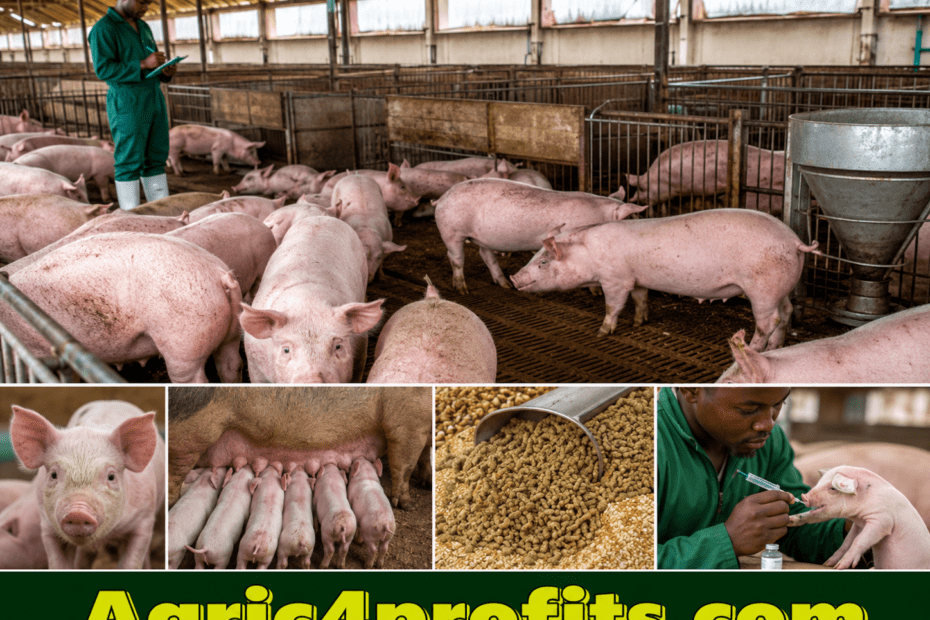
Pig farming remains one of the fastest routes to steady livestock income because pigs grow quickly, produce large litters, and convert affordable feed into valuable meat.
A single healthy sow can deliver two litters yearly, giving a patient farmer between sixteen and twenty-four weaners annually from one productive breeding female alone.
That reproductive advantage explains why smallholders, retirees, and young agripreneurs keep entering the business, often starting small with two gilts and one healthy boar.
However, success never comes from enthusiasm alone, because pigs punish poor planning through disease outbreaks, stunted growth, wasted feed, and disappointing sales at market time.
This detailed guide walks you through breeds, housing, nutrition, breeding, health control, budgeting, and marketing so your enterprise stands on strong technical and financial foundations.
Read every section carefully, apply the recommendations gradually, and you will build a pig unit that pays its bills and still rewards you generously.
🌿 Go Organic on Your Farm: Instead of harmful chemical pesticides and fertilisers, try our organic farming products — including neem oil spray, bio-pesticides, natural plant treatments, organic seeds and seedlings, suckers, and many more organic products that are safe for your health, your family, your soil and your harvest. Shop Now →
Why Pig Farming Is Highly Profitable Today

1. Rapid Growth Rate: Pigs reach market weight of about ninety kilograms within six to eight months, which is far faster than cattle or most other ruminants.
This speed shortens your capital recovery cycle considerably, letting you restock pens twice yearly and reinvest profits while competitors in slower enterprises still wait for maturity.
2. High Reproductive Capacity: A well-managed sow farrows eight to fourteen piglets per litter, and quality genetics can push that number even higher with attentive care.
Because of this multiplication power, a small herd expands into a serious commercial pig production unit within roughly two well-planned and disciplined years.
🔧 Free Farm Tool Available: Use our free Agric4Profits Farm Tools to calculate your farm profits, formulate feeds, identify pests and diseases on both your crops and animal farms, plan your planting and harvesting season, including many more farm tasks to get free expert advice and recommendations — completely free, no registration required. Access Free Tools →
3. Excellent Feed Conversion: Pigs convert roughly three kilograms of balanced feed into one kilogram of live weight, ranking them among the most efficient farm animals available.
They also digest kitchen leftovers, brewery waste, cassava peels, and market remnants, which lowers your feed bill significantly when such materials are safely sourced and processed.
4. Strong and Rising Market Demand: Pork consumption keeps climbing in hotels, restaurants, event catering, and processed meat factories that need reliable weekly supply from dependable farmers.
Understanding which livestock ventures pay best helps you position your farm where demand is strongest and competition remains comfortably manageable.
5. Multiple Income Streams: Beyond live pigs, you earn from weaner sales, breeding stock, manure, processed pork products, and paid training services for beginners entering the industry.
💬 Have a Farming Question? Join thousands of farmers across Africa on the Agric4Profits Community — ask questions, share experiences and connect with agricultural experts. It is completely free. Ask Your Question Now →
Pig dung is also rich fertilizer, and composting farm waste properly turns a disposal headache into extra revenue for your crop-farming neighbours nearby.
6. Low Land Requirement: An intensive unit housing fifty pigs occupies a modest plot, making the enterprise practical for farmers with limited land near growing urban centres.
Compact housing reduces fencing costs, shortens labour movement, and simplifies supervision, so one attentive worker can comfortably manage many animals without sacrificing hygiene or daily observation.
Read Also: The Process and Procedure in Pig Production
Best Pig Breeds for Commercial Production
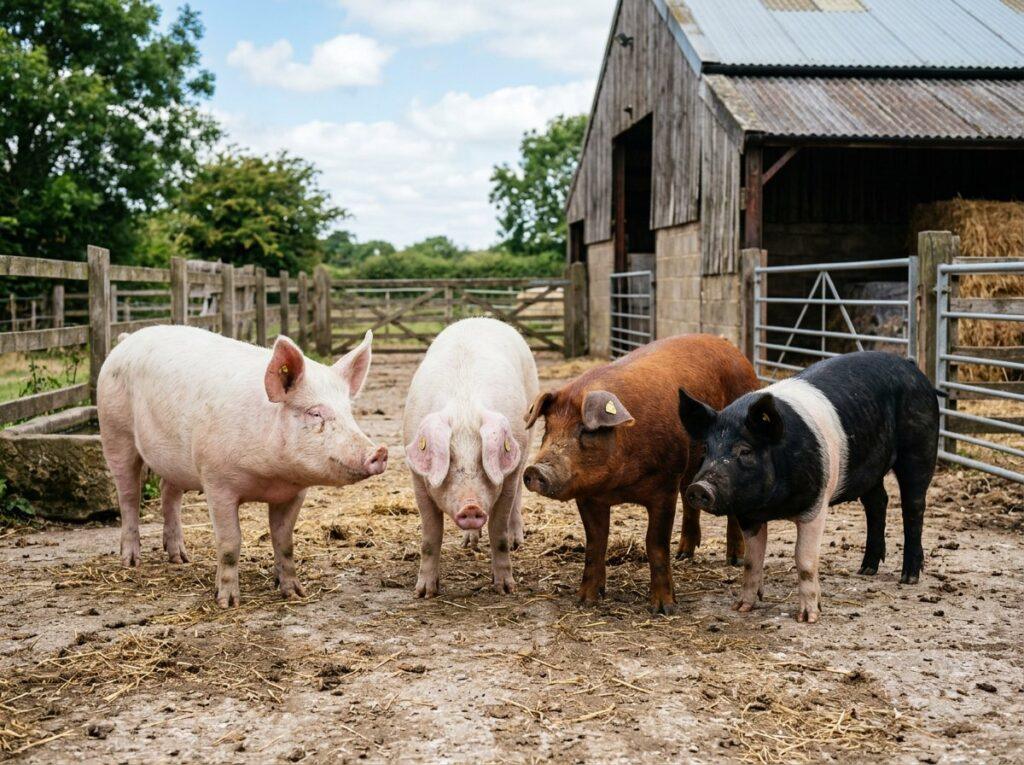
1. Large White (Yorkshire): This white, erect-eared breed is prized worldwide for prolific litters, strong mothering ability, fast growth, and excellent lean carcass quality at slaughter.
Sows tolerate intensive systems well, produce plenty of milk, and pass hardiness to crossbred offspring, making the breed a dependable foundation for most commercial herds.
2. Landrace: Recognised by its long body and drooping ears, Landrace delivers extra rib pairs, longer loins, and outstanding maternal traits that suit serious breeding programmes everywhere.
Crossing Landrace sows with Large White boars gives hybrid vigour, and learning to identify superior breeding stock protects you from costly purchase mistakes.
3. Duroc: The reddish-brown Duroc is a terminal sire favourite because it transmits fast growth, robust legs, marbled meat, and impressive resilience under warm tropical conditions.
📖 Want to Go Deeper on This Topic?
Our expert agricultural ebooks cover poultry, fish farming, different crops production, snail farming, organic farming, mushrooms, sheep, cattle, flowers, pig farming, goat farming, agribusiness, etc. in practical step-by-step detail — written by agricultural professionals for African farmers.
Browse All Farming Ebooks →Duroc-sired finishers usually eat well and gain weight steadily, which shortens the fattening period and improves the profit margin earned on every pen of animals.
4. Hampshire: This black pig with a distinctive white belt around the shoulders yields high-quality lean carcasses with excellent muscling along the loin and valuable ham region.
Hampshire boars are widely used in terminal crosses, and buyers appreciate the meaty carcasses, though litter sizes remain smaller than those of dedicated maternal white breeds.
5. Local and Indigenous Pigs: Native breeds show remarkable disease tolerance, thrive on fibrous local feedstuffs, and survive conditions that quickly stress delicate imported exotic genetics.
Their growth is slower and carcasses fattier, yet crossing them with exotic boars balances hardiness with productivity, especially for beginners farming in remote or harsh rural districts.
6. Crossbred Commercial Hybrids: Most successful farms finally settle on structured crossbreds that combine maternal prolificacy from white breeds with terminal growth power from coloured sire lines.
Choose your crossing plan deliberately, since proven breeding methods determine whether hybrid vigour truly translates into heavier weaners and healthier replacement gilts each season.
Housing and Pen Design in Pig Farming
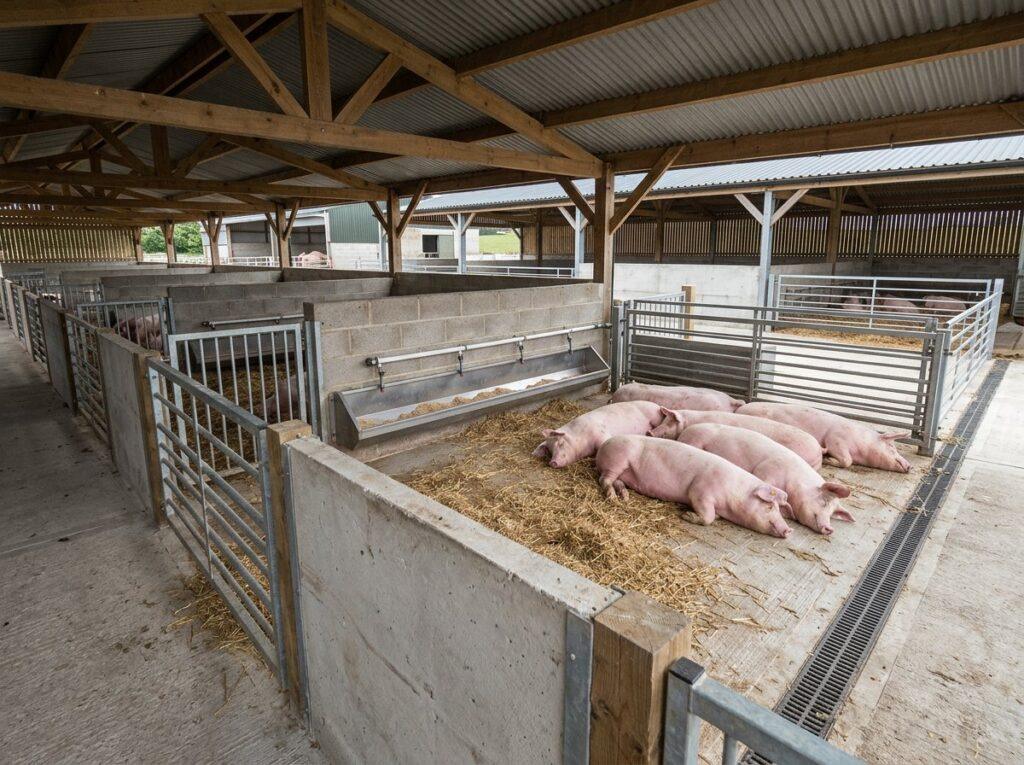
1. Suitable Site Selection: Build on gently sloping, well-drained ground away from residential buildings, yet close enough to good roads for feed delivery and buyer access.
A slight slope drains washing water naturally, prevents pond formation inside pens, and reduces the foul odours that often trigger complaints from neighbours and local authorities.
2. Correct Floor Space Allowance: Allocate about one square metre per weaner, one and a half for growers, and roughly three square metres for each adult sow.
Overcrowding raises humidity, spreads pathogens rapidly, and triggers tail biting, while generous space encourages calm behaviour, uniform growth, and noticeably cleaner resting and dunging patterns.
3. Durable Concrete Flooring: Use roughened concrete sloping gently towards a drainage channel so urine and washing water escape quickly without leaving slippery or waterlogged surfaces behind.
Smooth floors cause leg injuries and lameness, whereas rough finishes give grip; the same design logic applies in well-planned livestock housing facilities generally.
4. Adequate Ventilation and Shade: Pigs lack functional sweat glands, so open sidewalls, high roofs, and cross ventilation are essential for controlling dangerous heat stress daily.
Add wallows, overhead sprinklers, or misting during hot afternoons, because cool pigs eat more, breed better, and gain weight faster than animals panting under scorching roofs.
5. Farrowing and Nursery Units: Reserve separate warm pens fitted with farrowing crates or guard rails that stop clumsy sows from crushing their newborn and delicate piglets.
A creep area warmed by a lamp keeps piglets comfortable, and maintaining daily cleaning and sanitation routines here dramatically reduces preweaning mortality losses.
6. Feeding and Watering Fittings: Install sturdy troughs and nipple drinkers positioned at the right height so animals feed comfortably without climbing inside or wasting expensive rations.
Clean water must flow constantly, since a lactating sow can drink over thirty litres daily, and thirsty pigs immediately reduce intake and drop weight sharply.
7. Waste Handling Structures: Channel slurry into soakaway pits, biodigesters, or composting bays instead of allowing it to flow untreated into streams, gutters, or neighbouring farmland.
Proper waste structures protect community goodwill, cut fly breeding, and supply organic fertiliser that you can bag and sell to vegetable growers around your locality.
Feeding and Nutrition Management for Pigs
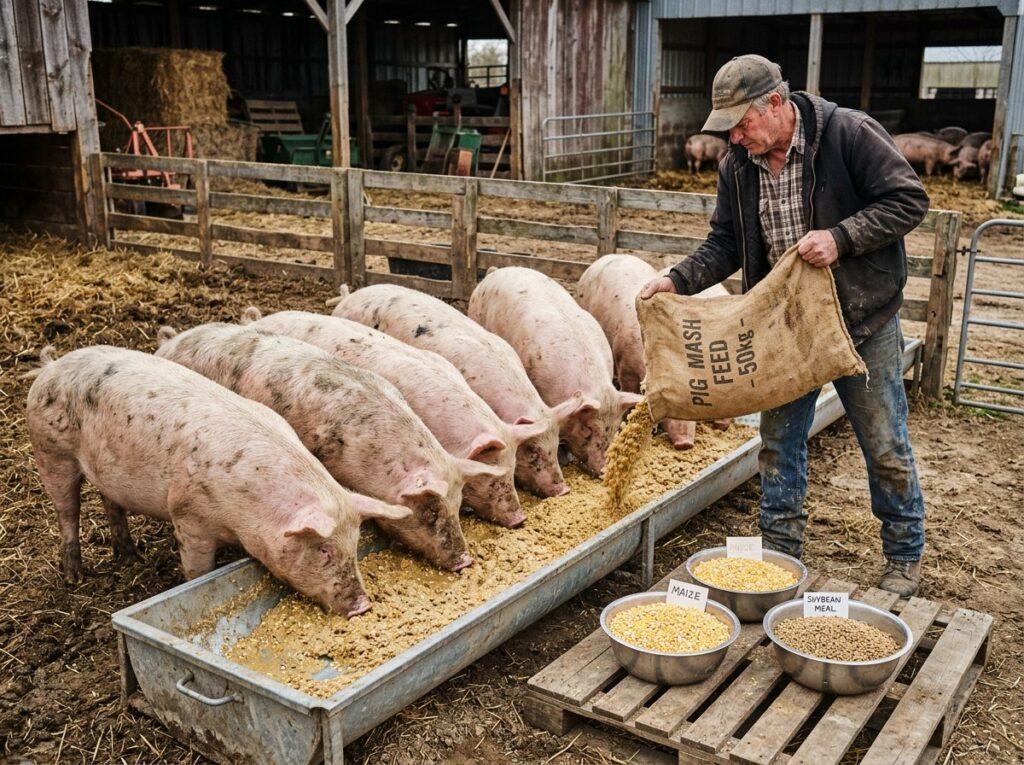
1. Feeding by Growth Stage: Match diets to age using creep, starter, grower, finisher, gestation, and lactation rations that reflect the changing nutrient demands of each stage.
Feeding one uniform ration to every pen wastes protein on finishers while starving young piglets, so understanding basic nutrient requirements saves real money.
2. Balanced Energy and Protein: Maize, cassava, and wheat offal supply energy, while soybean meal, groundnut cake, and fishmeal provide the amino acids that build lean muscle.
Weaners need about twenty percent crude protein, growers roughly eighteen, and finishers around sixteen percent, with energy levels rising gradually as the animals approach market weight.
3. Correct Ration Formulation: Use tested ingredient values and simple methods such as Pearson square to build least-cost diets that still meet published nutrient specifications reliably.
Farmers who learn to formulate balanced rations on the farm often cut feeding costs by a quarter compared with buying finished commercial bagged feed.
4. Vitamins, Minerals, and Additives: Include premix, bone meal, salt, and lysine to correct deficiencies that quietly limit growth, fertility, bone strength, and general herd performance.
Skipping these cheap supplements is false economy, because mineral shortages produce weak legs, poor conception, small litters, and disappointing weights despite otherwise generous daily feeding.
5. Safe Use of Alternative Feedstuffs: Brewery waste, cassava peels, palm kernel cake, and vegetable trimmings reduce cost, but must be fresh, clean, and correctly processed first.
Sun-dry cassava peels to remove cyanide, avoid mouldy grains that carry aflatoxin, and introduce every new ingredient gradually over about seven days to prevent digestive upsets.
6. Feeding Routine and Quantity: Feed growers twice daily, offering roughly two to three kilograms per head, and adjust portions according to body condition and observed leftovers.
Consistent timing calms the herd, reduces fighting at troughs, and helps you notice quickly when any animal loses appetite, which is usually the earliest illness signal.
7. Finishing Strategy for Market Weight: During the last two months, raise energy density and feed generously so animals lay down weight economically before the planned selling date.
Smart fattening strategies for finisher pigs can add ten extra kilograms per animal, which multiplies impressively across a pen of forty market-ready hogs.
Breeding and Reproduction in Pig Farming
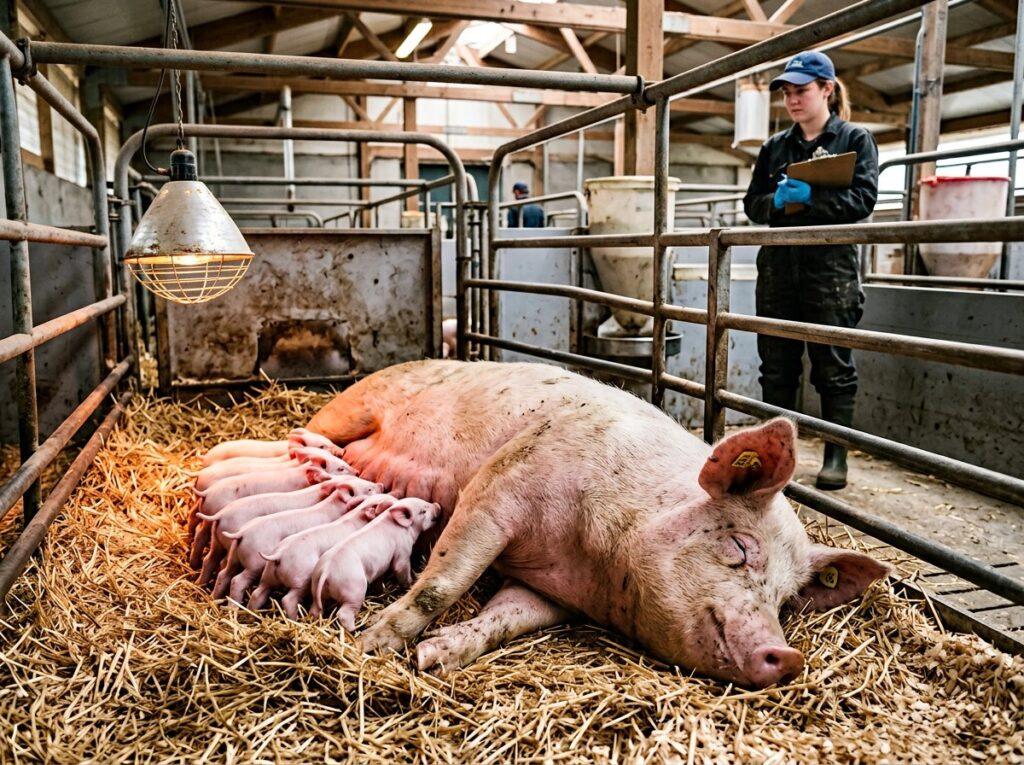
1. Selecting Replacement Gilts: Choose gilts with at least twelve well-spaced functional teats, strong straight legs, calm temperament, and a proven productive dam behind them.
Poor udder development or weak pasterns will frustrate you later, since such females wean fewer piglets and leave the herd long before recovering their purchase cost.
2. Right Age and Weight at Service: Serve gilts around eight months old, weighing near one hundred and twenty kilograms, and preferably during their second or third observed heat.
Breeding immature females produces small litters and weak piglets, while excessive delay wastes feed and reduces the number of productive litters obtained during her lifetime.
3. Accurate Heat Detection: Watch for a swollen reddened vulva, restlessness, mucus discharge, and the standing reflex when pressure is applied firmly on the sow's back.
Because oestrus lasts only two to three days, mastering the signs of heat directly determines your conception rate and annual farrowing index.
4. Natural Mating or Artificial Insemination: One mature boar can serve about twenty sows naturally, though many modern farms now prefer insemination for superior genetics and biosecurity.
Adopting artificial insemination gives access to elite boars, removes boar feeding costs, and prevents diseases that visiting or shared males frequently introduce.
5. Gestation and Pregnancy Care: Pregnancy lasts about one hundred and fourteen days, commonly remembered as three months, three weeks, and three additional days on the calendar.
Feed pregnant sows moderately, avoid rough handling, and confirm pregnancy early so that non-pregnant females return to service without wasting weeks of expensive feed.
6. Farrowing Management: Move the sow into a disinfected farrowing pen one week before delivery, then supervise quietly, providing clean water, warmth, and assistance only when genuinely necessary.
Ensure every piglet suckles colostrum within six hours, clip needle teeth carefully, treat navels with iodine, and record birth weights for future selection and performance comparison.
7. Weaning and Rebreeding: Wean piglets between four and six weeks, after which most healthy sows return to heat within about seven days for prompt rebreeding.
Tight weaning-to-service intervals raise annual litters per sow, and this single management discipline separates farms that merely survive from those that consistently generate impressive returns.
Pig Health, Disease Control, and Biosecurity
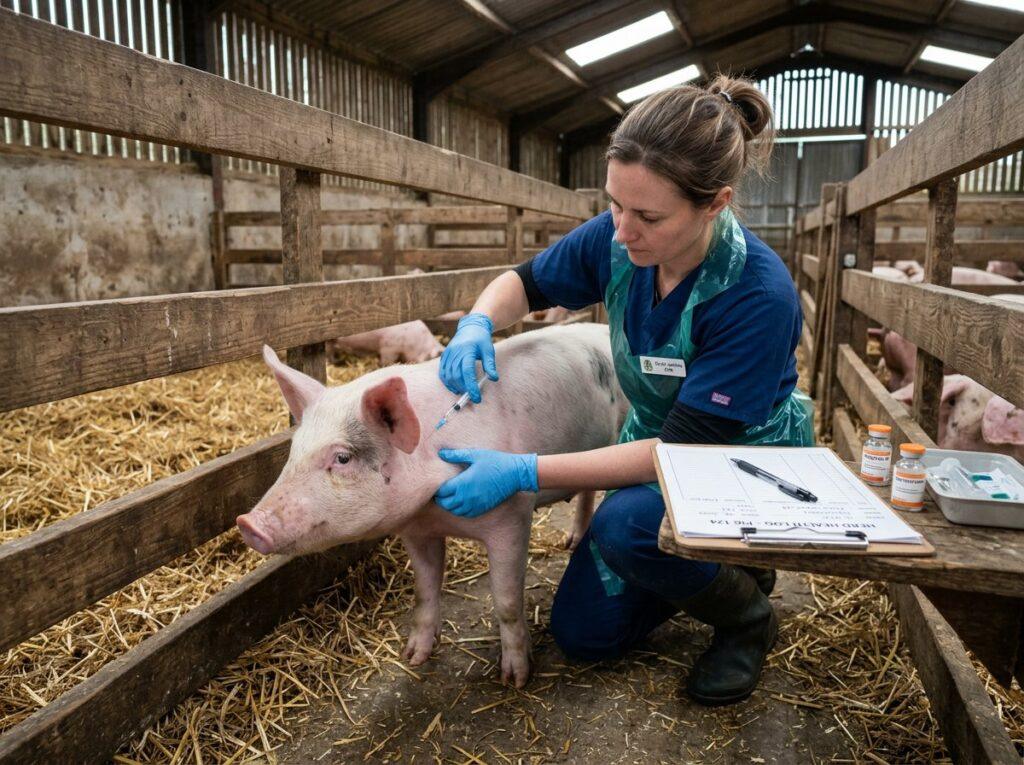
1. African Swine Fever Prevention: This viral killer has no vaccine or cure, so strict prevention through controlled entry and careful sourcing remains your only dependable protection.
Never feed uncooked swill from unknown sources, quarantine new animals for four weeks, and immediately report sudden deaths with high fever to veterinary authorities nearby.
2. Practical Biosecurity Measures: Fence the farm, install disinfectant footbaths, provide dedicated boots and overalls, and firmly restrict visitor movement through your production pens.
Most devastating outbreaks arrive on contaminated vehicles, footwear, or borrowed equipment, which means cheap discipline at the gate protects millions of naira in living stock.
3. Routine Vaccination Programme: Work with a veterinarian to build a schedule covering swine erysipelas, parvovirus, leptospirosis, and other diseases prevalent in your particular farming region.
Following a documented vaccination schedule costs far less than treating a full-blown outbreak that can wipe out an entire batch within a fortnight.
4. Internal Parasite Control: Roundworms, whipworms, and lungworms rob pigs of nutrients, causing pot bellies, rough coats, coughing, and stubbornly poor growth despite adequate feeding.
Regular deworming every three to four months, plus deworming sows before farrowing, keeps worm burdens low and feed conversion efficiency reliably high.
5. External Parasite Management: Mange mites and lice cause intense itching, skin thickening, restlessness, and reduced weight gain that silently erodes your profit throughout the fattening period.
Treat affected animals with approved acaricides, and study ecto-parasite management in pigs so infestations are detected during routine inspection before spreading widely.
6. Bacterial and Digestive Disorders: Scouring piglets, pneumonia, and sudden lameness often trace back to bacterial infections encouraged by damp, dirty, and poorly ventilated pens.
Correct treatment requires proper diagnosis and careful drug administration, including full dosage courses and strict observance of withdrawal periods before any animal is slaughtered.
7. Daily Observation and Welfare: Spend time watching feeding behaviour, breathing, dunging patterns, and posture, because early detection converts a potential disaster into a minor manageable setback.
Comfortable animals perform better, so applying sound welfare and health principles alongside recognised disease control methods protects both productivity and reputation.
Capital, Costs, and Profit Planning for Farmers
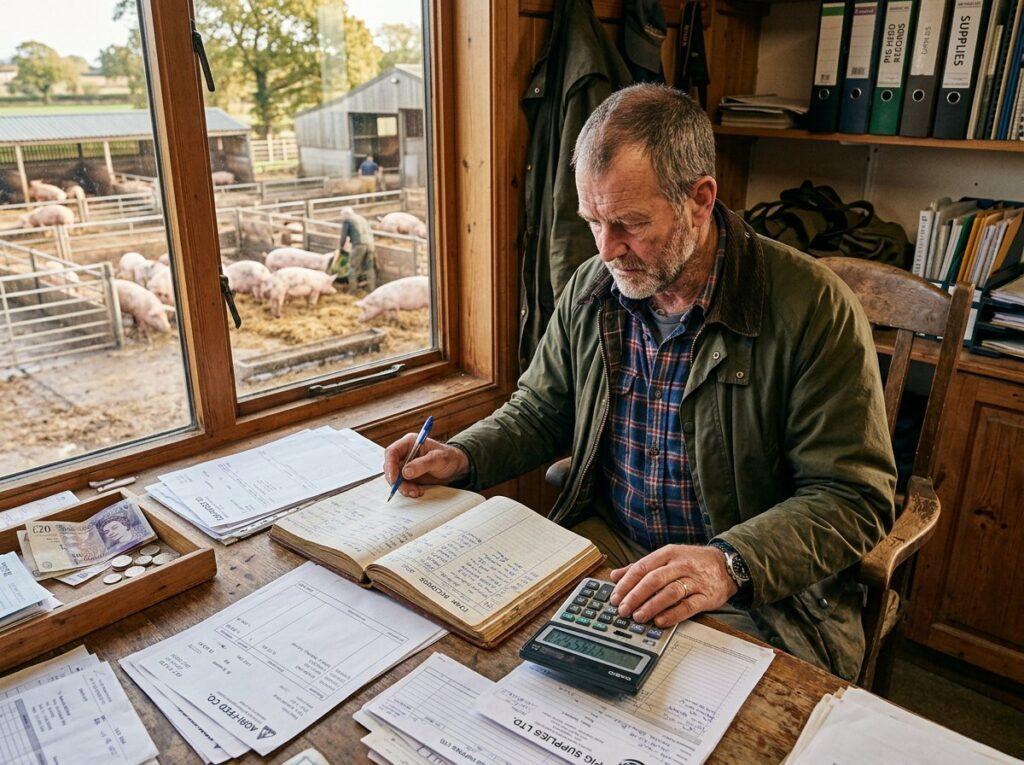
Every serious pig enterprise begins with an honest budget separating fixed investments such as land, pens, boreholes, and equipment from recurring costs like feed, drugs, and labour.
Feed alone consumes about seventy percent of total production expenses, so any decision that reduces feed waste immediately improves your margin more than any other single intervention.
A modest starter unit with four gilts, one boar, and simple concrete pens can begin producing weaners within one year of careful and disciplined operation.
Estimate revenue conservatively by assuming ten weaned piglets per litter rather than fourteen, because realistic projections protect you from painful shortfalls when actual performance disappoints slightly.
Track everything, since accurate farm records and accounts reveal exactly which sows, feeds, and management decisions are quietly draining your hard-earned money each month.
Applying sound farm management principles helps you allocate scarce resources between feed purchase, herd expansion, staff wages, and essential veterinary services without dangerous guesswork.
When expansion demands more capital than savings allow, prepare a bankable plan and explore how to access agricultural loans from cooperatives and development finance institutions.
Buy feed ingredients in bulk during harvest when maize and soybean prices fall, then store them properly to shield your operation from severe off-season price shocks.
Calculate your break-even weight and cost per kilogram regularly, because knowing that figure tells you instantly whether a buyer's offer is genuinely profitable or quietly ruinous.
Finally, reinvest a fixed share of every sale into herd improvement, staff training, and infrastructure, because farms that consume all profits rarely survive their third difficult year.
Marketing and Pork Value Addition Strategies
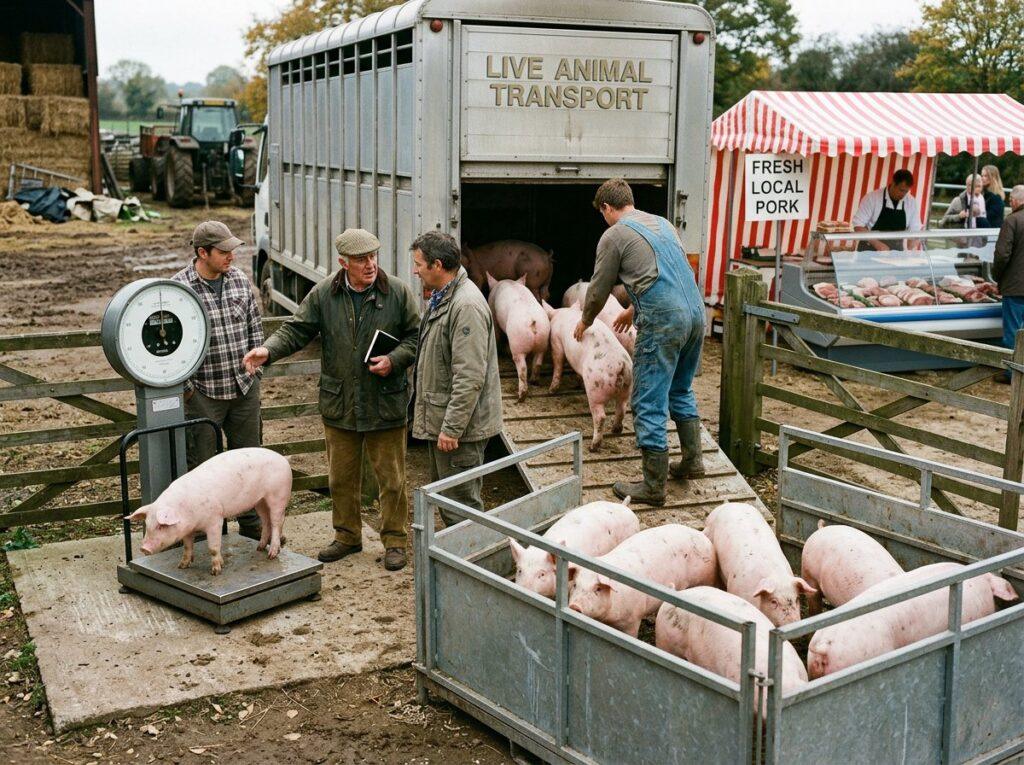
1. Selling Live Weaners and Breeding Stock: Weaners sold at eight to ten weeks return cash quickly, since other farmers constantly need healthy, well-grown replacement animals.
Breeding gilts and boars from documented parentage attract premium prices, especially when you can show vaccination records, growth data, and litter performance of their parents.
2. Direct Sales to Hotels and Caterers: Restaurants, bars, and event caterers buy consistently, and supplying them directly removes middlemen who normally capture much of your rightful margin.
Reliability matters more than price here, because a buyer who receives clean, uniform pigs on agreed dates will happily pay above the ordinary open-market rate.
3. Choosing Effective Marketing Channels: Compare farm-gate sales, livestock markets, butchers, and processors, then select the mix that delivers the highest net return after transport and commissions.
Studying available agricultural marketing channels prevents the common mistake of dumping every finished animal on one dealer who dictates prices without any competition.
4. Value Addition Through Processing: Converting carcasses into sausages, bacon, ham, smoked pork, and packaged cuts multiplies income far beyond what selling live animals ever achieves.
Mastering hygienic meat preservation and handling extends shelf life, reduces spoilage losses, and opens supermarket shelves that reject poorly packaged or unlabelled farm products.
5. Timing Sales for Festive Demand: Pork consumption peaks during Christmas, New Year, and major local festivals, when prices commonly rise by twenty to forty percent overnight.
Plan breeding backwards from those dates so batches reach market weight exactly when demand climbs, rather than selling into the quiet months at depressed prices.
6. Branding and Digital Promotion: Photograph your clean pens, share weekly updates on social platforms, and build a customer list that reorders without any persuasion or discount.
A recognised farm name signals quality assurance, and buyers increasingly prefer producers who openly demonstrate hygiene, humane handling, and responsible use of veterinary drugs on their farms.
Read Also: Wild Boar: Description and Personality
Common Pig Farming Challenges and Smart Solutions
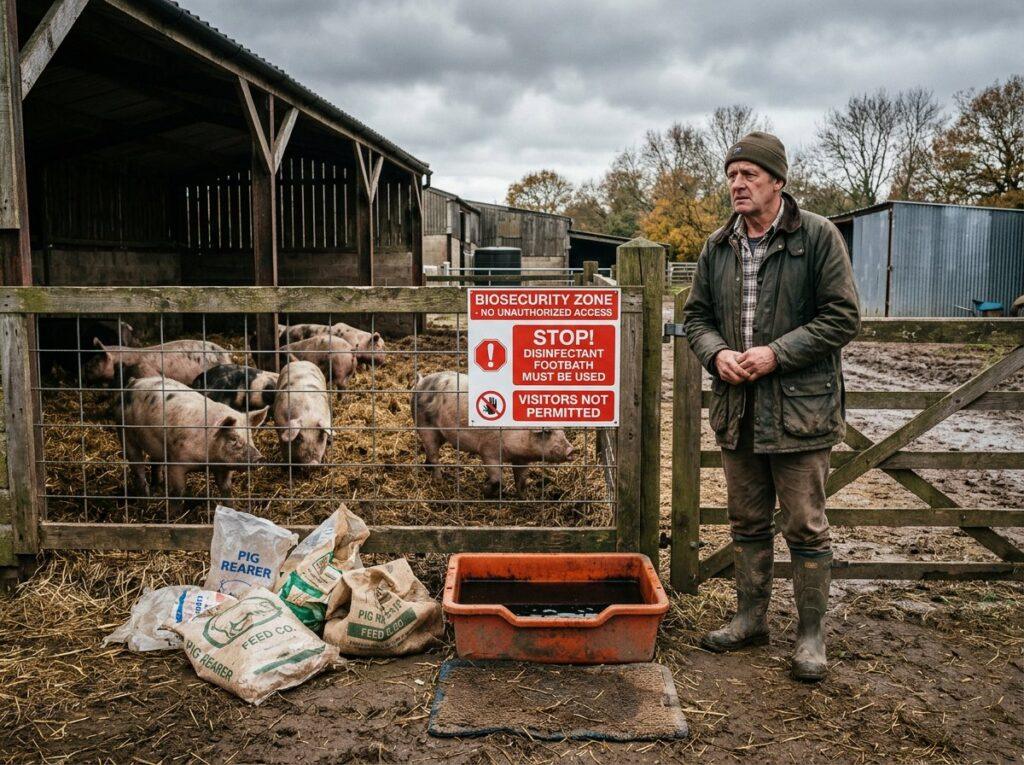
1. High and Unstable Feed Costs: Rising grain prices squeeze margins badly, especially for farmers who depend entirely on purchased commercial feed bought in small retail quantities.
Mill your own feed, join a cooperative for bulk buying, and safely incorporate agro-industrial by-products to keep the cost per kilogram of gain firmly under control.
2. Devastating Disease Outbreaks: A single careless introduction of infected stock can erase years of patient investment within weeks, leaving empty pens and unpaid debts behind.
Quarantine every new arrival, disinfect regularly, avoid casual pen visits, and build a working relationship with a veterinarian before an emergency actually arrives at your gate.
3. Odour and Community Complaints: Poor waste handling creates strong smells and flies that turn neighbours hostile and occasionally attract closure orders from environmental health officials.
Wash pens daily, compost solids away from homes, plant screening trees, and site new units at a respectful distance from residential streets and shared water sources.
4. Religious and Cultural Market Limits: Pork is not consumed in every community, which restricts local demand and forces some producers to transport animals over long, costly distances.
Research your catchment area before construction, then target hotels, processors, and cities where consumption is established, ensuring transport arrangements are secured long before animals reach market weight.
5. Piglet Mortality Before Weaning: Crushing, chilling, starvation, and scouring can claim twenty percent of piglets born, which quietly destroys the profitability of an otherwise excellent herd.
Use guard rails, provide creep heating, ensure early colostrum intake, and supervise farrowing attentively, since most preweaning deaths occur within the first critical seventy-two hours.
6. Poor Record Keeping and Weak Planning: Many farms fail because owners never track feed usage, mortality, service dates, or actual costs behind each animal sold.
Adopt a simple notebook or spreadsheet from day one, and follow a structured record system so every routine task happens on schedule without reminders.
7. Theft, Predators, and Escapes: Weak fencing invites theft and allows animals to stray into farmland, where they destroy crops and provoke expensive disputes with neighbours.
Strong gates, lockable pens, night watch arrangements, and secure perimeters protect stock, especially as animals approach market weight and become considerably more attractive to opportunistic thieves.
Summary on Pig Farming: Proven Guide to Bigger Farm Profits
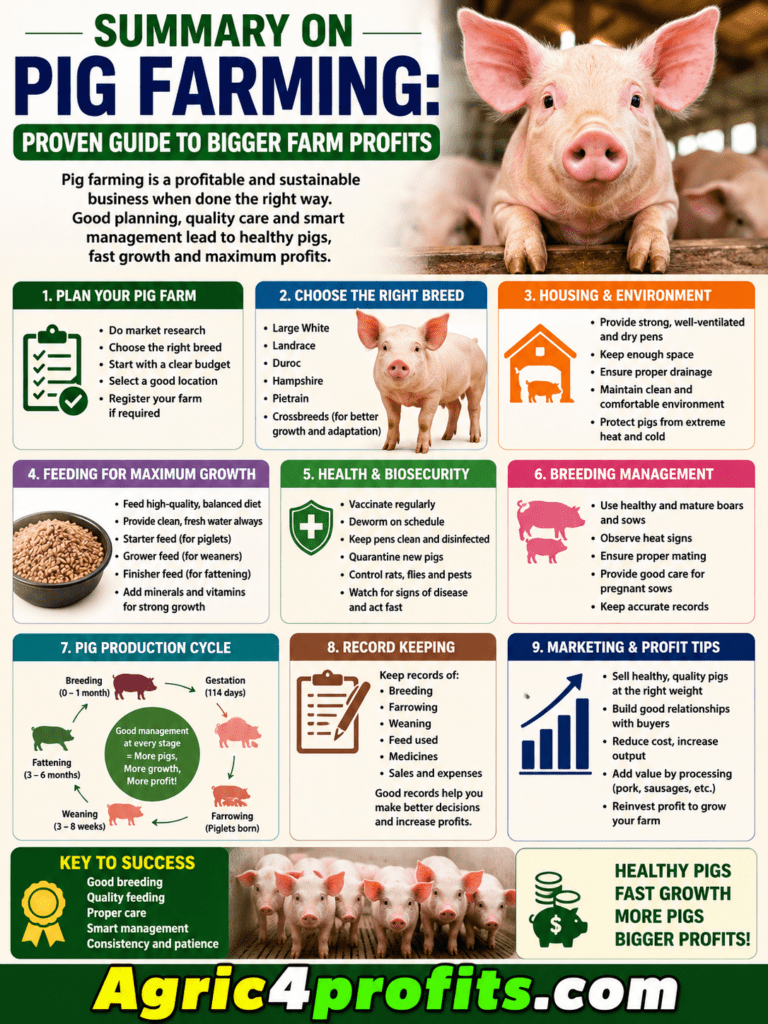
| Section | Key Focus | Practical Takeaway |
|---|---|---|
| Profit Potential | Growth speed, prolificacy, feed efficiency | Pigs reach market weight in six to eight months with multiple income streams |
| Breed Selection | Large White, Landrace, Duroc, Hampshire, local pigs | Combine maternal and terminal breeds for hybrid vigour and faster growth |
| Housing Design | Site, space, floors, ventilation, waste | Dry, well-drained, airy pens reduce disease and improve daily weight gain |
| Feeding Management | Stage feeding, formulation, supplements | Feed is seventy percent of cost, so balanced least-cost rations protect margins |
| Breeding Programme | Gilt selection, heat detection, farrowing | Tight weaning-to-service intervals raise annual litters per sow significantly |
| Health and Biosecurity | Swine fever, vaccination, parasites | Prevention through quarantine and hygiene costs far less than treatment |
| Financial Planning | Budgets, records, credit, break-even | Track costs per kilogram and reinvest steadily for sustainable expansion |
| Marketing | Channels, processing, festive timing | Value addition and direct sales deliver the highest net returns |
| Challenges | Feed prices, disease, odour, mortality | Planning, records, and biosecurity solve most recurring production problems |
Frequently Asked Questions About Pig Farming
1. How much capital is needed to start pig farming?
A small unit with four gilts, one boar, and simple concrete pens is achievable modestly, while commercial units need far larger investment in housing and feed.
2. How long does it take pigs to reach market weight?
Well-fed improved breeds reach ninety to one hundred kilograms within six to eight months, although poor feeding easily stretches that period beyond ten frustrating months.
3. How many piglets can one sow produce yearly?
A productive sow farrows twice each year, weaning roughly eight to twelve piglets per litter, giving about sixteen to twenty-four weaners annually under good management.
4. What is the best feed for fast pig growth?
A balanced ration combining maize, wheat offal, soybean meal, fishmeal, bone meal, salt, and premix, formulated specifically for each growth stage, produces the quickest gains.
5. Which diseases most threaten pig farms?
African swine fever is the deadliest, followed by swine erysipelas, pneumonia, colibacillosis, mange, and worm infestations that reduce growth and increase mortality on crowded farms.
6. How much space does each pig require?
Allow roughly one square metre per weaner, one and a half square metres per grower, and about three square metres for every adult breeding sow.
7. Is pig farming genuinely profitable for beginners?
Yes, provided the beginner starts small, learns feeding and health management thoroughly, keeps records faithfully, and secures buyers before the first batch reaches market weight.
8. Can pigs be fed with kitchen and market waste?
They can, but such swill must be fresh, free of meat scraps, and thoroughly cooked, since raw waste frequently transmits dangerous viral diseases between farms.
9. How do I control the strong smell from pig pens?
Wash pens daily, ensure proper drainage, compost manure away from houses, plant screening trees, and never allow slurry to stagnate inside or around the pens.
10. When should piglets be weaned from the sow?
Weaning is best done between four and six weeks, once piglets eat creep feed confidently and weigh enough to handle separation without serious growth setbacks.
Do you have any questions, suggestions, or contributions? If so, please feel free to use the comment box below to share your thoughts. We also encourage you to kindly share this information with others who might benefit from it. Since we can’t reach everyone at once, we truly appreciate your help in spreading the word. Thank you very much for your support and for sharing!
Read Also: Potato Farming Guide – 7 Tips to Grow Sacks Full of Potatoes
🌱 Take Your Farming Further With Agric4Profits
Based on what you just read, here are free resources and products from Agric4Profits that can help your farm right now:
- 🛒 Visit Our Marketplace — Organic neem oil, bio-pesticides, seeds and farming products
- 📚 Read Premium Content — Advanced guides for serious and profitable farming
- 🎓 Join Our Free Academy — Structured free training for farmers across Africa
- 🔧 Use Our Free Farm Tools — Profit calculators, feed formulation, pest identifier and more
- 💬 Join Our Farming Community — Connect with farmers across all 54 African countries
- ❓ Ask a Farming Question — Get answers from experienced farmers and agricultural experts
Please cite this content in academic work, research, or publications.