


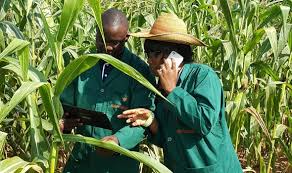
The federal, state governments and corporate organisations in Nigeria have embarked on a good number of rural youth programmes in agricultural extension.
These programmes include the Operation Feed the Nation (1976), Green Revolution Programme (1980), Back to Land Programme, Rapid Food Production Programme, Directorate for Food Roads and Rural Infrastructure, Farm Settlement Scheme, Songhai Vocational Centre (Amukpe), and National Directorate of Employment and so on.
Many of these programmes were short-lived owing to poor management and implementation. The broad objective of these programmes was to encourage the youths to take up agriculture as a lucrative means of livelihood.
In this article, the Farm Settlement Scheme, National Directorate of Employment, and Songhai Vocational Centre are discussed because they were the most popular and sustainable.
Read Also: How to Grow, Use and Care for Whitetinge Sedge Grass (Carex albicans)
Farm Settlement Scheme As A Rural Youth Agricultural Programme
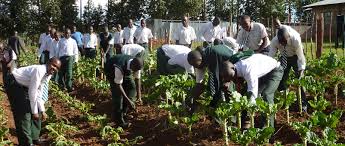
The Farm Settlement Schemes were established in the 60s by the former regional governments of Nigeria. The goal of the scheme was to enhance the standard of living of farmers and attract youths into agriculture.
The youths were made to settle and work on the farm. The scheme was laudable but short-lived due to mismanagement, government bureaucracy, inadequate planning, lack of finance, and negative attitude of settlers.
It was found that many of the settlers were too young to appreciate that farming involves a lot of hard work. The specific objectives of the scheme were to:
i. attract young and educated persons to take up farming as a lucrative venture
ii. test and demonstrate new technologies to enhance adoption rate among farmers
iii. increase profit and standard of living of farmers
iv. reduce unemployment among youths
v. develop a sense of civic responsibilities among the youths
vi. establish pilot projects for host communities.
Merits of the Farm Settlement
i. the youths were provided the opportunity to learn on the farm
ii. ideas were synchronised better because the learners easily associated the learning task with the environment
iii. modern and scientific techniques were demonstrated to the learners
iv. modern and scientific technologies were transferred to other farmers in the community through the settlers (Akinsanmi, 2004; Ovwigho and Ifie, 2009).
National Directorate of Employment (NDE) Agricultural Programme
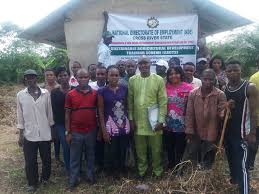
The National Directorate of Employment (NDE) was launched on 30th January, 1987 in response to the soaring rate of unemployment among the youth and University graduates.
The emphasis of the programme was on self-reliance. The sub-programmes are National Youth Employment and Vocational Skills Development Programme; Small Scale Industries and Graduate Employment; Agriculture Sector Employment Programme; and Special Public Works Programme.
The agriculture sector employment programme was established for the purpose of boosting agricultural production and providing sustainable means of livelihood to intended beneficiaries.
The beneficiaries were mainly University graduates, holders of Higher National Diploma, Ordinary National Diploma and Nigeria Certificate in Education in agriculture and related disciplines.
Those who have no basic education in agriculture were given training and orientation in the chosen area of agriculture. The government through the NDE provides land and loans to the beneficiaries after the training programme.
The NDE agriculture programme was implemented by the Federal Government in collaboration with the various state governments and non-governmental organisations. Every state has an NDE agriculture programme committee in charge of the organisation and implementation of the programme.
The NDE agriculture programme cuts across all agricultural enterprises including crop production, poultry, cattle, sheep and goat production, piggery, fishery, and rabbitry as well as the reactivation of dormant farms.
Merits of the NDE programme
i. Funds were made available to the youths, especially unemployed graduates to carry out production in any chosen agricultural enterprise
ii. The programme has been sustained for more than twenty-two (22) years because of the strong institutional backing and funding by government, NGOs and corporate bodies
iii. Continuous training of staff and loan beneficiaries has made the programme profitable and sustainable.
Read Also: How to Grow, Use and Care for Whitegrass (Leersia virginica)
Songhai Delta Vocational Centre (AMUKPE) As A Rural Youth Development Programme

The Songhai Delta Vocational Centre was established in March 2003 by the Delta State Government of Nigeria. The desire to establish the centre was informed primarily by the increasing youth restiveness and social insecurity particularly in the oil-producing areas of the state.
The Songhai Delta was patterned after the Songhai Parakou (Republic of Benin) Integrated Rural Development Centre. The broad objective of the Songhai-Delta is to provide different vocational skills acquisition programmes for the teeming youth population. The specific objectives are to:
i. facilitate self-employment among the youths using locally available resources
ii. redirect the attention and energy of youths into agriculture and related income-generating activities
iii. provide intensive vocational training for selected young graduates who in turn will establish similar centres
iv. encourage trainees to discover and develop a high sense of responsibility through emphasis on self-discipline; dialogue, creativity, initiative and courage
v. assist trainees master the mechanism of operating an integrated farming system
Merits of the Songhai-Delta:
i. to provide good residential accommodation for trainees as against many other programmes established in the past
ii. there are different agricultural and youth training schemes which make the centre a beehive of activities
iii. vocational and industrial attachment is provided for students all over the country at the centre (Nzamuzo, 2004; Ovwigho and Ifie, 2009).
Do you have any questions, suggestions, or contributions? If so, please feel free to use the comment box below to share your thoughts. We also encourage you to kindly share this information with others who might benefit from it. Since we can’t reach everyone at once, we truly appreciate your help in spreading the word. Thank you so much for your support and for sharing!