


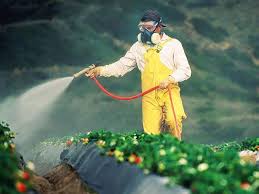
Agrochemicals or pesticides are chemical products designed to kill or control pests. Pests include animals (insects, nematodes, ticks, mites, snails, rodents) or plants (fungi, bacteria, weeds) that damage crops, animals, and stored foodstuffs.
Pesticides have significantly contributed to crop protection and the control of vector-borne diseases. They offer an effective, relatively simple, and quick method of pest control.
Pesticides remain a powerful tool in pest management and will continue to be integral to integrated management programs. Pesticides are grouped by mode of action
Systemic (absorbed and transported within the organism), contact (effective only upon direct contact with the pest), fumigant (acting as a gas that penetrates treated produce), and stomach poison (requiring ingestion).
Toxicity Levels of Pesticides in Agriculture
Most pesticides are highly toxic to pests, humans, and livestock. Colors on pesticide containers indicate toxicity levels, designated with a triangle (∆). For instance:
- Green color: Slightly toxic pesticide.
- Yellow color: Moderately toxic pesticide.
- Blue color: Highly toxic pesticide.
- Red color: Extremely toxic pesticide.
Two types of pesticide toxicity exist: acute and chronic. Acute toxicity refers to the ability to cause injury after a single exposure, typically short-term, from accidental or deliberate ingestion.
🌿 Go Organic on Your Farm: Instead of harmful chemical pesticides and fertilisers, try our organic farming products — including neem oil spray, bio-pesticides, natural plant treatments, organic seeds and seedlings, suckers, and many more organic products that are safe for your health, your family, your soil and your harvest. Shop Now →
It is described by LD50 (lethal dose), where the subscript 50 indicates the dose was acutely lethal for 50% of test animals under laboratory conditions. Test animals receive a specific amount of the chemical orally or intravenously and are observed for 14 days.
LD50 values, expressed as milligrams per kilogram (mg/kg) of body weight, start from zero; lower values indicate higher acute toxicity.
Chronic toxicity results from inhaling or absorbing small doses over a prolonged period, leading to effects like carcinogenesis (tumor or cancer production), teratogenesis (birth defects or changes in offspring structure/function), and mutagenesis (genetic structure changes).
Read Also: Pincushion Flowers (Scabiosa Spp): Complete Growing and Care Guide
🔧 Free Farm Tool Available: Use our free Agric4Profits Farm Tools to calculate your farm profits, formulate feeds, identify pests and diseases on both your crops and animal farms, plan your planting and harvesting season, including many more farm tasks to get free expert advice and recommendations — completely free, no registration required. Access Free Tools →
Safety Precautions for Transporting Agrochemicals
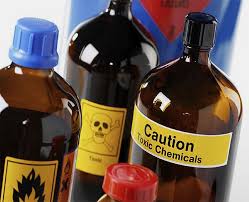
Carelessness in transporting pesticides can lead to broken containers, spills, and contamination. Responsibility for safely transporting pesticides begins upon possession.
Accidents can occur even over short distances, and responsibility lies with the transporter. To prevent transport issues, preparation for emergencies is essential.
The safest method for carrying pesticides is in the back of a truck. Pesticides should never be carried inside a car, van, or truck cab, as spills or hazardous fumes may cause injury or death.
Spills on seat covers are difficult to remove and may cause future contamination if not properly cleaned. Vehicles transporting pesticides in unlocked trunks or open-bed trucks should never be left unattended.
Agrochemicals must be transported in original containers, never alongside food, livestock products, or feed. Containers should be secured to prevent shifting, rolling, or bouncing and protected from moisture that could damage paper or cardboard packages or rust metal.
💬 Have a Farming Question? Join thousands of farmers across Africa on the Agric4Profits Community — ask questions, share experiences and connect with agricultural experts. It is completely free. Ask Your Question Now →
Any spills in or from the vehicle must be cleaned immediately using correct procedures.
Safe Storage Practices for Agrochemicals
Agrochemicals should be packed and loaded to prevent container breakage or spills. Covering agrochemicals protects against excessive heat exposure.
Pesticides must be stored in original, labeled containers, periodically checked for leakage, corrosion, breaks, or tears. Transferring agrochemicals to containers typically used for food or drink (e.g., lemon, milk, coke, juice, or cooking oil bottles) risks mistaken consumption.
Agrochemicals must be separated from food and livestock feeds. Storerooms should remain clean, cool, and well-ventilated to prevent toxic fume accumulation.
Only authorized personnel should access the agrochemical store.
Read Also: Economic Importance, Uses, and By-Products of Mushroom Gills
Safety Guidelines for Spraying Pesticides in Agriculture
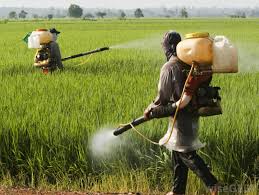
Before applying pesticides, the label must be read carefully. Memory should not be relied upon for details concerning pesticide use. Application equipment should be checked for leaking hoses or connections, plugged or worn nozzles, and seals on filter openings to ensure no chemical spillage.
Equipment must be calibrated before use, adjusted to manufacturers’ specifications and label requirements to ensure proper dosage at the target site.
Before application, all livestock, pets, and people must be cleared from the treatment area. The pest to be controlled should be identified to select the correct pesticide.
📖 Want to Go Deeper on This Topic?
Our expert agricultural ebooks cover poultry, fish farming, different crops production, snail farming, organic farming, mushrooms, sheep, cattle, flowers, pig farming, goat farming, agribusiness, etc. in practical step-by-step detail — written by agricultural professionals for African farmers.
Browse All Farming Ebooks →Protective clothing hand gloves, face masks, laboratory jackets, rain boots must be worn. Mixing or spraying should occur upwind or in the pro-wind direction.
Pesticides should be applied at the recommended rate, early in the morning or evening under suitable weather conditions, avoiding extreme temperatures.
Eating, drinking, or smoking during mixing or spraying is prohibited. Working alone when spraying pesticides should be avoided. Care must be taken to prevent pesticide contamination of water bodies.
Pesticides should not be left unattended in the field. Sufficient water for washing after mixing or application is necessary. Clogged nozzles or holes should not be blown out. Entry to treated areas should be restricted for the required re-entry period.
Operators should rest appropriately after each operation. Empty containers must be disposed of by burying. Containers cannot be cleaned sufficiently for safe use in storing food, water, or as cooking utensils.
Personal Protective Equipment for Safe Pesticide Handling
The need for personal protective equipment depends on the pesticide’s toxicity. For low-toxicity pesticides (category III or IV), ordinary work clothes (long-sleeve shirt and trousers) may suffice, though reserving one set specifically for this purpose is advisable.
Highly toxic pesticides (categories I and II) require coveralls over another layer of clothes or chemical-resistant protective suits.
During handling and spraying, a cotton overall or laboratory coat, face cover or mask, nose air filter or respirator, hand gloves, eye goggles, and rain boots should be worn. A hat or cap is recommended.
Pesticide labels specify personal protective equipment requirements based on toxicity, exposure route, and formulation. For moderately (category II) or highly toxic (category I) pesticides, coveralls over another layer, chemical-resistant gloves, and footwear are necessary to prevent skin exposure.
If the pesticide irritates eyes, goggles, shielded safety glasses, or a face shield should be worn. If coveralls wet through, a chemical-resistant suit or apron is required.
Synthetic rubber boots protect against liquid and dry formulations, while natural rubber boots suit only dry formulations.
Activity, environment, and handler factors influence protective equipment choice. Mixing/loading concentrated pesticides requires extra precautions, though closed systems reduce risk.
Air-blast applications increase applicator exposure, necessitating additional precautions. Pesticides on the head or scrotum are absorbed faster, requiring protective gear. Wind increases outdoor application risks, necessitating wide-brimmed, chemical-resistant hats, face masks, or goggles.
Extreme heat and humidity can cause heat stroke, requiring caution. Terrain, proximity to public places, and open versus closed spaces also influence equipment choice.
Pesticide applicators make final decisions on equipment selection, use, and care, tailored to the pesticide, activity, environment, and personal needs.
Safe Mixing and Filling Practices for Pesticides
Protective gear is critical when mixing and loading undiluted, concentrated pesticides, as accidental poisoning risks are highest during these activities. Pouring concentrates is particularly hazardous, requiring protective clothing and equipment.
Label directions must be followed each time pesticides are mixed, as labels frequently change. Mixing and loading should occur outside or in well-ventilated areas away from people, livestock, pets, and food or feed, preferably on a concrete pad for easy spill cleanup.
Pesticides should not be mixed near water supplies to avoid contamination. If working indoors or at night, well-ventilated areas with good lighting are essential.
Working alone with highly toxic pesticides should be avoided, with visual or voice contact with another person every two hours recommended.
Pesticides must be measured carefully and mixed in appropriate proportions. Different pesticides should not be mixed unless specified on the label or confirmed by an authority. Pesticides should remain in original containers to retain label instructions.
All items used for handling pesticides (measuring utensils, protective equipment) should be labeled to prevent use for other purposes. Overuse of pesticides may increase pest control costs, lead to illegal residues in treated foods, contaminate groundwater, or cause pesticide resistance.
Containers should be opened carefully using scissors to avoid spills. Tools for opening containers must be dedicated to pesticide-related work. When pouring, the head should remain well above the container and spray tank filling hole to avoid splashes. Siphoning pesticides by mouth is prohibited.
During breezes, pouring or mixing should occur with the wind blowing away or from the side. Spray tanks must not be left unattended during filling to prevent overflow.
Anti-siphon devices or an air gap between the filler pipe and tank are necessary. Containers should be closed after use to prevent spills. Spills on the floor or ground must be cleaned immediately to avoid environmental contamination, as some concentrated chemicals may persist in soil for months or years.
Equipment Maintenance for Safe Pesticide Application
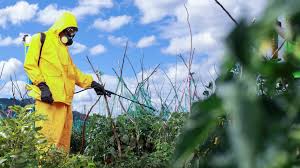
Suitable equipment for pesticide application must be chosen and used correctly. Before use, equipment should be thoroughly checked for proper functioning, with no leaks in hoses, pumps, or tanks.
Loose connections or worn hoses that could leak or burst must be addressed. Operating equipment with clean water at normal pressures before filling with pesticide mixture can identify leaks. Exposed belts, pulleys, or drive chains require guards to prevent injury. Spray tanks need tight lids to avoid splashing or leakage.
The treatment area must be cleared of unprotected people before application. Pesticides can contaminate clothing and soak through to the skin. Working in drift, spray, or runoff without proper protection must be avoided.
When handling hazardous pesticides, working in pairs is recommended, with visual or voice contact every two hours. Clogged hoses or nozzles should be cleared with a nylon bristle brush, not by mouth. Hands and face must be washed thoroughly after pesticide use and before other activities.
Eating, drinking, or smoking during handling is prohibited, as chemicals can transfer from hands to mouth. Smoking in recently treated areas or with pesticide-soiled hands is dangerous, especially with flammable chemicals.
Children, unauthorized persons, and pets must be kept away from sprayers, dusters, filler tanks, storage areas, and old pesticide containers.
Protecting Sensitive Areas During Pesticide Application
Spraying near houses, schools, playgrounds, hospitals, beehives, lakes, streams, pastures, or sensitive crops should be avoided. On windy days, spraying or dusting outdoors is prohibited.
Applications should be planned when people, animals, pets, and non-target pests (e.g., honey bees) are not exposed. Residents and beekeepers must be notified before spraying in their areas and urged to take precautions.
Toys, pet dishes, and windows should be covered or closed, ensuring children and pets are absent during pesticide application. Sensitive indoor areas, such as infants’ rooms, food preparation and storage areas, heating and air conditioning systems, and pet or fish tank locations, must be avoided.
Importance of Cleanup Measures in Pesticide Handling
Mixing, loading, and application equipment must be cleaned immediately after use. Cleaning should occur in a designated area with a wash rack or concrete apron equipped with a sump to catch contaminated wash water.
Wash water containing registered pesticides should be used as directed on the label, ideally to dilute the pesticide or a compatible pesticide. Waste from equipment cleanup must be kept out of water supplies and streams.
Equipment must be thoroughly cleaned between applications to prevent accidental injury or death to sensitive plants or animals from residual pesticides.
Both the interior and exterior, including nozzles, should be cleaned by trained personnel wearing proper personal protective equipment. External cleaning prevents exposure to those touching the equipment, while internal cleaning avoids dangerous chemical mixing.
At the end of each day, a thorough shower with soap, including scrubbing nails, is necessary. Pesticide-soiled protective equipment should be placed in a designated area away from people, pets, and family laundry.
Washable clothing must be laundered separately daily, including regular work clothes worn under coveralls and garments directly exposed to pesticides. Disposable or limited-use garments should not be reused.
Cleaning Pesticide-Soiled Clothing for Safe Reuse
Spray clothing must be changed and washed daily to prevent harm to others who may touch it. Pesticide-soiled clothing should be kept separate from family laundry, and the person washing it must be warned of potential dangers and wear chemical-resistant gloves.
Children should not play near contaminated clothing, and dry-cleaning such clothing is prohibited. Recommended cleaning procedures include:
- Hanging garments outdoors to air, as sunshine and ventilation aid pesticide breakdown. Contaminated garments should not be hung with uncontaminated ones or near residences or areas frequented by people or pets.
- Washing garments separately from family laundry to prevent pesticide transfer to other clothing, equipment, or the washer’s hands.
- Washing contaminated garments two or three times before reuse for thorough pesticide removal.
- Hanging washed garments outdoors to avoid contaminating dryers and encourage further chemical dissipation.
Safe Re-Entry into Treated Agricultural Areas
Unprotected individuals must wait until the appropriate time to enter a treated area, known as the entry restriction period, which may be specified on pesticide labels.
When no restricted entry times are provided, entry should be delayed until sprays dry, dusts settle, and vapors disperse. For early re-entry after spraying:
- All necessary personal protective equipment required on the label must be worn.
- Treated surfaces should not be touched.
- Decontamination water must be available nearby, with knowledge of its use.
Some highly toxic pesticides (organophosphates and carbamates) have legally specified entry restrictions of 24 or 48 hours, listed on labels. Longer re-entry times may apply due to specific climatic conditions or other hazards.
Do you have any questions, suggestions, or contributions? If so, please feel free to use the comment box below to share your thoughts. We also encourage you to kindly share this information with others who might benefit from it. Since we can’t reach everyone at once, we truly appreciate your help in spreading the word. Thank you so much for your support and for sharing!
🌱 Take Your Farming Further With Agric4Profits
Based on what you just read, here are free resources and products from Agric4Profits that can help your farm right now:
- 🛒 Visit Our Marketplace — Organic neem oil, bio-pesticides, seeds and farming products
- 📚 Read Premium Content — Advanced guides for serious and profitable farming
- 🎓 Join Our Free Academy — Structured free training for farmers across Africa
- 🔧 Use Our Free Farm Tools — Profit calculators, feed formulation, pest identifier and more
- 💬 Join Our Farming Community — Connect with farmers across all 54 African countries
- ❓ Ask a Farming Question — Get answers from experienced farmers and agricultural experts
Please cite this content in academic work, research, or publications.