


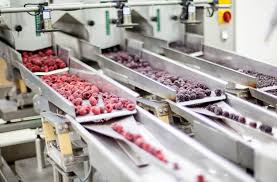
Food processing transforms raw materials into finished products, generating significant by-products and waste. Proper utilization and disposal of these materials are critical for maintaining a clean environment and maximizing resource efficiency.
This article examines the types of by-products from food processing industries, the importance of their utilization, and the benefits of repurposing these materials.
Definition of Food By-Products and Waste
Food waste refers to food intended for consumption that is discarded along the food supply chain and cannot be consumed. By-products, however, are secondary products derived from primary agro-food production processes, serving as an affordable source of potentially functional ingredients, such as animal feed, organic manure, and components for value-added products.
Many food by-products are not true waste but additional resources that augment existing natural materials. Recycling, reprocessing, and utilizing these by-products offer the potential to return them to beneficial uses, reducing detrimental environmental effects.
In this article, the terms “by-products” and “waste” are used interchangeably. Food industries are increasingly focused on waste management and recycling through valorization, utilizing by-products and discarded materials to develop new value-added products for commercial applications.
Valorization enables the reuse of nutrients in primary production, highlighting potential gains. In developing countries, food production and processing generate high levels of waste and by-products, which are rich in valuable compounds like proteins, lipids, starch, micronutrients, bioactive compounds, and dietary fibers.
Fruit by-products, such as bagasse, peels, trimmings, stems, shells, bran, and seeds, account for over 50% of fresh fruit and often have higher nutritional or functional content than the final product. In the meat processing industry, by-products include blood, bones, some internal organs, and hides.
Points of Food By-Product and Waste Generation
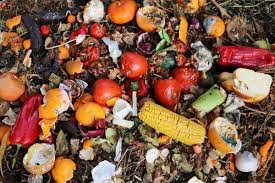
Five system boundaries in the food supply chain (FSC) are primarily responsible for generating waste:
1. Agricultural Production: Losses occur due to environmental conditions, mechanical damage, or spillage during harvest operations (e.g., threshing, fruit picking), curing/pre-treatments, on-farm temporary storage, and crop sorting.
2. Postharvest Handling and Storage: Losses result from spillage and degradation during handling, storage, and transportation between farm and distribution.
3. Processing: Losses occur due to spillage and degradation during industrial or domestic processing, such as juice production, canning, and bread baking, or from sorting crops unsuitable for processing, washing, peeling, slicing, boiling, process interruptions, or accidental spillage.
4. Distribution: Losses and waste arise in market systems, including wholesale markets, supermarkets, retailers, and wet markets.
5. Consumption: Losses and waste occur during household consumption.
Importance of Food By-Product and Waste Utilization
1. Reduction of Environmental Pollution
Improper disposal of food by-products leads to environmental pollution and degradation. For instance, waste plastic materials from food industries pose serious environmental challenges.
Inappropriate disposal of food waste contributes to greenhouse gas emissions, significantly impacting climate change, occupying landfill space, contaminating freshwater, and increasing carbon footprints.
2. Cost Reduction
The cost of disposing of by-products and waste can be substantial for the food industry. Recycling these materials is often more cost-effective.
3. Income Generation
Utilizing food by-products generates additional income for processors. For example, palm kernel cake from the vegetable oil industry can be sold to livestock feed producers. Valuable products like enzymes and coloring materials can also be extracted from such wastes.
Types of Waste from Food Processing Operations
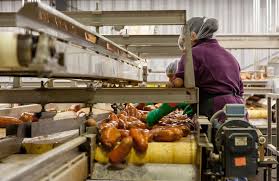
Food processing generates various types of waste, including:
1. Food Wastes: Shavings, peelings, stones, and animal by-products, in addition to wasted food.
2. Packaging Waste: Packaging from incoming materials and waste product packaging.
3. Wastewater and Liquid Effluent: Liquid waste from processing operations.
4. Gaseous Wastes: Emissions like carbon dioxide from the brewery industry, steam, and smoke from the bakery industry.
Categories and Operations Generating Food Processing Waste
| Category | Operations | Wastes |
|---|---|---|
| Raw Material Preparation | Cleaning, Sorting, Grading, Peeling | Cleaning water effluent, peelings, hair, feathers, grit, blood, contaminated foodstuffs |
| Size Reduction | Chopping, Cutting, Slicing, Dicing, Milling, Pulping, Emulsification, Homogenization | Poor quality (too coarse/fine) product, loss of nutritional/sensory characteristics, dust, agglomerates, waste off-cuts, fat-bearing effluents, risk of pathogenic contamination |
| Mixing and Forming | Mixing, Forming | Malformed pieces, wrongly proportioned batches, poorly mixed ingredients |
| Separation and Concentration | Centrifugation, Filtration, Expression, Solvent Extraction, Membrane Concentration | Separated solids (e.g., after liquid clarification), press residues (e.g., fruit juice extraction) |
| Fermentation and Enzyme Use | Fermentation, Enzyme Technology | Spent biomass |
Utilization of Food By-Products and Waste
1. Applications of Food By-Products
i. Livestock Feeding: Many by-products, rich in nutrients, serve as affordable feed or feed ingredients for livestock like poultry, pigs, and ruminants. Examples include fruit and vegetable peels, soybean residue, brewer’s yeast waste, and brewer’s spent grain.
ii. Compost Manure: Biodegradable food wastes, containing nitrogen and phosphorus, can be used as organic manure to improve crop yields.
iii. Production of Value-Added Products: Fruit peels, rich in fiber, can be incorporated into high-fiber foods. Antioxidant-rich phytochemicals from fruit and vegetable by-products are used to produce functional foods, which provide health benefits beyond basic nutrition.
iv. Renewable Energy Sources: By-products can be converted into biogas and biofuel.
v. Special Products: Vinegar, a widely used seasoning, is produced from food by-products and applied in sauces, ketchups, and mayonnaise. It also has anti-infective, antitumor, and hyperglycemic properties. Bromelain, an enzyme used as a meat tenderizer, can be recovered from pineapple waste (core, peel, stem). Antioxidants like ascorbic acid, phenolics, and flavonoids prevent or inhibit oxidation in the human body and food products.
vi. Bioadsorbents for Water Treatment: Food by-products can be used to develop bioadsorbents for treating wastewater.
Food waste refers to discarded food intended for consumption, while by-products are secondary products from primary agro-food production processes, such as fruit peels, seeds, bagasse, blood, bones, and fat trimmings.
By-product utilization is critical for reducing environmental impact and generating additional revenue through value-added products like enzymes, vinegar, biofuel, and bioadsorbents.
This article has covered the definition of food waste and by-products, points of waste generation along the food supply chain, the importance of by-product utilization, typical wastes in food processing, and their applications.
Do you have any questions, suggestions, or contributions? If so, please feel free to use the comment box below to share your thoughts. We also encourage you to kindly share this information with others who might benefit from it. Since we can’t reach everyone at once, we truly appreciate your help in spreading the word. Thank you so much for your support and for sharing!