


If you are running a hatchery or managing a breeder flock, hatchability is one of the numbers you watch most closely. It tells you how well your incubation program is working and how healthy and productive your breeder stock is.
A good flock should consistently produce a hatchability rate of between 80% and 90%. Anything below that is a signal that something in your system needs to be reviewed.
But hatchability does not happen in isolation. It is the result of several factors working together, and a weakness in any one of them can pull your numbers down. Some of these factors are biological, some are genetic, some are nutritional, and some come down entirely to how the farm is managed from day to day.
Understanding what drives hatchability helps you take better control of your results. It helps you ask the right questions when things go wrong. Are your breeders healthy? Is your mating ratio correct? Are your eggs being stored properly before they go into the incubator? Are you collecting eggs frequently enough? These are the kinds of questions this article helps you answer.
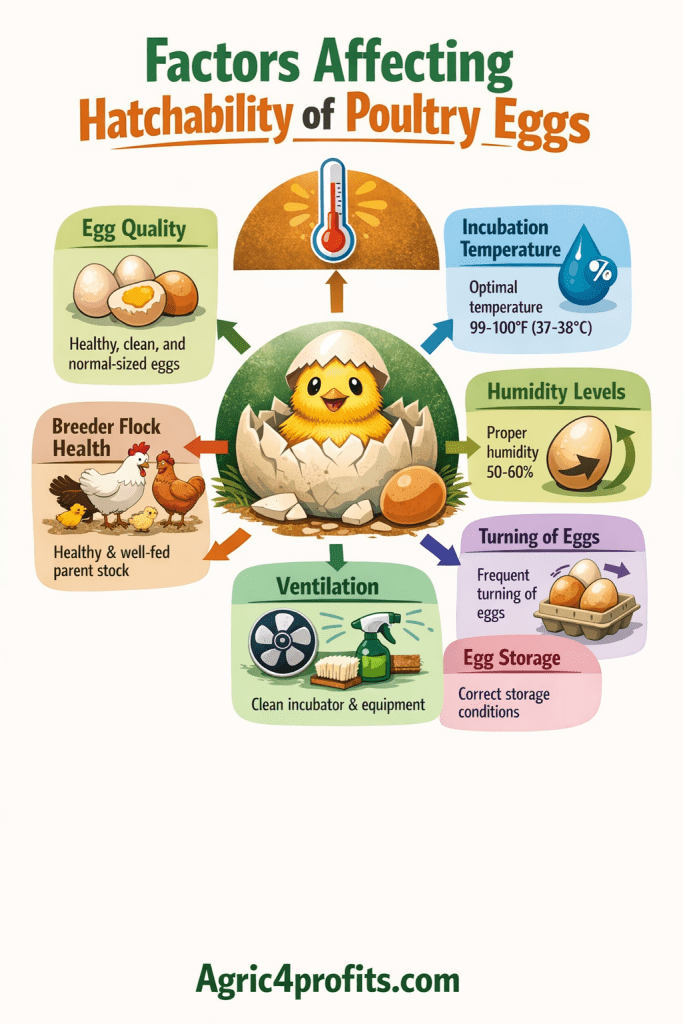
There are six main factors that affect the hatchability of poultry eggs during incubation. Each one plays a specific role, and each one can be managed with the right knowledge and practices. This article breaks them down one by one so you understand not just what they are, but why they matter and what you can do about them.
The six factors are:
i. Fertility
ii. Genetic factors
iii. Nutrition
iv. Disease
v. Egg selection
vi. Management practices
1. Fertility
Fertility is the foundation of hatchability. If the eggs are not fertile, nothing else in the incubation process matters. Percentage fertility refers to the proportion of eggs that are actually fertile, and for a good flock, this should be between 90% and 95%.
Several things influence whether your eggs are fertile or not:
A. Mating Ratio
A mating ratio of 10 hens to 1 rooster is the recommended standard. If the ratio of hens to roosters is higher than this, meaning there are too few males in the flock, the fertility rate of the eggs will drop. Each rooster can only mate with so many hens effectively, so having the right balance is important.
B. Age of Breeders
Fertility naturally declines as birds get older. Younger breeders that are in their productive prime will generally produce more fertile eggs than older birds. Keeping track of the age of your breeder flock helps you plan replacements before fertility drops too far.
C. Length of the Period Between Mating
A mated hen stores sperm and can use it for up to 2 weeks. This means that even after a single mating, a hen can continue to produce fertile eggs for a period of time.
However, it takes about 2 weeks after introducing the male to the flock before satisfactory fertility levels are reached. And once the male is removed, fertility begins to decline within 2 weeks. After 3 weeks without a male, very few fertile eggs will be produced.
2. Genetic Factors
Hatchability is an inherited trait. This means the strain or breed of bird you are working with has a built-in tendency toward either high or low hatchability. Strains that are known for high hatchability should be selected for breeding programs where hatch rates are a priority.
Other genetic considerations include:
i. In-breeding without selecting for hatchability has been shown to lower hatch rates over time. Keeping too narrow a genetic pool without actively selecting for hatchability will work against you.
ii. Crossbreeding, on the other hand, usually results in increased hatchability. Bringing together two different lines can produce offspring that hatch more reliably than either parent line.
iii. Lethal or semi-lethal genes can affect fertility, hatchability, and the overall survival of the chick after hatching. Responsible selection and testing can help identify and remove these from the breeding population.
iv. Rate of egg production also plays a role. Eggs laid by hens producing at a high rate tend to be more fertile than those laid by low producers.
v. Age at peak hatchability differs between males and females. For females, hatchability reaches its maximum around halfway through the second laying year. For males, the peak is roughly one year after sexual maturity.
3. Nutrition
The egg must contain all the nutrients the embryo needs to develop from fertilization to hatching. The hen cannot pass on what she does not have. This means breeder hens must be fed rations that supply adequate quantities of all the essential nutrients required for proper embryo development.
Deficiencies in vitamins, minerals, amino acids, or energy in the breeder diet can lead to poor embryo development, increased embryo mortality during incubation, and lower overall hatch rates. Nutrition for breeder flocks is not the same as nutrition for production flocks, and the feed program should reflect that difference.
4. Disease
Hatching eggs should only be collected from healthy flocks. Some disease-causing organisms, particularly Salmonella and Mycoplasma, are transmitted from infected hens to their chicks mainly through the egg itself. This means a sick hen does not just produce fewer fertile eggs. She can pass the disease on directly to the next generation of chicks before they even hatch.
Breeding stocks should be tested regularly to detect and address infections before they spread through the hatchery. Biosecurity practices at both the breeder farm and the hatchery are an important line of defense against disease transmission.
Read Also: 4 Ways to add Value to your Poultry Eggs for more Profit
5. Egg Selection
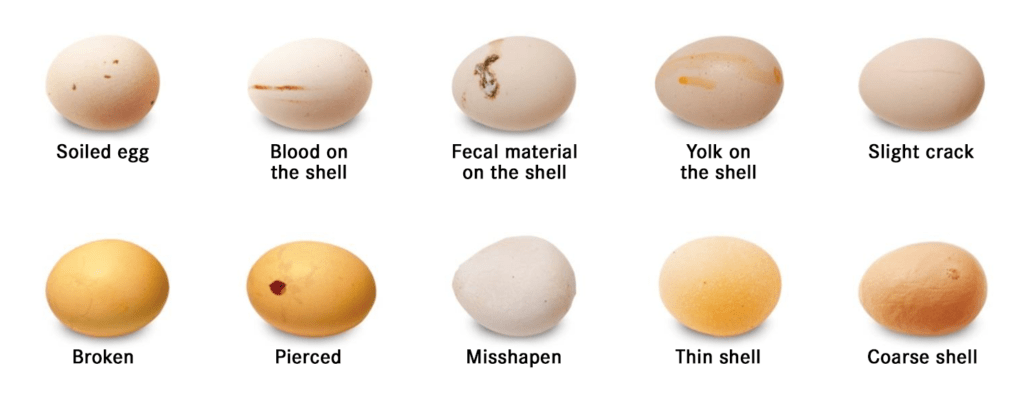
Not every egg that is laid is suitable for incubation. Certain physical characteristics of an egg are directly linked to how well it will hatch. Selecting the right eggs before they go into the incubator is one of the simplest ways to improve your hatch rate.
The key physical characteristics to assess during egg selection are:
i. Size: Eggs that are too small or too large tend to hatch poorly compared to eggs of a standard size.
ii. Weight: The ideal egg weight for hatching is between 50 and 60 grams. Eggs outside this range should be set aside.
iii. Shape: Eggs that are abnormally shaped, whether too round, too pointed, or misshapen in any way, should not be used for incubation.
iv. Shell quality: Thin shells, cracked shells, rough textures, or eggs with irregular surface quality should be rejected. A good shell is essential for protecting the embryo and regulating moisture exchange during incubation.
v. Internal quality: Internal quality refers to the condition of the albumen and yolk inside the egg. Poor internal quality eggs are less likely to produce viable chicks.
6. Management Practices
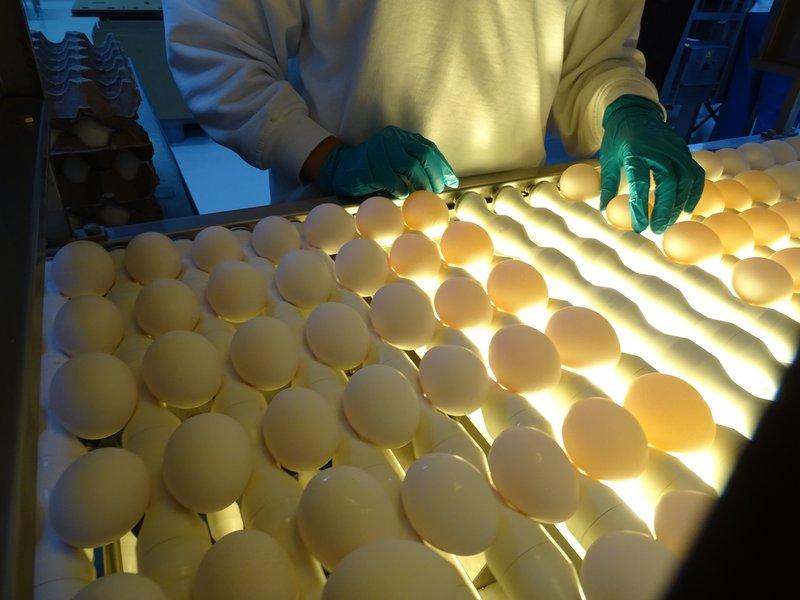
Even with fertile, genetically sound, well-nourished eggs from a healthy flock, poor management practices can still ruin your hatch. How eggs are handled from the moment they are laid to the moment they go into the incubator has a significant impact on hatchability.
Key management practices that affect hatchability include:
A. Egg Collection
Eggs for hatching should be collected immediately after laying and stored below 20°C. This arrests embryonic development and prevents the egg from beginning to develop outside of a controlled environment. Eggs should be collected at least 3 times daily to reduce the time they spend in the nest where temperatures may be unsuitable.
B. Egg Storage
Fertile eggs deteriorate in quality after 4 days. For best results, fertile eggs should be stored at a temperature of around 10°C and a humidity level of 80%. Eggs should be stored with the broad end facing upward. Storing them incorrectly accelerates quality loss and reduces hatchability.
C. Hygiene
Soiled eggs should be rejected or fumigated with a formalin solution before going into the incubator. Dirty eggs carry bacteria that can contaminate the incubator, infect developing embryos, and spread disease to newly hatched chicks. Proper hygiene must be maintained throughout the hatchery at all times.
Read Also: Nutritional Diseases of Poultry: Symptoms, Control, and Treatments
Summary on Factors Affecting Hatchability of Poultry Eggs
| Factor | Key Points |
|---|---|
| Fertility | Should be 90 to 95% for a good flock. Affected by mating ratio, age of breeders, and time since last mating. |
| Mating Ratio | 10 hens to 1 rooster is recommended. A higher ratio reduces fertility. |
| Sperm Storage | A hen stores sperm for up to 2 weeks. Fertility begins to decline 2 weeks after the male is removed. |
| Genetic Factors | Hatchability is inherited. Select strains with high hatchability. Crossbreeding improves hatch rates while inbreeding reduces them. |
| Lethal Genes | Can reduce fertility, hatchability, and livability. Should be identified and removed through selection. |
| Peak Hatchability by Age | Females peak halfway through the second laying year. Males peak one year after sexual maturity. |
| Nutrition | Breeder hens must be fed rations with all nutrients needed for embryo development. Deficiencies lower hatch rates. |
| Disease | Eggs should come from healthy flocks. Salmonella and Mycoplasma are transmitted through the egg. Regular testing is essential. |
| Egg Selection | Ideal weight is 50 to 60 grams. Eggs must have the right size, shape, shell quality, and internal quality. |
| Egg Collection | Collect at least 3 times daily. Store below 20°C immediately after collection to arrest development. |
| Egg Storage | Store at 10°C and 80% humidity, broad end up. Quality deteriorates after 4 days. |
| Hygiene | Soiled eggs should be rejected or fumigated with formalin. Clean hatchery conditions prevent disease spread. |
Frequently Asked Questions About Factors Affecting Hatchability of Poultry Eggs
1. What is hatchability in poultry farming?
Hatchability is the percentage of incubated eggs that successfully hatch into live chicks. A well-managed flock should produce a hatchability rate of between 80% and 90%. Rates below this indicate problems with one or more of the six factors that affect hatchability.
2. What is the ideal percentage fertility for a good breeder flock?
Percentage fertility for a good flock should be between 90% and 95%. This means that out of every 100 eggs laid, at least 90 to 95 of them should be fertile. Fertility below this level suggests issues with mating ratio, age of breeders, or the time between mating events.
3. What is the recommended mating ratio for poultry?
The recommended mating ratio is 10 hens to every 1 rooster. If there are too few roosters relative to the number of hens, not all eggs will be fertilized properly and the fertility rate will drop below acceptable levels.
4. How long can a hen produce fertile eggs after mating?
A mated hen stores sperm and can produce fertile eggs for up to 2 weeks after a single mating. However, once the rooster is removed from the flock, fertility begins to decline within 2 weeks, and very few fertile eggs will be produced after 3 weeks without a male present.
5. How do genetics affect hatchability?
Hatchability is an inherited trait. Birds from strains selected for high hatchability will consistently outperform those that have not been selected for this trait. Inbreeding without selecting for hatchability reduces hatch rates over time, while crossbreeding generally improves them. Lethal or semi-lethal genes in the breeding population can also reduce hatchability and the survival of chicks after hatching.
6. Why is nutrition important for hatchability?
The egg must contain all the nutrients the embryo needs to develop from fertilization to hatching. If the breeder hen is not getting the right balance of vitamins, minerals, amino acids, and energy in her diet, the eggs she lays will be nutritionally deficient. This leads to poor embryo development and higher embryo mortality during incubation.
7. What diseases affect hatchability in poultry?
Salmonella and Mycoplasma are two of the most important disease-causing organisms that affect hatchability because they are transmitted from infected hens directly through the egg. This means chicks can be born infected even before they hatch. Breeding stocks should be tested regularly and infected birds removed to protect hatchability and chick health.
8. What physical characteristics should be checked when selecting eggs for incubation?
When selecting eggs for incubation, check for the right size and weight (ideally between 50 and 60 grams), a normal oval shape, good shell quality with no cracks or thin spots, and good internal quality. Eggs that fall outside these standards should not be set in the incubator as they are less likely to hatch successfully.
9. How should hatching eggs be stored before going into the incubator?
Hatching eggs should be collected at least 3 times daily and stored below 20°C immediately after collection to stop embryonic development. For longer storage, keep eggs at around 10°C and 80% humidity, with the broad end facing upward. Egg quality deteriorates after 4 days of storage, so the sooner eggs go into the incubator the better.
10. Why should soiled eggs be rejected or fumigated before incubation?
Dirty eggs carry bacteria on their shells that can enter the incubator and contaminate the environment inside. This can infect developing embryos, kill them before they hatch, or spread disease to newly hatched chicks. Soiled eggs should either be rejected outright or fumigated with a formalin solution to reduce the bacterial load before being set in the incubator.
Do you have any questions, suggestions, or contributions? If so, please feel free to use the comment box below to share your thoughts. We also encourage you to kindly share this information with others who might benefit from it. Since we can’t reach everyone at once, we truly appreciate your help in spreading the word. Thank you very much for your support and for sharing!
Read Also: Feed and Nutrition Management for Cattle