


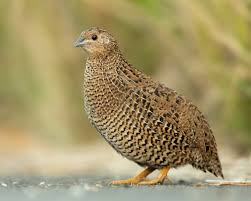
Quails are small, short-tailed game birds classified under the families Phasianidae and Odontophoridae, belonging to the order Galliformes. There are roughly 130 species of quails across the world, and they generally resemble partridges but are smaller and less robust in build.
One of the most well-known species is the common quail, scientifically known as Coturnix coturnix, also called the European quail. It is a small ground-nesting bird in the pheasant family Phasianidae. This species is mainly migratory, breeding in the western Palearctic and spending winters in Africa and southern India. It is more often heard than seen, recognized by its distinctive call that sounds like “wet my lips.”
Quail farming refers to the practice of raising quails commercially for the purpose of egg and meat production. It is one of the easiest, most affordable, and most profitable poultry ventures a farmer can start. Quails are among the smallest poultry birds, which makes them simple to house and manage. Japanese scientists were the first to domesticate wild quails and develop methods for raising them as productive farm birds. Since then, commercial quail farming has spread across Japan and now throughout the world.
Quail farming works well in almost all weather conditions, making it accessible to farmers in different regions. The meat and eggs of quails are not only tasty but also highly nutritious. They are considered suitable for people with diabetes and are rich in protein, phosphorus, iron, and vitamins A, B1, and B2, making quail eggs more nutritious than eggs from most other poultry birds. The business requires relatively low startup capital and minimal labor, and quails can even be raised alongside other poultry birds on the same farm.
Read Also: Quail Eggs – The Super Food (34 Amazing Health Benefits)
1. Management of Quails
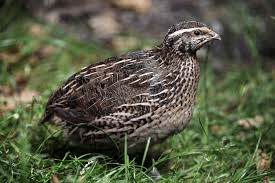
Good management is the foundation of a successful quail farm. Understanding the behavior and physical development of quails at different stages helps you make better decisions.
i. Weight at six weeks: At six weeks of age, female quails typically weigh between 175 and 200 grams, while males weigh about 125 to 150 grams.
ii. Egg laying age: Females begin laying eggs at 7 weeks of age and continue up to 22 weeks.
iii. Laying time: Quails typically lay their eggs during the evening hours of the day.
iv. Egg weight: A quail egg usually weighs between 9 and 10 grams, and can reach up to 12 grams with proper nutrition and care.
v. Physical distinction between male and female: The male quail has a narrow breast covered with evenly distributed brown and white feathers. The female has a broader breast covered with brown feathers marked with black dots.
vi. Separation age: Male and female quails should be separated at 4 weeks of age to prevent fighting and injury.
vii. Lighting requirement: Egg-laying quails need at least 16 hours of light per day to maintain optimal production.
2. Reproduction
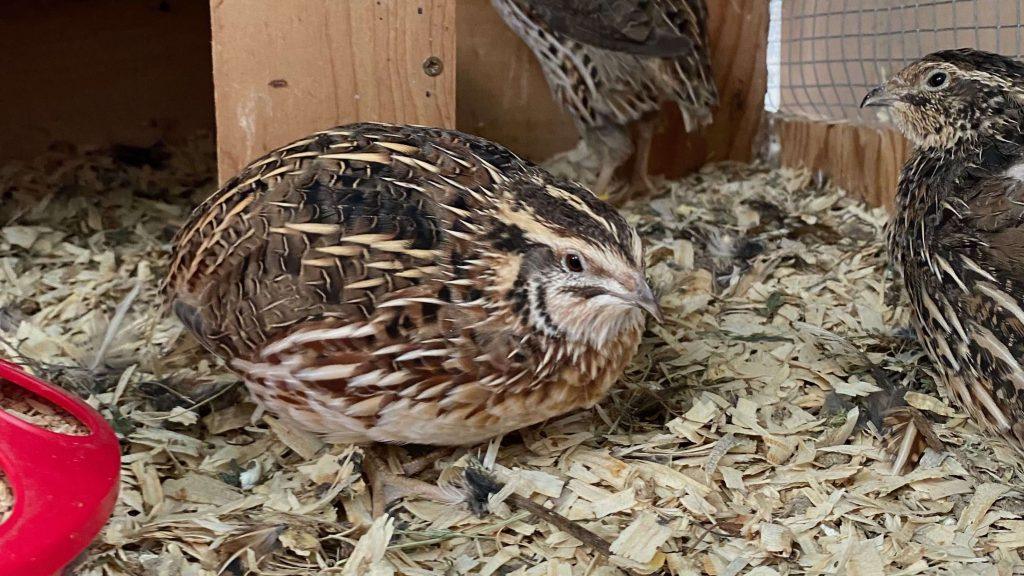
Understanding the reproductive behavior of quails is important for farmers who want to produce fertile eggs and grow their flock.
i. Egg production start: Quails begin laying eggs from the 7th week of age and reach 50 percent egg production by the 8th week.
ii. Fertile egg production: To produce fertile eggs, males should be kept together with females between 8 and 10 weeks of age.
iii. Male to female ratio: The recommended ratio is 1 male to 5 females for effective fertilization.
iv. Incubation period: Quail eggs take 18 days to hatch.
v. Chick production estimate: With 500 females, a farmer can produce up to 1,500 chicks per cycle.
Read Also: Comprehensive Guide on How to Start Cockerel Farming Business
3. Facts About Diseases of Quails
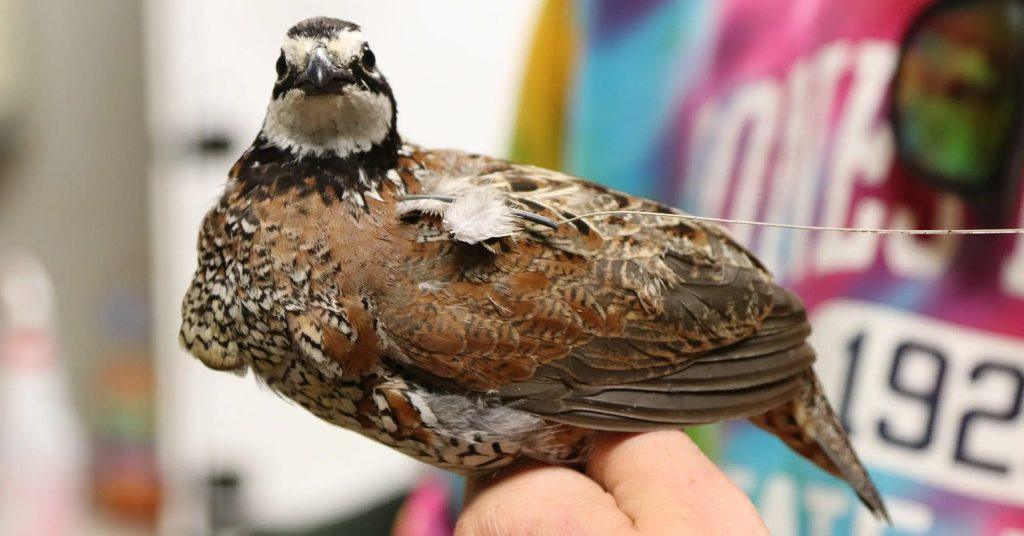
One advantage of quail farming is that quails are generally more resistant to infectious diseases than chickens. However, there are still health considerations every farmer should be aware of.
i. Vitamin and mineral deficiency: When breeder females lack adequate vitamins and minerals in their diet, chicks hatched from their eggs tend to be lean with weak legs.
ii. Prevention through nutrition: To prevent this, breeder females must be given feed that contains the right balance of vitamins and minerals at all times.
iii. Disease resistance: Quails are naturally resistant to most infectious diseases, and unlike chickens, they generally do not require routine vaccination.
iv. General disease prevention: Proper chick management, regular disinfection of the farm premises, access to clean drinking water, and feeding quality concentrate feed are the main ways to keep disease outbreaks from occurring on the farm.
4. Rearing
Rearing quails requires attention to how males and females interact, especially when housed together.
i. Male quail noise: Male quails produce a distinct sound that can be disruptive and uncomfortable for people living or working nearby. This is worth considering when choosing the location of your farm.
ii. Male aggression: When male and female quails are reared together without proper management, the males tend to peck at other birds aggressively. This can cause blindness in affected birds and, in some cases, death.
Summary on Facts About Quails (Coturnix coturnix)
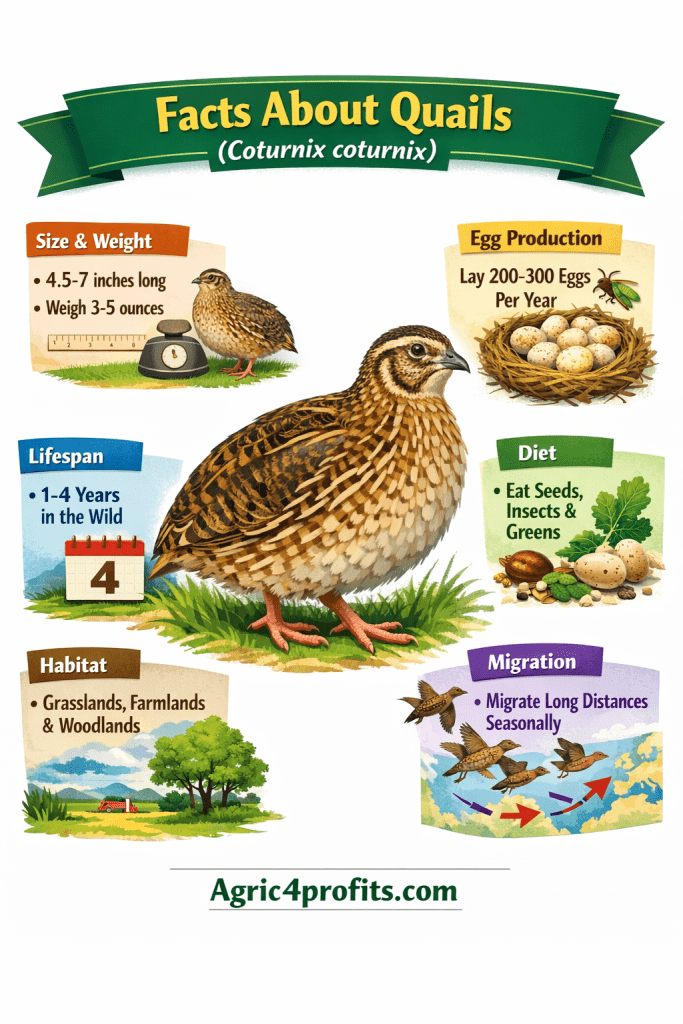
| Topic | Key Points |
|---|---|
| Classification | Small game birds under families Phasianidae and Odontophoridae |
| Common species | Coturnix coturnix (European quail) |
| Origin of domestication | Japan |
| Female weight at 6 weeks | 175 to 200 grams |
| Male weight at 6 weeks | 125 to 150 grams |
| Egg laying starts | 7th week of age |
| Egg weight | 9 to 12 grams |
| Incubation period | 18 days |
| Male to female ratio | 1:5 |
| Light requirement | 16 hours per day for laying birds |
| Disease resistance | Higher than chickens, no routine vaccination needed |
| Separation age | Male and female separated at 4 weeks |
Frequently Asked Questions About Quail Farming
1. How profitable is quail farming compared to chicken farming?
Quail farming can be just as profitable as chicken farming, and in some cases more so, because startup costs are lower, quails mature faster, and they require less space and feed to produce eggs and meat.
2. What do quails eat on a farm?
Quails do well on a balanced concentrate feed formulated for poultry. Their diet should contain adequate protein, vitamins, and minerals to support growth, egg production, and overall health.
3. How many eggs does a quail lay per year?
A well-managed quail hen can lay between 250 and 300 eggs per year under good conditions, which is impressive for such a small bird.
4. Can quails be raised indoors?
Yes. Quails adapt well to indoor cage systems. In fact, cage rearing is one of the most common methods used in commercial quail farming because it makes management and egg collection easier.
5. Do quails need vaccination?
Generally, quails are more resistant to infectious diseases than chickens and do not require routine vaccination. However, maintaining good hygiene and biosecurity on the farm remains essential.
6. At what age are quails ready for meat production?
Quails raised for meat are typically ready for processing between 5 and 6 weeks of age, which makes them one of the fastest-maturing poultry birds available.
7. How much space do quails need?
Quails are small birds and do not need a lot of space. In cage systems, about 150 to 200 square centimeters per bird is generally sufficient, depending on the stage of production.
8. Why are quail eggs considered more nutritious than chicken eggs?
Quail eggs contain higher concentrations of protein, phosphorus, iron, and vitamins A, B1, and B2 compared to chicken eggs. They are also considered beneficial for people with certain health conditions, including diabetes.
9. Can I raise quails alongside other poultry birds?
Yes. Quails can be raised on the same farm as other poultry birds, though it is advisable to house them separately to avoid disease transmission and stress from mixing species.
10. What is the biggest challenge in quail farming?
One of the main challenges is managing male aggression. Males can peck at other birds and cause injury or death if not separated or properly managed. Noise from male quails can also be a concern for farms located near residential areas.
Do you have any questions, suggestions, or contributions? If so, please feel free to use the comment box below to share your thoughts. We also encourage you to kindly share this information with others who might benefit from it. Since we can’t reach everyone at once, we truly appreciate your help in spreading the word. Thank you very much for your support and for sharing!
Read Also: How to Control and Prevent Disease on Poultry Farms