



Groundnut, also called peanut, remains a valuable crop in Malawi because it feeds families, brings cash, and fits small farms. However, profit appears only when you measure costs, yield, and market prices carefully.
Too many farmers depend on memory and rough estimates, so they never know whether the farm earns well or quietly loses money. A clear plan, supported by the Farm Profit Calculator, fixes that problem.
This guide shows how groundnut farming works in Malawi, what farmers spend, how revenue grows, and how the free FarmSmart Business Planner improves decision-making. It also points you towards useful Agric4Profits tools for planning.
Groundnut farming suits many small plots, especially where families want a crop that improves soil and brings returns within one season. Still, the crop rewards careful spacing, timely weeding, and good pest control.
If you want better results, keep records, compare prices, and plan ahead with tools such as the Market Price Tracker, the Soil and Fertility Guide, and the Crop Spacing and Seed Rate Calculator.
Groundnut (Peanut) Farming in Malawi
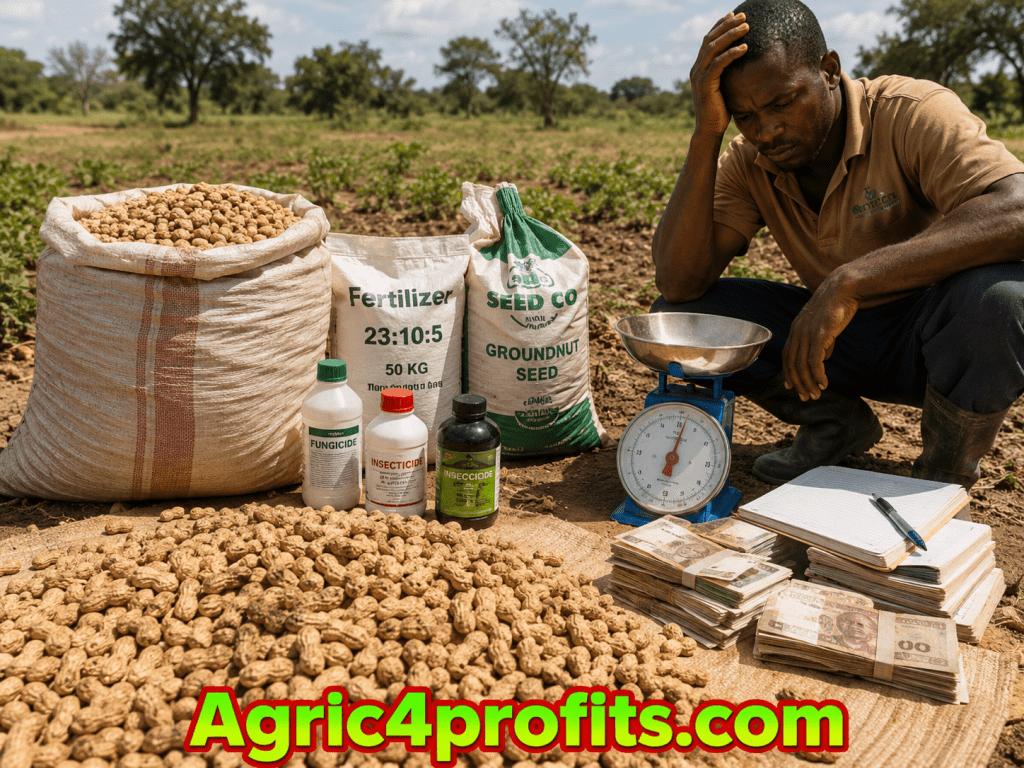
1. Malawi gives groundnut farmers a climate, especially in areas with seasonal rainfall and warm temperatures. When land is prepared early, farmers improve germination, reduce weed pressure, and raise the chance of a strong harvest.
🌿 Go Organic on Your Farm: Instead of harmful chemical pesticides and fertilisers, try our organic farming products — including neem oil spray, bio-pesticides, natural plant treatments, organic seeds and seedlings, suckers, and many more organic products that are safe for your health, your family, your soil and your harvest. Shop Now →
2. Many households grow groundnut for food, but the crop also supports cash income, especially when farmers sell into active local markets. Linking production with the Market Price Tracker helps them choose better selling moments.
3. Groundnut improves soil structure because it belongs to the legume family and can support later crops through nitrogen fixation. Farmers who rotate fields with maize or vegetables protect soil fertility and reduce long-term costs.
4. Good seed selection matters because healthy seed gives stronger emergence, better pod development, and fewer losses during establishment. The Crop Spacing and Seed Rate Calculator helps farmers match seed needs to land size.
5. Farmers should also watch for aflatoxin risks, because poor drying and bad storage can reduce quality and market value. Careful drying on clean surfaces, followed by dry storage, protects income and household food safety.
🔧 Free Farm Tool Available: Use our free Agric4Profits Farm Tools to calculate your farm profits, formulate feeds, identify pests and diseases on both your crops and animal farms, plan your planting and harvesting season, including many more farm tasks to get free expert advice and recommendations — completely free, no registration required. Access Free Tools →
6. Labour needs remain manageable for smallholders, yet they still require planning for land clearing, planting, weeding, harvesting, and shelling. Families that organise work early often avoid rushed field operations and expensive last-minute labour.
7. Transport matters as much as production because poor roads, distant buyers, and delayed delivery can eat into profit. Using the Market Access and Transport Tool helps farmers understand true net returns.
8. In Malawi, the most successful farmers treat groundnut as a business, not only as a household crop. They record inputs, monitor field performance, and use planning tools before planting, selling, or expanding their acreage.
Read Also: Snail Farming Step-by-Step Beginners Guide
The Real Costs of Groundnut (Peanut) Farming in Malawi

1. Groundnut farming starts with spending before income arrives, so farmers need to know every input clearly. The Farm Finance Calculator helps them compare actual cash outflow with expected seasonal returns.
💬 Have a Farming Question? Join thousands of farmers across Africa on the Agric4Profits Community — ask questions, share experiences and connect with agricultural experts. It is completely free. Ask Your Question Now →
2. Seed costs vary depending on whether farmers save seed from a healthy harvest or buy improved seed from suppliers. The Crop Production Calculator helps estimate yield and input cost together.
3. Land preparation may involve clearing, ridging, and marking rows, and each activity carries labour or machinery costs. Farmers who measure their plots accurately with the Farm Land Measurement and Unit Converter avoid costly mistakes.
4. Fertiliser choices also affect profit, because some farmers use compost while others buy mineral fertiliser for quicker results. The Composting and Organic Input Calculator helps those who prefer organic inputs plan better.
5. Pest control costs may look small at first, yet they become serious when aphids, beetles, or storage pests attack the crop. Regular scouting with the Pest and Disease Identifier can reduce expensive crop losses.
6. Weeding and harvesting consume labour, and labour often becomes the largest seasonal expense on a small farm. Families that schedule work early usually spend less than farmers who wait until weeds force urgent action.
7. Drying and storage also matter, because poor handling can reduce quality and lower the final selling price. The Storage and Loss Calculator helps farmers see how much value they lose after harvest.
8. When farmers combine all costs honestly, they can calculate their true break-even point and judge whether the farm is underperforming. That habit leads to stronger pricing decisions and better planning for the next season.
What the FarmSmart Business Planner Does for Your Groundnut (Peanut) Farm
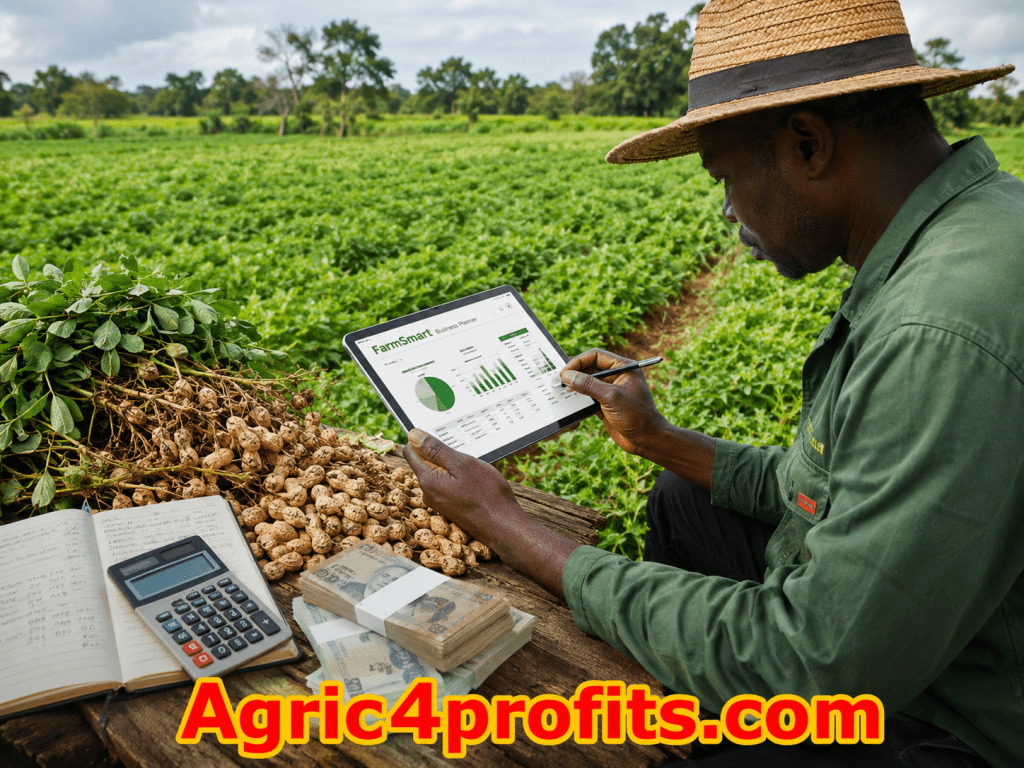
1. The free FarmSmart Business Planner helps farmers enter their figures and see a clearer picture of the enterprise. It works especially well when combined with the Farm Profit Calculator for direct profitability checks.
2. After entering costs, the planner estimates expected revenue and profit, so farmers can judge whether the season can pay back investment. Those numbers become more useful when compared with the Farm Finance Calculator.
📖 Want to Go Deeper on This Topic?
Our expert agricultural ebooks cover poultry, fish farming, different crops production, snail farming, organic farming, mushrooms, sheep, cattle, flowers, pig farming, goat farming, agribusiness, etc. in practical step-by-step detail — written by agricultural professionals for African farmers.
Browse All Farming Ebooks →3. The tool also highlights break-even points, which matter because many farmers sell without knowing the lowest acceptable price. Once they understand break-even, they negotiate with more confidence and protect their margins.
4. Farmers who want better timing can align the planner with the Planting and Harvest Calendar, because planting dates and harvest dates shape labour needs, market timing, and cash flow.
5. The planner is useful for smallholders because it does not require registration or advanced training. That simplicity matters in rural areas where access to consultants, software, and detailed record systems remains limited.
6. It also helps with expansion decisions, because farmers can compare one plot with another before increasing acreage. The Crop Spacing and Seed Rate Calculator adds more precision when farmers scale up.
7. When farmers use the planner regularly, they stop making decisions by guesswork and start making decisions from evidence. That shift improves savings, loan planning, and conversations with buyers, family members, or lenders.
8. The strongest benefit comes when every season creates a clearer record than the last. Over time, farmers see which inputs pay back, which fields perform best, and which sales channels bring better results.
Enter your real groundnut figures below and use the planner to test costs, revenue, profit, and break-even points before the season ends today. That simple check can stop expensive guesswork.
After you enter the figures, review the result carefully and use it to compare options, improve budgeting, and plan your next planting cycle with more confidence, discipline, and control ahead.
Practical Tips for Groundnut (Peanut) Farmers in Malawi
1. Save seed from healthy plants after harvest, because strong seed gives better emergence and fewer gaps in the field. Farmers who keep only the best pods start the next season with cleaner stands.
2. Rotate groundnut with maize, sorghum, or vegetables, because rotation reduces pest build-up and protects soil balance. The Soil and Fertility Guide helps farmers understand how to keep fields productive longer.
3. Weed early and weed often, because young groundnut plants compete badly with grass and broadleaf weeds. Timely weeding reduces stress on the crop and keeps labour costs lower than late, rushed field work.
4. Watch moisture closely during flowering and pod formation, because drought at those stages can reduce yield sharply. Where irrigation exists, the Irrigation and Water Management Calculator helps farmers plan better.
5. Harvest at the right time, because late digging can cause pod loss, while early digging can reduce seed maturity. Careful timing improves both yield quality and market acceptance, especially in stricter buying channels.
6. Dry the pods on clean raised surfaces, because dirt and dampness increase mould and aflatoxin risk. Good drying protects grain quality, the selling price, and the health of the family later.
7. Store produce in a dry, ventilated place, away from water, insects, and rodents. Farmers who handle storage well lose less after harvest and can wait for stronger market prices instead of selling in distress.
8. Record every expense and every sale, because records reveal whether the farm makes money or only stays busy. The Farm Record Keeping Template Generator makes that habit easier and simpler.
9. Build relationships with buyers before harvest, because early contact improves bargaining power and reduces panic selling. Linking sales plans with the Market Price Tracker helps farmers target stronger markets.
10. Join cooperative networks or farmer groups, because shared knowledge reduces mistakes and opens access to bulk sales, inputs, and advice. Farmers who work together often solve problems faster than those who farm alone.
Read Also: Complete Snail Farming (Heliculture) Guide for Beginners and Commercial Farmers
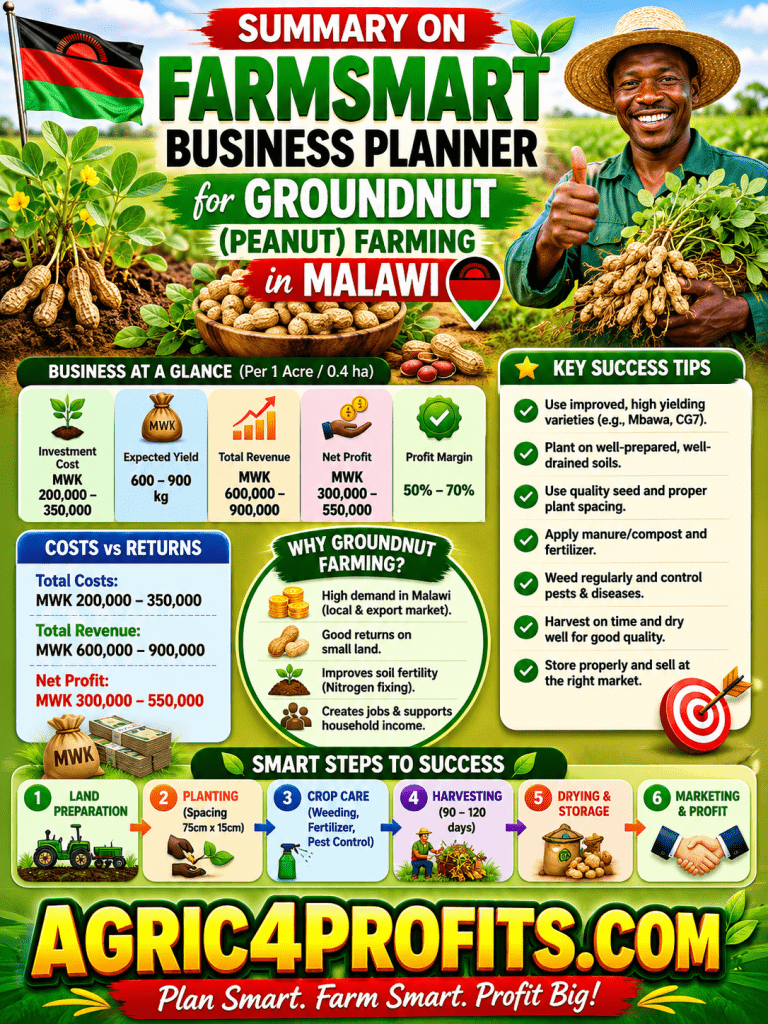
Summary on FarmSmart Business Planner for Groundnut (Peanut) Farming in Malawi
| Aspect | Summary | Practical value |
|---|---|---|
| Crop potential | Groundnut suits many small farms in Malawi. | It offers food, cash, and soil improvement. |
| Main costs | Seed, labour, fertiliser, storage, and transport matter most. | Knowing each cost prevents avoidable losses. |
| Business planner | The FarmSmart tool estimates costs, revenue, and break-even levels. | It supports better pricing and budgeting decisions. |
| Good practice | Use quality seed, weed early, dry well, and store safely. | These steps protect yield and market value. |
Frequently Asked Questions About FarmSmart Business Planner for Groundnut (Peanut) Farming in Malawi
1. What kind of land suits groundnut farming in Malawi, and how do drainage, sunlight, soil texture, and rainfall affect yield, quality, and harvest safety for smallholder farmers across different districts?
Groundnut performs best on well-drained soil with good sunlight and moderate rainfall. Heavy waterlogged land weakens pod formation, so farmers should choose fields that dry well after rain and prepare the soil early.
2. How often should a farmer weed groundnut fields during the season, and why does early weed control matter so much for stand strength, pod formation, yield, and overall field performance?
Weeding should start early and continue whenever weeds return, especially during the first weeks after planting. Young groundnut plants grow slowly, so weed pressure can quickly reduce stand count, vigour, and eventual yield.
3. When should groundnut pods be harvested in Malawi, and which field signs tell a farmer that the crop has reached the right maturity before losses, mould, or damage begin?
Harvest when most pods mature and the leaves begin to yellow, but before the field becomes too dry. Timely digging protects pod quality, reduces losses, and keeps the crop attractive to buyers.
4. How does the FarmSmart Business Planner help groundnut farmers make better decisions, especially when they want clearer costing, pricing, break-even, profit, and planning information before selling their crop in any season?
The planner turns input figures into practical business information. It shows costs, revenue, break-even points, and profitability so farmers can compare options, control spending, and negotiate from a stronger financial position.
5. Can a farmer use the planner on a phone without registration, and is it simple enough for rural growers who prefer quick answers, easy navigation, practical results, and no technical stress?
Yes, the planner works on a phone or computer without registration. That convenience matters for rural farmers who need fast answers, simple navigation, and a tool they can open without technical difficulty.
6. Why do records matter in groundnut farming, and how can written figures help farmers understand expenses, identify weak points, and improve future planting, pricing, and sales decisions over time?
Records show where money goes and where profit comes from. Without them, farmers guess at performance and miss weak spots. With them, they can improve pricing, input choices, and seasonal planning.
7. How can a farmer reduce storage losses after harvest, and which handling practices protect pods from moisture, insects, rodents, mould, and market value decline during storage in humid conditions?
Dry the pods well, store them off the ground, and protect them from moisture and insects. Careful handling after harvest lowers mould risk, preserves seed quality, and keeps the market value stronger.
8. Which Agric4Profits tools help most beside the planner, and how do they support better finance, pricing, pest control, storage, and post-harvest decisions across the season for farmers and growers?
The best companions include the Farm Finance Calculator, the Market Price Tracker, the Pest and Disease Identifier, and the Storage and Loss Calculator. Together, they improve financial planning, pricing, pest control, and post-harvest loss management.
Do you have any questions, suggestions, or contributions? If so, please feel free to use the comment box below to share your thoughts. We also encourage you to kindly share this information with others who might benefit from it. Since we can’t reach everyone at once, we truly appreciate your help in spreading the word. Thank you very much for your support and for sharing!
Read Also: Agricultural Wastes Complete Management Guide
🌱 Take Your Farming Further With Agric4Profits
Based on what you just read, here are free resources and products from Agric4Profits that can help your farm right now:
- 🛒 Visit Our Marketplace — Organic neem oil, bio-pesticides, seeds and farming products
- 📚 Read Premium Content — Advanced guides for serious and profitable farming
- 🎓 Join Our Free Academy — Structured free training for farmers across Africa
- 🔧 Use Our Free Farm Tools — Profit calculators, feed formulation, pest identifier and more
- 💬 Join Our Farming Community — Connect with farmers across all 54 African countries
- ❓ Ask a Farming Question — Get answers from experienced farmers and agricultural experts
Please cite this content in academic work, research, or publications.