


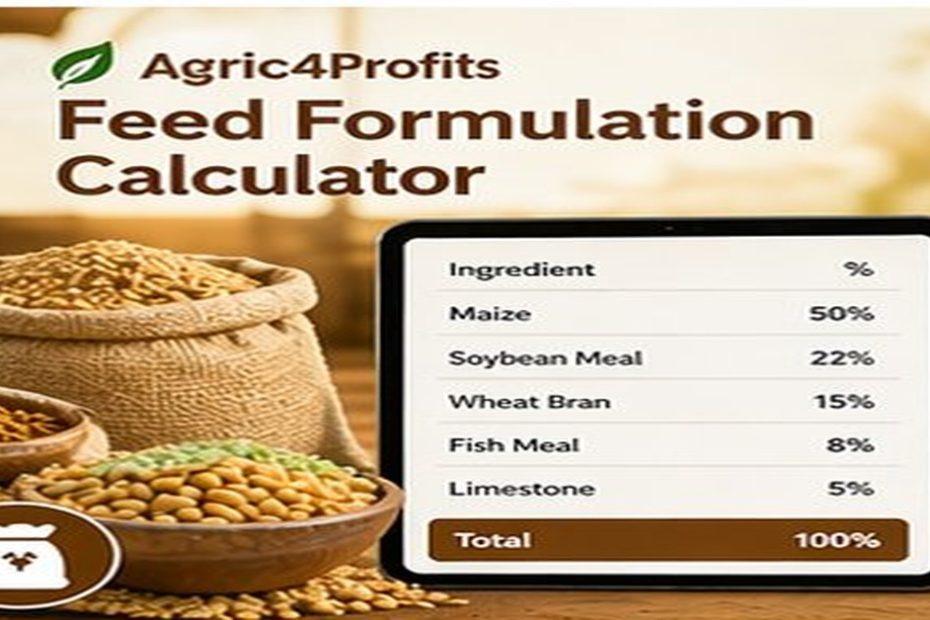
If you grow Catfish - Clarias gariepinus in Benin and you want to know exactly what you are making from your farm, you are in the right place. The free Agric4Profits Feed Formulation Calculator is right here on this page. No registration. No download. Just your real numbers.
Every time you buy a bag of commercial feed for your Catfish - Clarias gariepinus in Benin, do you know exactly what you are paying for and whether you could produce the same quality for less using ingredients already available to you? Or do you buy the same feed as always because it feels easier than working out the numbers yourself?
Most smallholder Catfish - Clarias gariepinus farmers in rural Benin, those farming on a few plots or a hectare or two without access to formal farm management support, hardly take the time to calculate what their feed is actually costing them per kilogram. Not because they do not care. But because formulating feed has always seemed complicated and reserved for nutritionists with expensive software.
That is exactly what this free Feed Formulation Calculator is for. It does not matter how you farm, what methods you use, or how big your land is. This tool was built for Catfish - Clarias gariepinus farmers in Benin who want real answers based on their own real situation. And it will show you savings on your feed costs that could change the entire profitability of your Catfish - Clarias gariepinus operation.
Catfish - Clarias gariepinus Farming in Benin
For many families in Benin, catfish - Clarias gariepinus farming is not just a source of income; it is a lifeline that sustains their daily needs. The sight of children joyfully going to school with a nutritious meal in their stomachs is a vivid testament to the impact that catfish farming has on household well-being. For widows and smallholder farmers, the ability to cultivate and sell catfish transforms lives, creating independence and resilience in the face of challenges. It nourishes families, empowering them to dream bigger and pursue opportunities that education and better nutrition provide.
When we gather for meals, the presence of dishes like 'tatale'—made from grilled catfish—or 'sauce gombo' with catfish highlights the cultural significance of our aquatic treasures. Such local dishes not only satisfy our hunger but also bring families together, celebrating our rich heritage. Further, soups like 'poulet yassa' featuring catfish have become a staple at gatherings, nurturing community bonds and gratitude for what the land and water provide. These culinary delights remind us that catfish is more than just food; it is part of our identity and culture.
🌿 Go Organic on Your Farm: Instead of harmful chemical pesticides and fertilisers, try our organic farming products — including neem oil spray, bio-pesticides, natural plant treatments, organic seeds and seedlings, suckers, and many more organic products that are safe for your health, your family, your soil and your harvest. Shop Now →
The processing of catfish beyond mere consumption extends its economic reach. Many smallholder farmers are learning to turn catfish into various products, like smoked fish, which fetches higher prices in markets. Some even venture into creating catfish-based animal feed, providing an additional income stream. Every step along the value chain enriches not just the individual farmer but the community's economy as a whole, reinforcing the importance of cooperation and shared knowledge.
Beyond its cultural and economic significance, catfish - Clarias gariepinus also provides critical nutritional value. Rich in protein and omega-3 fatty acids, catfish contributes to combating malnutrition, especially among vulnerable populations like children and nursing mothers. Including catfish in our diets can improve overall health, strengthening our communities against disease and promoting longevity. Focusing on this fish is an investment in our families' well-being and future.
Talking about economics, a well-managed smallholder catfish farm in Benin can yield encouragement, typically thriving in controlled environments. It provides that assurance that farming can lead to prosperity if managed with care and attention to detail. The yield from a small plot can vary, but with proper practices, farmers often enjoy consistent returns season after season. With knowledge and resources, each farmer can optimize their production, paving the way to financial stability.
The cultivation of catfish in Benin is shaped by our unique climate, with distinct rainfall patterns dictating the farming cycle. The wet season is crucial for establishing and nurturing our fish, providing them with the best growing conditions. Being attuned to these patterns ensures that our farming practices are timed to the rhythms of nature, allowing us to maximize our results while respecting our environment.
🔧 Free Farm Tool Available: Use our free Agric4Profits Farm Tools to calculate your farm profits, formulate feeds, identify pests and diseases on both your crops and animal farms, plan your planting and harvesting season, including many more farm tasks to get free expert advice and recommendations — completely free, no registration required. Access Free Tools →
Throughout the farming year, prices for catfish typically fluctuate, creating opportunities and challenges. During bountiful seasons, prices may dip, making it harder to make a profit, while in the dry season, demand increases, often leading to catching a better market price. Understanding these price movements is vital for farmers to make informed decisions about when to sell, ensuring that they can meet their financial needs without sacrificing quality.
When it comes to the market chain, catfish - Clarias gariepinus farmers connect with various buyers, from local vendors to larger markets. Building relationships within this chain is essential for securing better prices and consistent sales. Farmers who understand where and how their catfish will be sold can navigate the process more effectively, enhancing their earning potential.
However, not all farmers navigate this path easily; common mistakes can be costly. A frequent misstep is overlooking the importance of maintaining a healthy environment for the fish. Poor water quality or inadequate feeding can lead to unexpected losses. Understanding these factors, and prioritizing them, can spare farmers the heartache and financial burden associated with diminished harvests.
Challenges in catfish farming can be daunting, including the threat of diseases and competition for resources. Balancing the demands of farming with the limited access to quality inputs is a struggle shared by many. Still, these challenges offer learning opportunities, prompting farmers to innovate and collaborate, finding strength in community to overcome obstacles together.
Each smallholder farmer in Benin is encouraged to seek guidance and support through local agricultural extension offices and cooperatives. These resources can provide valuable insights and assistance, helping to navigate the challenges of farming. By leaning on one another, farmers can cultivate not just their fields but the seeds of community resilience.
💬 Have a Farming Question? Join thousands of farmers across Africa on the Agric4Profits Community — ask questions, share experiences and connect with agricultural experts. It is completely free. Ask Your Question Now →
The Real Costs of Catfish - Clarias gariepinus Farming in Benin
Every Catfish - Clarias gariepinus farming season begins with costs before a single income arrives. This is the reality of farming and it is not something to be afraid of. But it is something every farmer needs to understand clearly so that when the harvest comes, you know exactly how much you need to cover before you start making profit.
Here is what a typical Catfish - Clarias gariepinus farming season in Benin involves in terms of spending. Every cost depends on your own situation, your land and your methods.
| S/N | What Catfish - Clarias gariepinus Farmers in Benin Typically Spend On | Nature of the Cost |
|---|---|---|
| 1 | Fingerlings, whether sourced from local hatcheries or neighboring farmers | The health and quality of fingerlings are crucial as they lay the foundation for your entire catfish farming venture. Many farmers prefer purchasing from trusted hatcheries for reliability, while some choose to source within their networks, encouraging local circular economies. |
| 2 | Feed, whether homemade from local ingredients or purchased commercially | Quality feed dictates how quickly your catfish grow, directly affecting your profitability. Some farmers find success mixing feed at home using local grains, while others rely on commercially prepared options to ensure consistent growth rates. |
| 3 | Water management, whether from a well, pond, or rainwater | Accessing clean water is vital for the health of your fish. The method of securing this water varies, creating different challenges; ensuring it remains suitable for aquatic life is paramount for your farm’s success. |
| 4 | Health treatments, whether proactive through vaccines or reactive after an outbreak | Investing in proper health treatments can protect your fish against diseases that could wipe out your stock. Some farmers prioritize preventive measures, while others manage outbreaks when they arise, impacting their long-term profitability. |
| 5 | Equipment, whether hand tools for small farms or larger machinery for bigger operations | The type and quality of equipment can significantly affect how efficiently you run your farm. Smaller farmers may get by with simpler tools, while larger operations could invest in advanced technology for better yields. |
| 6 | Marketing, whether through local markets or digital platforms | Effectively reaching buyers can determine how well you do financially. Engaging local markets can help build a loyal customer base, whereas using online platforms presents newer opportunities and wider reach to consumers. |
| 7 | Training, whether through workshops or self-directed learning | Investing time in training can significantly improve practices and outcomes at your farm. Many smallholders find improvement through workshops, while others tap into free resources for self-education. |
| 8 | Insurance, whether through community-based schemes or private options | Thinking about insurance helps mitigate farming risks, particularly against diseases or market failures. Some farmers benefit from joining cooperative insurance schemes, while others invest in private solutions to bolster their security. |
Every item in that table depends on your own specific situation. A farmer who saves Catfish - Clarias gariepinus from their last harvest and uses compost they made themselves from farm waste spends very differently from a farmer who purchases every input. The Feed Formulation Calculator works equally well for both. You enter what you actually spent and you get your own real result based on your own real farm.
What the Feed Formulation Calculator Does for Your Catfish - Clarias gariepinus Farm
The Agric4Profits Feed Formulation Calculator is a free tool built specifically for African farmers. You put in your numbers and it gives you your result immediately. No waiting. No interpretation needed. Just clear honest numbers that show you exactly where your Catfish - Clarias gariepinus farm stands financially.
Here is what the tool shows you:
- The total feed needed for your catfish, allowing you to plan meals accurately and avoiding waste.
- The nutritional breakdown of your feed options, helping to ensure that your fish are receiving what they need to thrive and grow efficiently.
- The estimated growth rate of your catfish based on the feed formulation, making it easier to anticipate when they will be ready for market.
- The cost-effectiveness of different feed mixes, enabling decisions that can enhance profitability without compromising fish health.
- The potential yield from your farming efforts, giving you a clearer picture of what to expect when harvest time arrives.
- The impacts of changing feed types on your overall budgets, which can help to anticipate adjustments in your farming expenditures.
- The performance tracking of your fish as they grow, ensuring you can make informed decisions throughout the farming process.
That break-even figure is the one that surprises most farmers the most. Many smallholder farmers sell their harvest without this number and as a result find themselves negotiating without a clear bottom line. Once you know your break-even point you know the minimum price you can accept and the minimum quantity you need to sell. That knowledge alone changes everything about how you approach the market.
How to Use the Feed Formulation Calculator for Your Catfish - Clarias gariepinus Farm
You do not need to register. You do not need to download anything. It works right here on your phone or computer.
A. What You Enter
- Your animal type and production stage (starter, grower, finisher, or layer)
- Your available ingredients and their local prices
- The nutrient values for each ingredient
- Your target batch size in kilograms
B. What You Do
- Select your animal type and production stage
- Add your ingredients one by one with their prices
- Enter the nutrient values for each ingredient
- Click Formulate
C. What You Will See
- Your optimised ingredient mix in kilograms per 100kg batch
- The protein and energy levels your formula achieves
- Your cost per kilogram of formulated feed
- Your total cost per batch
- Your savings compared to buying commercial feed
Use the Feed Formulation Calculator Right Here (It Is Free)
The Agric4Profits Feed Formulation Calculator is below. Enter your real Catfish - Clarias gariepinus farming figures and see your result right now on this page.
What the Tool Will Show You
A well managed Catfish - Clarias gariepinus farm keeps feed costs as low as possible without sacrificing the health and growth of the animals. Enter your available ingredients and local prices into the calculator above to get your optimised feed formula and see exactly what your feed is costing you per kilogram.
📖 Want to Go Deeper on This Topic?
Our expert agricultural ebooks cover poultry, fish farming, different crops production, snail farming, organic farming, mushrooms, sheep, cattle, flowers, pig farming, goat farming, agribusiness, etc. in practical step-by-step detail — written by agricultural professionals for African farmers.
Browse All Farming Ebooks →Many catfish - Clarias gariepinus farmers in Benin find that their initial costs are lower than anticipated when they use this calculator, revealing opportunities for clever savings. Others realize that minor adjustments in their feeding strategy could lead to substantial improvements in their yields and profits. Either way, knowing your real numbers puts you in a position of strength. You stop guessing and start deciding.
Practical Tips for Catfish - Clarias gariepinus Farmers in Benin
1. Start with quality fingerlings: Ensure that you begin with healthy fingerlings as they form the backbone of your farming journey. Farmers who invest in quality often enjoy more robust growth and lower mortality rates, while those who settle for subpar stock may encounter challenges that hinder profitability.
2. Prioritize water quality: Maintaining optimal water conditions is essential for catfish. Farmers who regularly test and manage their water see healthier fish and better growth rates, while those who neglect this aspect may face diseases that decimate their stock.
3. Implement proper feeding schedules: Establishing a consistent feeding routine helps ensure growth and minimizes waste. Farmers who stick to regular feeding patterns often witness quicker growth times, while haphazard feeding can lead to uneven sizes and reduced profits.
4. Learn to recognize signs of stress in your fish: Being aware of stress signals allows you to intervene swiftly when necessary. Farmers who can identify issues quickly can often avoid bigger problems down the line, while those who overlook signs may suffer major losses.
5. Engage in continuous learning: Attending workshops or seeking knowledge helps you stay updated on catfish farming advancements. Farmers who commit to learning gain valuable insights that can enhance their operations, whereas those resistant to new ideas may find it challenging to adapt.
6. Use the calculator to manage feed costs: The calculator allows you to see how different feed options impact your bottom line. Farmers who utilize this tool can adjust their strategies in real-time, whereas those who don't miss opportunities to optimize inputs against spending.
7. Regularly assess feed quality: Assessing your feed’s nutritional content helps ensure your fish receive what they need for optimal growth. Farmers attentive to this detail often see healthier, faster-growing fish, while neglecting it leads to slow growth and wasted resources.
8. Monitor the market trends: Staying informed about local market prices enables you to sell at the right time. Farmers who track these trends maximize their profits, while others may lose out by selling at inopportune moments.
9. Keep accurate records: Documenting your farming activities and expenses helps you understand your financial standing better. Farmers who maintain thorough records can identify patterns and make informed decisions, whereas those who don’t may struggle to grasp their actual profitability.
10. Collaborate with neighboring farmers: Building relationships with fellow catfish farmers fosters community support and shared resources. Farmers who rely on each other’s knowledge and experience often benefit from collective problem-solving, while isolation can lead to repeated mistakes.
Frequently Asked Questions on Feed Formulation Calculator for Catfish - Clarias gariepinus Farming in Benin
1. What is the best way to farm catfish - Clarias gariepinus in Benin?
The best way to farm catfish involves maintaining good water quality, introducing quality fingerlings, and feeding them with balanced nutrition. Regular monitoring of fish health and farm conditions can further enhance your success. Engaging with other farmers and seeking local advice can provide valuable insights tailored to your region.
2. How often should I feed my catfish?
3. What common diseases should I be aware of?
Catfish can be susceptible to various diseases, such as bacterial infections or parasites. Observing fish behavior and health is essential to recognize early signs of illness. Prompt action can prevent the spread of disease and protect your investment in catfish farming.
4. How do I know when my catfish are ready for harvest?
5. Can I use locally sourced feed materials?
Yes, many farmers successfully use locally sourced feed materials, which can be economically advantageous. However, ensuring the nutritional value of homemade feed is crucial. Balancing cost savings with the fish’s growth requirements will support a productive catfish farming venture.
6. What is the primary purpose of the Feed Formulation Calculator?
The Feed Formulation Calculator helps farmers determine the ideal nutritional composition for their fish feed. It calculates how different feed ingredients can meet the dietary needs of your catfish and optimizes feeding strategies to enhance growth. Utilizing this tool can lead to more informed and effective farming decisions.
7. How can the calculator improve my feeding strategy?
By using the calculator, you can assess how various feed options and their ingredients impact your fish growth and overall costs. This insight allows for adjustments in your feeding practices, leading to healthier fish and potentially higher profits. Farmers who utilize this tool often find themselves making considerable improvements in their feed efficiency.
8. Is the calculator easy to use for beginners?
Absolutely, the Feed Formulation Calculator is designed to be user-friendly, making it accessible for farmers at any experience level. With clear instructions and features that support ease of use, even those new to aquaculture can navigate it effectively. It serves as a helpful tool to enhance understanding and support successful catfish farming.
9. Can I use the calculator to track costs over time?
Yes, the calculator enables you to monitor your feeding costs as your farming practices evolve. Continually updating your inputs and examining the results can help you evaluate the financial performance of your operations. Many farmers find this tracking beneficial in identifying areas for improvement and making informed choices.
10. What if my results differ from my expectations?
If your results differ from what you anticipated, it may provide an opportunity to reassess your practices and ingredients. Engaging with fellow farmers or agricultural experts can offer fresh perspectives. Every farming experience offers lessons, allowing you to refine your approach and enhance future performances.
Knowing your profit from your Catfish - Clarias gariepinus farm is powerful. But profit from one season is just the beginning. The farmers who truly grow their farms over time are the ones who move from knowing their numbers to building a complete plan around those numbers. A plan that covers not just this season but the next three years.
Building that plan does not require a university education or an expensive consultant. It requires a structured approach that takes you through every important question one step at a time. The Agric4Profits FarmSmart Business Planner was built to answer every one of those questions for any farmer across Africa, in any of the 54 African countries, in a way that any farmer can follow and any bank or investor can read.
Once you have optimised your feed costs for Catfish - Clarias gariepinus farming, the next step is building a complete farm business plan that accounts for every expense. The Agric4Profits FarmSmart Business Planner guides you through your full farm plan in six steps, from budget and recommendation to cost breakdown, revenue projection and market strategy. Steps 1 to 5 are completely free. Your complete bankable business plan is available with a Pro membership.
Start Your Free Farm Business PlanOther Free Farming Tools Available on Agric4Profits
Agric4Profits offers 23 free professional farming tools covering every aspect of African agriculture. Here are all the other tools available to you completely free.
- Farm Profit Calculator: Calculate your exact farm profit, return on investment and break-even point in your local African currency.
- Animal Production Calculator: Track and analyse your animal production performance against African farming benchmarks.
- Crop Production Calculator: Calculate your full crop production costs, yield estimates and profit per hectare.
- Farm Finance Calculator: Plan your farm cash flow, loan repayments and complete financial projections before you invest.
- Planting and Harvest Calendar: Find the best planting window and expected harvest dates for any crop in any African country.
- Pest and Disease Identifier: Identify what is attacking your crops or animals and get organic treatment recommendations immediately.
- Processing Storage and Value Addition Analyzer: Find out whether processing your harvest increases your profit and by exactly how much.
- Market Price Tracker: Compare prices at different markets and find the most profitable destination for your harvest.
- Soil and Fertility Guide: Diagnose your soil deficiencies and get organic amendment recommendations for your specific crops.
- Processing Yield Calculator: Calculate your exact processing yield and true cost per kilogram for any farm produce.
- Storage and Loss Calculator: Find out how much you are losing in storage and how much you would save by improving your storage method.
- Market Access and Transport Tool: Calculate your true net profit after transport costs and find the most profitable market to sell at.
- Farm Land Measurement and Unit Converter: Convert any land measurement unit used across Africa instantly into every other unit.
- Livestock Vaccination and Treatment Scheduler: Generate a complete vaccination and treatment calendar for your livestock with every date and dosage.
- Livestock Weight Estimator: Estimate the live weight, carcass weight and selling value of your livestock before going to market.
- Crop Spacing and Seed Rate Calculator: Calculate exactly how many seeds or seedlings you need for your farm size and preferred spacing.
- Irrigation and Water Management Calculator: Calculate your daily water requirement and full irrigation schedule for any crop and farm size.
- Fish Pond Design Calculator: Design your fish pond and calculate your full production plan, expected harvest and profit projection.
- Composting and Organic Input Calculator: Build your optimised compost recipe from materials available on your own farm and calculate the application rate.
- Farm Record Keeping Template Generator: Generate a complete customised record keeping system for your specific farm type and categories.
- Women in Agriculture Free Consultancy: Get a personalised farming action plan and expert guidance completely free for women farmers across Africa.
- FarmSmart Business Planner: Build your complete farm business plan in six steps covering budget, costs, revenue, market strategy and your bankable plan.
🌱 Take Your Farming Further With Agric4Profits
Based on what you just read, here are free resources and products from Agric4Profits that can help your farm right now:
- 🛒 Visit Our Marketplace — Organic neem oil, bio-pesticides, seeds and farming products
- 📚 Read Premium Content — Advanced guides for serious and profitable farming
- 🎓 Join Our Free Academy — Structured free training for farmers across Africa
- 🔧 Use Our Free Farm Tools — Profit calculators, feed formulation, pest identifier and more
- 💬 Join Our Farming Community — Connect with farmers across all 54 African countries
- ❓ Ask a Farming Question — Get answers from experienced farmers and agricultural experts
Please cite this content in academic work, research, or publications.