


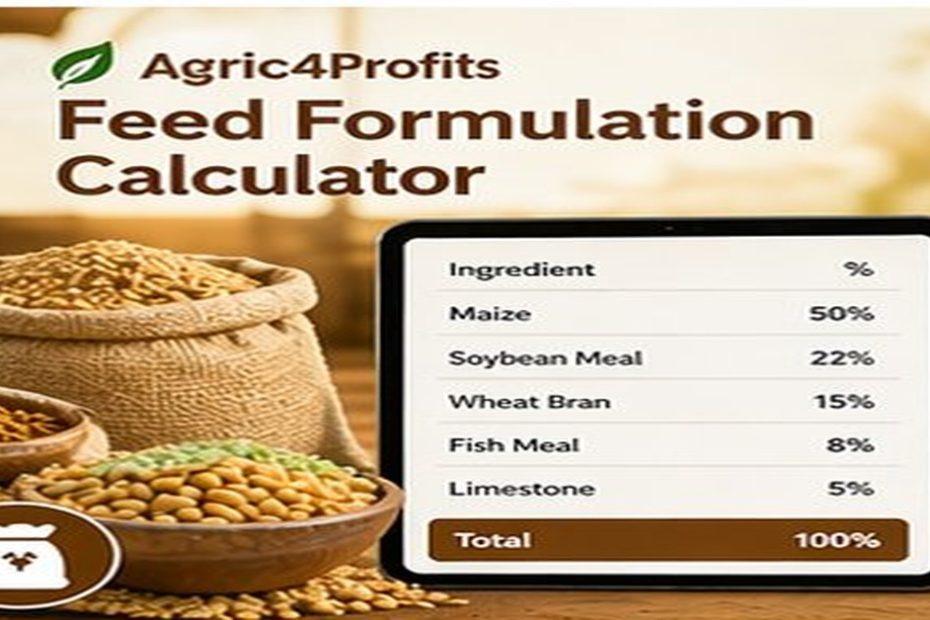
If you grow Mixed Culture - Catfish and Tilapia in Mozambique and you want to know exactly what you are making from your farm, you are in the right place. The free Agric4Profits Feed Formulation Calculator is right here on this page. No registration. No download. Just your real numbers.
Every time you buy a bag of commercial feed for your Mixed Culture - Catfish and Tilapia in Mozambique, do you know exactly what you are paying for and whether you could produce the same quality for less using ingredients already available to you? Or do you buy the same feed as always because it feels easier than working out the numbers yourself?
Most smallholder Mixed Culture - Catfish and Tilapia farmers in rural Mozambique, those farming on a few plots or a hectare or two without access to formal farm management support, hardly take the time to calculate what their feed is actually costing them per kilogram. Not because they do not care. But because formulating feed has always seemed complicated and reserved for nutritionists with expensive software.
That is exactly what this free Feed Formulation Calculator is for. It does not matter how you farm, what methods you use, or how big your land is. This tool was built for Mixed Culture - Catfish and Tilapia farmers in Mozambique who want real answers based on their own real situation. And it will show you savings on your feed costs that could change the entire profitability of your Mixed Culture - Catfish and Tilapia operation.
Mixed Culture - Catfish and Tilapia Farming in Mozambique
Mixed Culture - Catfish and Tilapia farming in Mozambique is more than just an agricultural practice; it is the heartbeat of many families and communities. For a widow tending to her small plot, it offers not just sustenance but hope for her children’s education. This way of life nourishes soul and spirit, bringing families together around shared meals, the laughter of children, and dreams for a brighter future. Each fish harvested represents a step towards stability, providing nourishment and income that ripple through the community.
In Mozambique, dishes like matapa made with fresh fish, piri-piri tilapia grilled to perfection, and catfish stews filled with local vegetables bring families together. The flavor of these meals tells stories of tradition and culture, where food is a bridge connecting generations. Sharing these meals reinforces family bonds and creates a sense of belonging, unity in every bite flavored with love and care. This communal aspect makes Mixed Culture - Catfish and Tilapia not just a source of food, but a source of identity.
🌿 Go Organic on Your Farm: Instead of harmful chemical pesticides and fertilisers, try our organic farming products — including neem oil spray, bio-pesticides, natural plant treatments, organic seeds and seedlings, suckers, and many more organic products that are safe for your health, your family, your soil and your harvest. Shop Now →
Beyond the home kitchen, Mixed Culture - Catfish and Tilapia opens doors to various processing possibilities. Fish can be transformed into delectable smoked products or dried fish, enhancing its shelf life and market value. The industry also presents opportunities for creating fish meal for animal feed, ensuring that no part of the harvest goes to waste. This upward trend in value addition not only enhances food security but establishes a vibrant market chain that supports many smallholder farmers.
Nutritiously, Mixed Culture - Catfish and Tilapia offers a treasure trove of benefits. The protein content is vital for growing children and contributes greatly to health and wellness. Rich in omega fatty acids and essential vitamins, these fish play a crucial role in confronting malnutrition, especially among vulnerable groups. The nutritional diversity they provide complements local diets, making fish a key component of food security in Mozambique.
Economically, Mixed Culture - Catfish and Tilapia farming is a game-changer in Mozambique. A well-managed smallholder farm can yield a remarkable harvest that secures household income while boosting local economies. Many smallholder farmers experience yield ranges that reflect both their dedication and the ecological richness of their environment. The profitability aligns with sustainable practices that nurture the land and water, ensuring that farming remains a viable long-term livelihood.
The success of Mixed Culture - Catfish and Tilapia relies heavily on the understanding of local climate and rainfall patterns. Mozambique typically enjoys a growing season marked by distinct wet and dry periods, each influencing farming practices. Smallholder farmers expertly adapt to these changes, recognizing the rhythm of nature that governs fish breeding and growth. This intrinsic knowledge of the land becomes an asset in resilient farming practices that weather challenges each season.
🔧 Free Farm Tool Available: Use our free Agric4Profits Farm Tools to calculate your farm profits, formulate feeds, identify pests and diseases on both your crops and animal farms, plan your planting and harvesting season, including many more farm tasks to get free expert advice and recommendations — completely free, no registration required. Access Free Tools →
Throughout the annual farming cycle, the prices for Mixed Culture - Catfish and Tilapia fluctuate naturally. Typically, during the peak harvest season, prices tend to drop as supply increases, making it a time for wise marketing decisions. Conversely, during lean periods when fish is less available, prices rise, presenting an opportunity for farmers to sell their stock. Understanding these dynamics can empower farmers to strategically plan their sales for optimum profit.
Farmers can successfully position themselves in the market chain for Mixed Culture - Catfish and Tilapia by knowing their clients. Local markets, restaurants, and fishmongers often seek quality products, making connections vital. By establishing direct relationships with buyers, farmers can enhance their bargaining power and ensure fair prices. Consistent quality and reliable supply can set a farmer apart in this competitive environment.
Among the most common pitfalls in Mixed Culture - Catfish and Tilapia farming is neglecting proper water quality management. Many smallholder farmers, perhaps out of inexperience, might overlook the importance of maintaining a balanced aquatic environment. This negligence can lead to stunted fish growth or disease, costing farmers both in terms of yield and income. Understanding and addressing water quality early can lead to healthier fish and more bountiful harvests.
The challenges facing Mixed Culture - Catfish and Tilapia farmers are real and deserve respectful acknowledgment. Many farmers contend with issues like fluctuating market prices, increasing feed costs, and occasional environmental threats such as drought or flooding. These factors can make farming a struggle, yet each challenge presents an opportunity for growth and learning. Resilience is part of the farming journey.
It is essential for farmers to reach out for support from local agriculture extension offices and cooperatives. These resources can provide valuable advice, information on best practices, and assistance with market access. Connecting with knowledgeable individuals can help navigate challenges and enhance productivity, reinforcing the strength of our community. Together, we can rise above obstacles and thrive in our passion for farming.
💬 Have a Farming Question? Join thousands of farmers across Africa on the Agric4Profits Community — ask questions, share experiences and connect with agricultural experts. It is completely free. Ask Your Question Now →
The Real Costs of Mixed Culture - Catfish and Tilapia Farming in Mozambique
Every Mixed Culture - Catfish and Tilapia farming season begins with costs before a single income arrives. This is the reality of farming and it is not something to be afraid of. But it is something every farmer needs to understand clearly so that when the harvest comes, you know exactly how much you need to cover before you start making profit.
Here is what a typical Mixed Culture - Catfish and Tilapia farming season in Mozambique involves in terms of spending. Every cost depends on your own situation, your land and your methods.
| S/N | What Mixed Culture - Catfish and Tilapia Farmers in Mozambique Typically Spend On | Nature of the Cost |
|---|---|---|
| 1 | Fingerlings, whether sourced from a hatchery or collected from local waters | The choice of fingerlings impacts the future of your fish farming significantly. Sourcing from reliable hatcheries ensures strong stock, while collecting from nature may carry risks. Farmers must weigh their options wisely to start with the healthiest fish. |
| 2 | Feed, whether mixed at home from local ingredients or bought as commercial pellets | The nutritional value of the feed is crucial for healthy growth and good harvests. Many smallholder farmers prefer homemade mixes tailored to their fish needs, while others opt for commercially formulated feeds available locally. Both methods can yield good results when done thoughtfully. |
| 3 | Water supply, whether drawn from a borehole, river, or rainwater collection | Accessing clean water is vital for fish health and growth. Farmers may have different systems in place, which can influence costs significantly. Planning for water sources can be the difference between success and struggles. |
| 4 | Medication and vaccines, whether sourced from a vet or purchased at an agro-input store | Investing in prevention through proper medication is an essential practice for fish health. Some farmers may rely on advice from local vets, while others manage with over-the-counter products. Guarding against disease pays off in healthy stocks and robust harvests. |
| 5 | Pond construction, whether built by hand or with hired labor | The foundation of your fish farming relies on the quality of pond construction. Many farmers take pride in doing this work themselves, while others invest in skilled labor to ensure proper setup. This initial investment impacts ongoing management significantly. |
| 6 | Miscellaneous supplies, whether gathered from home or purchased new | Every farm requires various supplies from nets to feeding equipment. Some farmers get creative, using what they have on hand, while others may buy new tools for efficiency. This diversity in approach can influence the costs endured during the farming season. |
| 7 | Labor, whether provided by family members or hired hands | Labor is an essential component of fish farming, impacting how much attention your stock receives. Family involvement can cut costs, while hiring labor ensures dedicated time for management tasks. Striking a balance between the two can boost productivity. |
| 8 | Transport, whether using personal vehicles or public transport | Getting your fish to market is crucial, and transport methods can vary widely. Some farmers have access to personal transport, while others rely on local transport options, impacting costs. Planning ahead for transport logistics ensures a smoother sale process. |
Every item in that table depends on your own specific situation. A farmer who saves Mixed Culture - Catfish and Tilapia from their last harvest and uses compost they made themselves from farm waste spends very differently from a farmer who purchases every input. The Feed Formulation Calculator works equally well for both. You enter what you actually spent and you get your own real result based on your own real farm.
What the Feed Formulation Calculator Does for Your Mixed Culture - Catfish and Tilapia Farm
The Agric4Profits Feed Formulation Calculator is a free tool built specifically for African farmers. You put in your numbers and it gives you your result immediately. No waiting. No interpretation needed. Just clear honest numbers that show you exactly where your Mixed Culture - Catfish and Tilapia farm stands financially.
Here is what the tool shows you:
- The ideal feed composition for your fish ensures optimal growth and health, helping you understand the blend that works best for your unique situation.
- The exact nutritional requirements for your fingerlings guide your feeding strategy, ensuring they receive the right nutrients at every stage of growth.
- The cost analysis for feed helps you track expenses against income, enabling smarter financial decisions to maximize profit.
- The recommended feed conversion ratios help you evaluate how efficiently your fish convert feed into growth, optimizing your resources.
- The growth projections based on your feed choices and management allow you to set realistic goals and expectations for each harvest.
- The monthly feeding schedule customized for your specific conditions helps streamline your operations and prevents overfeeding or underfeeding.
- The potential return on investment analysis empowers you with the insights needed to refine your farming practices for better profitability.
That break-even figure is the one that surprises most farmers the most. Many smallholder farmers sell their harvest without this number and as a result find themselves negotiating without a clear bottom line. Once you know your break-even point you know the minimum price you can accept and the minimum quantity you need to sell. That knowledge alone changes everything about how you approach the market.
How to Use the Feed Formulation Calculator for Your Mixed Culture - Catfish and Tilapia Farm
You do not need to register. You do not need to download anything. It works right here on your phone or computer.
A. What You Enter
- Your animal type and production stage (starter, grower, finisher, or layer)
- Your available ingredients and their local prices
- The nutrient values for each ingredient
- Your target batch size in kilograms
B. What You Do
- Select your animal type and production stage
- Add your ingredients one by one with their prices
- Enter the nutrient values for each ingredient
- Click Formulate
C. What You Will See
- Your optimised ingredient mix in kilograms per 100kg batch
- The protein and energy levels your formula achieves
- Your cost per kilogram of formulated feed
- Your total cost per batch
- Your savings compared to buying commercial feed
Use the Feed Formulation Calculator Right Here (It Is Free)
The Agric4Profits Feed Formulation Calculator is below. Enter your real Mixed Culture - Catfish and Tilapia farming figures and see your result right now on this page.
What the Tool Will Show You
A well managed Mixed Culture - Catfish and Tilapia farm keeps feed costs as low as possible without sacrificing the health and growth of the animals. Enter your available ingredients and local prices into the calculator above to get your optimised feed formula and see exactly what your feed is costing you per kilogram.
📖 Want to Go Deeper on This Topic?
Our expert agricultural ebooks cover poultry, fish farming, different crops production, snail farming, organic farming, mushrooms, sheep, cattle, flowers, pig farming, goat farming, agribusiness, etc. in practical step-by-step detail — written by agricultural professionals for African farmers.
Browse All Farming Ebooks →Mixed Culture - Catfish and Tilapia farmers in Mozambique often discover a new level of understanding about their operations after using this tool. Some realize they were managing their costs better than they anticipated, while others uncover areas where minor adjustments could lead to significant improvements.
Either way, knowing your real numbers puts you in a position of strength. You stop guessing and start deciding.Practical Tips for Mixed Culture - Catfish and Tilapia Farmers in Mozambique
1. Ensure water quality is a priority: Quality water is essential for thriving fish. Many farmers who overlook this often struggle with stunted growth and health issues. In contrast, those who invest in regular assessments of their water sources enjoy healthier fish and better yields.
2. Monitor feeding schedules closely: Establishing a consistent feeding routine can lead to healthier and faster-growing fish. Farmers who neglect this waste resources and often see poor growth performance. Those who stick to a schedule maximize their production potential.
3. Engage in proper record-keeping: Keeping detailed records of your inputs and outputs can illuminate patterns that help enhance your techniques. Without this practice, many farmers miss opportunities for improvement. Those who track their progress are better positioned to adapt and succeed over time.
4. Learn from each harvest: Every harvest offers insights into what works and what doesn’t in your farming approach. Without reflection, some farmers find themselves repeating mistakes season after season. But those who take the time to analyze their results continuously refine their practices, leading to greater success.
5. Invest in good quality fingerlings: Sourcing high-quality fingerlings can set the stage for successful catfish and tilapia farming. Many farmers who choose lower quality options often face higher mortality rates and poor growth. Choosing strong stock from reputable sources significantly boosts your chances of success.
6. Use your calculator results to adapt feeding strategies: Analyze how different feed combinations affect growth, and adjust based on what you learn. Farmers who follow this advice often see improved conversion rates. Those who ignore these insights may miss out on potential growth opportunities.
7. Explore alternative feed options: Utilizing local ingredients can diversify diets and lower costs. Some farmers who stick to commercial feeds may miss the chance for nutritional variety. Embracing alternatives not only reduces expenses but can enhance fish health.
8. Assess your market throughout the year: Understanding demand and prices will guide your selling strategy and timing. Farmers who stay attuned to market trends generally secure better sales, while those who are unaware may sell at lower prices. Your knowledge of the market can directly affect your bottom line.
9. Connect with fellow farmers: Sharing experiences can uncover new ideas and practices that enhance your farming. Many farmers who work in isolation miss creative solutions to their challenges. Collaborating with peers opens doors to new learning and opportunities.
10. Stay informed about best practices: Engage with agricultural resources and information as an ongoing process. Farmers who stop learning may fall behind in techniques that maximize productivity. Keeping informed empowers you to make the best decisions for your farm.
Frequently Asked Questions on Feed Formulation Calculator for Mixed Culture - Catfish and Tilapia Farming in Mozambique
1. What is Mixed Culture - Catfish and Tilapia farming?
This practice combines two species of fish in the same farming environment to optimize resource use and enhance yield. Catfish and tilapia can coexist harmoniously, benefiting from the different feeding habits they possess. This method not only increases productivity but also provides diverse marketing options for farmers.
2. What types of fish are best for mixed culture?
In Mozambique, catfish and tilapia are particularly well-suited for mixed culture systems. They complement each other through various feeding behaviors, and their growth rates can lead to a more fruitful harvest. Additionally, their palatability makes them popular among local consumers.
3. How can I improve my fish farming techniques?
Improving fish farming can start with proper management of feed, monitoring water quality, and ensuring the health of your fingerlings. Engaging in continuous learning, whether through workshops or community exchanges, helps acquire new insights. Each small change can lead to significant improvements in yield and profitability.
4. What are the main challenges faced in mixed culture farming?
Farmers often encounter issues like fluctuating market prices, competition for resources, and environmental factors affecting water quality. Understanding these challenges offers an opportunity for farmers to strategize and adapt. Resilience in the face of such challenges is essential for continued success.
5. How can I effectively market my fish?
Effective marketing requires understanding who your customers are and what they seek. Building relationships with local vendors or establishing your direct sales can greatly enhance profitability. Farmers who focus on quality and reliability usually achieve better sales results.
6. What does the Feed Formulation Calculator do?
The Feed Formulation Calculator helps you determine the optimal feed mix for your fish, taking into account their specific dietary needs. This tool empowers farmers to create balanced nutrition plans that lead to healthier and faster-growing fish. It ultimately guides you toward better management of resources.
7. How does using the calculator benefit my farming?
Using the calculator allows you to analyze and optimize your feed strategy, leading to enhanced growth performance. It helps identify how to adjust feed costs and maintain fish health effectively. These insights can culminate in better harvests and increased profitability.
8. Can the calculator help me track my costs?
Indeed, the calculator provides a framework for monitoring expenses related to feed and overall production. Farmers who keep faithful records can better understand profitability and adjust practices accordingly. This tool turns abstract numbers into valuable insights for informed decision-making.
9. Is the calculator easy to use?
Yes, it's designed with user-friendliness in mind, ensuring that both experienced and novice farmers can navigate it effectively. Tutorials and community support often accompany these tools to facilitate learning. This accessibility empowers everyone to improve their farming outcomes.
10. How do I start using the Feed Formulation Calculator?
Starting with the calculator involves inputting data related to your current feeding practices, species types, and overall management. Engaging in this process will help guide your feed formulation decisions. With practice, you’ll gain confidence in adjusting your strategies for better results.
Knowing your profit from your Mixed Culture - Catfish and Tilapia farm is powerful. But profit from one season is just the beginning. The farmers who truly grow their farms over time are the ones who move from knowing their numbers to building a complete plan around those numbers. A plan that covers not just this season but the next three years.
Building that plan does not require a university education or an expensive consultant. It requires a structured approach that takes you through every important question one step at a time. The Agric4Profits FarmSmart Business Planner was built to answer every one of those questions for any farmer across Africa, in any of the 54 African countries, in a way that any farmer can follow and any bank or investor can read.
Once you have optimised your feed costs for Mixed Culture - Catfish and Tilapia farming, the next step is building a complete farm business plan that accounts for every expense. The Agric4Profits FarmSmart Business Planner guides you through your full farm plan in six steps, from budget and recommendation to cost breakdown, revenue projection and market strategy. Steps 1 to 5 are completely free. Your complete bankable business plan is available with a Pro membership.
Start Your Free Farm Business PlanOther Free Farming Tools Available on Agric4Profits
Agric4Profits offers 23 free professional farming tools covering every aspect of African agriculture. Here are all the other tools available to you completely free.
- Farm Profit Calculator: Calculate your exact farm profit, return on investment and break-even point in your local African currency.
- Animal Production Calculator: Track and analyse your animal production performance against African farming benchmarks.
- Crop Production Calculator: Calculate your full crop production costs, yield estimates and profit per hectare.
- Farm Finance Calculator: Plan your farm cash flow, loan repayments and complete financial projections before you invest.
- Planting and Harvest Calendar: Find the best planting window and expected harvest dates for any crop in any African country.
- Pest and Disease Identifier: Identify what is attacking your crops or animals and get organic treatment recommendations immediately.
- Processing Storage and Value Addition Analyzer: Find out whether processing your harvest increases your profit and by exactly how much.
- Market Price Tracker: Compare prices at different markets and find the most profitable destination for your harvest.
- Soil and Fertility Guide: Diagnose your soil deficiencies and get organic amendment recommendations for your specific crops.
- Processing Yield Calculator: Calculate your exact processing yield and true cost per kilogram for any farm produce.
- Storage and Loss Calculator: Find out how much you are losing in storage and how much you would save by improving your storage method.
- Market Access and Transport Tool: Calculate your true net profit after transport costs and find the most profitable market to sell at.
- Farm Land Measurement and Unit Converter: Convert any land measurement unit used across Africa instantly into every other unit.
- Livestock Vaccination and Treatment Scheduler: Generate a complete vaccination and treatment calendar for your livestock with every date and dosage.
- Livestock Weight Estimator: Estimate the live weight, carcass weight and selling value of your livestock before going to market.
- Crop Spacing and Seed Rate Calculator: Calculate exactly how many seeds or seedlings you need for your farm size and preferred spacing.
- Irrigation and Water Management Calculator: Calculate your daily water requirement and full irrigation schedule for any crop and farm size.
- Fish Pond Design Calculator: Design your fish pond and calculate your full production plan, expected harvest and profit projection.
- Composting and Organic Input Calculator: Build your optimised compost recipe from materials available on your own farm and calculate the application rate.
- Farm Record Keeping Template Generator: Generate a complete customised record keeping system for your specific farm type and categories.
- Women in Agriculture Free Consultancy: Get a personalised farming action plan and expert guidance completely free for women farmers across Africa.
- FarmSmart Business Planner: Build your complete farm business plan in six steps covering budget, costs, revenue, market strategy and your bankable plan.
🌱 Take Your Farming Further With Agric4Profits
Based on what you just read, here are free resources and products from Agric4Profits that can help your farm right now:
- 🛒 Visit Our Marketplace — Organic neem oil, bio-pesticides, seeds and farming products
- 📚 Read Premium Content — Advanced guides for serious and profitable farming
- 🎓 Join Our Free Academy — Structured free training for farmers across Africa
- 🔧 Use Our Free Farm Tools — Profit calculators, feed formulation, pest identifier and more
- 💬 Join Our Farming Community — Connect with farmers across all 54 African countries
- ❓ Ask a Farming Question — Get answers from experienced farmers and agricultural experts
Please cite this content in academic work, research, or publications.