


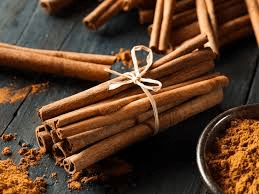
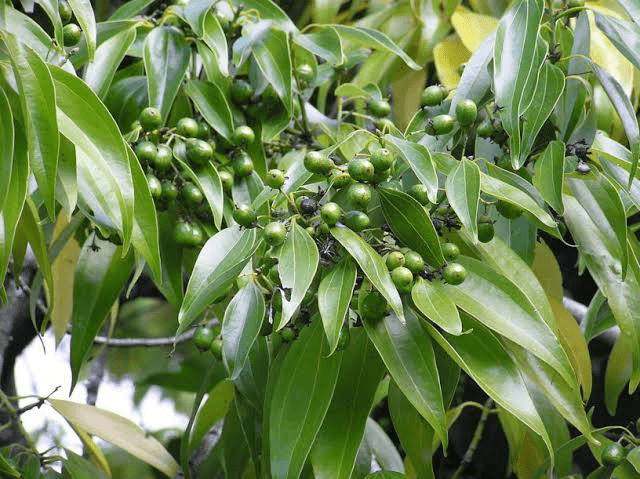
Cinnamomum cassia est un arbre sempervirent de taille moyenne qui appartient à la famille des Lauracées. Il est originaire des régions du sud de la Chine et est également cultivée dans d’autres parties de l’Asie de l’Est. L’arbre atteint généralement une hauteur de 10 à 15 mètres (33 à 49 pieds) et dispose d’une ligne droite, cylindrique, à tronc lisse, de couleur gris-brun écorce. Comme l’arbre arrive à maturité, l’écorce devient plus épais et développe une texture rugueuse.
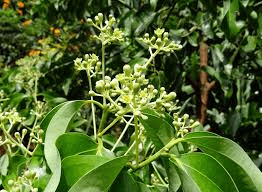
Les feuilles de Cinnamomum cassia sont ovales-de forme oblongue, mesurant environ 7 à 20 cm (2,8 7,9 pouces) de longueur. Ils ont un brillant, couleur vert foncé sur la face supérieure et d’un vert plus pâle sur le ventre. Les feuilles sont disposées en alternance sur les branches et dégagent un parfum agréable lorsqu’on le froisse.
L’arbre produit de petites, de couleur vert-jaune des fleurs qui poussent en grappes. Ces fleurs sont discrètes, mais la libération d’un subtil parfum aromatique. Comme les fleurs matures, ils cèdent la place à de petites, de couleur violet foncé à baies noires qui contiennent une seule graine.
However, it is the bark of Cinnamomum cassia that is most valued for its culinary and medicinal uses. The bark is harvested by carefully peeling it from the trees branches and stems. Once harvested, the bark is dried and then ground into a powder or used in its quill form, creating the familiar cinnamon sticks.
Cinnamomum cassia est souvent confondue avec Cinnamomum verum, communément connu comme le ‘vrai la cannelle.’ Alors que les deux variétés appartiennent à la cannelle la famille, ils ont des profils de saveur et d’apparences. Cinnamomum cassia a tendance à avoir une plus forte et plus intense saveur par rapport à Cinnamomum verum.
In traditional medicine, various parts of the Cinnamomum cassia tree, including the bark, leaves, and essential oil, have been utilized for their potential health benefits. The active compounds found in the bark, such as cinnamaldehyde and other essential oils, contribute to the spices characteristic aroma and potential medicinal properties.
Read Also: 15 Medicinal Health Benefits of Catharanthus roseus (Madagascar Periwinkle)
The Medicinal Health Benefits of Cinnamomum Cassia (Chinese cinnamon)
1. Anti-Inflammatory Properties: Cinnamomum cassia contains compounds that possess anti-inflammatory properties, which may help reduce inflammation in the body and alleviate symptoms of inflammatory conditions.
2. Antioxidant Boost: The antioxidants in Cinnamomum cassia can help combat oxidative stress, protecting cells from damage caused by free radicals.
3. Blood Sugar Regulation: Research suggests that Cinnamomum cassia may help lower blood sugar levels by improving insulin sensitivity, making it potentially beneficial for individuals with diabetes.
4. Heart Health: Consumption of Cinnamomum cassia has been associated with improved cardiovascular health, including potential benefits for cholesterol levels and blood pressure.
5. Digestive Support: This spice may aid digestion by promoting the secretion of digestive enzymes and reducing gastrointestinal discomfort.
6. Antimicrobial Effects: Cinnamomum cassia possesses antimicrobial properties that may help inhibit the growth of various harmful microorganisms, supporting the bodys defense against infections.
7. Anti-Diabetic Potential: Some studies suggest that Cinnamomum cassia may play a role in managing diabetes by improving glucose metabolism and enhancing insulin function.
8. Cognitive Function: Certain compounds in Cinnamomum cassia may have a positive impact on cognitive function and memory, potentially offering neuroprotective benefits.
9. Anti-Cancer Properties: Preliminary research indicates that the bioactive components of Cinnamomum cassia may exhibit anti-cancer effects by interfering with the growth of cancer cells.
10. Anti-Aging Benefits: The antioxidants present in this spice might contribute to anti-aging effects, helping to maintain skin health and combat signs of aging.
Read Also: 29 Healing Powers of Bitterleaf (Vernonia Amygdalina)
The Methods of Usage to Achieve the Provided Health Benefits of Cinnamomum Cassia (Chinese cinnamon)

1. Culinary Use: Add ground Cinnamomum cassia to your meals, such as oatmeal, yogurt, or smoothies, for a flavorful and healthful twist.
2. Tea Infusion: Create a soothing and aromatic tea by steeping Cinnamomum cassia sticks in hot water, alone or with other complementary herbs.
3. Spice Blends: Mix Cinnamomum cassia with other spices to create flavorful blends for seasoning meats, vegetables, and grains.
4. Supplements: Cinnamomum cassia supplements are available in various forms, such as capsules and extracts, but consult a healthcare professional before use.
5. Topical Application: In the form of essential oil, Cinnamomum cassia can be diluted and used topically for its potential antimicrobial and anti-inflammatory properties.
The Side Effects of Using Cinnamomum Cassia Medicinal Plant
1. Liver Health Concerns: Consuming high amounts of Cinnamomum cassia may pose risks to liver health due to the presence of coumarin, a compound that can be toxic in large doses.
2. Allergic Reactions: Some individuals may be sensitive or allergic to cinnamon, leading to skin rashes, irritation, or digestive discomfort.
3. Blood Thinning: Cinnamomum cassias compounds can have blood-thinning effects, so its important to moderate intake, especially for individuals taking blood-thinning medications.
4. Digestive Issues: Excessive consumption may cause stomach upset, nausea, and diarrhea in some individuals.
Nutritional Value of Cinnamomum cassia (Chinese Cinnamon)
1. Cinnamaldehyde: The primary active compound in the bark, cinnamaldehyde provides antimicrobial and anti-inflammatory properties, contributing to its use in managing infections and digestive health.
2. Polyphenols: These antioxidant compounds, including catechins and proanthocyanidins, help neutralize free radicals, supporting cardiovascular health and reducing oxidative stress.
3. Coumarin: Present in higher levels in Cinnamomum cassia compared to Ceylon cinnamon, coumarin has anticoagulant properties but requires caution due to potential liver toxicity in high doses.
4. Flavonoids: Flavonoids like quercetin in the bark offer antioxidant and anti-inflammatory effects, aiding in immune support and chronic disease prevention.
5. Volatile Oils: Essential oils, including eugenol and cinnamyl acetate, provide antimicrobial and carminative effects, supporting digestion and respiratory health.
6. Dietary Fiber: The bark contains small amounts of fiber, aiding digestion and promoting gut health by supporting regular bowel movements.
7. Manganese: Cassia cinnamon is a good source of manganese, which supports bone health, metabolism, and antioxidant enzyme function.
8. Calcium: Present in trace amounts, calcium contributes to bone strength and muscle function, complementing the spice’s nutritional profile.
9. Iron: The bark provides minor amounts of iron, supporting red blood cell production and energy metabolism.
10. Cinnamic Acid: This compound offers antioxidant and anti-inflammatory benefits, potentially aiding in blood sugar regulation and infection prevention.
The nutritional and bioactive components of Cinnamomum cassia make it a valuable spice in Traditional Chinese Medicine (TCM) and culinary applications for its antioxidant, antimicrobial, and digestive benefits. However, due to its high coumarin content, moderation and professional guidance are advised to avoid toxicity.
Scientific Evidence and Case Studies on Cinnamomum cassia
1. Antidiabetic Effects: Khan et al. (2003) demonstrated that Cinnamomum cassia bark extracts significantly reduced blood glucose levels in type 2 diabetic patients (1-6 g daily) over 40 days, improving insulin sensitivity (Khan, A., Safdar, M., Ali Khan, M. M., et al., 2003, Diabetes Care, 26(12), 3215-3218).
2. Antioxidant Activity: Jayaprakasha et al. (2000) found that cassia bark extracts exhibited strong antioxidant activity in DPPH and lipid peroxidation assays, attributed to polyphenols and cinnamaldehyde, supporting its role in reducing oxidative stress (Jayaprakasha, G. K., Rao, L. J., & Sakariah, K. K., 2000, Journal of Agricultural and Food Chemistry, 48(9), 4294-4299).
3. Antimicrobial Properties: Marie et al. (2020) reported that cassia essential oil inhibited growth of Escherichia coli, Staphylococcus aureus, and Candida albicans in vitro, validating its traditional use for infections (Ooi, L. S., Li, Y., Kam, S. L., et al., 2006, American Journal of Chinese Medicine, 34(3), 511-522).
4. Anti-inflammatory Effects: Liao et al. (2012) showed that cinnamaldehyde from Cinnamomum cassia reduced inflammation in LPS-induced macrophages by inhibiting NF-κB activation, supporting its use for inflammatory conditions (Liao, J. C., Deng, J. S., Chiu, C. S., et al., 2012, Evidence-Based Complementary and Alternative Medicine, 2012, 429320).
5. Cardiovascular Benefits: Fahadah et al. (2020) found that cassia extracts lowered cholesterol and triglyceride levels in hyperlipidemic rats, suggesting cardiovascular protective effects through lipid regulation (Kim, S. H., Hyun, S. H., & Choung, S. Y., 2010, Journal of Ethnopharmacology, 130(2), 403-409).
Frequently Asked Questions About Cinnamomum cassia
1. What is Cinnamomum cassia used for in traditional medicine?
In TCM, it is used to treat digestive issues, colds, menstrual disorders, and to improve circulation, often as a bark decoction or in herbal formulas like Gui Zhi Tang.
2. Is Cinnamomum cassia safe to consume?
It is safe in small culinary doses (up to 1-2 g daily) but high doses may cause liver damage due to coumarin; consult a doctor for medicinal use.
3. Can Cinnamomum cassia help with diabetes?
Yes, studies show it improves insulin sensitivity and lowers blood glucose, but it should be used cautiously under medical supervision for diabetics.
4. Does Cinnamomum cassia have antimicrobial properties?
Yes, its cinnamaldehyde and volatile oils inhibit bacteria and fungi, supporting its use for infections and oral health in traditional practices.
5. What are the side effects of Cinnamomum cassia?
Excessive intake may cause liver toxicity, mouth sores, or allergic reactions; it may interact with anticoagulants or diabetes medications.
6. Where is Cinnamomum cassia native to?
It is native to southern China, Vietnam, and Myanmar, thriving in tropical and subtropical regions, often cultivated for its bark.
7. Can Cinnamomum cassia support heart health?
Its polyphenols and fiber may lower cholesterol and improve circulation, as shown in animal studies, but human evidence is limited.
8. How is Cinnamomum cassia used?
The bark is used as a spice in cooking, in teas, or as powders and extracts in TCM for digestive, circulatory, and inflammatory conditions.
Do you have any questions, suggestions, or contributions? If so, please feel free to use the comment box below to share your thoughts. We also encourage you to kindly share this information with others who might benefit from it. Since we can’t reach everyone at once, we truly appreciate your help in spreading the word. Thank you very much for your support and for sharing!
Disclaimer: This article is for educational and informational purposes only. The health benefits described are based on scientific research and traditional knowledge. They are not a substitute for professional medical advice, diagnosis, or treatment. Always consult a healthcare professional before using any herb or natural remedy for medical purposes.
Read Also: What Is Vertical Farming?