


Public Group
Active 1 year, 3 months ago
Group Type By Special Interest Group
Group Leadership
- Group Administrators
-

Agri-Business Startups Network
Profitable Vegetable Farming Business Ideas
- This topic is empty.
- AuthorPosts
- July 30, 2026 at 12:09 pm #794821
 Agric4ProfitsModerator
Vegetable farming offers accessible entry points into agricultural business, with generally lower capital requirements and faster production cycles compared to many other agricultural ventures, making it particularly attractive for farmers seeking quicker returns on investment.
The diversity within vegetable farming means opportunities exist across a wide range of specific business models, from high volume staple vegetable production to specialized niche crops, each offering different profit potential and market considerations worth understanding.
This article covers several profitable vegetable farming business approaches, from crop selection strategies to value addition opportunities that can improve returns beyond basic raw vegetable sales.
Whether you are just entering vegetable farming or looking to improve profitability of an existing operation, these business ideas offer practical starting points for building a more profitable vegetable farming enterprise.
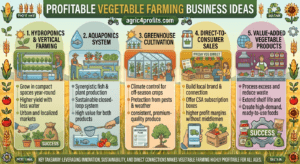
1. Focus on High Demand Local Staple Vegetables
Producing vegetables with consistent, high local demand, such as tomatoes, onions, and leafy greens common in local diets, offers relatively reliable market access, though often at more competitive pricing given widespread production by many farmers.
Success in this approach typically depends on production efficiency and consistent quality that allows competing effectively on price while maintaining adequate margins, making operational efficiency a particular priority for this business model.
2. Explore Specialty or Niche Vegetable Production
Growing specialty vegetables with limited local production but growing demand, whether from restaurants seeking specific ingredients or health conscious consumers seeking particular varieties, can command premium pricing due to reduced direct competition.
This approach requires more careful market research before significant investment, since niche demand may be more limited in volume even while offering better per unit pricing than high volume staple production.
Vegetable Business Model Comparison
Business Model Competition Level Typical Margin High demand staples High, many producers Moderate, volume dependent Specialty or niche vegetables Lower, specific market Higher per unit Off-season production Lower during target window Higher due to scarcity Value-added processing Variable by product Higher than raw sales Read Also: controlling-crop-diseases-with-beneficial-insects
3. Target Off-Season Production for Premium Pricing
Using protected growing structures, irrigation, or variety selection to produce vegetables during periods when local supply typically declines allows farmers to capture significantly higher prices during these scarcity windows compared to peak season selling.
This approach requires additional investment in infrastructure or technique to achieve reliable off-season production, making it better suited to farmers with some capital available for these improvements rather than a starting point for entirely new operations.
4. Add Value Through Basic Processing
Simple value addition, such as washing, sorting, and attractive packaging of vegetables, or more involved processing like drying, pickling, or sauce production, can meaningfully improve returns compared to selling entirely raw, unprocessed produce.
Starting with straightforward value addition that requires modest equipment investment, then expanding into more involved processing as market demand and business capability develop, provides a manageable growth pathway for vegetable businesses.
Value Addition Options for Vegetable Farmers
Value Addition Type Investment Level Shelf Life Impact Washing and packaging Low Minimal change Sun drying Low to moderate Significantly extended Pickling or fermentation Moderate Significantly extended Sauce or paste production Moderate to high Extended, requires proper preservation 5. Consider Contract Growing for Restaurants or Businesses
Establishing supply agreements with restaurants, hotels, or other businesses needing consistent vegetable supply can provide more predictable income than relying entirely on open market sales, though it typically requires demonstrating reliable quality and delivery capability first.
This business model rewards consistency and communication, since business buyers value dependable partners who can reliably meet agreed specifications and delivery schedules over time.
6. Combine Multiple Approaches for Diversified Income
Many successful vegetable farming businesses combine several of these approaches, such as staple production for reliable base income alongside specialty crops or value addition for improved margins, rather than relying entirely on a single business model.
This diversification spreads risk across different market segments while allowing farmers to capture the specific advantages each approach offers, though it also requires more diverse management skill than a single, focused business model.
Frequently Asked Questions
- What makes staple vegetable production a reliable business option?
Producing vegetables with consistent, high local demand offers relatively reliable market access, though often at more competitive pricing given widespread production by many farmers.
- How can specialty vegetable production improve profitability?
Growing specialty vegetables with limited local production but growing demand can command premium pricing due to reduced direct competition, though market research is important before investment.
- Is off-season vegetable production worth the additional investment?
Off-season production can capture significantly higher prices during scarcity windows, though it requires additional investment in infrastructure or technique for reliable results.
- What value addition options work well for vegetable farmers?
Simple options like washing and packaging require low investment, while more involved processing like drying or pickling significantly extends shelf life and improves returns.
- Can contract growing for businesses provide more stable income?
Yes, supply agreements with restaurants or hotels can provide more predictable income than open market sales, though they typically require demonstrating reliable quality and delivery first.
- Should vegetable farmers focus on one business model or combine several?
Many successful operations combine several approaches, spreading risk across market segments while capturing specific advantages each offers, though this requires more diverse management skill.
- How does competition level differ between vegetable business models?
High demand staples face significant competition from many producers, while specialty or off-season production faces lower competition within their specific market windows.
- What is a manageable starting point for value addition in vegetable farming?
Starting with straightforward value addition requiring modest equipment investment, then expanding into more involved processing as capability develops, provides a manageable growth pathway.
- Why is consistency important for contract growing arrangements?
Business buyers value dependable partners who can reliably meet agreed specifications and delivery schedules, making consistency and communication key to successful contract relationships.
- Does off-season production require more capital than standard vegetable farming?
Yes, achieving reliable off-season production typically requires additional investment in protected structures, irrigation, or technique compared to standard seasonal production.
Profitable vegetable farming can take many forms, from reliable staple crop production to specialty niches, off-season timing, and value addition, each offering different risk and return profiles. Understanding these options helps you choose or combine approaches that fit your specific resources and market opportunities. What vegetable farming business approaches have worked best for you? Share your experience with the Agric4Profits farming community.
Read Also: mechanisms-involved-in-sterilization-process
- AuthorPosts


- You must be logged in to reply to this topic.