



Public Group
Active 1 year, 3 months ago
Group Type By Special Interest Group
Group Leadership
- Group Administrators
-

Agri-Business Startups Network
Tips for Farmers to Start Small-Scale Poultry Business
- This topic is empty.
- AuthorPosts
- July 30, 2026 at 11:42 am #794808
 Agric4ProfitsModerator
Poultry farming offers one of the more accessible entry points into livestock business for new farmers, requiring relatively modest initial capital compared to larger livestock species while offering reasonably quick production cycles that generate income sooner than many other agricultural ventures.
Despite this accessibility, many new poultry business owners underestimate the planning and management discipline needed for sustainable success, leading to preventable losses that could have been avoided with better preparation before launching the business.
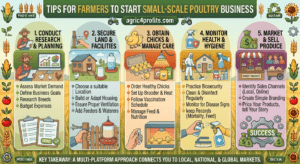
This article covers essential tips for successfully starting a small-scale poultry business, from initial planning and housing setup to health management and market planning, helping new poultry entrepreneurs build a solid operational foundation.
Whether you are planning a layer operation, broiler production, or a mixed poultry business, these foundational tips will help you navigate the critical early stages of establishing a sustainable, profitable poultry enterprise.
1. Choose Your Poultry Business Focus Clearly
Deciding between egg production, meat production, or breeding stock sales, based on realistic assessment of local market demand and your available resources, provides essential direction for all subsequent planning decisions rather than attempting to pursue multiple focuses simultaneously from the start.
Each poultry business type has different infrastructure needs, production timelines, and market considerations, making this initial focus decision one of the most important early choices for new poultry entrepreneurs to get right.
2. Plan Appropriate Housing Before Acquiring Birds
Proper housing that provides adequate space, ventilation, and protection from predators and weather should be constructed and ready before birds arrive, since attempting to house birds in inadequate temporary arrangements often leads to preventable health problems and losses.
Sizing housing appropriately for your planned flock size, with some allowance for planned growth, avoids the common mistake of either underinvesting in housing that quickly becomes inadequate or overinvesting beyond what initial capital and management capacity can support.\
Read Also: How-to-store seeds safely from pests
Poultry Business Type Comparison
Business Type Production Cycle Key Infrastructure Need Layer (egg) production Ongoing, months to years per bird Laying house, nest boxes Broiler (meat) production 6 to 8 weeks per batch Efficient growing space Breeding stock Longer term, ongoing Breeding pens, incubation capacity Mixed operation Varies by component Flexible or separate housing 3. Source Quality Birds From Reliable Suppliers
Starting with healthy, quality chicks or birds from reputable suppliers significantly improves your odds of success compared to sourcing from unreliable sources where health status and breed quality cannot be properly verified.
Verifying vaccination history and health status before purchase, and quarantining new birds briefly before integration where feasible, protects your initial investment from health problems that could otherwise devastate a new flock before the business has even properly begun.
4. Develop a Realistic Financial Plan
Calculating complete startup costs, including housing, initial stock, feed for the full production cycle until first revenue, and basic health management, prevents the common problem of running out of capital before the business reaches its first income generating milestone.
Planning for feed costs specifically, since this typically represents the largest ongoing expense in poultry production, and understanding how feed costs relate to expected production and sales timeline, supports more realistic financial planning.
Small-Scale Poultry Startup Cost Categories
Cost Category Typical Proportion of Startup Budget Planning Consideration Housing construction Significant upfront investment Size appropriately for planned scale Initial bird stock Moderate Source from reliable suppliers Feed until first revenue Often underestimated Calculate full cycle needs Health management supplies Smaller but essential Include vaccination and basic treatment 5. Establish Basic Health Management Practices Early
Implementing fundamental biosecurity practices, appropriate vaccination schedules, and regular health monitoring from the very beginning protects your investment against the disease outbreaks that represent one of the most significant risks to new poultry businesses.
Working with a local veterinarian or extension officer to establish appropriate health protocols for your specific region and poultry type provides valuable guidance that new poultry entrepreneurs often lack from personal experience alone.
6. Identify Your Market Before Production Peaks
Confirming where and how you will sell your eggs, meat, or birds before production reaches its peak avoids the scramble to find buyers after products are already ready, which often leads to accepting lower prices out of urgency.
Building relationships with potential buyers, whether individual customers, local markets, or bulk purchasers, during the production period rather than only after products are ready supports smoother, more profitable sales when your poultry business reaches market readiness.
Frequently Asked Questions
- Should new poultry farmers start with layers or broilers?
The choice should be based on realistic assessment of local market demand and available resources, since each type has different infrastructure needs, timelines, and market considerations.
- How important is housing preparation before acquiring birds?
Very important, since proper housing should be ready before birds arrive, as attempting to house birds in inadequate temporary arrangements often leads to preventable health problems and losses.
- What should new poultry business owners look for when sourcing birds?
Healthy, quality chicks or birds from reputable suppliers with verified vaccination history and health status significantly improve success odds compared to unreliable sourcing.
- What is typically the largest ongoing expense in poultry production?
Feed typically represents the largest ongoing expense, making it important to calculate feed costs for the full production cycle when planning startup finances.
- Why do new poultry businesses often run out of capital?
Startup costs, particularly feed needs until first revenue, are commonly underestimated, leading to running out of capital before reaching the first income generating milestone.
- Is biosecurity important for small-scale poultry operations?
Yes, fundamental biosecurity practices protect against disease outbreaks that represent one of the most significant risks to new poultry businesses, regardless of scale.
- When should new poultry farmers start identifying their market?
Confirming sales channels before production reaches its peak avoids scrambling to find buyers after products are ready, which often leads to accepting lower prices out of urgency.
- Should poultry housing be sized for current or future flock needs?
Housing should be sized appropriately with some allowance for planned growth, avoiding both underinvestment that quickly becomes inadequate and overinvestment beyond initial capacity.
- Can working with a veterinarian help new poultry businesses succeed?
Yes, working with a local veterinarian or extension officer to establish appropriate health protocols provides valuable guidance that new poultry entrepreneurs often lack from personal experience.
- What poultry business type requires the longest production cycle before revenue?
Layer production and breeding stock operations typically involve longer timelines before significant revenue compared to broiler production, which generates revenue within six to eight weeks per batch.
Starting a successful small-scale poultry business requires clear focus, proper housing preparation, quality bird sourcing, realistic financial planning, and early attention to both health management and market development. This foundational preparation significantly improves the odds of building a sustainable, profitable operation. What advice would you give someone starting a poultry business? Share your experience with the Agric4Profits farming community.
Read Also: processes of sludge treatment
- AuthorPosts


- You must be logged in to reply to this topic.