



Public Group
Active 1 year, 3 months ago
Group Type By Crop
Group Leadership
- Group Administrators
-

Cabbage (Brassica oleracea) Farmers Community
Growing Cabbage Without Chemical Pesticides
- This topic is empty.
- AuthorPosts
- June 17, 2026 at 10:23 am #769794
 Agric4ProfitsModerator
Cabbage is one of the most widely grown and nutritionally valuable vegetables in home gardens and smallholder farms around the world, yet it also belongs to a plant family that attracts a remarkably wide range of pests and diseases. From caterpillars and aphids to clubroot and black rot, cabbage growers face persistent pressure from organisms that can devastate a crop quickly if left unchecked.
The conventional response to these pressures has long been chemical pesticides, which offer fast, visible results but come with costs that extend beyond the price tag, including potential harm to beneficial insects, risks to human health during handling and consumption, environmental contamination of soil and water, and the gradual development of pesticide resistance in target pest populations.
Growing cabbage without chemical pesticides doesn’t mean accepting damaged crops or poor yields as inevitable. It means understanding how cabbage grows, what threatens it, and how to create conditions that favor the plant while working against the organisms that damage it. Organic and low input approaches draw on principles including biodiversity, healthy soil biology, physical barriers, natural enemies of pests, and the use of botanical or microbial treatments where targeted intervention becomes necessary.
In this article, we’ll explore practical strategies for growing healthy, productive cabbage without relying on synthetic chemical pesticides. You’ll learn about soil preparation and plant health as the foundation of pest resistance, how to use physical barriers and row covers to prevent pest access, companion planting strategies that deter pests or attract beneficial insects, biological control approaches using natural enemies and microbial products, organic approved treatments for when pest pressure becomes significant, and how to identify and manage the most common diseases affecting cabbage through non chemical approaches.
By the end of this article, you should have a comprehensive understanding of how these strategies work together as a system, rather than relying on any single approach, to keep cabbage healthy and productive through the growing season without the use of synthetic chemical pesticides.
1. Building Healthy Soil and Strong Plants as the First Line of Defense
The foundation of successful pesticide free cabbage growing begins well before seeds are sown or transplants go into the ground, with the health and preparation of the soil itself. Plants growing in well balanced, biologically active soil with appropriate nutrient levels and good physical structure tend to be fundamentally more resilient to pest and disease pressure compared to plants struggling in compacted, nutrient poor, or biologically depleted soil, simply because well nourished, vigorous plants have more resources to devote to natural defense mechanisms and can recover more quickly from damage when it does occur.
Cabbage belongs to the brassica family, which has specific nutritional needs including relatively high requirements for nitrogen during active leaf and head development, good calcium availability for cell wall strength and disease resistance, and adequate boron for proper development of growing tissues. Ensuring these needs are met through organic sources, rather than through synthetic fertilizers that might otherwise be part of a conventional production approach, supports plant vigor in ways that indirectly reduce pest vulnerability.
Well aged compost incorporated into planting beds before transplanting provides a broad spectrum of nutrients, improves soil structure, supports populations of beneficial soil organisms that compete with soil borne pathogens, and gradually releases nutrients over the growing season in a form that supports steady plant growth rather than the surge and crash pattern sometimes associated with high rate synthetic fertilizer applications. Incorporating two to three inches of mature compost into the top eight to twelve inches of soil before planting cabbage represents a foundational investment in plant health.
Soil pH matters specifically for cabbage and other brassicas because the primary soil borne disease affecting this family, clubroot, caused by the organism Plasmodiophora brassicae, is considerably more severe in acidic soils and can be substantially suppressed by raising soil pH to around 7.0 or slightly above. Regular soil testing and pH adjustment with agricultural lime where needed serves the dual purpose of improving nutrient availability and creating a less favorable environment for one of the most damaging diseases in brassica production.
Transplant quality at the time of planting sets the trajectory for the entire growing season. Healthy, stocky transplants with well developed root systems that have been properly hardened off before being moved to outdoor conditions establish more quickly and begin vigorous growth sooner than weak, leggy, or stressed transplants, reducing the window during which young plants are most vulnerable to pest damage and environmental stresses.
Spacing cabbage plants appropriately, avoiding the temptation to plant more densely than recommended in hopes of fitting more plants into a given area, supports better airflow around plants, reduces humidity in the plant canopy that can favor fungal diseases, and ensures each plant has adequate access to soil nutrients and moisture rather than competing intensely with neighboring plants for these resources.
Crop rotation is a critical soil health practice for brassicas specifically, because several important soil borne diseases and pests, including clubroot, brassica cyst nematodes, and certain fungal pathogens, can persist in soil for extended periods and build up to damaging levels when brassicas are grown repeatedly in the same location. Maintaining a rotation that avoids growing cabbage or other brassicas in the same soil for at least three to four years, and ideally longer where clubroot is a known problem, is one of the most important soil health practices for sustainable brassica production.
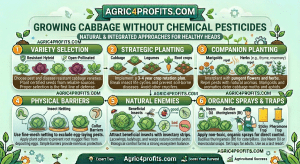
2. Physical Barriers and Row Covers to Prevent Pest Access
Physical exclusion, preventing pests from reaching cabbage plants in the first place rather than dealing with them after they’ve arrived, represents one of the most effective and reliable non chemical pest management strategies available, particularly for the flying insects whose adults lay eggs on or near brassica plants that then hatch into damaging caterpillar or larval stages.
Row covers made from lightweight floating fabric, sometimes called agro fleece, insect mesh, or floating row cover depending on regional terminology, are among the most valuable tools in a pesticide free cabbage grower’s toolkit. These materials allow light, air, and water to pass through while creating a physical barrier that prevents adult butterflies and moths from reaching plants to lay eggs, adult aphids from landing and establishing colonies, and in some cases other pests from accessing plants.
The effectiveness of row covers depends critically on installation timing and technique. Covers must be installed before pests arrive, which typically means at or immediately after transplanting, and must be secured at the edges to prevent insects from finding gaps to enter. Leaving covers loose at the edges, or installing them after pest populations have already begun establishing on plants, allows insects to access plants despite the presence of a cover.
For row covers to provide effective exclusion, the soil beneath must also be free of pest eggs or larvae at the time of installation, since pests already in the soil can simply emerge beneath the cover. This connects physical barrier use with crop rotation, as rotating brassicas to ground that hasn’t grown them recently reduces the likelihood that soil borne stages of brassica specific pests are already present when covers are installed.
The timing of cover removal matters for crops like cabbage that require pollination, though cabbage grown for heads rather than seed doesn’t require insect pollination, meaning covers can in principle remain in place throughout the entire growing season if desired, removing them only for management activities like weeding or inspection and then immediately replacing them. This makes cabbage somewhat more amenable to season long row cover use compared to fruiting vegetables that require bee pollination for yield.
Copper tape or similar physical deterrents placed around raised bed edges can help reduce slug and snail access to cabbage plants, as slugs and snails are deterred by contact with copper due to a mild electrical reaction. While this approach doesn’t provide complete exclusion the way row covers can for flying insects, it can meaningfully reduce damage in situations where slugs and snails are a significant concern.
Collars placed around the base of individual cabbage transplants at planting time can help prevent cabbage root fly females from laying eggs at the soil surface immediately adjacent to plant stems, from which newly hatched larvae would normally burrow into the soil to feed on roots. Simple collars cut from cardboard, thick plastic, or similar materials, placed flat on the soil surface surrounding each plant stem, physically prevent access to the egg laying site.
Read Also: FarmSmart Business Planner for Cabbage Farming in South Sudan
3. Companion Planting and Habitat for Beneficial Insects
Companion planting strategies use the presence of certain plants near cabbage to either deter pest insects through various mechanisms including scent confusion, visual disruption, or chemical compounds released by companion plants, or to attract and support populations of beneficial insects that prey on or parasitize pest species, providing ongoing biological pest management that operates continuously without requiring active intervention.
Strongly aromatic herbs planted near or between cabbage plants have long been used as companion plants, with the theory that their volatile compounds can interfere with the ability of pest insects to locate host plants by smell, since many brassica pests use olfactory cues to find host plants. Herbs like sage, rosemary, thyme, and oregano have been used in this way, though the scientific evidence for the magnitude of their deterrent effect varies and they’re generally considered one tool among many rather than a comprehensive pest solution.
Nasturtiums have a specific role as trap crops for aphids, particularly species that prefer brassicas, as aphids tend to colonize nasturtiums readily and in large numbers, potentially drawing aphid populations away from cabbage and concentrating them on the nasturtiums where they can be managed or simply allowed to support populations of aphid predators like ladybugs and lacewings that then move to control aphids on cabbage as well.
Flowering plants strategically incorporated into or around the garden area provide nectar and pollen resources for beneficial insects including parasitic wasps, hoverflies, and other natural enemies of common cabbage pests. Many of these beneficial insects, including small parasitic wasps that lay their eggs inside caterpillars or aphids, have adult stages that feed on nectar and pollen and may have very short lifespans, meaning that consistent nectar sources in close proximity to cabbage plantings can significantly support populations of these beneficial organisms.
Dill, fennel, cilantro, and various other plants in the carrot family are particularly valuable for attracting beneficial insects, as they produce large, open flower structures that are easily accessible to many beneficial insect species including parasitic wasps and predatory hoverflies whose larvae feed on aphids.
Planting cabbage in diverse garden environments rather than large monocultures tends to support more diverse insect communities overall, including more abundant populations of generalist predators like ground beetles, spiders, and various other invertebrates that collectively contribute to suppression of pest populations simply through predation on eggs, larvae, and adults of various pest species throughout the season.
Purple and white flowering plants including sweet alyssum, planted as border plantings or in strips within the garden, are well established companions for attracting hoverflies and parasitic wasps and have been shown in various studies to support beneficial insect populations that contribute meaningfully to aphid and caterpillar management in nearby crops.
4. Biological Controls and Microbial Products
When pest populations begin building despite preventive measures and companion planting support, biological control tools, including naturally occurring organisms or their products, can provide targeted pest management without the environmental and health concerns associated with synthetic chemical pesticides.
Bacillus thuringiensis, commonly known as Bt, is a naturally occurring soil bacterium that produces proteins toxic to certain insect larvae when consumed, while being essentially harmless to humans, beneficial insects, birds, and most other non target organisms. The variety Bacillus thuringiensis var. kurstaki is specifically effective against caterpillar pests, making it particularly relevant for managing the larvae of cabbage white butterflies, cabbage loopers, and imported cabbageworm, which are among the most damaging caterpillar pests of cabbage.
Bt products are applied to plant foliage and work when caterpillar larvae consume treated plant material, so timing and coverage are important for effectiveness. Bt degrades relatively quickly when exposed to sunlight and rain, meaning it needs to be applied when larvae are young and actively feeding rather than waiting until populations are well established and larvae are large, and reapplication after rainfall is often necessary to maintain efficacy throughout periods of active caterpillar pressure.
Spinosad, derived from another naturally occurring soil microorganism, Saccharomyces spinosa, provides effective control against thrips, certain caterpillars, and some other insect pests, and is considered acceptable in certified organic production systems, though it has somewhat broader effects on certain beneficial insects compared to Bt and should be used with this in mind.
Predatory insects that can be purchased and released into the garden include ladybugs and their larvae, lacewings, and parasitic wasps of various species, though the effectiveness of purchased insect releases can be variable, as released insects may disperse from the release area or fail to establish in meaningful numbers depending on local conditions and the availability of suitable habitat and alternative food sources beyond just the target pest.
Beneficial nematodes, microscopic roundworms that parasitize and kill certain soil dwelling insect larvae, can be useful for managing pests with soil dwelling larval stages, including cabbage root fly larvae, when applied to moist soil where these larvae are active. These organisms require moist soil conditions to move and infect hosts, making application timing relative to soil moisture conditions important for their effectiveness.
Encouraging resident populations of beneficial insects through the habitat strategies described in the previous section tends to provide more reliable biological control compared to purchased and released organisms, since populations of beneficial insects that are naturally established in and around the garden are often better matched to local pest species and conditions than introduced organisms.
5. Organic Approved Treatments for Significant Pest Pressure
Even with excellent soil health, physical barriers, companion planting, and biological control support, there will be situations where pest pressure escalates to levels that threaten crop viability and where more directly targeted intervention becomes necessary. A range of treatments that are approved for use in organic production systems can provide this intervention without the environmental and health concerns of synthetic chemical pesticides.
Neem products derived from the neem tree, particularly neem oil and azadirachtin based products extracted from neem seeds, have multiple modes of action against pest insects including acting as a feeding deterrent, disrupting insect development and molting processes, and in some cases affecting reproduction, while showing relatively low toxicity to mammals and selective effects on insects that depend on the specific formulation and application method.
Neem oil has some direct contact effects on soft bodied insects like aphids when spray coverage is thorough, and its residual properties can deter feeding and disrupt development of various pests including thrips and young caterpillars, though it generally requires more consistent, repeated application compared to some synthetic options to maintain adequate pest pressure management.
Insecticidal soaps, made from potassium salts of fatty acids, provide contact control of soft bodied insects including aphids, whiteflies, and spider mites by disrupting their cell membranes, causing dehydration and death relatively quickly upon contact. Soap sprays must contact the insects directly to be effective, meaning thorough coverage of infested plant surfaces, particularly undersides of leaves where aphids often congregate, is important.
Pyrethrin products derived from chrysanthemum flowers provide broad spectrum insect control through contact and some repellent activity, breaking down relatively quickly in the environment compared to synthetic pyrethroids. While effective against a range of pest insects, pyrethrins also affect beneficial insects when contacted directly, meaning selective application targeting specific pest concentrations rather than blanket spraying across the entire planting is generally preferable.
Diatomaceous earth, a powder made from the fossilized remains of tiny aquatic organisms, causes physical damage to the outer layers of soft bodied insects and arthropods that contact it, leading to dehydration and death. Applied as a dust to plant surfaces or around the base of plants, it can help manage soft bodied pests and crawling insects, though it loses effectiveness when wet and needs reapplication after rain, and it can also affect beneficial insects that come into contact with it.
Strong sprays of plain water from a hose, while not a product in the traditional sense, can physically dislodge aphid colonies from cabbage leaves when populations are noticed early and plants are robust enough to tolerate the water pressure needed to knock aphids off effectively, sometimes significantly reducing populations without any product application, and is worth trying as a first response before reaching for any treatment.
6. Identifying and Managing Common Diseases Without Chemicals
Diseases affecting cabbage in the absence of chemical fungicides and bactericides require a management approach built primarily on prevention, cultural practices, and variety selection, since once diseases become established and widespread, options for non chemical intervention are more limited compared to pest management situations where several effective organic approved treatments exist.
Clubroot, caused by the soil organism Plasmodiophora brassicae, produces characteristic swelling and distortion of roots that disrupts water and nutrient uptake, causing plants to wilt during warm parts of the day even when soil moisture is adequate, with stunted, yellowed growth and severely reduced or no head formation in affected plants. Because clubroot spores can persist in soil for many years, prevention through rotation, pH management to keep soil near neutral or slightly above, and using only uncontaminated transplants from disease free sources represents the most effective management approach, as there’s no effective non chemical cure for infected soil or plants.
Downy mildew, caused by Peronospora parasitica, produces angular, yellow patches on upper leaf surfaces with a grayish purple downy growth on the undersides of leaves beneath these patches, favoring cool, humid conditions. Management focuses on improving air circulation through appropriate plant spacing, avoiding overhead irrigation where possible, selecting resistant varieties where available, removing and destroying infected plant material promptly to reduce spore sources, and ensuring that plants have the nutrition and growing conditions needed for vigorous growth.
Black rot, a bacterial disease caused by Xanthomonas campestris, produces distinctive V shaped yellow lesions at leaf margins that spread inward with darkened leaf veins visible within the affected area, and can cause internal blackening of stem tissues in severely affected plants. Warm, wet weather combined with overhead irrigation promotes spread, and the pathogen can be seed borne, making starting with certified disease free seed an important prevention step.
Alternaria leaf spot produces dark spots with concentric rings on older leaves, sometimes with yellow halos, caused by Alternaria brassicae or related species. Warm, humid weather promotes development, and management focuses on the same cultural practices that help with downy mildew, including improved airflow, reduced leaf wetness from irrigation, and removal of infected lower leaves to reduce spore sources while the infection is still limited.
Selecting disease resistant or tolerant cabbage varieties, where available for the specific diseases most problematic in a given area, provides ongoing protection that doesn’t require additional inputs or management activities beyond the initial variety selection decision, making it one of the most valuable long term disease management strategies particularly for diseases like clubroot where few effective non chemical intervention options exist once soil is infested.
Frequently Asked Questions
1. Is it really possible to grow cabbage successfully without any chemical pesticides?
Yes, many growers successfully produce high-quality cabbage using only organic and non chemical approaches, though it requires more planning, observation, and management compared to relying on chemical pesticides as a primary control tool.2. Which pests are most difficult to manage without chemical pesticides in cabbage?
Caterpillar pests like cabbage white butterfly larvae can be challenging during peak population periods, though Bt products and row covers provide effective management tools, while heavy aphid infestations under conditions that suppress natural enemies can also be difficult to manage without intervention.3. How effective are row covers for preventing pest damage to cabbage?
When properly installed before pests arrive and secured at edges to prevent entry, row covers are among the most effective tools available for excluding flying insect pests, often dramatically reducing caterpillar and aphid damage compared to unprotected plants.4. Can companion planting alone provide adequate pest control for cabbage?
Companion planting provides useful support for pest management but is generally most effective as part of a broader integrated approach rather than as a standalone pest control strategy, since its effects on pest populations tend to be partial rather than complete.5. How do I know when Bt should be applied for caterpillar management?
Bt is most effective when applied to young, small caterpillars that are actively feeding, so regular monitoring for eggs and newly hatched larvae, particularly of cabbage white butterfly, and applying when larvae are first noticed rather than waiting until populations are large and larvae are mature, improves effectiveness significantly.6. What should I do if clubroot appears in my garden?
Once clubroot is confirmed, affected plants should be removed and destroyed without composting, brassica crops should not be grown in that area for as long as possible ideally many years, and lime should be applied to raise soil pH, as lower pH significantly worsens clubroot severity.7. Do organic approved treatments like neem oil need to be applied as often as synthetic pesticides?
Many organic approved treatments break down more quickly in the environment than synthetic options and may require more frequent reapplication, particularly after rain, but this more rapid breakdown is also part of why they have lower environmental persistence and reduced non target effects.Growing cabbage without chemical pesticides is a journey that rewards close observation and a willingness to experiment with different combinations of strategies across different seasons and growing conditions. Have you found particular companion plants, physical barriers, or biological treatments that made a noticeable difference in your cabbage garden?
Have you dealt with difficult pests or diseases like clubroot or heavy caterpillar pressure, and what approaches helped most? Share your experiences and questions in the comments below, your insights could help other growers build more effective pesticide free cabbage production systems in their own gardens and farms.
Read Also: Guide to choosing the right garbage disposal
- AuthorPosts


- You must be logged in to reply to this topic.