


Public Group
Active 1 year, 3 months ago
Group Type By Animal
Group Leadership
- Group Administrators
-

Cattle (Bos taurus) Farmers Community
How to Detect Early Signs of Livestock Disease
- This topic is empty.
- AuthorPosts
- July 15, 2026 at 11:07 am #785600
 Agric4ProfitsModerator
Disease outbreaks remain one of the most costly threats facing livestock farmers, capable of wiping out months of investment within days if not caught early. The difference between a manageable health issue and a devastating farm wide outbreak often comes down to how quickly a farmer notices that something is wrong.
Animals cannot tell you directly that they are unwell, but their bodies and behavior almost always send early warning signals before a disease becomes severe or contagious. Farmers who train themselves to observe these subtle changes gain a critical head start that can mean the difference between a quick, low cost treatment and a major loss.
This article breaks down the key physical, behavioral, and environmental indicators every livestock farmer should watch for, along with practical daily observation habits that make early detection part of routine farm management rather than an afterthought.
Whether you keep poultry, goats, pigs, or cattle, the fundamentals of early disease detection are similar across species, even though specific symptoms vary. Building these observation skills protects not just individual animals but the health and profitability of your entire herd or flock.
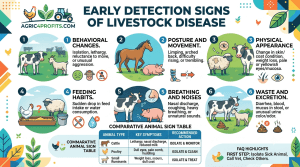
1. Watch for Changes in Feeding and Drinking Behavior
A sudden drop in feed or water intake is often the very first sign that an animal is unwell, frequently appearing before any visible physical symptom. Healthy animals typically maintain consistent, predictable feeding patterns, so any noticeable reduction deserves immediate attention.
Keeping simple daily records of feed and water consumption for a pen or flock, rather than relying purely on memory, makes it much easier to notice when intake begins trending downward across several animals at once, which can signal an emerging outbreak.
2. Monitor Posture, Movement, and Activity Levels
Lethargy, reluctance to move, hunched posture, or isolation from the rest of the group are strong indicators of illness. Animals that separate themselves from the herd or flock, or that lag noticeably behind during feeding or movement, should be examined closely.
Lameness, stiffness, or an abnormal gait can point to joint infections, nutritional deficiencies, or foot related diseases, all of which are far easier to treat when caught in their early stages rather than after they progress.
Read Also: Best Ways to Control Poultry Mites Naturally
3. Check Physical Appearance Daily
Dull, ruffled feathers in poultry, a rough or staring coat in mammals, and unusual discharge from the eyes, nose, or mouth are all visible red flags. Skin lesions, swelling, or discoloration around the eyes, comb, or mucous membranes also warrant closer inspection.
Body condition should be assessed regularly as well, since gradual weight loss can be easy to miss day to day but becomes obvious when animals are handled or compared against recent records or photographs.
4. Pay Attention to Droppings and Discharge
Changes in the color, consistency, or smell of droppings often reveal digestive or infectious issues well before other symptoms appear. Watery, bloody, or unusually colored droppings in poultry, or diarrhea in livestock, should never be ignored.
Unusual discharge from the nose, eyes, or reproductive tract can indicate respiratory or reproductive infections. Recording these observations, even briefly, helps establish a pattern that supports faster, more accurate diagnosis when consulting an animal health professional.
5. Track Body Temperature and Respiration
Elevated body temperature is one of the most reliable early indicators of infection across almost all livestock species. Learning the normal temperature range for your specific animals and checking suspect individuals with a simple thermometer can confirm a fever well before other symptoms are visible.
Rapid, labored, or noisy breathing is another critical sign, particularly in poultry and pigs, where respiratory disease can spread quickly through a group if not identified and isolated promptly.
6. Establish a Routine Daily Observation Habit
The farmers who catch disease earliest are almost always the ones who observe their animals at the same times each day, ideally during feeding when animals are most active and easiest to compare against each other.
A short, consistent daily walk through, combined with a simple notebook or spreadsheet to log anything unusual, turns disease detection from a stressful emergency response into a routine part of good farm management.
Early Warning Signs by Category
Category Early Sign Possible Concern Feeding Reduced feed or water intake General illness onset Behavior Isolation, lethargy Infection, pain Physical Dull coat or feathers Nutritional or disease issue Digestive Abnormal droppings Parasites, infection Vital signs Fever, labored breathing Respiratory or systemic infection Frequently Asked Questions
1. What is the very first sign of illness to watch for in livestock?
A drop in feed or water intake is usually the earliest and most reliable sign, often appearing before any visible physical symptom develops.
2. How often should farmers check their animals for signs of disease?
Daily observation, ideally during feeding times, is recommended so that changes in behavior or appearance are noticed as quickly as possible.
3. Can one sick animal really threaten an entire flock or herd?
Yes, especially with contagious diseases. Early isolation of a symptomatic animal is one of the most effective ways to prevent a wider outbreak.
4. What should a farmer do immediately after spotting early symptoms?
Isolate the affected animal if possible, record the specific symptoms observed, and contact a veterinarian or animal health extension officer for guidance.
5. Is fever always a sign of infectious disease?
Not always, but elevated temperature is one of the most consistent indicators of infection and should always prompt closer monitoring and evaluation.
Early detection is one of the most powerful and lowest cost tools available to any livestock farmer. A few minutes of focused daily observation can save an entire flock or herd from a preventable outbreak. We would love to hear what early warning signs have helped you catch problems on your own farm. Share your experience with the Agric4Profits farming community.
- AuthorPosts

- You must be logged in to reply to this topic.