



Public Group
Active 1 year, 3 months ago
Group Leadership
- Group Administrators
-

Central African Republic Farmers Community
Packaging Farm Products for Local Markets in Central African Republic
- This topic is empty.
- AuthorPosts
- August 24, 2026 at 7:29 pm #835622
 Agric4ProfitsModerator
Packaging plays an important role in farm product sales across the Central African Republic, protecting produce quality through the country’s challenging transport conditions while also influencing how customers perceive value and quality at local markets and points of sale.
Many farmers across the country sell produce without significant attention to packaging, missing opportunities for both better product protection during transport and improved market presentation that could support stronger sales and pricing.
This article covers practical, accessible packaging approaches suited to local market conditions in the Central African Republic, balancing product protection needs with the cost realities many farmers and small traders operate within.
Whether you sell fresh produce, processed products like garri or palm oil, or a mix of farm goods, these packaging strategies will help you better protect your products while presenting them in ways that support successful local market sales.
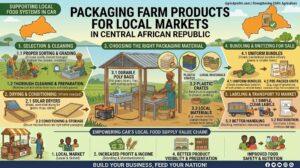
1. Choose Packaging Suited to Local Transport Realities
Given the challenging road conditions common across much of the Central African Republic, packaging that provides genuine physical protection against the jostling and rough handling typical of local transport deserves particular attention compared to packaging designed for smoother transport conditions.
Sturdy baskets, sacks, or other locally available containers that can withstand this handling while still being affordable and accessible provide a practical foundation for protecting produce through the journey from farm to market.
2. Protect Perishable Produce During Transport and Display
For fresh, perishable produce like vegetables, packaging that provides some protection from direct sun exposure and physical damage during transport and market display helps preserve quality through to the point of sale, particularly important given the region’s heat.
Simple measures like using shade cloth or covering during transport, and arranging produce to minimize crushing from stacking, can meaningfully reduce the quality decline that inadequate protection commonly causes for delicate fresh products.
Packaging Options for Common Farm Products
Product Type Packaging Option Key Protection Need Fresh vegetables Ventilated baskets, sacks Sun and physical damage protection Grains and legumes Woven or hermetic sacks Moisture and pest protection Processed products (garri, flour) Sealed bags or containers Moisture re-entry prevention Palm oil or groundnut oil Clean, sealed containers Contamination and leak prevention 3. Use Clear Labeling Where Practical
Simple labeling indicating what the product is, and where relevant, your farm or producer name, helps customers identify products and can support building recognition for farmers looking to develop repeat customer relationships over time.
Even basic labeling, achievable without significant cost or technology, provides more market professionalism and customer information than entirely unmarked produce, particularly valuable for processed products like flour or oil where visual identification alone may be insufficient.
4. Balance Packaging Investment With Product Value
Packaging costs should remain proportional to the product’s price point, since investing heavily in elaborate packaging for lower value staple crops may not represent good economic sense compared to simpler, functional packaging appropriate to that product’s market position.
For higher value processed products like palm oil or groundnut oil, however, somewhat more attention to clean, professional container presentation can support better customer confidence and potentially justify stronger pricing compared to loosely presented alternatives.
Packaging Investment Guidance by Product Value
Product Category Packaging Investment Level Primary Focus Basic staple crops Low, functional Protection at minimal cost Fresh vegetables for local sale Low to moderate Freshness and damage protection Processed products (oil, flour, garri) Moderate Quality signal, contamination prevention Products for urban or premium markets Moderate to higher Professional presentation 5. Use Locally Available and Affordable Materials
Locally produced baskets, sacks, and containers often provide cost effective packaging options that also support local craft producers, making these materials worth prioritizing over more expensive imported alternatives where they provide adequate protection.
Reusing appropriate containers where sanitary and practical, rather than always purchasing new packaging materials, can further reduce costs while still providing the protection and presentation benefits packaging offers.
6. Observe What Works Well at Your Local Markets
Paying attention to how successful vendors at your local markets package and present their products provides practical, locally relevant guidance that may be more directly applicable than generic packaging advice not specific to your particular market context.
Gathering feedback from your own customers about packaging, whether through direct conversation or simply noting which products sell more readily, helps refine your specific packaging approach based on genuine local market response.
Frequently Asked Questions
- Why does packaging matter for farm products sold at local markets in the Central African Republic?
Packaging protects produce quality through challenging transport conditions while also influencing how customers perceive value and quality at the point of sale.
- What packaging works best given local road and transport conditions?
Sturdy baskets, sacks, or other locally available containers that can withstand rough handling while remaining affordable and accessible provide a practical foundation for protection.
- How can farmers protect fresh vegetables during transport in this climate?
Providing protection from direct sun exposure and physical damage, such as using shade cloth or covering during transport, helps preserve quality through to the point of sale.
- Should packaging investment be the same for all farm products?
No, packaging costs should remain proportional to the product’s price point, with basic staple crops needing simple functional packaging while higher value processed products may justify more investment.
- Is labeling worthwhile for farmers selling at local markets?
Yes, even basic labeling indicating the product and producer name helps customers identify products and supports building recognition for farmers seeking repeat customer relationships.
- Are locally available materials good options for packaging?
Yes, locally produced baskets, sacks, and containers often provide cost effective options that also support local craft producers, worth prioritizing over more expensive imported alternatives.
- How can farmers learn what packaging approaches work well locally?
Observing how successful vendors at local markets package and present their products provides practical, locally relevant guidance specific to the particular market context.
- Does packaging matter more for processed products like oil than fresh produce?
Processed products like palm oil or groundnut oil particularly benefit from clean, sealed container presentation to support customer confidence and prevent contamination or leaks.
- Can reusing containers help reduce packaging costs?
Yes, reusing appropriate containers where sanitary and practical, rather than always purchasing new materials, can reduce costs while still providing protection and presentation benefits.
- How can farmers know if their packaging choices are working well?
Gathering feedback from customers, whether through direct conversation or noting which products sell more readily, helps refine packaging approach based on genuine local market response.
Thoughtful packaging for local market sales in the Central African Republic, suited to local transport realities and product value, protects farm products while supporting stronger customer confidence and sales. Balancing protection, presentation, and cost using locally available materials provides a practical approach for farmers of any scale. What packaging approaches have worked best for your farm products? Share your experience with the Agric4Profits farming community.
Read Also: how-to-find-the-best-recycling-center
- AuthorPosts


- You must be logged in to reply to this topic.