



Public Group
Active 1 year, 3 months ago
Group Leadership
- Group Administrators
-

Chad Farmers Community
Market Access for Agricultural Products in Chad: A Guide for Farmers
- This topic is empty.
- AuthorPosts
- August 30, 2026 at 11:42 am #840424
 Agric4ProfitsModerator
Producing agricultural goods is only one part of running a successful farm. Farmers also need reliable markets where they can sell their crops and livestock at reasonable prices. For many farmers in Chad, limited market access can make it difficult to turn agricultural production into a profitable business.
Market access refers to the ability of farmers to reach buyers, obtain useful market information, transport their products and sell them under acceptable conditions. Better market access can help farmers increase their bargaining power, reduce unnecessary losses and make better decisions about what and how much to produce.
Chad has opportunities for agricultural trade through local markets, urban centres, regional trade networks, processors, wholesalers and other buyers. However, farmers may face challenges including poor roads, limited storage facilities, seasonal price changes, inadequate market information and weak links between producers and buyers.
Farmers can improve their market position by understanding demand, improving product quality, organising collectively, reducing post-harvest losses and developing relationships with reliable buyers.
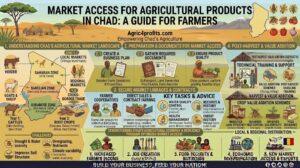
1. Understanding Agricultural Markets in Chad
Agricultural markets connect farmers with consumers, traders, processors, retailers and other businesses that purchase agricultural products.
Farmers may sell their products through several channels, including:
- Village markets.
- Local traders.
- Wholesale markets.
- Urban markets.
- Retailers.
- Restaurants.
- Food processors.
- Cooperatives.
- Livestock markets.
- Direct sales to consumers.
The best market depends on the type of product, production volume, distance, transportation costs and expected selling price.
A farmer producing perishable vegetables, for example, may prefer a nearby market that can be reached quickly, while a grain producer may have greater flexibility because properly stored grains can generally remain marketable for longer.
2. Identifying Products With Strong Market Demand
Before planting or expanding production, farmers should investigate what buyers actually want.
Market research can help farmers determine:
- Which products are in demand.
- When demand is highest.
- Typical selling prices.
- Preferred varieties.
- Required product quality.
- Preferred packaging.
- Available buyers.
- Transportation requirements.
Farmers should avoid making production decisions based entirely on assumptions.
For example, if many farmers produce the same vegetable at the same time, market prices may decline because supply becomes excessive. Understanding seasonal demand can help farmers make better production decisions.
Farmers can gather information by speaking with traders, visiting markets, consulting agricultural organisations and monitoring local prices.
Read Also: Best Livestock Breeds for Chad Farming
3. Improving Product Quality
Quality can influence the price farmers receive and whether buyers return.
For crops, quality may involve:
- Cleanliness.
- Size.
- Maturity.
- Appearance.
- Moisture content.
- Variety.
- Absence of pests.
- Absence of contamination.
- Proper packaging.
For livestock, buyers may consider animal health, body condition, size, age and breed characteristics.
Farmers should sort products before selling them. Damaged or poor-quality produce can be separated from higher-quality products instead of allowing the entire batch to be sold at a lower price.
Consistent quality can also help farmers build stronger relationships with buyers.
4. Using Farmer Cooperatives to Reach Better Markets
Individual smallholder farmers may have difficulty supplying large buyers because they produce relatively small quantities.
Farmer cooperatives and producer groups can help solve this problem by aggregating products from multiple members.
Collective marketing can potentially provide:
- Larger volumes.
- Better bargaining power.
- Reduced transportation costs.
- Shared storage.
- Better access to market information.
- More consistent supply.
- Greater negotiating power with wholesalers.
However, cooperatives need effective management. Members should agree on product quality standards, pricing procedures, payment systems and responsibilities.
Transparent financial records are also important for maintaining trust among members.
5. Improving Transportation and Storage
Transportation costs can significantly affect the price farmers receive. A farmer may obtain a good market price but still earn little profit if transportation expenses are extremely high.
Farmers should therefore compare the selling price in different markets against the cost of reaching those markets.
Storage can also provide greater marketing flexibility. If farmers are able to store suitable products safely, they may not be forced to sell immediately after harvest when prices are low.
Useful investments may include:
- Improved grain storage.
- Appropriate packaging.
- Crates for vegetables.
- Drying facilities.
- Shared warehouses.
- Cooperative transportation.
- Simple produce handling equipment.
Perishable products require particularly careful planning because delays can result in significant losses.
6. Using Market Information to Make Better Decisions
Market information allows farmers to understand changes in prices, demand and supply.
Farmers should monitor:
- Current prices.
- Seasonal price trends.
- Buyer preferences.
- Production volumes.
- Transportation costs.
- Market demand.
- Competitor supply.
Information can be obtained through local traders, markets, farmer organisations, extension workers and available communication technologies.
Farmers should avoid relying on a single source of information where possible. Comparing information from several buyers and markets can provide a clearer picture of actual market conditions.
Good market information can help farmers decide whether to sell immediately, store their products, process them or transport them to another market.
7. Adding Value to Agricultural Products
Farmers may increase the value of their products by processing, sorting, packaging or improving presentation.
Examples include:
- Milling grains into flour.
- Processing oilseeds.
- Drying vegetables.
- Packaging cleaned grains.
- Processing fruits.
- Turning milk into other dairy products.
- Cleaning and grading agricultural products.
Value addition can extend shelf life and provide access to different customers.
However, processing requires additional investment, skills, equipment and attention to food safety. Farmers should calculate the costs and expected additional income before investing in a processing business.
8. Connecting Farmers With Larger Buyers
Larger buyers may include food processors, wholesalers, supermarkets, restaurants, institutions and other commercial businesses.
Farmers seeking these markets should be prepared to provide consistent quantities and quality.
Before entering an agreement with a buyer, farmers should clarify:
- Product specifications.
- Quantity required.
- Delivery schedule.
- Price.
- Payment terms.
- Transportation responsibility.
- Quality standards.
- Procedures for rejected products.
Written agreements can reduce misunderstandings, particularly when significant quantities or long-term supply arrangements are involved.
Farmers should also avoid depending entirely on a single large buyer. Maintaining alternative markets can reduce the risk associated with unexpected changes in purchasing conditions.
9. Building a Profitable Agricultural Marketing Strategy
A good marketing strategy begins before production.
Farmers should estimate the total cost of producing and selling their products.
Marketing Factor What Farmers Should Consider Production cost Seeds, feed, labour and other inputs Packaging Bags, crates, containers and labels Transportation Cost of reaching the buyer Storage Cost of keeping produce before sale Market price Expected selling price Product quality Requirements of the target buyer Quantity Available and required volume Timing Best period to sell Profit margin Expected income after expenses Farmers should calculate their break-even point where possible. Knowing the minimum price needed to cover production and marketing expenses can help farmers avoid selling at a loss.
Diversifying buyers and markets can also make farm businesses more resilient.
Frequently Asked Questions
1. What does market access mean for farmers?
Market access refers to a farmer’s ability to reach buyers, obtain market information, transport products and sell agricultural goods at acceptable prices and conditions.
2. Where can farmers in Chad sell agricultural products?
Farmers can sell through local markets, traders, wholesalers, retailers, processors, restaurants, cooperatives, livestock markets and direct sales to consumers.
3. How can farmers get better prices for their products?
Improving quality, reducing losses, comparing different markets, timing sales appropriately and negotiating collectively can help farmers improve their selling opportunities.
4. Can cooperatives improve agricultural market access?
Yes. Cooperatives can aggregate produce, improve bargaining power, share transportation and storage and help farmers reach larger buyers.
5. Why is market research important before planting?
Market research helps farmers understand demand, prices, buyer preferences and competition. This information can reduce the risk of producing crops that are difficult to sell profitably.
6. How can farmers reduce transportation costs?
Farmers can consider collective transportation, selling closer to production areas, improving packaging and coordinating deliveries with other producers.
7. Can storing agricultural products improve market access?
For suitable products, storage can allow farmers to avoid selling immediately after harvest and provide greater flexibility in choosing when and where to sell.
8. What is value addition in agriculture?
Value addition involves processing, grading, cleaning, packaging or otherwise improving an agricultural product so that it can be sold in a more valuable or convenient form.
9. Should farmers depend on one buyer?
It is generally safer to maintain relationships with several potential buyers where possible. Depending on one buyer can leave a farmer vulnerable if the buyer changes prices, reduces purchases or stops buying.
10. How can farmers find larger agricultural buyers?
Farmers can approach wholesalers, processors, restaurants, retailers, institutions and organised agricultural networks. Cooperatives can also help small producers combine their output and approach larger buyers.
Improving market access can help Chad farmers turn agricultural production into stronger and more sustainable businesses. Better market information, product quality, storage, transportation, collective marketing and value addition can all contribute to better selling opportunities.
What is the biggest challenge farmers in your area of Chad face when trying to sell their products? Is it transportation, low prices, lack of buyers, storage or market information? Share your thoughts and experiences in the comments below.
- AuthorPosts

- You must be logged in to reply to this topic.