



Public Group
Active 1 year, 3 months ago
Group Leadership
- Group Administrators
-

Chad Farmers Community
Sheep Farming in Chad
- This topic is empty.
- AuthorPosts
- August 28, 2026 at 6:16 am #838531
 Agric4ProfitsModerator
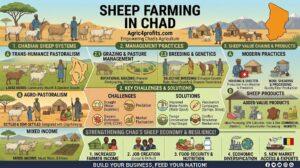
Sheep farming is an important livestock activity in Chad and provides opportunities for farmers, pastoralists and agricultural entrepreneurs. Sheep are raised mainly for meat and breeding, while their manure can also be used in crop production. For households with suitable grazing and feed resources, sheep can provide an additional source of income and contribute to food security.
One of the advantages of sheep production is that sheep are smaller than cattle and can therefore be managed on a smaller scale. However, successful sheep farming still requires proper planning. Farmers must provide suitable nutrition, clean water, adequate shelter, effective disease prevention and appropriate breeding management.
Sheep production can also be affected by seasonal changes. Availability of pasture may vary between rainy and dry periods, while water availability can become a major concern during periods of limited rainfall. Farmers therefore need to plan their resources carefully.
Whether you are planning to start with a few sheep or establish a larger commercial enterprise, understanding the fundamentals of sheep management is essential. The following guide explains how to establish, manage and potentially improve the profitability of a sheep farm in Chad.
1. Importance of Sheep Farming in Chad
Sheep can provide several economic and agricultural benefits to farming households.
The main source of income is usually the sale of live animals for meat or breeding. Farmers can also generate income by selling young sheep to other farmers who want to expand their flocks.
Sheep manure can provide an additional benefit in mixed farming systems because it can be incorporated into agricultural soils as an organic source of nutrients.
The main products and benefits of sheep farming include:
Product or benefit Potential use Sheep meat Household consumption and commercial sales Breeding sheep Sales to other farmers Lambs Flock expansion and commercial sales Manure Crop production and soil improvement Wool or fibre Potential use where suitable breeds and markets exist Livestock asset Savings and emergency source of income Sheep can therefore serve both as a productive agricultural enterprise and as an important household financial asset.
2. Selecting Sheep and Choosing a Production System
Choosing the right animals is an important first step.
Farmers should first determine their main production objective. A meat-focused operation will prioritize healthy animals with good growth and body condition, while a breeding operation will place greater emphasis on reproductive performance and desirable characteristics.
When purchasing sheep, farmers should examine the general health and condition of each animal.
Look for sheep that are:
- Active and alert
- Properly nourished
- Able to walk normally
- Free from obvious injuries
- Free from obvious signs of serious illness
- Suitable for the intended production system
The local environment should also influence the choice of animals. Sheep that are appropriately adapted to the production conditions may perform better than animals poorly suited to the environment.
Farmers should avoid purchasing large numbers of animals before establishing whether their available feed, water, housing and labour can support them.
Read Also: Goat farming in Chad
3. Housing, Feeding and Water Management
Good housing protects sheep from harsh weather, predators and theft while providing a suitable environment for resting.
Sheep housing should be dry, adequately ventilated and easy to clean. Excess moisture and accumulated manure can create an unhealthy environment.
The housing structure should also provide enough space to prevent overcrowding.
Feeding is equally important. Sheep may obtain nutrients from pasture, browse, hay, fodder and appropriate agricultural residues. The exact feeding system should depend on the local environment and available resources.
During periods of pasture shortage, farmers may need to provide additional feed.
Water must also be available regularly.
The following table summarizes the basic management requirements.
Area Recommended management Housing Dry, secure and adequately ventilated Feeding Provide sufficient pasture, forage or supplementary feed Water Maintain reliable access to suitable drinking water Hygiene Clean housing and manage manure Space Avoid excessive overcrowding Security Protect animals from predators and theft Farmers should plan these resources according to seasonal conditions rather than relying only on what is available during favourable periods.
4. Sheep Breeding and Lamb Management
Reproduction is central to flock development. Farmers should select breeding rams and ewes based on health, reproductive performance, adaptation and desired characteristics.
Keeping breeding records can help farmers determine which animals are producing productive offspring.
Important records include:
- Animal identification
- Birth dates
- Parentage
- Mating dates
- Pregnancy information
- Lambing dates
- Number of lambs born
- Lamb survival
- Growth performance
Lamb management deserves particular attention because young animals are essential for replacing older sheep and expanding the flock.
Farmers should monitor lambs carefully and provide appropriate nutrition and care.
Animals that repeatedly produce poor reproductive outcomes should be evaluated to determine whether the problem is related to nutrition, health, age or another management issue.
Good breeding management can gradually improve flock performance and reduce unnecessary replacement costs.
5. Sheep Health and Disease Prevention
Healthy animals are essential for profitable sheep farming.
Disease can cause mortality, slow growth, poor reproductive performance and increased treatment costs.
Farmers should establish appropriate preventive health practices.
These may include:
- Regular inspection of sheep
- Appropriate vaccination
- Parasite management
- Clean housing
- Adequate nutrition
- Clean drinking water
- Proper waste management
- Appropriate isolation of sick animals
- Veterinary assistance when necessary
Parasites can have a major effect on sheep performance because affected animals may lose condition and grow more slowly.
Farmers should seek appropriate veterinary guidance regarding parasite-control programmes and avoid using veterinary medicines without proper advice.
Newly purchased sheep should also be monitored before being introduced into an existing flock where appropriate.
Early identification of health problems can help reduce losses.
6. Grazing Management and Sustainable Sheep Production
Sheep farming often depends on access to grazing resources, making pasture management important.
Although sheep can utilize a variety of vegetation, excessive grazing can reduce the quality of available pasture.
Farmers should therefore manage flock size according to available resources.
Sustainable management practices may include:
- Rotating grazing areas where practical
- Protecting degraded pasture
- Conserving hay and forage
- Producing supplementary fodder
- Managing flock size
- Protecting water points
- Preventing unnecessary vegetation loss
Farmers who combine crop and livestock production may also use suitable crop residues as supplementary feed.
Sheep manure can also be returned to crop fields where appropriate.
This integrated approach can help farmers use agricultural resources more efficiently.
7. Record Keeping, Marketing and Sheep Farm Profitability
Record keeping allows farmers to monitor the performance of their flock and identify areas where money is being gained or lost.
Farmers should record animal purchases, births, deaths, treatments, feed costs, labour expenses and sales.
Before discussing profitability, it is important to understand the major financial components of a sheep enterprise.
Financial area Examples Animal purchases Rams, ewes and young sheep Feed Hay, forage and supplementary feed Veterinary costs Vaccines, treatments and professional services Housing Construction and maintenance Labour Farm workers and hired assistance Transport Moving animals and inputs Marketing Market and transaction expenses Revenue Sale of sheep and other products Potential buyers may include households, livestock traders, butchers, restaurants, breeders and other farmers.
Selling prices can vary according to:
- Age
- Sex
- Body condition
- Size
- Breed characteristics
- Season
- Market location
- Demand
Farmers should calculate their actual net return using:
Net Profit = Total Revenue − Total Costs
A flock can generate substantial sales while still producing limited profit if feed, health, labour and transportation costs are high.
8. Major Challenges and Ways to Improve Sheep Production
Sheep farmers can face several challenges, particularly during difficult environmental and economic conditions.
Common challenges include:
- Drought
- Pasture shortages
- Water scarcity
- Disease
- Parasites
- Predators
- Theft
- Poor housing
- Market fluctuations
- Rising feed costs
Farmers can improve their resilience by planning for these challenges in advance.
For example, forage can be conserved during periods of greater availability for use when pasture becomes limited. Farmers can also monitor flock size and avoid keeping more animals than available resources can support.
Other measures for improving productivity include:
- Selecting productive breeding animals
- Improving nutrition
- Monitoring lambs
- Maintaining clean housing
- Reducing mortality
- Keeping farm records
- Identifying reliable markets
The objective should be to improve the productivity of existing resources before significantly increasing flock size.
9. How to Start Sheep Farming in Chad
Starting a sheep farm requires careful planning.
Step 1: Determine your main objective — meat, breeding or a combination.
Step 2: Research local demand and potential buyers.
Step 3: Assess available land, pasture, water and feed.
Step 4: Prepare a detailed startup and operating budget.
Step 5: Construct suitable housing and fencing.
Step 6: Identify reliable sources of healthy sheep.
Step 7: Purchase a manageable number of animals.
Step 8: Establish feeding and watering routines.
Step 9: Develop an appropriate animal-health programme.
Step 10: Establish a breeding and lamb-management system.
Step 11: Keep records of births, deaths, treatments, purchases and sales.
Step 12: Monitor market prices and build relationships with buyers.
Step 13: Calculate your actual profit after each production cycle.
Step 14: Expand the flock gradually when resources and market opportunities justify expansion.
Beginning on a manageable scale allows new farmers to gain experience before committing additional capital.
Frequently Asked Questions
1. Is sheep farming profitable in Chad?
Sheep farming can be profitable when farmers maintain healthy animals, manage feed costs, achieve good reproductive performance and sell through suitable markets. Actual profitability varies according to local conditions and management.
2. What sheep are suitable for farming in Chad?
Farmers should select healthy sheep that are appropriately adapted to their local environment and production objectives. The ideal animal will depend on whether the farmer focuses on meat, breeding or another purpose.
3. How much money is required to start sheep farming?
There is no fixed startup amount. Costs depend on the number of sheep purchased, animal prices, housing, fencing, feed, water and veterinary expenses.
4. What do sheep eat?
Sheep can feed on pasture, suitable forage, hay, browse and appropriate crop residues. Supplementary feeding may be necessary when natural pasture is insufficient.
5. How can sheep diseases be prevented?
Regular observation, appropriate vaccination, parasite control, adequate nutrition, clean housing, suitable water and professional veterinary support can help reduce health risks.
6. How many sheep should a beginner start with?
The appropriate starting number depends on available capital, land, feed, water and labour. A beginner should choose a flock size that can be properly managed.
7. How do sheep farmers make money?
Farmers can earn income through the sale of sheep for meat, breeding animals and young sheep. Additional opportunities may exist depending on local markets and production systems.
Are you currently raising sheep in Chad, or are you planning to start a sheep-farming business?
What has been your biggest challenge with sheep farming — feeding, water, disease, breeding, grazing, housing or marketing?
Share your experiences, questions and opinions in the comments section below. Your contribution could help other farmers understand the realities of sheep production in Chad and discover practical ways to improve their own flocks.
Read Also: sources-of-industrial-wastes
- AuthorPosts


- You must be logged in to reply to this topic.